The lowest monthly rate you find on a major booking platform often ends up being the most expensive way to live in the Motor City. You likely already know that a 90-day contract requires more than just a surface-level price tag; it demands a deep dive into the true cost of living. Calculating a realistic budget for 3 months in Detroit means looking past the base rent to account for the utilities, parking fees, and service charges that catch many professionals off guard. It’s a complex puzzle, but getting the numbers right is the difference between a stressful stay and a seamless transition into your new neighborhood.
This guide will help you master these financial logistics by providing a comprehensive breakdown of housing, daily living expenses, and the hidden costs that often slip through the cracks. You’ll gain the confidence to choose a furnished sanctuary that offers genuine value rather than just a low entry price. We’ll preview everything from the 2026 market trends in historic neighborhoods like Corktown to the specific line-items that define your total cost of stay. By the end of this article, you’ll have a clear roadmap for a turn-key experience that respects both your professional needs and your bottom line.
Key Takeaways
- Understand the Total Cost of Stay framework to ensure your 90-day relocation is as financially sound as it is comfortable.
- Master your budget for 3 months in detroit by analyzing the cost-benefit of turn-key furnished apartments that eliminate the stress of separate utility setups.
- Gain clear insights into projected 2026 living costs, from curated grocery budgets to the vibrant local dining scene that defines the Detroit professional experience.
- Protect your peace of mind by identifying hidden administrative fees and essential insurance requirements before you sign your mid-term agreement.
- Learn strategic ways to maximize your relocation fund, including tips for negotiating seasonal rates and simplifying corporate billing for a stress-free stay.
The 90-Day Relocation Framework: Understanding Your Total Cost of Stay
Planning a temporary move to the Motor City requires more than a quick glance at rental listings. For professionals arriving in 2026, the traditional monthly rent figure is a deceptive metric that rarely reflects the reality of a short-term transition. We utilize the Total Cost of Stay (TCOS) framework to provide a transparent financial roadmap. This approach ensures your move remains a source of excitement rather than a series of fiscal surprises. A 90-day window represents the “Goldilocks” zone of mid-term travel; it’s long enough to truly integrate into a neighborhood like Corktown or Midtown, yet short enough to bypass the rigid legal commitments and credit hurdles of a standard 12-month lease.
When you calculate your budget for 3 months in detroit, you’ll find that bundled, turn-key solutions often outperform unbundled traditional rentals. Traditional leases come with hidden friction, including utility deposits, Wi-Fi installation fees, and the logistical nightmare of outfitting a space. By contrast, a curated mid-term rental functions as a stress-free sanctuary where every detail is managed before you turn the key. This allows you to focus on your professional objectives from the moment you arrive, rather than managing a checklist of household chores.
Why Monthly Rent is Only Half the Story
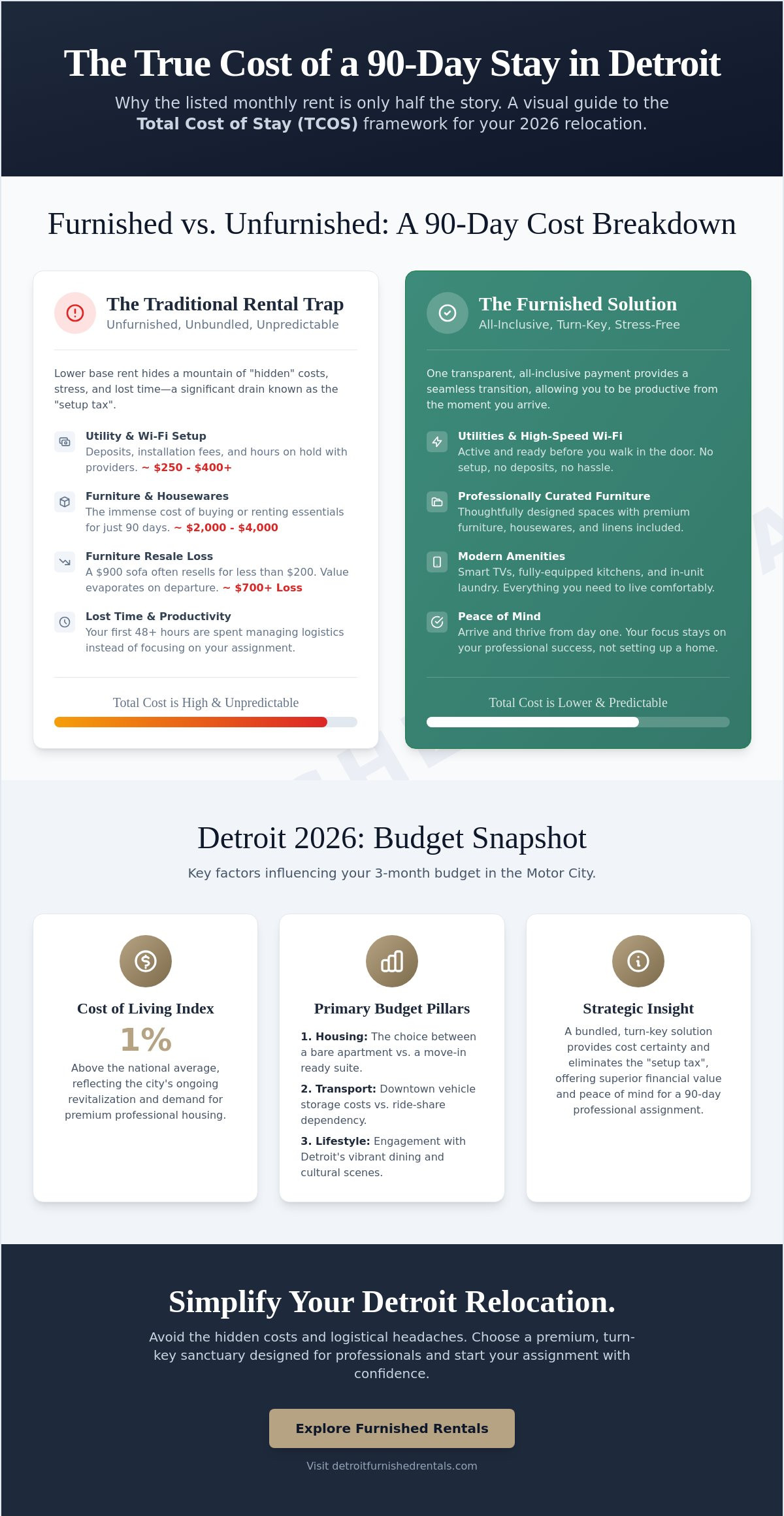
The “setup tax” is a significant drain on both time and capital that many travelers overlook. Traditional leases often require you to spend your first forty-eight hours in the city on hold with utility companies or waiting for furniture deliveries that may or may not arrive on schedule. Purchasing a sofa for a 90-day stay might cost $900 on the front end, yet it often yields less than $200 on the resale market when you depart. This $700 loss, combined with the time spent coordinating movers, quickly erodes any perceived savings from a lower monthly rent. TCOS is the sum of rent, utilities, and setup fees.
Setting Realistic Expectations for 2026
As of early 2026, the cost of living in Detroit sits at 1% above the national average. This shift reflects the ongoing revitalization of the region and an increased demand for premium professional housing near the city’s major employment hubs. Service sector inflation has also impacted local dining and specialized transport costs, making lifestyle choices a primary budget driver for the modern traveler. Reviewing a comprehensive Overview of Detroit helps professionals understand how the city’s diverse economic sectors influence neighborhood pricing and availability. Your final budget for 3 months in detroit will be dictated by three primary pillars:
- Housing: The choice between a bare-walls apartment and a thoughtfully designed, move-in ready suite.
- Transport: Costs associated with vehicle storage in the downtown core versus ride-share dependency.
- Lifestyle: Your frequency of engaging with the city’s vibrant culinary scene and historic cultural institutions.
By establishing this baseline now, you ensure your Detroit experience is defined by professional success and local discovery, not by administrative stress.
Calculating Housing Expenses: Why Furnished Units Offer the Best Value
When you sit down to map out your budget for 3 months in detroit, housing will naturally be your largest line item. It’s tempting to look at the lower base rent of unfurnished apartments, yet those figures rarely tell the whole story for a short-term stay. A traditional lease often requires credit checks, security deposits equal to a full month’s rent, and the immense hassle of utility setup. Professionals arriving in 2026 find that turn-key, furnished units provide superior value by eliminating these hidden hurdles. You can dive deeper into the current pricing trends in our average rent in downtown detroit report to see how these costs balance out in the current market.
Choosing a furnished sanctuary means you aren’t just paying for a bed; you’re paying for a seamless transition into the city’s vibrant culture. You avoid the $2,000 to $4,000 expense of purchasing or moving furniture for a stay that lasts only ninety days. This stress-free approach creates a genuine home away from home, allowing you to focus on your professional goals from the moment you drop your bags.
The All-Inclusive Advantage
The beauty of a professional mid-term rental lies in its simplicity. Everything is ready for you. Your monthly payment covers the essentials that usually require separate contracts and activation fees. These all-inclusive models save you approximately $300 per month in administrative headaches and utility overhead. Common inclusions include:
- High-speed fiber internet, typically valued at $70 to $100 monthly.
- Electricity, gas, and water, which average $150 to $250 depending on the season.
- Premium linens, kitchenware, and thoughtfully designed decor.
- Smart home features and secure entry systems for peace of mind.
For those seeking elevated amenities and concierge-style service, exploring luxury apartments detroit ensures your temporary home matches your professional standards.
Avoiding the “Hotel Tax” and Airbnb Fees
Staying in an extended-stay hotel for three months is a budget killer. In Michigan, stays longer than 30 days are generally exempt from the 6% state use tax and local occupancy taxes, which can save you hundreds of dollars compared to a hotel. Platforms like Airbnb often tack on service fees ranging from 14% to 16% plus heavy cleaning costs that inflate your daily rate. For a complete breakdown of how these charges stack up, our guide to Airbnb Detroit fees explains every line item you’ll encounter before committing to a booking. By booking a dedicated mid-term rental, you bypass these inflated margins. You’ll have more in your budget for 3 months in detroit to explore the city or utilize the Detroit Department of Transportation (DDOT) for your daily commute. If you’re looking for a curated experience without the hidden fees, consider viewing our available move-in ready homes to find your perfect Detroit sanctuary.
Essential Living Costs: Navigating Food, Utilities, and Transportation
Detroit’s cost of living reflects its ongoing revitalization, offering a blend of Midwestern value and emerging urban premium. Your budget for 3 months in detroit needs to account for these shifting dynamics to ensure a seamless transition. Official data regarding average household spending in Detroit indicates that food and transportation remain the most significant variable expenses after housing. For a single professional in 2026, a realistic monthly allocation for these categories ranges from $1,150 to $1,500 depending on your lifestyle choices. For a deeper look at how these figures compare across Detroit’s diverse neighborhoods, our 2026 guide to the real cost of living in Detroit provides a comprehensive district-by-district breakdown.
Grocery and Dining Projections
A stress-free arrival begins with a thoughtfully designed kitchen. During your first week, expect to spend approximately $280 on a “Professional Pantry” setup to cover high-quality oils, spices, and bulk staples. For routine shopping, local chains like Meijer or the urban-focused Whole Foods in Midtown offer convenience. However, visiting the historic Eastern Market for fresh, local produce provides a curated shopping experience that connects you to the city’s culture. A monthly grocery bill for one person typically averages $510 in 2026. Detroit’s dining scene is a source of immense local pride; you should reserve a social budget of $150 per week. This allows you to explore vibrant culinary hubs in Corktown or the West Village without compromising your financial goals. It is the best way to feel like a local expert rather than a temporary visitor.
Transportation and Commuting Logistics
Detroit remains a city where the vehicle is king. Recent data shows that transportation costs in the metro area are 5% higher than the national average. This premium is driven by insurance rates and the necessity of personal vehicles for most commutes. For a three-month stay, a long-term car rental in 2026 averages $975 per month. If you choose to live in centrally located hubs like Downtown or Midtown, a car-free lifestyle is increasingly feasible. Utilizing the QLine, MoGo bike-sharing, and occasional ride-sharing requires a monthly budget of roughly $650. You must also factor in parking fees, which are frequently overlooked. Secured garage parking in historic districts or the financial center typically costs between $180 and $240 monthly. Our move-in ready properties are often positioned to minimize these logistical hurdles, ensuring your daily commute to the Medical Center or downtown offices remains efficient and turn-key. This organized approach to your budget ensures your stay feels like a true home away from home.
Accounting for the “Hidden” Costs of a 3-Month Assignment
While rent and utilities form the backbone of your financial plan, the true cost of a seamless stay lies in the subtle details. When calculating your budget for 3 months in Detroit, you must look beyond the monthly lease payment to capture the full scope of your professional relocation. These secondary expenses often determine whether your transition feels like a stressful move or a curated experience in a new city. Every professional deserves a sanctuary that functions perfectly from day one, but achieving that requires foresight into lifestyle maintenance and administrative requirements.
Lifestyle maintenance is a primary category that professionals often overlook during the planning phase. If your chosen residence doesn’t include an on-site fitness center, local memberships at boutique gyms in the Midtown or Downtown areas typically range from $65 to $130 per month. You should also account for professional cleaning services to maintain your home away from home. Scheduling a bi-weekly cleaning ensures your space remains pristine, with 2026 market rates for premium units averaging $160 per visit. Finally, establish a “Buffer Fund” of at least $1,500. This reserve handles last-minute flights, unexpected vehicle maintenance, or spontaneous networking dinners at the city’s latest culinary destinations.
Deposits and Administrative Fees
Securing a premium property involves initial outlays that differ from standard long-term leases. You will likely encounter refundable security deposits, which protect the property, and non-refundable administrative or move-out cleaning fees. In 2026, application fees for high-end corporate units generally range from $85 to $165 per applicant. To ensure your full deposit returns to your bank account, take detailed photos of the unit’s condition upon arrival. This proactive approach aligns with the professional reliability we value, ensuring your budget for 3 months in Detroit remains predictable and fair.
Insurance and Liability
Relying on standard travel insurance for a 90-day stay is a frequent oversight. Most travel policies focus on trip cancellations or medical emergencies rather than residential liability or personal property protection for a mid-term stay. A dedicated renter’s policy is a small investment with high returns, often costing less than $22 per month in the Michigan market. It provides essential peace of mind if a pipe leaks or personal electronics are damaged. Before purchasing an individual policy, verify your employer’s coverage. Approximately 38% of corporate relocation packages in 2026 include umbrella liability coverage, though a personal rider is often still recommended for high-value equipment.
Planning for these specific details transforms a temporary assignment into a productive, stress-free residency. If you are ready to find a turn-key space that simplifies your transition and eliminates the guesswork, explore our curated Detroit properties today.
Strategic Budgeting: How to Maximize Your Per Diem or Relocation Fund
Maximizing your budget for 3 months in Detroit requires a blend of foresight and local insight. If your assignment falls during the quieter winter months, typically January through March, you often gain leverage to negotiate competitive mid-term rates. Landlords value the stability of a 90-day booking during the off-season; these savings can be redirected toward exploring the city’s world-class culinary scene or historic theaters. A well-negotiated rate serves as the foundation of a stress-free stay, allowing you to focus on your professional goals rather than fluctuating costs.
The Corporate Housing Advantage
Managing separate bills for utilities, high-speed internet, and furniture rentals quickly becomes a logistical burden. Choosing furnished apartments detroit providers streamlines this process by offering direct billing to your employer. You receive one all-encompassing invoice that covers every domestic necessity, which simplifies reimbursement and eliminates out-of-pocket stress. This model is particularly effective for those seeking travel nurse housing detroit, where demanding shift schedules require a seamless living experience without the distraction of administrative chores.
It’s vital to understand the IRS “one-year rule” regarding per diems for your 2026 stay. As long as your assignment is realistically expected to last, and does last, for one year or less, your per diem payments generally remain non-taxable. If the assignment exceeds 365 days, the IRS treats those payments as taxable income from day one. Consulting with a tax professional before you arrive ensures your budget for 3 months in Detroit remains compliant and optimized for your specific financial situation.
Finalizing Your 90-Day Financial Plan
Success lies in the details of your weekly cash flow projection. A turn-key provider allows you to lock in costs early, protecting you from the price fluctuations common in the short-term rental market. This organized approach creates a sense of luxury and professional oversight, ensuring you feel both inspired and informed throughout your transition. Use this final checklist to ensure a smooth financial move:
- Confirm direct billing or reimbursement timelines with your HR department.
- Set aside a “local discovery” fund for Detroit’s seasonal festivals and sporting events.
- Verify that your housing contract includes all utilities and Wi-Fi to avoid hidden fees.
- Document all moving expenses for potential tax deductions under current 2026 guidelines.
- Identify local grocery stores in neighborhoods like Corktown or Midtown to balance dining costs.
Your Detroit experience should feel like an invitation to a new lifestyle, not a series of chores. By choosing a curated, move-in ready sanctuary, you secure your 2026 budget and your peace of mind simultaneously. Book your sanctuary and secure your 2026 budget today.
Your Seamless 90-Day Detroit Transition
Navigating a professional assignment requires a strategic approach to your 90-day relocation framework. By prioritizing move-in ready housing and accounting for the 15 percent buffer recommended by financial experts for unexpected costs, you’ll secure your peace of mind. Establishing a realistic budget for 3 months in detroit allows you to focus on your career milestones rather than your bank statement. Since 2015, travel nurses and corporate leaders have relied on our expertise to eliminate the friction of temporary living. We provide a curated selection of lofts that blend Detroit’s architectural history with modern, turn-key convenience. Our transparent, all-inclusive pricing ensures you won’t face hidden fees while exploring the city’s vibrant neighborhoods. You deserve a sanctuary that feels like a true home. Find your stress-free home away from home with Detroit Furnished Rentals. We’re excited to welcome you to the neighborhood.
Frequently Asked Questions
How much should I budget for a 3-month stay in Detroit in 2026?
You should plan for a total budget between $12,000 and $18,000 for a high-quality, three-month professional stay. This range covers premium housing, a reliable vehicle, and consistent dining at the city’s best local spots. A single professional’s monthly expenses often hover around $4,500 when accounting for 2024 cost of living indices adjusted for 3% annual inflation. Planning your budget for 3 months in Detroit requires prioritizing your lifestyle needs in vibrant districts like Corktown.
Is it cheaper to rent a furnished apartment or stay in a hotel for 3 months?
Renting a furnished apartment typically saves you 30% to 50% compared to staying in a downtown hotel for 90 days. Average hotel rates in the city core often exceed $250 per night, which can total over $22,500 for your entire trip. Our turn-key residences offer a more sustainable price point and a true home away from home experience. You’ll also reduce daily expenses by using a fully equipped kitchen for your meals.
Do I need a car for a 3-month stay, or can I rely on ride-sharing?
You’ll likely need a car if your daily commute goes beyond the 3.3-mile QLine streetcar loop or the downtown People Mover circuit. While ride-sharing is available, a 15-minute Uber trip can cost $18 to $25 during morning rush hours. For professionals working at the Henry Ford Health System, a vehicle offers essential flexibility during Michigan winters. Most guests find a rental car provides better value for exploring historic neighborhoods or taking weekend trips.
Are utilities and high-speed internet usually included in mid-term rentals?
Yes, professional mid-term rentals almost always include water, electricity, gas, and high-speed internet in the monthly rate. This seamless arrangement eliminates the need for you to set up accounts with DTE Energy or local fiber providers. Most premium stays offer Wi-Fi speeds of at least 300 Mbps to support your remote work and streaming needs. It’s a stress-free way to ensure your sanctuary is fully functional the moment you arrive.
What is the average security deposit for a furnished professional apartment?
Security deposits for mid-term stays generally range from $500 to a full month’s rent depending on the specific property. According to Michigan Landlord-Tenant law, a security deposit cannot exceed 1.5 times the monthly rent. For a thoughtfully designed professional suite, you’ll often see a flat deposit fee that covers potential damages while remaining manageable for your corporate budget. This protects the historic architecture and your peace of mind throughout your stay.
How much does a monthly car rental typically cost for long-term visitors?
Monthly car rentals in the city average between $900 and $1,400 based on 2024 market data from major providers like Enterprise or Hertz. This price fluctuates based on vehicle class and your chosen insurance coverage. When you’re calculating your budget for 3 months in Detroit, remember to factor in an additional $150 to $250 for monthly parking in centrally located areas. Booking your vehicle 30 days in advance often secures the most competitive corporate rates.
Are there hidden taxes for staying in a rental for more than 30 days?
Stays exceeding 30 consecutive days in Michigan are typically exempt from the 6% state use tax and local hotel occupancy taxes. This tax break saves you hundreds of dollars compared to short-term hotel visits. You should ensure your lease agreement clearly states the 90-day duration to qualify for these exemptions automatically. This makes mid-term housing a fiscally responsible choice for traveling medical professionals and consultants who value both style and efficiency.
What is a reasonable weekly grocery budget for a single professional?
A single professional should budget approximately $100 to $150 per week for groceries. Prices at local staples like the Whole Foods in Midtown or Meijer Rivertown Market reflect national averages and offer high-quality fresh produce. If you prefer curated local ingredients from the historic Eastern Market, your costs might fluctuate based on seasonal availability. Planning for $600 a month ensures you can enjoy a mix of home-cooked meals and vibrant local Detroit flavors.