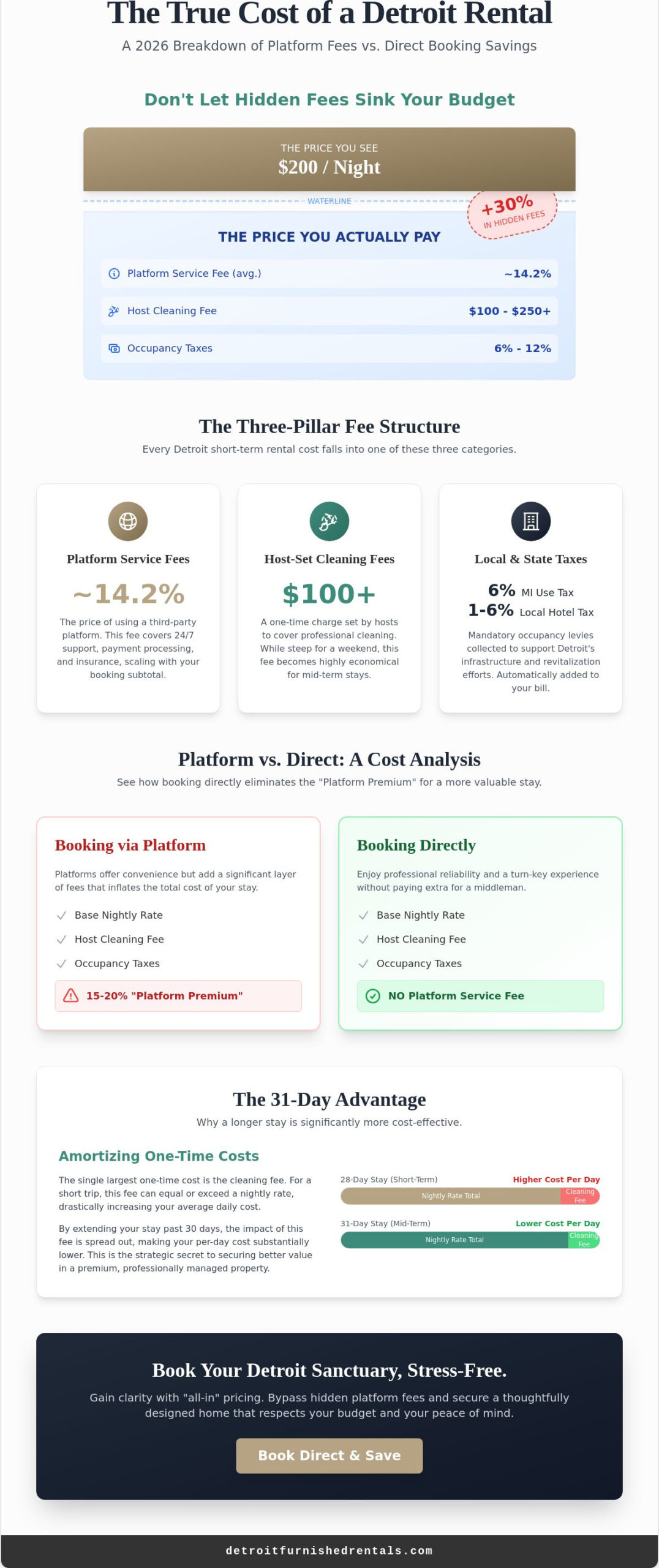
The nightly rate you see while scrolling through sun-drenched lofts in historic Corktown is often the least accurate predictor of your final bill. It’s a common frustration for traveling professionals who find a beautiful space only to watch the price climb by 30% or more during the final booking steps. When you factor in airbnb detroit fees, including the standard 14.2% platform service charge and localized cleaning costs, that affordable weekend stay can quickly lose its luster. You likely value transparency and want to avoid the sting of hidden service charges that only appear once you’ve already committed to a property.
This guide provides a clear breakdown of every charge you’ll encounter in 2026, from state-level occupancy taxes to the specific city assessments that affect Detroit stays. You’ll learn how to identify better value for stays over 30 days and why a professional mid-term rental offers a more turn-key, stress-free alternative to traditional platforms. We’ll explore exactly how these costs aggregate so you can secure a sanctuary that respects both your aesthetic taste and your budget.
Key Takeaways
- Understand the three-pillar structure of service charges and taxes to ensure your Detroit stay remains a seamless and stress-free experience.
- Identify the specific Michigan Use Tax and local occupancy levies that impact your final budget when calculating airbnb detroit fees.
- Discover how bypassing third-party platforms for direct mid-term rentals can eliminate the 15-20% “Platform Premium” while maintaining professional reliability.
- Learn the strategic booking secret that makes a 31-day stay significantly more cost-effective than a shorter 28-day visit.
- Gain clarity on the 2026 trend of “all-in” pricing to better evaluate the true value and comfort of thoughtfully designed local sanctuaries.
What Are the Standard Airbnb Fees for a Detroit Stay?
Stepping into a thoughtfully designed home in the heart of the Motor City should feel like a seamless transition to your new sanctuary. Understanding the breakdown of airbnb detroit fees is essential for maintaining that sense of peace and professional reliability. The total cost of your stay relies on a three-pillar fee structure: host fees, guest service fees, and local occupancy taxes. Most Detroit bookings follow a split-fee model, which is a core component of Airbnb’s business model where the platform divides the operational costs between the property owner and the traveler to ensure a balanced marketplace.
In vibrant urban markets like Detroit, cleaning fees often reflect the high standards required for historic lofts and centrally located apartments. These costs ensure your space is turn-key and pristine upon arrival, meeting the expectations of modern professionals. It is vital to remember that these charges become non-negotiable once you initiate the booking through the platform. This structure provides a secure framework for both parties, ensuring the reliability of your stay from the moment you receive your digital keys. You won’t find room for haggling here; the price reflects the curated quality of the Detroit experience.
Local taxes also play a significant role in your final total. In Detroit, guests are typically responsible for the 6% Michigan use tax alongside potential county-specific hotel taxes that can range from 1% to 6% depending on the property’s exact location. These taxes are collected automatically to support the city’s ongoing revitalization and infrastructure. By accounting for these three pillars early in your planning, you ensure a stress-free arrival without any financial surprises.
The Guest Service Fee: The Price of the Platform
The guest service fee typically averages 14% of the booking subtotal. This fee covers the essential infrastructure that makes your arrival stress-free; it funds 24/7 global support, secure payment processing, and constant platform maintenance. As your stay lengthens or the property value increases, this fee scales proportionally with the total cost. It is the investment you make for a professional, managed experience that prioritizes your safety and comfort in the city.
Why Fees Vary by Property Type
Property selection significantly influences your final receipt. A single room in a historic home often carries lower fixed cleaning costs compared to a sprawling penthouse in the city center. Luxury properties require specialized maintenance and higher insurance premiums, which are reflected in the final airbnb detroit fees. Subtotal is the nightly rate multiplied by the stay duration. Choosing a curated apartment in a neighborhood like Corktown or Midtown ensures your investment matches the premium quality of your Detroit experience.
A Deep Dive into Cleaning Fees and Guest Service Charges
Cleaning fees represent the most misunderstood portion of airbnb detroit fees. These charges aren’t generated by a platform algorithm; instead, individual hosts set these rates based on their specific turnover costs. By 2026, the industry has largely pivoted toward “all-in” pricing displays to solve the psychological friction of itemized lists. Seeing a low nightly rate only to have the total double at checkout creates a sense of distrust. Modern travelers now expect transparency, preferring a clear total that accounts for the labor required to maintain a high-end sanctuary. When the cleaning fee exceeds the cost of a single night’s stay, it often signals that the host is prioritizing mid-term guests over one-night travelers.
The Reality of Cleaning Costs for Corporate Housing
Professional housing requires a level of sanitation that goes far beyond a quick surface wipe. For a turn-key apartment in a vibrant neighborhood like Corktown, professional-grade cleaning involves deep-cleaning upholstery, sanitizing high-touch surfaces, and refreshing premium linens. This rigorous process ensures every guest arrives to a pristine home away from home. While a $200 fee might feel steep for a weekend, it’s remarkably economical for mid-term stays. When you analyze the average rent in downtown detroit, you’ll find that these one-time fees are a small price for a stress-free move-in. The cost is amortized over the length of your stay, making a 30-day professional residency much more cost-effective than a series of short-term bookings where turnover costs repeat frequently.
How to Spot ‘Fee-Padding’ in Listings
Smart travelers focus on the total cost rather than the base nightly rate. Some hosts use “fee-padding” to artificially lower their search ranking while recouping profits through inflated cleaning or “extra guest” charges. It’s also vital to remember that Michigan’s 6% use tax applies to the total taxable amount. This means a padded cleaning fee actually increases your total tax liability. Use this checklist to evaluate if airbnb detroit fees are reasonable for your specific unit:
- Unit Size: A studio shouldn’t carry the same cleaning cost as a three-bedroom historic loft.
- Turnover Quality: Does the host promise professional laundry services and turn-key amenities?
- Extra Guest Fees: Check if the host charges per person, which often creates more “sticker shock” than the cleaning fee itself.
If you’re looking for a seamless experience without the hidden surprises of traditional platforms, consider a curated stay with a local expert who prioritizes transparency and professional reliability.
Navigating Local Taxes and Hidden Occupancy Levies
Detroit’s tax landscape is a complex tapestry of state and local requirements that often catch the uninitiated traveler off guard. When you review your checkout screen, the total airbnb detroit fees include more than just the host’s nightly rate. Michigan imposes a 6% Use Tax on all short-term accommodations, a standard state-level levy designed to capture revenue from transient housing. In the city of Detroit, this is compounded by local hotel occupancy taxes which can add another 6% to your bill, bringing the total tax burden to approximately 12% for stays under a month.
These taxes aren’t just applied to the base price of the room. They’re calculated on the sum of the nightly rate and the cleaning fee, creating a compounding effect that stretches your budget. Airbnb’s financial structure relies heavily on the service fee for guests, which is typically calculated before these local taxes are applied. This means your final “taxes and fees” line item often feels disproportionately high compared to the advertised price. Understanding this math is essential for professionals who need to justify travel expenses or stay within a strict corporate per diem. For a broader perspective on what your dollars actually cover in this city, a detailed look at the cost of living in Detroit can help you build a more accurate monthly budget before you arrive.
The 30-Day Tax Exemption: A Professional’s Best Friend
Michigan law offers a significant financial reprieve for those planning an extended visit to the Motor City. If your stay exceeds 30 consecutive days, the state often reclassifies your occupancy from “transient” to “residential.” This shift effectively waives the 6% Use Tax and most local occupancy levies. For a professional on a six-week assignment, this tax exemption can result in savings of 12% or more on the total stay cost. It’s a turn-key strategy for reducing airbnb detroit fees without sacrificing the quality of your housing. You should always verify that the booking platform automatically removes these taxes once you cross the 30-day threshold, as manual adjustments are sometimes required to ensure your sanctuary remains cost-effective.
Understanding the Total Tax Load
In 2026, the combined tax rate for short-term rentals in Detroit remains one of the more significant factors in your travel budget. These costs are non-negotiable for short stays, but they’re manageable when you understand the underlying structure. Many luxury apartments in detroit cater specifically to mid-term guests to help them bypass these transient levies entirely. By choosing a stay of 31 days instead of 28, the math often works in your favor. You might find that the extra three days of housing are essentially “free” because of the tax savings you’ve unlocked. This level of professional oversight ensures your move-in ready experience is as financially seamless as it is aesthetically pleasing.
Airbnb vs. Direct Mid-Term Rentals: A Cost-Benefit Analysis
When you reach the final checkout screen on a global booking site, the initial excitement of finding a beautiful home often fades into frustration. The airbnb detroit fees you encounter typically include a platform service fee that adds a 15% to 20% premium to your total stay cost. This “platform tax” doesn’t go toward better linens or a faster Wi-Fi connection; it simply funds the middleman’s marketing budget. Choosing a direct-to-manager booking path eliminates these unnecessary surcharges, allowing your budget to go toward a higher standard of living in the city’s most vibrant neighborhoods.
Professional property managers provide a level of curated quality control that individual hobbyist hosts simply can’t match. Every unit undergoes a rigorous multi-point inspection before you arrive, ensuring that your turn-key sanctuary is exactly as described. Safety is never left to chance. Professional firms vet their properties and guests with the same diligence as a boutique hotel, providing a secure environment for professionals who need a reliable home base. This professional reliability creates a sense of belonging that a faceless platform cannot replicate.
The Transparency of Direct Booking
Working with local experts like Detroit Furnished Rentals replaces algorithmic uncertainty with human hospitality. You receive an “all-in” quote from the start, which means no hidden cleaning surcharges or surprise service fees appearing at the last minute. It’s a stress-free process that prioritizes your peace of mind over a platform’s profit margins. For those seeking a specific aesthetic, our lofts in detroit offer a perfect example of curated inventory where historical architecture meets modern, functional design. You get the character of the city without the hidden costs.
Avoiding the Middleman for Corporate Stays
A mid-term rental is a move-in ready stay of 30 days to 6 months. This specific duration is the sweet spot for HR departments and travel nurses who are increasingly bypassing third-party sites to work directly with housing providers. These professionals value the flexibility of direct partnerships, where lease extensions are handled with a simple conversation rather than a complex re-booking process. By removing the middleman, companies save thousands on airbnb detroit fees while securing better housing for their teams.
- Direct communication with a local expert who knows the city’s pulse.
- Flexible lease terms that adapt to changing project timelines.
- Significant cost savings by eliminating the 15% to 20% platform premium.
- Vetted, high-quality units that meet professional safety standards.
You don’t have to navigate a faceless interface when you can work with a partner who knows the best coffee shops in Corktown and the most reliable commute to the Medical Center. This local expertise ensures your stay is not just a transaction, but a seamless transition into Detroit life.
Strategic Ways to Reduce Fees for Your Next Stay
Understanding the mechanics of airbnb detroit fees allows you to keep more of your budget for exploring the city’s culinary scene or attending a show at the Fox Theatre. One of the most effective tactics involves the 31-day rule. While it sounds counterintuitive, booking a stay for 31 days is frequently cheaper than booking for 28 days. This happens because many hosts set aggressive monthly discounts that only kick in at the 30 or 31-day mark. Additionally, stays exceeding 30 days often qualify for exemptions from certain local occupancy taxes, which can save you an additional 6% on your total bill depending on the specific tax regulations in place during 2026. Professionals planning a longer relocation will find it worthwhile to review a comprehensive breakdown of the cost of living in Detroit to ensure their full monthly budget accounts for every expense beyond just housing.
When you’re browsing, don’t hesitate to message a host directly. If you’re planning a stay of three weeks or more, ask if they’re willing to adjust the cleaning fee or offer a custom rate. Professional hosts who value high-quality, long-term guests are often happy to waive discretionary fees to ensure their property is occupied by a reliable professional. For a deeper look at your options, explore our furnished apartments detroit guide to see how industrial-chic living can be both stylish and cost-effective.
The Professional Advantage: Curated Local Housing
The most direct way to bypass airbnb detroit fees is to step away from the national platforms entirely. Third-party sites typically add a service fee ranging from 14% to 16% to every reservation. By choosing a local partner like Detroit Furnished Rentals, you eliminate these middleman costs while gaining the expertise of a team that actually lives and works in the city. We provide turn-key, stress-free environments that feel like a true sanctuary from the moment you arrive.
Our properties are thoughtfully designed to serve as a home away from home, situated in historic neighborhoods like Corktown and Midtown. We prioritize your peace of mind by offering curated spaces where the Wi-Fi is fast, the furniture is premium, and the management is just a phone call away. Choosing a local expert means you’re not just a confirmation number; you’re a guest in our community. We encourage you to browse our current availability to experience the seamless transition into Detroit living that only a local boutique manager can provide.
- Direct Booking: Saves an average of 15% by removing platform service fees.
- Monthly Tiers: Aim for 31 nights to trigger deep discounts and tax breaks.
- Local Expertise: Gain neighborhood-specific safety and commute advice that national apps can’t offer.
Secure Your Seamless Detroit Experience Today
Navigating the complexity of airbnb detroit fees requires a keen eye for detail; especially since platform service charges typically reach 14.2% of the booking subtotal. You’ve seen how Detroit’s 6% state use tax and local occupancy levies can quickly transform an initial quote into a much larger expense. By choosing a direct mid-term rental, you effectively eliminate these middleman markups while securing a higher standard of service. Since 2015, Detroit Furnished Rentals has managed a curated selection of lofts and apartments that prioritize professional reliability and local warmth. We provide transparent, all-in pricing for every stay, ensuring your move-in ready home is a true sanctuary without the hidden costs of national platforms. Our team understands the rhythm of the city and the specific needs of modern professionals seeking a turn-key lifestyle. Skip the platform fees and book your stress-free Detroit stay directly with us today. We can’t wait to help you settle into your new home away from home.
Frequently Asked Questions
Why are Airbnb fees so high in Detroit compared to other cities?
Detroit’s fees reflect the 6% Michigan Use Tax and local excise taxes that reach 5% in specific counties. In 2024, state legislation empowered municipalities to set higher compliance standards for short-term rentals. These costs ensure your stay meets rigorous safety codes in historic neighborhoods like Brush Park. Our curated properties prioritize these standards to provide a sanctuary that feels both authentic and secure for every professional guest.
Is the cleaning fee on Airbnb a one-time charge or per night?
The cleaning fee is a one-time flat charge applied to your reservation regardless of your stay’s duration. This fee covers the professional turnover of the property to ensure your curated space is move-in ready. Whether you book a three-night visit or a thirty-day residency, the cost remains static. It supports our commitment to high-end hospitality and ensures your home away from home is pristine upon your arrival.
Do I have to pay occupancy tax if I stay for more than 30 days?
Guests staying for 30 consecutive days or more are exempt from Michigan’s 6% Use Tax and local hotel assessments. Under Michigan Compiled Laws Section 205.93a, stays exceeding one month transition from short-term lodging to a non-taxable residential rental. This exemption makes long-term stays in our centrally located sanctuaries more cost-effective. It’s a valuable benefit for professionals seeking a seamless, turn-key experience while relocating to the city.
Can I ask an Airbnb host to lower the service fee?
Hosts cannot adjust or remove the Airbnb service fee because it’s a platform-level charge collected directly by the site. This fee ranges from 14% to 16% of the booking subtotal to cover platform maintenance. To avoid these extra costs and find the best airbnb detroit fees, guests book through professional management companies. Booking directly with a local expert ensures a more personal, stress-free experience without the 14% corporate markup.
What is the difference between a service fee and a management fee?
A service fee is paid to the booking platform, while a management fee covers the local operations and maintenance of the property. In Detroit, professional management fees range from 20% to 30% of the host’s revenue. You’ll see the service fee as a separate line item at checkout. Conversely, the management fee is integrated into the nightly rate of your thoughtfully designed, move-in ready home to keep the billing process simple.
Are taxes included in the initial nightly price I see in search results?
Taxes are not included in the initial nightly price you see while browsing Detroit search results. You’ll see the full breakdown, including the 6% state tax and local county assessments, only after you select your dates. This transparency helps you understand the total investment for your stay in a vibrant neighborhood like Corktown. It’s part of our commitment to professional reliability, ensuring there are no surprises when you’re ready to book.
How can I find out if a property allows direct booking to save on fees?
You can find direct booking options by searching for the property name or the management company, such as Detroit Furnished Rentals, online. Professional hosts maintain their own websites to offer a seamless, stress-free booking process without the 14% platform markup. This approach allows you to enjoy the same curated, historic spaces while keeping your airbnb detroit fees at zero. It’s the most efficient way to secure a local sanctuary.
What happens to the fees if I need to cancel my Detroit stay?
Refund policies for fees depend on the specific cancellation policy, like “Firm” or “Strict,” selected by the property host. Airbnb refunds its service fee if you cancel within 48 hours of booking and at least 14 days before your arrival. Cleaning fees are always refunded if you cancel before check-in occurs. We aim to make every transition as smooth as possible, providing clear information so your travel plans remain flexible and professional.