What if the ‘dollar house’ headlines from 2013 are the biggest hurdle to your successful relocation in 2026? You’ve likely noticed the disconnect between viral news stories and the actual cost of living in detroit within vibrant hubs like Corktown or the Cass Corridor. It’s exhausting to reconcile the promise of affordability with the reality of premium rents and Michigan’s car insurance rates, which surged to an average of $2,100 per year in recent 2024 reports. You want a home that feels like a sanctuary, not a math problem you can’t solve.
We understand that your peace of mind depends on clarity. This guide offers a curated breakdown of local expenses, moving past the myths to deliver the facts you need for a seamless transition. We’ll explore the price delta between historic districts, provide a realistic monthly budget template for modern professionals, and show you how a turn-key housing solution can ensure your move is entirely stress-free. By the end of this article, you’ll have the confidence to choose a move-in ready lifestyle that celebrates Detroit’s rich architectural history while respecting your bottom line.
Key Takeaways
- Compare Detroit’s 2026 economic landscape against peer cities like Chicago and Minneapolis to understand your relative purchasing power.
- Master your relocation budget by evaluating the cost of living in detroit, specifically focusing on the premium rental market for high-end lofts.
- Identify the “hidden” expenses of the Motor City, from navigating Michigan’s unique insurance rates to budgeting for a vibrant, world-class culinary scene.
- Learn why curated, turn-key living provides a more efficient total cost of ownership compared to the logistical hurdles of buying and moving furniture.
- Gain insider strategies for securing competitive mid-term lease rates and leveraging local knowledge for a truly seamless, stress-free transition.
Is Detroit Affordable? Comparing the 2026 Cost of Living to the National Average
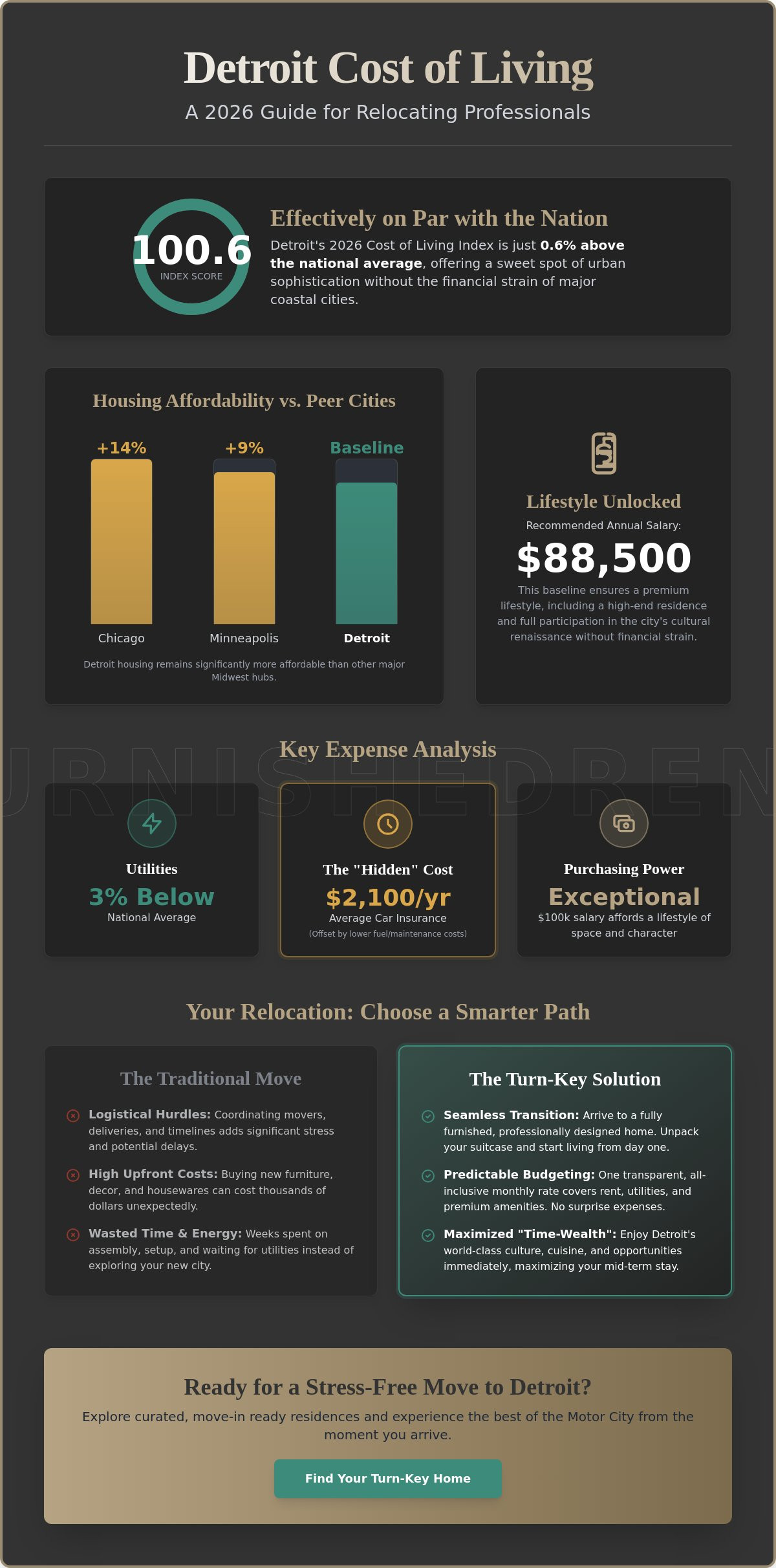
Detroit is no longer the budget-basement secret of the Midwest, but it remains a remarkably accessible hub for high-level talent. According to the Detroit Regional Chamber 2026 Cost of Living Index, the city currently sits at approximately 100.6. This means the cost of living in detroit is just 0.6% above the national average, a negligible delta for those relocating from hyper-expensive coastal markets. It is a sweet spot for those seeking urban sophistication without the crushing financial weight of New York or San Francisco.
While the composite index suggests a near-perfect parity with the rest of the country, this figure can be misleading for the modern executive. The index includes lower-cost outskirts that balance out the “Revitalization Premium” found in the city’s most vibrant districts. For a professional seeking a curated, turn-key lifestyle in Midtown or Corktown, the experience is less about finding the lowest price and more about maximizing the value of every dollar spent.
The Macro View: Detroit vs. The Rest of the US
When we look at purchasing power, the contrast is stark. In 2026, a $100,000 salary in Seattle often forces professionals into cramped studios or grueling hour-long commutes. In Detroit, that same income unlocks a lifestyle defined by space and architectural character. You can secure a move-in ready, thoughtfully designed residence in a historic building while still having the discretionary income to enjoy the city’s world-class culinary scene.
- Housing: Detroit remains 14% more affordable than Chicago and 9% more affordable than Minneapolis.
- Utilities: Costs have stabilized in 2026, sitting roughly 3% below the national average due to regional grid modernizations.
- Transportation: While car insurance remains a factor, the lower density compared to Atlanta or DC reduces wear and tear and fuel consumption.
Why Professionals are Choosing Detroit in 2026
The shift toward “Boutique Urbanism” has transformed the local market. Professionals aren’t just looking for a place to sleep; they’re looking for a home away from home that offers a seamless transition into the city. This demand has led to a rise in premium, centrally located rentals that prioritize domestic ease and aesthetic appeal. Understanding Detroit’s economic landscape is essential for any newcomer, as the city has matured into a stable, high-growth environment.
The 2026 Detroit economy serves as a primary hub for global healthcare innovation and high-growth technology firms.
Beyond the spreadsheets, Detroit offers a unique form of “Time-Wealth.” Lower density and a decentralized layout mean your commute to the Medical Center or the tech corridor is often a stress-free fifteen-minute drive. To live comfortably as a single professional in 2026, a salary threshold of $88,500 is the recommended baseline. This figure ensures you can afford a premium lifestyle, maintain a high-end residence, and fully participate in the city’s cultural renaissance without financial strain.
Housing and Utilities: Navigating the Professional Rental Market
Securing a residence in Detroit in 2026 requires a nuanced understanding of a market that has transitioned from recovery to a sophisticated urban center. For the relocating professional, the choice isn’t just about square footage; it’s about finding a curated environment that supports a demanding career. Managed buildings have become the gold standard, offering 24/7 security, package concierge services, and modern fitness centers. While these amenities increase the monthly baseline, they provide a level of professional reliability that many find indispensable. The latest economic data for Detroit indicates that while local inflation has stabilized, the demand for high-end rentals continues to drive the market toward premium, service-oriented housing.
Neighborhood Price Breakdown: Downtown, Midtown, and New Center
Location dictates the rhythm of your daily life and your monthly budget. In Downtown, you’ll find a mix of historic lofts with soaring ceilings and brand-new glass towers. Historic renovations often carry a premium due to their unique architectural character, while new builds offer the efficiency of modern insulation. Midtown remains a favorite for its exceptional walkability. Living here often offsets transportation costs, as the QLine and dense commercial corridors make car-free days entirely possible. Meanwhile, New Center has emerged as a strategic sanctuary for healthcare professionals. Its proximity to the Detroit Medical Center and Henry Ford Health systems makes it a practical, high-value alternative to the bustle of the central business district. For a granular look at current rates, consult our Average Rent in Downtown Detroit: 2026 Market Report for Professionals.
The Utility Equation: Heating, Cooling, and Connectivity
The cost of living in detroit is heavily influenced by the Great Lakes climate. Michigan winters are legendary, and heating a spacious loft with original industrial windows requires a different strategy than cooling a compact, modern studio. You should expect higher energy bills from December through March. Most managed buildings include water, sewer, and trash removal in the monthly rent, but electricity and gas remain variable costs. Connectivity is another pillar of the professional budget. Reliable 1Gbps fiber internet is widely available and should be treated as a non-negotiable utility for remote work or late-night research. If you prefer a seamless transition, choosing a turn-key furnished apartment can eliminate the stress of setting up individual accounts, providing an all-inclusive sanctuary from day one.
Transportation and Lifestyle: The “Hidden” Costs of the Motor City
Detroit’s identity is famously tied to the automobile, yet the financial reality of moving through the city in 2026 is multifaceted. While the cost of living in detroit offers significant advantages over other major metros, transportation remains a category where local knowledge saves you money. For the modern professional, the choice between car ownership and a car-free lifestyle depends on your specific sanctuary’s location. The Q-Line provides a seamless, stress-free link between New Center and the downtown core, while ride-sharing services offer a reliable alternative to the traditional commute.
The Car Insurance Hurdle
Michigan has long been known for the nation’s highest car insurance rates. Although the landmark 2020 reforms introduced more choices for Personal Injury Protection (PIP), urban premiums in 2026 still reflect the density of city living. You can expect to budget approximately $2,400 to $2,800 annually for comprehensive coverage. Mitigating these costs often involves selecting higher deductibles or leveraging the security features of a managed residence. Forbes’ analysis of Detroit highlights how the city’s evolving business climate impacts these everyday expenses for residents.
Parking is another essential line item for your budget. If your property doesn’t include a dedicated spot, monthly rates in Downtown or Midtown garages typically range from $175 to $225. Gas prices in the city center often sit 8 to 12 cents higher than the Midwest regional average. This makes the walkability of neighborhoods like Corktown or the Medical Center a valuable financial asset.
Entertainment and Everyday Essentials
Living in Detroit means immersion in a world-class culinary and cultural scene. The cost of a night out varies by neighborhood, but you’ll find the quality rivals any global capital. A curated evening in Corktown, featuring craft cocktails and farm-to-table dining, usually averages $70 per person. Dinner in The Belt, known for its vibrant alleyway art and high-end atmosphere, may command a 15% premium over other local districts.
Grocery shopping also requires a strategic approach to balance convenience and cost. Many professionals prefer the Whole Foods in Midtown for its high-quality selections, but savvy locals supplement this with trips to the historic Eastern Market. Shopping at local markets can reduce your produce bill by roughly 20% compared to boutique retailers. Other lifestyle costs to consider include:
- Gym memberships: Luxury clubs and boutique Pilates studios range from $130 to $190 per month.
- Healthcare: Detroit’s status as a premier medical hub ensures exceptional care, though services are priced at a 4% premium relative to national averages.
- Dry Cleaning: Professional services for a turn-key wardrobe typically cost $25 to $40 per week.
Choosing a move-in ready home away from home through Detroit Furnished Rentals allows you to bypass many initial setup costs. By selecting a thoughtfully designed space in a centrally located neighborhood, you minimize your daily commute and maximize your ability to enjoy the city’s rich cultural fabric without the stress of hidden fees. This approach ensures your transition is both aspirational and practical, letting you focus on your career while we handle the domestic ease.
The Financial Logic of Furnished Stays for Mid-Term Stays
Analyzing the cost of living in detroit requires looking beyond monthly rent to the total cost of occupancy. For a professional on a 90-day contract, the financial logic of a furnished stay is undeniable. You avoid the heavy lifting of purchasing, assembling, and eventually liquidating furniture. Instead, you step into a curated environment where every detail, from the ergonomic workspace to the high-thread-count linens, is already in place. These turn-key lofts eliminate the setup cost of relocation, ensuring your first day in the city is spent exploring the historic neighborhoods rather than waiting for a delivery truck.
Travel nurses and corporate executives often prioritize the “One Bill” model for its administrative simplicity. This model consolidates several expenses that would otherwise require separate management and multiple security deposits:
- High-speed fiber internet and mesh Wi-Fi systems.
- Electric, water, and gas services without the need for credit-check deposits.
- Premium kitchenware, small appliances, and designer bedroom linens.
- Smart home features and integrated security systems.
When you factor in these invisible savings, the value proposition for a mid-term stay sharpens. To see how these savings fit into your overall relocation strategy, review our guide on Planning Your Budget for 3 Months in Detroit: A 2026 Professional’s Guide.
Furnished vs. Unfurnished: A 90-Day Comparison
The true price of an unfurnished apartment includes hidden layers of expense that quickly erode a relocation budget. Local moving services in the Metro Detroit area typically range from $150 to $200 per hour as of 2024 pricing, and furniture rental for a one-bedroom unit can easily exceed $600 monthly. When you add the time spent coordinating these services, the stress-free nature of a managed stay becomes a tangible asset. For many, luxury apartments in Detroit provide a superior return on investment by combining upscale amenities with the flexibility needed for short assignments. Time saved is money earned, especially when your focus needs to be on a new project or patient care.
Corporate Housing Benefits
Professional management offers a level of reliability that individual Airbnb hosts often cannot match. For those receiving a relocation stipend, the tax implications are simplified through detailed invoicing that aligns with IRS Publication 463 guidelines for business travel. Choosing a professionally managed property ensures your temporary home functions as a true sanctuary, not a project. Those seeking dedicated corporate housing in Detroit will find that purpose-built solutions offer the consistency and administrative simplicity that individual listings simply cannot replicate. This consistency helps stabilize the overall cost of living in detroit during your transition, providing a home away from home that is both sophisticated and secure.
Maximizing Your Detroit Budget: Tips for a Seamless Transition
Managing the cost of living in detroit requires a blend of professional planning and local insight. While the city remains more affordable than coastal hubs, the 2026 market rewards those who prioritize value over mere price tags. A thriving professional life here isn’t just about the bottom line. It’s about how you allocate resources to ensure your transition is stress-free and productive from day one.
Finding hidden gem dining and services is a hallmark of the Detroit experience. Instead of sticking to the high-traffic corridors, explore the neighborhood staples in Corktown or the North End. You’ll find that a locally roasted coffee and a curated breakfast often cost 15% less than their downtown counterparts; these spots also offer a more authentic connection to the city’s heartbeat. Embracing the “Home Away From Home” motif means looking for residences that offer more than just four walls. A thoughtfully designed, turn-key apartment allows you to skip the heavy investment in new furniture and utility setups. This can save a relocating professional upwards of $5,000 in initial moving expenses.
In 2026, a monthly professional budget of $4,200 to $5,500 covers a high-end lifestyle in the city. This figure includes a premium furnished rental, frequent dining at top-tier establishments, and all essential services. By choosing a centrally located residence, you reduce transportation costs and gain immediate access to the city’s most vibrant cultural assets. It’s a strategic investment in your peace of mind.
Strategic Booking and Lease Timing
Timing your move is critical for securing the best rates and availability. Professionals should look to book their stay at least 45 to 60 days in advance, especially when targeting high-demand areas near the Medical Center or the tech corridor. Booking directly through a local provider instead of third-party platforms like Airbnb typically eliminates service fees that can add 14% to 20% to your total stay. For a deeper dive into the specific neighborhoods and amenities available, see our Furnished Apartments in Detroit: The Ultimate 2026 Guide for Professionals.
Final Checklist for Your Move
To ensure your relocation is as seamless as possible, follow this 5-point checklist designed for the modern professional:
- Verify Connectivity: Confirm high-speed fiber internet is active and included before your arrival.
- Map Your Commute: Identify the best transit routes to the Financial District or Midtown.
- Secure Parking: Ensure your lease includes dedicated, secure parking to avoid daily city rates.
- Local Integration: Locate the nearest specialty grocer or pharmacy within a 2-mile radius of your new home.
- Choose Turn-Key: Opt for a move-in ready space to eliminate the logistics of utility transfers and furniture delivery.
Detroit Furnished Rentals streamlines this entire process, offering curated lofts that serve as true sanctuaries. We handle the granular details so you can focus on your career and the vibrant culture of the city. Our properties are more than just housing; they’re a bridge to your new life. Explore our curated selection of move-in ready Detroit lofts and experience a stress-free start to your new chapter.
Secure Your Place in Detroit’s Future
Navigating the cost of living in detroit requires more than just looking at the bottom line; it’s about valuing your time and peace of mind. By 2026, the city’s revitalization has matured, offering a cost of living that remains approximately 10% lower than the national average according to recent Council for Community and Economic Research data. You’ve seen how choosing turn-key housing eliminates the hidden friction of utility setups and furniture logistics. Our curated selection of lofts and apartments provides a seamless transition for those in the medical and corporate sectors. We specialize in travel nurse and corporate housing, offering move-in ready solutions where every detail is managed. You won’t have to worry about separate bills because all utilities are included in your stay. Let us handle the logistics so you can focus on your career and explore the soulful culture of the Motor City.
Find Your Stress-Free Sanctuary in Detroit
We’re ready to welcome you home to a city that’s as resilient and inspiring as you are.
Frequently Asked Questions
Is the cost of living in Detroit higher than the national average in 2026?
No, the cost of living in Detroit remains approximately 9% lower than the national average as of 2026. While property values in historic districts rose 6.2% over the last year, overall expenses for groceries and healthcare stay below the U.S. mean. This affordability makes the city an inviting sanctuary for professionals who want a high-end lifestyle without the extreme price tags found in other major Midwestern hubs.
How much should I budget for car insurance when moving to Detroit?
You should budget between $2,500 and $4,100 annually for car insurance when you move into the city limits. Michigan’s 2019 insurance reform helped stabilize rates, but Detroit premiums still sit 65% higher than the statewide average due to high litigation costs. To lower your monthly payment, look for a turn-key rental that offers secure, off-street parking in a gated or monitored garage to satisfy provider requirements.
Are utilities expensive in Detroit during the winter months?
Winter utility bills for a standard 900-square-foot apartment typically average $215 per month between December and March. DTE Energy reported a 5.4% increase in delivery rates in early 2025, which affects heating costs for older, drafty buildings. Many professionals choose a move-in ready stay where all utilities are bundled into one payment; it’s a seamless way to avoid the stress of fluctuating seasonal bills during the coldest months.
Is it cheaper to live in Downtown or Midtown Detroit?
Midtown is approximately 12% cheaper than Downtown for residential housing and daily services. Average monthly rents for a one-bedroom in Downtown hit $2,150 in 2026, while Midtown options stayed closer to $1,890. Both neighborhoods offer vibrant, walkable environments. Midtown provides a more historic feel near the Medical Center, while Downtown puts you in the heart of the central business district near the major corporate headquarters.
What is the average price for a furnished professional apartment in Detroit?
A furnished professional apartment in a central neighborhood typically costs between $2,800 and $4,200 per month. This price reflects the cost of living in Detroit for those who prioritize convenience and style in a turn-key environment. These curated spaces include designer furniture, high-speed internet, and utilities. It’s a practical choice for a 3-month contract, as it eliminates the $1,200 average cost of moving and setting up new household goods.
Can I live in Detroit without a car to save money?
You can live without a car if you stay within the 7.2-square-mile central core that includes Downtown, Midtown, and Corktown. The QLine streetcar is free to ride, and a monthly DDOT bus pass costs $50 as of 2026. While 82% of the city remains car-dependent, the increase in bike lanes and ride-share availability makes a car-free lifestyle possible for professionals who work and socialize in these densely packed, vibrant neighborhoods.
How much does a typical meal at a mid-range restaurant cost in Detroit?
A typical three-course meal at a mid-range restaurant in Detroit costs approximately $45 per person. This price includes a main entree and a cocktail but doesn’t account for the standard 20% gratuity. The city’s culinary scene has expanded rapidly, with 18 new high-end eateries opening in the last 12 months. You’ll find that dining out remains more affordable than in Chicago, where a similar experience costs roughly 15% more.
What are the hidden costs of moving to Detroit for a 3-month contract?
The 2.4% city income tax is the most significant hidden cost for professionals relocating to Detroit. You’ll also need to account for daily parking fees, which can reach $25 in the central business district if your building doesn’t provide a spot. Choosing a move-in ready sanctuary often mitigates other hidden fees like the $350 in non-refundable utility deposits and the high cost of short-term furniture leases for temporary stays.