Find the Best Outdoor Ice Skating Rink for Your Winter Trip
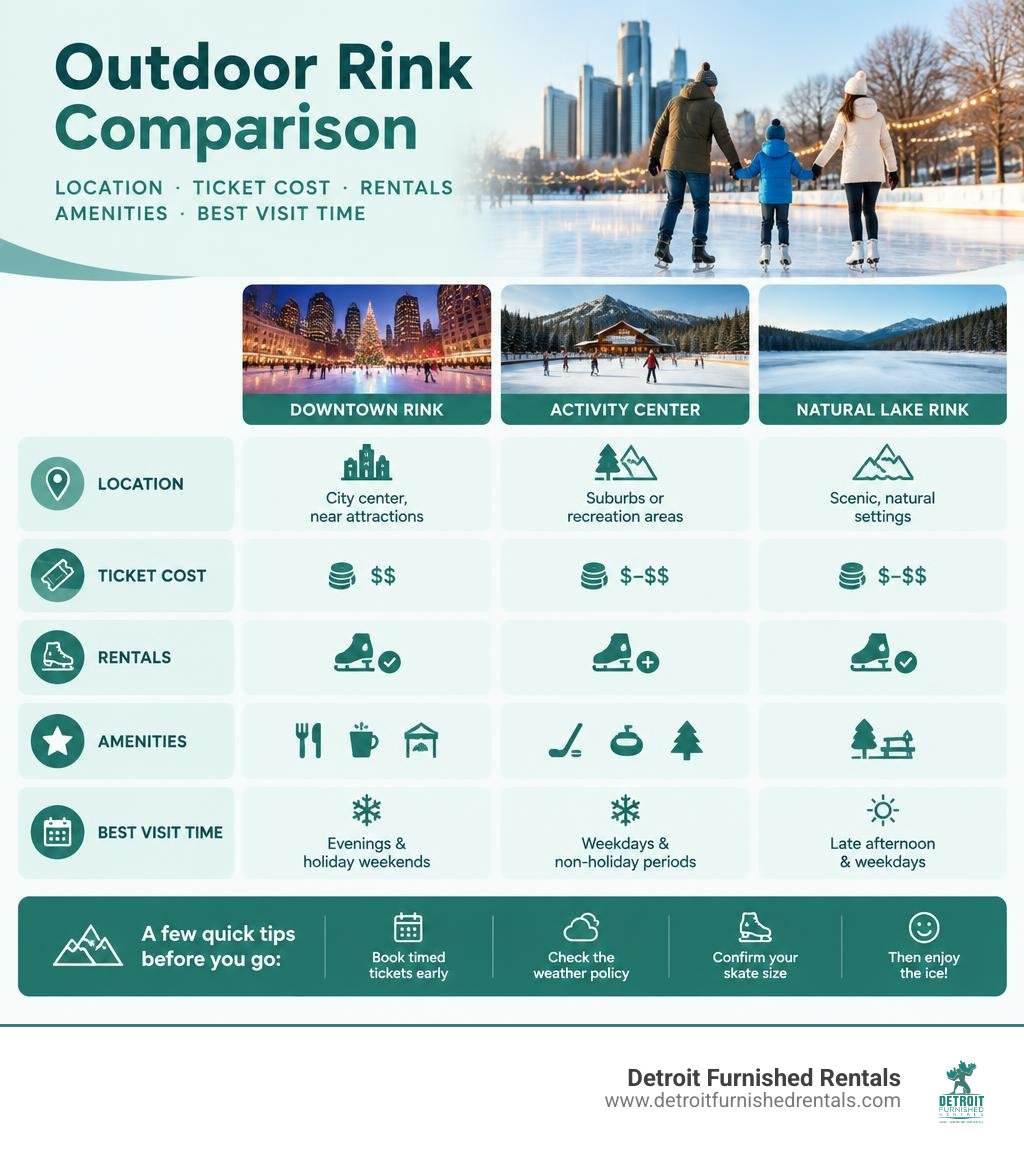
The best outdoor ice skating rink depends on the experience you want. Choose a downtown rink for lights, food, and nearby attractions; a large activity center for skating trails, curling, or hockey; or a natural lake rink for a quieter winter setting. Book timed tickets early for holiday weekends, check the weather policy, and confirm that your skate size is available before you go.
Across Detroit, the Midwest, and major winter destinations, outdoor rinks usually run from November into February or March. Prices often fall between $15 and $30, though community rinks can cost less. Some include skate rental, while others charge it separately.
This field guide compares standout rinks by location, cost, hours, rentals, amenities, and crowd levels, so you can spend less time sorting ticket pages and more time on the ice. For a broader look at winter recreation, the Ice Skating Institute maintains a directory of rinks and learn-to-skate programs across North America.
I’m Sean Swain, a hospitality operator and Detroit travel writer who helps visitors plan practical, locally grounded stays. Through Detroit Furnished Rentals and our city guide, I focus on the details that make an outdoor ice skating rink visit easier for travelers, from location and timing to what to do nearby.
Outdoor ice skating rink further reading:
Finding the Perfect Outdoor Ice Skating Rink: Top Regional Destinations
Choosing the right venue shapes your entire winter outing. Modern outdoor rinks fall into two main categories: mechanically chilled surfaces that stay frozen even when air temperatures climb into the 50s, and natural frozen lakes or ponds that rely entirely on sustained sub-freezing temperatures.
Urban plaza rinks place you in the center of bustling holiday markets, towering Christmas trees, and skyline architecture. In contrast, destination park rinks provide expansive square footage, dedicated ice trails, and multi-sport activities like curling and broomball.
Iconic Urban Outdoor Ice Skating Rink Experiences in New York
New York City sets a benchmark for metropolitan open-air skating, blending high-energy urban backdrops with classic winter traditions:
- The Rink at Bank of America Winter Village at Bryant Park: Spanning 17,000 square feet, this is Manhattan’s premier free-admission rink if you bring your own skates. Surrounding the ice is The Lodge by Prime Video, an open-air food hall and rinkside bar, alongside over 170 holiday shopping kiosks. Visitors can book general admission slots or upgrade to Express Lane passes that extend skate time to 75 minutes.
- The Rink at Brookfield Place: Situated along the Hudson River waterfront in Lower Manhattan, this boutique rink offers views of the One World Trade Center and New York Harbor. Skating programs and private lessons here are hosted by former Olympic competitors Melissa Gregory and Denis Petukhov, making it a favorite for both technical learners and date-night skaters.
- The Rink at Rockefeller Center: Operating for over 90 years beneath the world-famous Rockefeller Center Christmas tree, this venue delivers one of the most recognized holiday backdrops in North America.
Metro Detroit and Midwest Outdoor Ice Skating Rink Highlights
The Midwest embraces winter sports with community-centric rinks featuring affordable access, warming shelters, and robust recreational leagues.
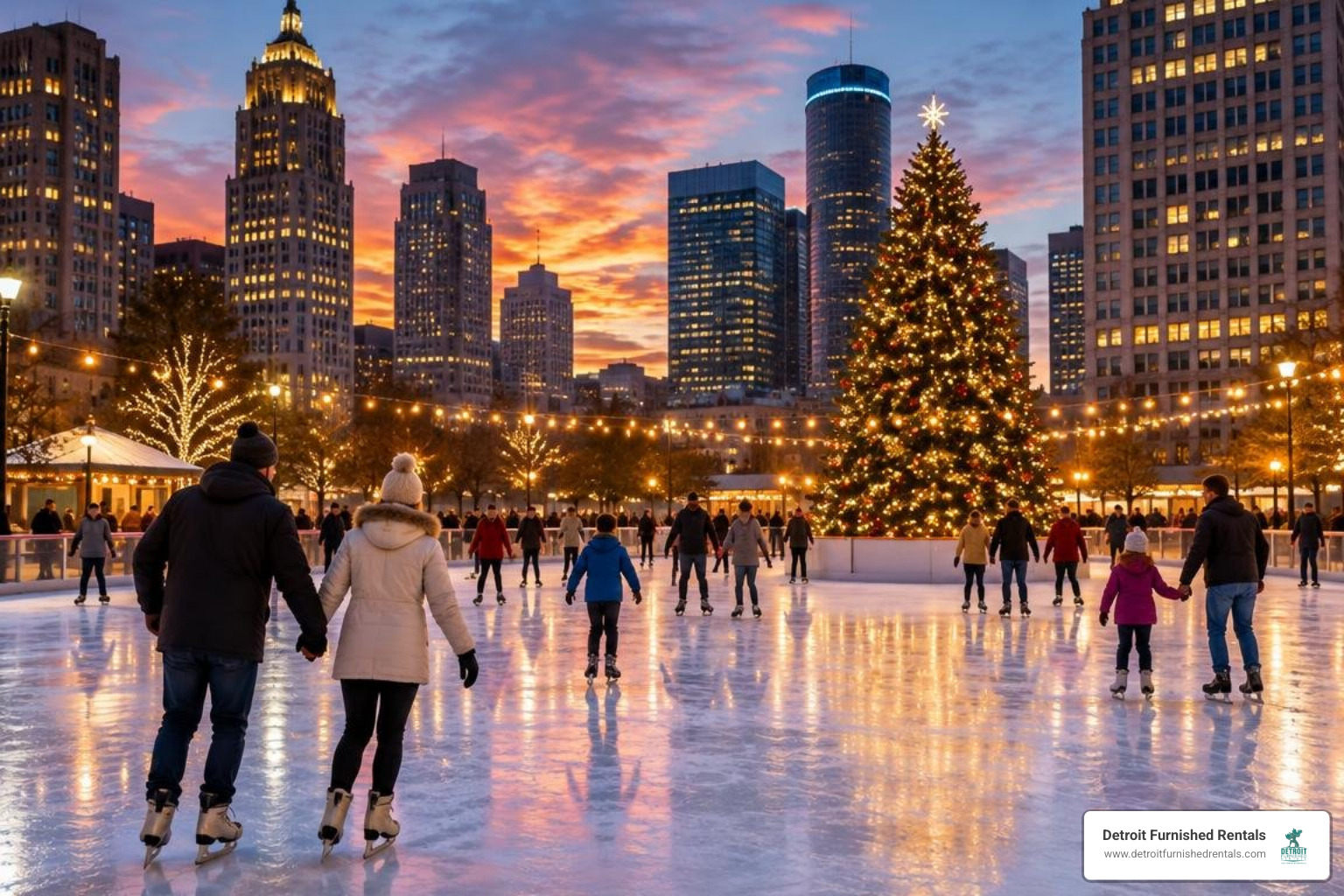
- Downtown Detroit (The Rink at Campus Martius Park): Nestled in the heart of Woodward Avenue, Detroit’s signature rink surrounds skaters with illuminated skyscrapers, the city’s official Christmas tree, and fire pits. It serves as an anchor for exploring free healthy outdoor activities across the urban core.
- MetroParks Ice Rink (Five Rivers MetroParks, Dayton, OH): Measuring 70 by 150 feet, this is the region’s largest outdoor ice rink. Sheltered under a massive open-air pavilion at RiverScape MetroPark, the facility offers public sessions, curling leagues, broomball, and family theme nights. Skaters can warm up inside the Comfort Tent or grab hot cocoa and snacks at the RiverScape Café. Through its Access to Nature program, qualifying SNAP/EBT cardholders receive reduced admission of just $1.75.
- Skate @ Canal District Kendall (Cambridge, MA): Located in the vibrant Kendall Square neighborhood, this professionally maintained rink offers public sessions from mid-December through mid-March, a heated pavilion, and beginner group lessons structured under US Figure Skating guidelines.
Southern and Mountain Hotspots: From Atlanta to Colorado
Outdoor skating is no longer limited to the snowy north. Sunbelt metropolises and Rocky Mountain resorts have developed world-class facilities:
- Atlantic Station (Skate the Station – Atlanta, GA): Running mid-November through mid-January, this popular intown rink brings an open-air winter experience to Midtown Atlanta, complete with season pass options and ambient lighting.
- Ponce City Market (Skate the Sky – Atlanta, GA): Located ten stories up on The Roof at Ponce City Market, this 3,500-square-foot rink offers panoramic skyline views, private heated igloos, and adult evening sessions.
- The Whitewater Center (Charlotte, NC): Covering 24,000 square feet on an upper river pond, this is the largest outdoor ice rink in the Southeast. It features two ice trails, free skate zones, an on-ice beverage Airstream, and lanes for Cask Curling and pond hockey.
- Evergreen Lake Ice Rinks (Evergreen, CO): A premier natural mountain lake rink providing expansive ice for public open skating and pond hockey. Operating on natural frozen lake ice, EPRD maintains multiple public rinks with stunning mountain views, weather permitting.
- The Rink at Lawrence Plaza (Bentonville, AR): A 7,000-square-foot community rink that transforms a downtown splash park into an affordable winter ice destination from November through February.
- Fenton Skate the Square (Cary, NC): An active shopping center rink hosting themed DJ nights, $5 ticket Tuesdays, and accessible skating sessions from early November to February.
Essential Amenities, Pricing, and Booking Strategies
Admission models vary widely depending on whether a venue operates as a municipal park or a private commercial attraction. Planning ahead helps prevent long queue times and unexpected equipment shortages.
| Rink Location | Standard Adult Admission | Skate Rental Fee | Typical Season Window | Session Duration | Key Amenities |
|---|---|---|---|---|---|
| Bryant Park (NYC) | Free (BYO Skates) / $18–$65 peak | Included with paid tier | Late Oct – Early Mar | 50–75 mins | The Lodge, Holiday Shops, Skate Aids |
| Brookfield Place (NYC) | $15.00 | $5.00 | Nov – March | 60 mins | Olympic coaching, Hudson River views |
| MetroParks Rink (Dayton, OH) | $7.00 ($1.75 SNAP) | $3.00 | Nov – Feb | Open session | Heated Comfort Tent, RiverScape Café |
| Whitewater Center (Charlotte, NC) | $25.00 (Single Pass) | Included | Mid-Nov – Mid-Feb | Day access | 24k sq ft, Ice trails, Airstream café |
| Evergreen Lake (Evergreen, CO) | $15.00 | $10.00 | Dec – Feb (Ice dependent) | All day | 10-Punch pass, Warming hut, Hockey rinks |
| Lawrence Plaza (Bentonville, AR) | $7.00 | Included | Late Nov – Feb | Timed session | Downtown setting, Skate aids |
| Fenton Skate the Square (Cary, NC) | $18.00 | Included | Nov – Feb | 75 mins | DJ nights, Restrooms, Fire pits |
Ticket Tiers, Discounts, and Season Passes
Frequent skaters can lower per-visit costs significantly:
- Multi-Session Punch Passes: Venues like Evergreen Lake offer 10-punch cards ($120), reducing the per-visit cost while retaining flexibility.
- Season Passes: If you plan to skate weekly, season passes (ranging from $40 at municipal rinks like MetroParks to $90–$200 at urban and resort rinks) pay for themselves within four to six visits.
- Discount Days & Community Rates: Look for midweek specials such as “Cheapskate Nights,” student discounts, and reduced rates for military personnel, first responders, and healthcare workers.
On-Site Amenities: From Skate Rentals to Heated Warming Tents
Before booking, verify that the venue provides the equipment and facilities your group requires:
- Rental Skate Sizing: Most commercial rinks stock rental skates ranging from Toddler-8 through Adult-15. Families with toddlers should verify if the rink stocks double-bladed strap-on runners.
- Skate Aids: Rinks often supply push-assist aids (plastic seals, penguins, or sled chairs) on a first-come, first-served basis. Some venues rent them for $5 to $10 per session, while others offer them free during morning hours.
- Ice Conditioning: High-traffic rinks run mechanical resurfacers (Zambonis) every 90 to 120 minutes. Skating right after a resurfacing cut provides the smoothest glide.
- Heated Pavilions & Food Concessions: Venues featuring dedicated comfort zones, fire pits, and hot food concessions ensure non-skaters and families remain comfortable during extended outings.
Safety Protocols, Rink Etiquette, and What to Wear
Maintaining safety on open-air ice requires adherence to standardized facility rules and appropriate personal preparation.
Rules of the Ice: Chaperone Policies and Gear Requirements
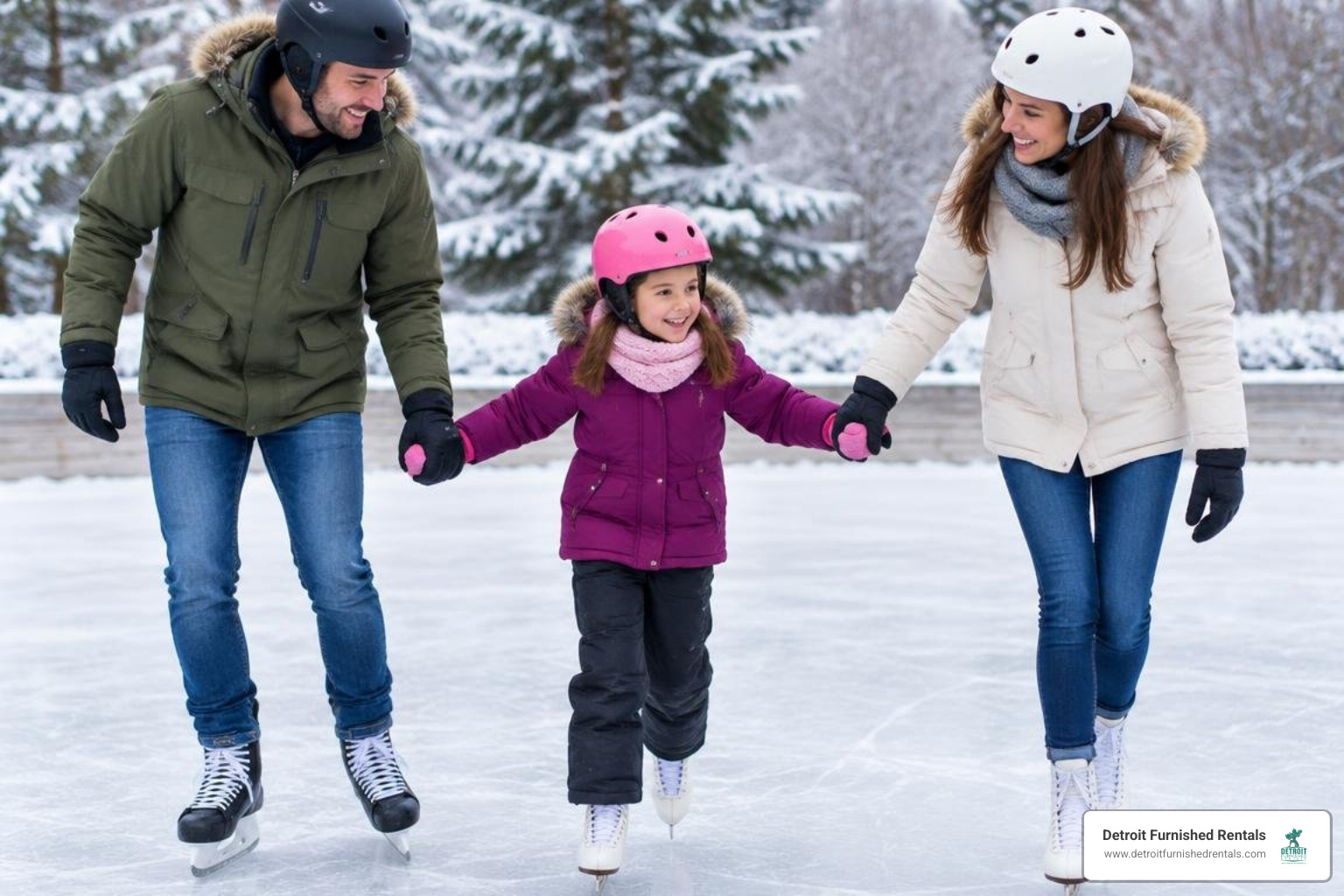
- Skater Supervision: Most facilities enforce age minimums. Skaters under 12 or 14 typically require on-site adult chaperone supervision.
- Prohibited Items on Ice: For safety, venues prohibit personal bags, purses, backpacks, cell phones, food, drinks, and strollers directly on the ice sheet. Non-skating spectators in street shoes are strictly prohibited from walking on the ice.
- Helmet Policies: While helmets are rarely mandatory for public adult open skating, certified hockey or ski helmets are strongly recommended for children, beginners, and pond hockey players.
- ADA Accessibility: Most modern outdoor rinks are fully ADA compliant, welcoming manual and motorized wheelchairs onto the ice with assistance.
Dressing for Cold Weather Skating
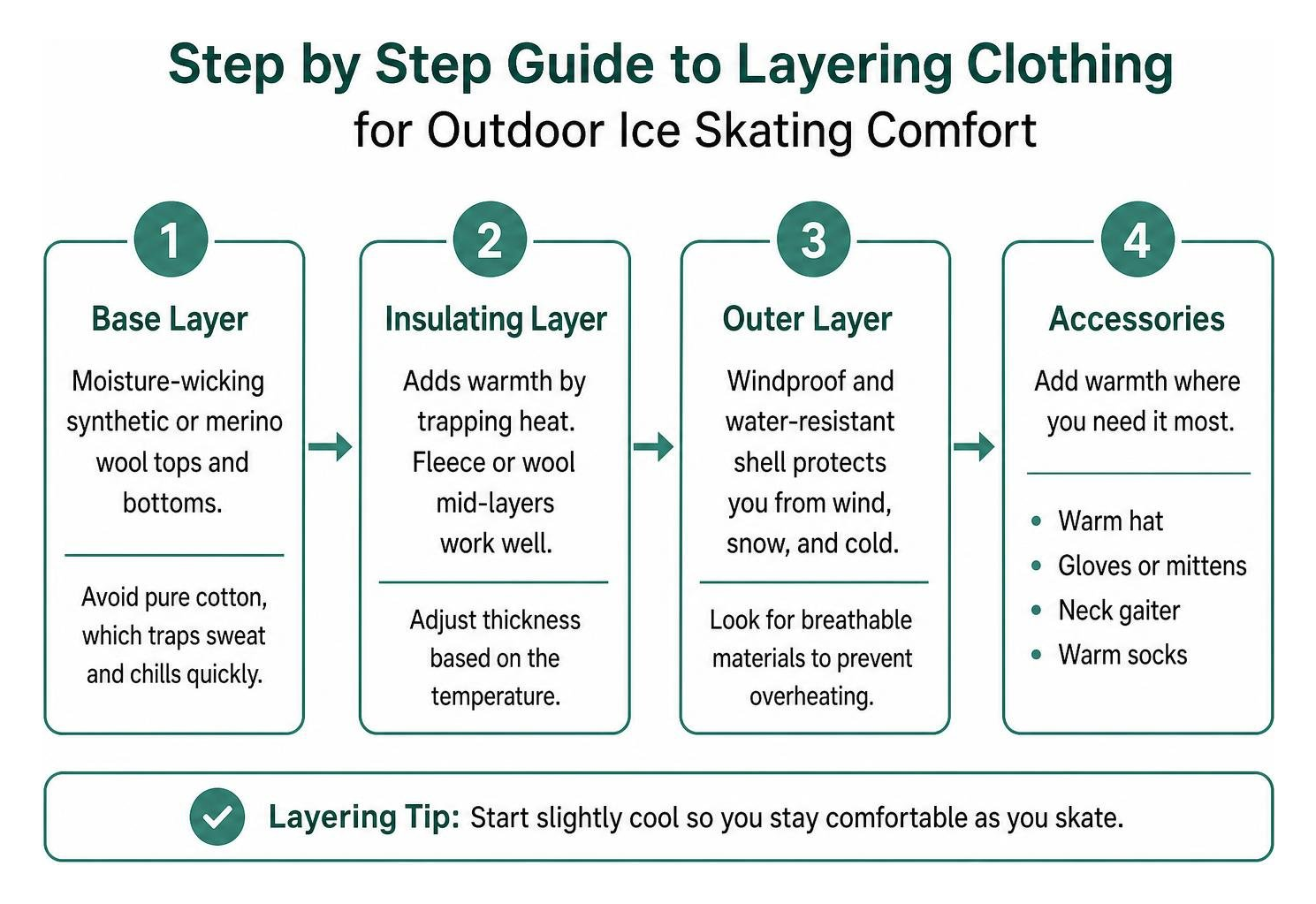
Staying warm without overheating requires a deliberate, breathable layering system:
- Base Layer: Moisture-wicking synthetic or merino wool tops and bottoms. Avoid pure cotton, which traps sweat and chills quickly.
- Mid Layer: A breathable fleece jacket or lightweight wool sweater that insulates your core while allowing free arm movement.
- Outer Layer: Wind-resistant, water-repellent softshell pants and jackets to shield against brisk winter winds and dampness from occasional falls.
- Socks: A single pair of thin, fitted wool or synthetic skate socks. Thick, bulky socks can bunch up inside the boot, causing friction, blisters, and reduced blood circulation.
- Accessories: Fitted, water-resistant gloves (mandatory at many rinks to protect fingers from ice scrapes) and a snug knit beanie.
Expert Tips to Beat the Crowds and Maximize Your Experience
Because open-air skating is heavily seasonal, crowd management directly impacts ice quality and overall enjoyment:
- Target Early Morning Slots: The first public session of the day offers freshly cut, smooth ice and minimal line waits for skate rentals.
- Skate Midweek: Tuesday through Thursday afternoons generally experience a fraction of the foot traffic seen on Saturday evenings.
- Book Holiday Windows 2–3 Weeks Out: The period between Thanksgiving weekend and New Year’s Day sees peak demand across all regional rinks. Timed reservation slots often sell out weeks in advance.
- Monitor Ice and Weather Hotlines: Mild rain or unusually warm temperatures can lead to standing surface water on outdoor ice sheets. Always confirm daily operating status before departing.
Frequently Asked Questions About Outdoor Ice Skating
What is the best time of day to avoid crowds at an outdoor rink?
The least crowded times are weekday mornings and early afternoons between 10:00 AM and 2:00 PM. Weekend early morning sessions (opening until 11:30 AM) are also significantly less congested than evening prime-time slots.
Can beginners rent skate aids or bring their own skates?
Yes. Most rinks allow you to bring personal figure or hockey skates, and several venues offer discounted entry for doing so. Skate aids (such as push penguins or sled chairs) are generally available on-site on a first-come, first-served basis for beginner balance support.
What happens if it rains or temperatures rise unexpectedly?
Mechanically refrigerated rinks operate continuously through light drizzle and warmer ambient temperatures up to 50–55°F. However, in cases of severe storms, lightning, or torrential rain, rinks will temporarily close for guest safety and offer ticket rescheduling or weather rain checks.
Conclusion
Outdoor ice skating captures the best of the winter season, blending crisp open air, festive lights, and active recreation for skaters of all experience levels. Whether you are gliding across a downtown plaza rink or enjoying expansive ice trails at a dedicated regional sports park, planning ahead ensures a smooth, memorable experience.
For travelers staying with us in Southeast Michigan, be sure to explore our ultimate guide to ice skating in Detroit for local rink schedules, rental details, and neighborhood dining recommendations. Bundle up, check the ice conditions, and enjoy your time on the rink!