What Is Ice Skating — and Why It’s One of Winter’s Best Activities
Ice skating is one of the most popular winter activities in the world — and for good reason. Here’s a quick snapshot of what you need to know:
| Topic | Quick Answer |
|---|---|
| What it is | Gliding across ice using metal-bladed skates |
| Who can do it | All ages, from toddlers (age 3+) to adults |
| Where to skate | Outdoor rinks, indoor arenas, frozen lakes/ponds |
| Typical cost | Free to $40 per session; rentals $3–$12/hour |
| Key disciplines | Figure skating, ice hockey, speed skating, recreational skating |
| Origins | Over 4,000 years ago in southern Finland |
Few winter activities bring people together quite like skating does. Whether you’re gliding across a downtown rink under twinkling lights, playing pond hockey with friends, or watching elite athletes spin and jump at the Olympic level, ice skating offers something for nearly everyone.
The sport has a surprisingly deep history. The earliest known skaters lived in southern Finland more than 4,000 years ago — and they weren’t doing it for fun. They used bone-blade skates as a practical way to travel across frozen terrain in winter. Today, the activity has evolved into everything from casual weekend outings to internationally televised competitions.
As Samuel Pepys wrote in December 1662, after watching skaters on the new canal at St. James’s Park in London — it was the first time he had ever seen skating — the spectacle clearly left an impression. That same sense of wonder still draws millions to rinks every winter season.
I’m Sean Swain, a Detroit-based hospitality entrepreneur with a portfolio of furnished rentals across Detroit and Chicago, and I’ve spent years helping guests discover the best local winter experiences — including the city’s best ice skating spots. In this guide, I’ll walk you through everything you need to plan a great skating outing, whether you’re a first-timer or a seasoned skater visiting Detroit.
Top Locations for Outdoor and Indoor Ice Skating
Finding the right place to lace up your skates can make all the difference in your winter experience. Skating venues generally fall into three distinct categories: seasonal outdoor urban rinks, year-round indoor multiplex arenas, and natural frozen ice ponds. Each venue type offers a unique atmosphere, distinct amenities, and specific operating conditions.
Outdoor urban rinks provide unmatched festive ambiance, often surrounded by city skyline lights, seasonal decorations, warming huts, and hot cocoa stands. Indoor arenas offer climate-controlled consistency with pristine, mechanically resurfaced ice sheets regardless of ambient weather. Natural ice ponds, while subject to environmental conditions and strict safety checks, offer a classic, open-air connection to nature that traditional skaters cherish.
Iconic Outdoor Urban Rinks and Winter Resorts
Urban centers across North America have perfected the art of seasonal ice rinks. Highlighting famous destinations like The Rink at Rockefeller Center – New York City Ice Skating Tickets, where skaters glide beneath iconic skyscrapers, reveals how central skating is to winter urban culture. Similarly, civic venues like Ice Skating on the Oval | City of Worcester showcase how cities utilize massive 12,000-square-foot ice sheets — larger even than Rockefeller Center — to bring communities together during the colder months.
Right here in Michigan, downtown Detroit boasts its own world-class centerpiece. At the heart of the city lies Downtown Detroit Ice Skating Rink located at Campus Martius Park. Skating surrounded by illuminated skyscrapers, holiday light displays, and towering glass architecture is an essential Michigan winter memory. To learn more about exploring this vibrant district, check out our guide on Detroit’s Heartbeat: Why Campus Martius Park is a Must-Visit.
When visiting outdoor rinks, keep in mind that weather plays a key role. Temperatures hovering near freezing or solar exposure during sunny days can create surface slush, while extreme freezes require frequent resurfacing.
Indoor Community Facilities and Multi-Plex Arenas
While outdoor rinks shine during the holiday season, indoor facilities keep the sport alive year-round. Modern indoor arenas utilize sophisticated refrigeration systems underneath concrete foundations to maintain ice temperatures around 22°F to 24°F (-5°C to -4°C). These venues feature climate-controlled viewing galleries, fully equipped pro shops, skate sharpening stations, and cozy warming pavilions.
Major athletic facilities, such as the Pegula Ice Arena – Penn State – Official Athletics Website, demonstrate how multi-plex venues serve both high-level college athletes and community drop-in skaters through dedicated public skate sessions and learn-to-skate courses.
In Metro Detroit, indoor skating thrives through iconic training hubs and community outreach centers:
- Detroit Skating Club: A premier training facility that has produced national, world, and Olympic figure skating champions. It offers year-round ice, specialized coaching, and public skating programs.
- Figure Skating Detroit: Welcome: A transformative leadership program that combines the discipline of figure skating with academic support and life skills development for young women in the Detroit area.
Indoor arenas provide reliable ice surface conditions free from wind, rain, or solar melt, making them ideal for structured practice, private lessons, and adult pick-up hockey games.
History and Physics Behind the Surface
Understanding how ice skating works requires taking a journey back in time, as well as looking at the subtle physical forces at play beneath your blades.
Ancient History and Origins of Ice Skating
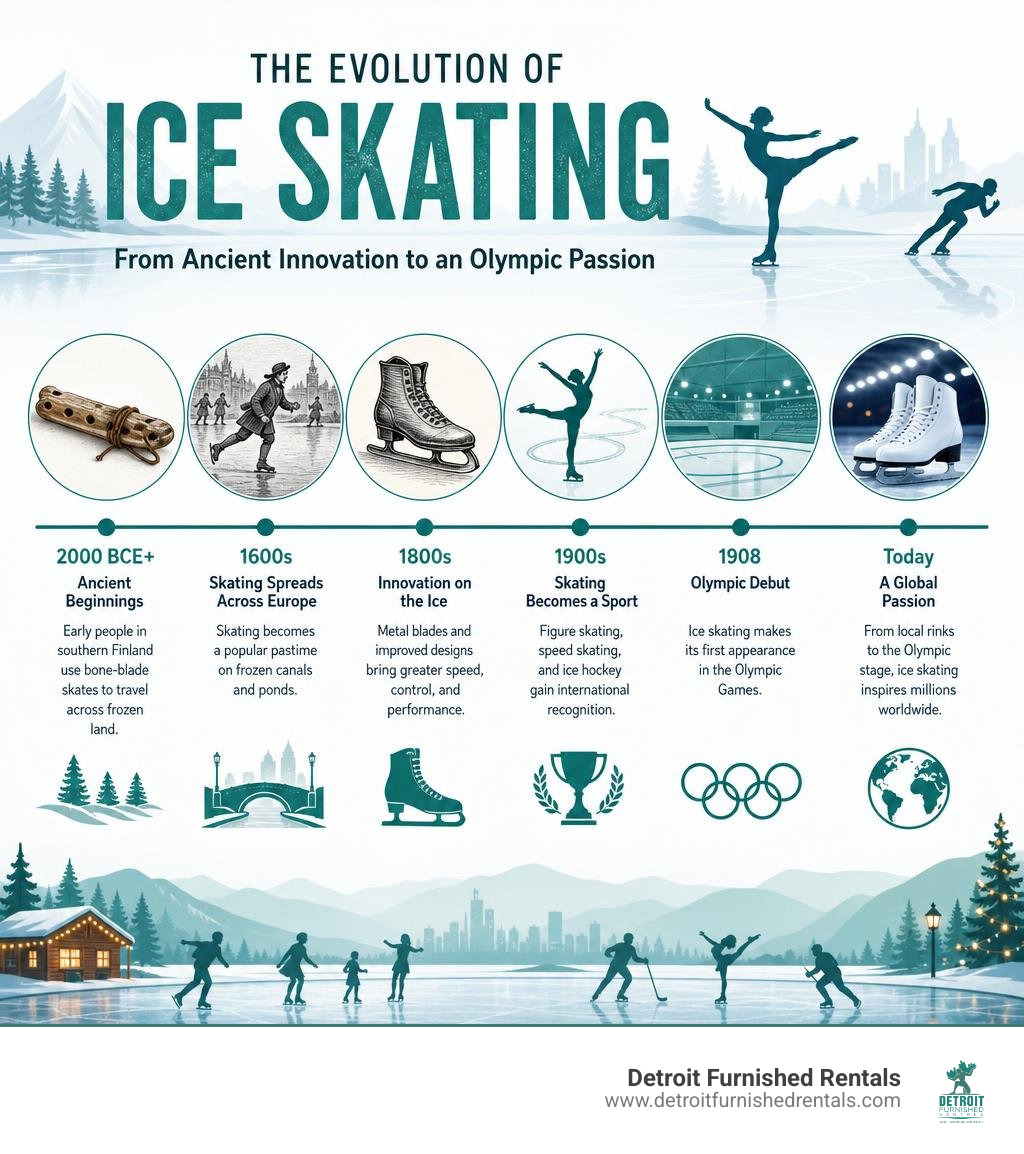
The origins of ice skating stretch back over 4,000 years to southern Finland. Archaeological evidence indicates that early inhabitants crafted skates using bone materials, specifically the shin bones and ribs of cattle, horses, and deer. Skaters strapped these smoothed bones to their footwear using leather thongs and propelled themselves across frozen lakes using wooden poles. This was not done for sport; calculations reveal that bone skates saved travelers up to 10% of their physical energy when navigating Finland’s vast, frozen lake networks during harsh winters.
The evolution of ice transit accelerated through historical milestones across Europe:
- 13th Century: Dutch skaters began utilizing iron-bladed skates on frozen canal systems, eliminating the need for propulsion poles and allowing true edge-to-edge gliding.
- 1740s: The Edinburgh Skating Club was established in Scotland, marking the world’s first organized skating club. Membership tests were famously rigorous, requiring candidates to skate complete circles on each foot and jump over stacked hats on the ice.
- 1772: The first instructional text, The Art of Skating, was published in London by Robert Jones, defining formal artistic movements.
- 1850: American inventor Edward Bushnell introduced steel blades attached directly to skate boots, enabling sharper turns and complex rotational movements.
- 1860s: Jackson Haines, an American ballet master known as the “Father of Modern Figure Skating,” introduced music, dance, and grace to the sport, inventing the sit spin and permanently integrating blades into boot soles.
Ice Thermodynamics and Frictional Physics
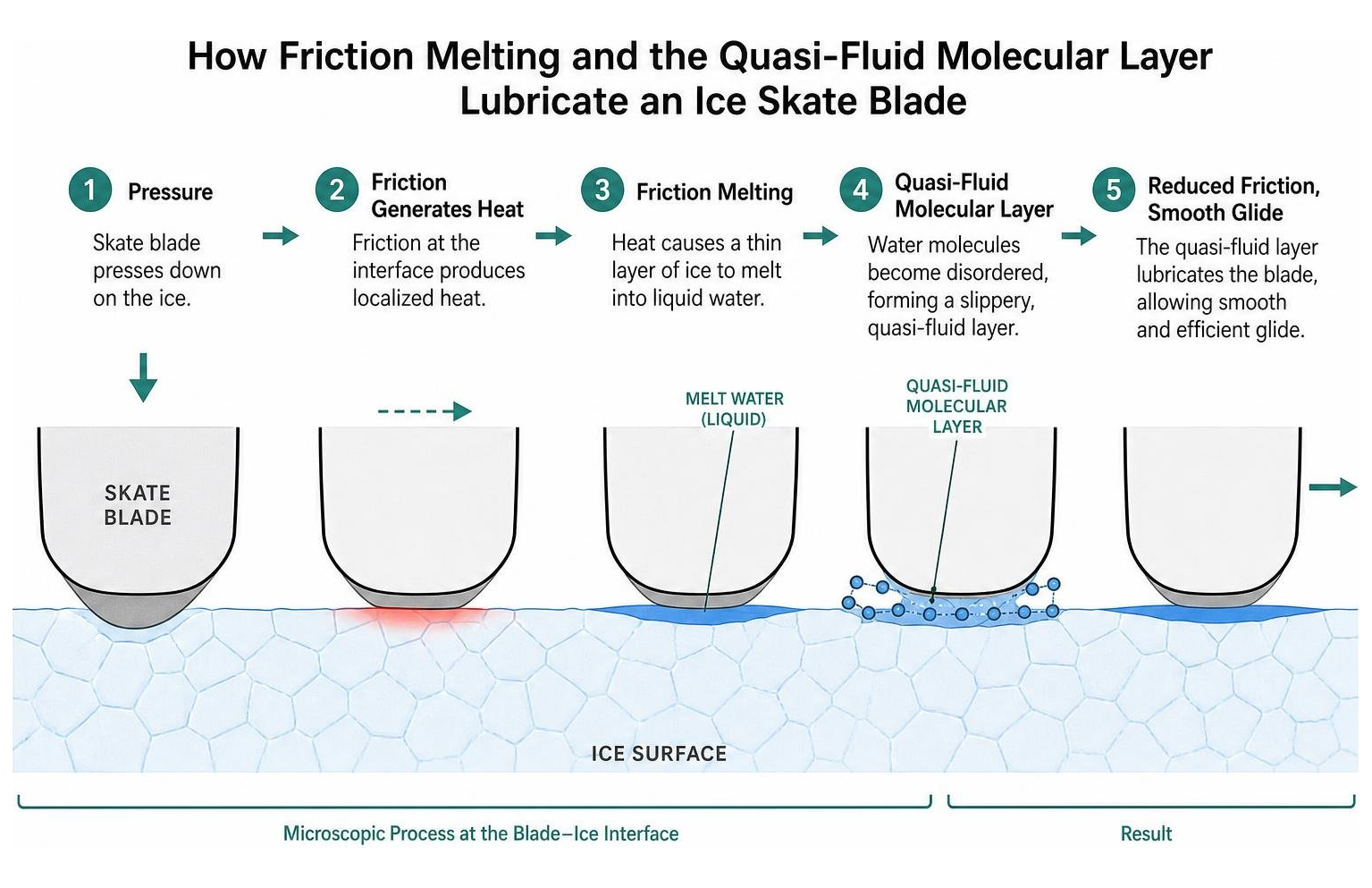
For decades, popular science incorrectly attributed ice slipperiness to “pressure melting” — the idea that a skater’s body weight compresses the ice, lowering its melting point and creating a thin water layer. However, thermodynamics calculations show that pressure melting only lowers ice’s melting point by a fraction of a degree, failing to explain how people can skate effortlessly at temperatures as low as -15°F (-26°C).
The real science of skating relies on two distinct physical phenomena:
- The Quasi-Fluid Layer: Ice inherently possesses a microscopic, liquid-like surface layer of mobile water molecules even at sub-zero temperatures. Because molecules at the very top of an ice crystal lack surrounding bonds on all sides, they remain partially disordered and mobile, acting as a natural lubricant.
- Viscous Frictional Heating (Friction Melting): As a steel skate blade glides across the ice, physical friction generates heat along the narrow line of contact. This friction melts a microscopic film of water — roughly a few micrometers thick — directly underneath the blade edge.
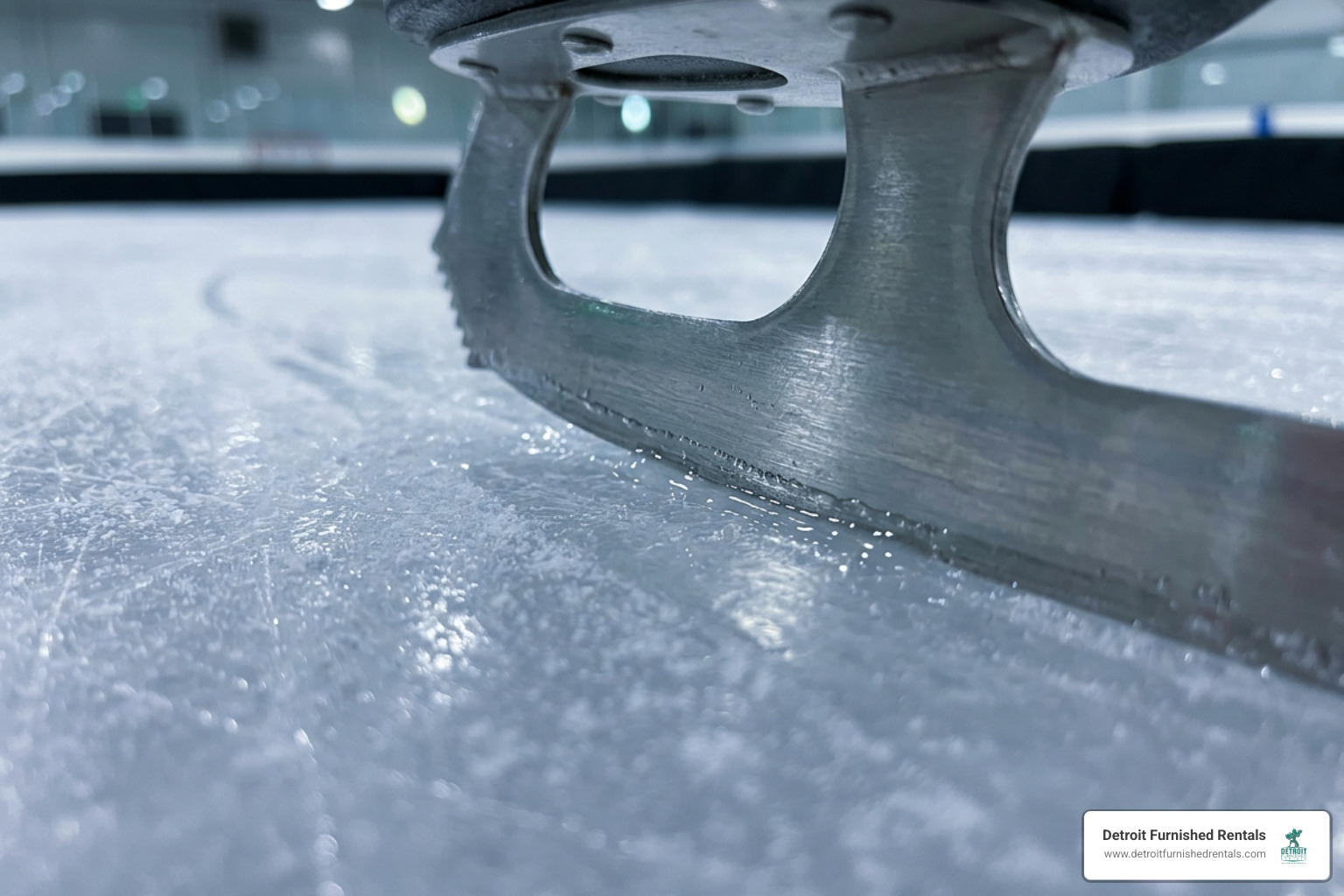
When a skater accelerates to higher speeds, the water film pressure increases, slightly lifting the blade in a process known as dynamic aquaplaning. This dramatically reduces friction coefficients, allowing skaters to reach speeds exceeding 30 to 50 mph on competitive tracks.
Popular Ice Skating Disciplines and Winter Sports
From artistic expression to high-speed team sports, ice skating encompasses a wide variety of competitive disciplines and recreational pastimes.
Ice Sports and Performance Art
Different winter sports utilize specific ice properties, gear designs, and arena configurations:
- Figure Skating: Combines athletic jump rotations, intricate spins, and artistic footwork choreographed to music. Disciplines include Men’s Singles, Women’s Singles, Pair Skating, and Ice Dance.
- Ice Hockey: A contact team sport played with curved sticks and a vulcanized rubber puck. Teams score points by maneuvering the puck into the opposing goal net.
- Speed Skating: Competitors race against each other or the clock on oval tracks. Divided into Long Track (400m oval) and Short Track (111.12m rink inside a standard hockey sheet), athletes reach intense speeds using extended 16 to 18-inch blades.
- Bandy and Ringette: Bandy is a team sport played on a field of ice roughly the size of a soccer pitch using sticks and a small ball. Ringette, created in Canada, uses straight ice sticks and a hollow rubber ring, emphasizing non-contact strategy and team passing.
- Cask Curling: A fun, recreational spin on traditional curling where participants slide weighted mini-kegs or stones down designated ice lanes toward target circles.
International Governing Bodies and Major Competitions
The international competitive framework for ice sports is managed by established athletic organizations:
Fans following global events can review official schedules via ISU Figure Skating | Latest Events, News, Results & Rankings | Official. For detailed Olympic coverage, event records, and competition rules, visit Figure Skating: Olympic history, rules, latest updates and upcoming events for the Olympic sport. Looking ahead to the Milano Cortina 2026 Winter Games, elite skaters from around the globe continue pushing technical boundaries with quadruple jumps and intricate artistic routines.
Equipment, Pricing, and Learning Fundamentals
Getting started on the ice requires picking the right equipment, understanding session fees, and mastering basic balance concepts.
Choosing Gear, Rental Options, and Rink Fees
Skate design varies significantly depending on the discipline you choose. Selecting the correct skate type ensures proper foot support, balance, and edge control.
| Feature | Figure Skates | Hockey Skates |
|---|---|---|
| Blade Shape | Longer, flatter blade with a toe pick at the front | Curved blade (rockered) rounded at front and back |
| Boot Construction | Leather or synthetic, higher ankle cut, stiff support | Molded plastic/composite shell, heavy padded ankle support |
| Primary Focus | Precision edge control, jumps, spins, figure moves | Agility, rapid acceleration, quick turns, collision protection |
| Toe Pick Present? | Yes (used for jump takeoffs and footwork) | No (prevents catching edges during quick strides) |
| Best For | Beginners wanting stability; artistic skaters | Fast skaters, team sports, quick maneuverability |
For those looking to build their own winter haven right at home, setting up a personal outdoor surface is easier than ever. Learn all about backyard setups in our guide on the Best Home Ice Rink Kits: Freeze the Day with Your Own Backyard Rink.
When visiting public rinks, pricing varies by location and facility type:
- Public Admission: Typically ranges from $5.00 to $10.00 for standard 90-minute sessions at municipal rinks, up to $25.00–$40.00 at high-demand resort locations.
- Skate Rentals: Rental fees generally cost between $3.00 and $12.00 per session. Standard sizes cover Youth 7 through Adult 14.
- Pass Systems: Many facilities use digital RFID cards or multi-session punch passes (e.g., $80 for 10 public skates) to streamline check-ins and reduce per-visit costs.
Beginner Techniques and Instructional Lessons
If you’re stepping onto the ice for the first time, staying calm and using proper posture will keep you upright and comfortable.
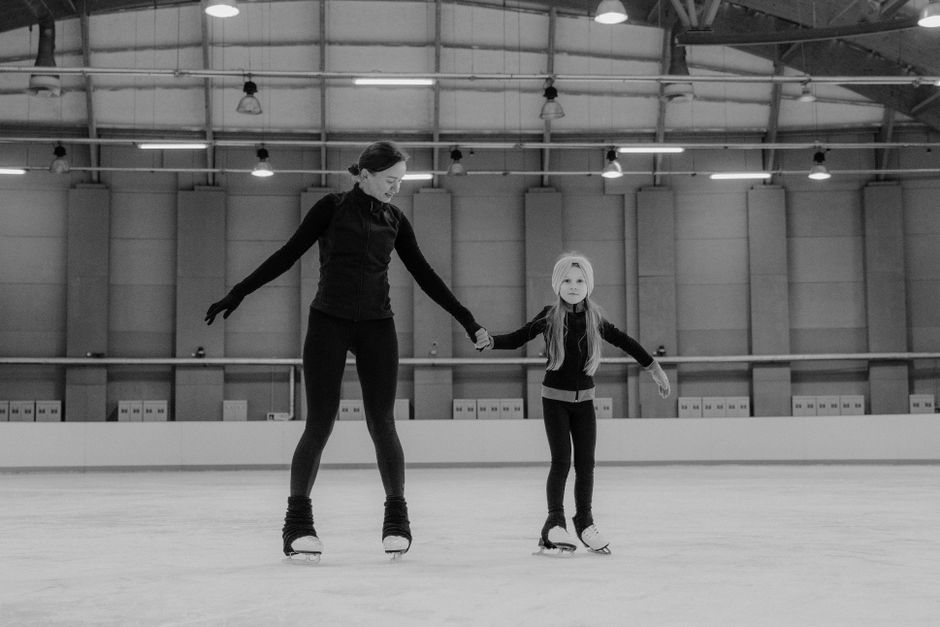
Here is a step-by-step framework for first-time skaters:
- Focus on Proper Posture: Keep your knees soft and slightly bent, shoulders relaxed over your hips, and feet stacked shoulder-width apart. Look straight ahead rather than directly down at your feet.
- Learn How to Fall Safely: If you feel yourself losing balance, bend your knees and squat low. Try to fall sideways onto your hip and thigh, keeping your hands tucked in close to your body in mittens or gloves.
- Master Getting Up: Transition onto your hands and knees. Place one skate flat on the ice between your hands, press down firmly on your knee, and bring your second foot up onto the ice surface to push up to a standing position.
- March Before Gliding: Begin by marching in place with small steps. Once comfortable, push off gently using the inside edge of one blade, gliding forward on the other foot.
Structured courses certified by Learn to Skate USA offer structured progressions for children and adults alike. For municipal facility lesson frameworks, review program schedules at the civic Skating Facility guide.
Rink Safety Rules, Hazards, and Visitor Etiquette
Whether you are skating at a busy downtown rink or visiting a frozen pond, keeping safety and proper etiquette top of mind ensures a fun experience for everyone.
Safety Precautions and Natural Ice Hazards
While ice skating is a fantastic recreation activity, falls and collisions present inherent risks. Traumatic head injuries, wrist fractures, and lacerations are the most common injuries reported at public rinks.
When considering outdoor natural ice surfaces on lakes, ponds, or rivers, extreme caution is required. Natural ice thickness can vary wildly within just a few feet due to underwater currents, thermal springs, or decaying vegetation.
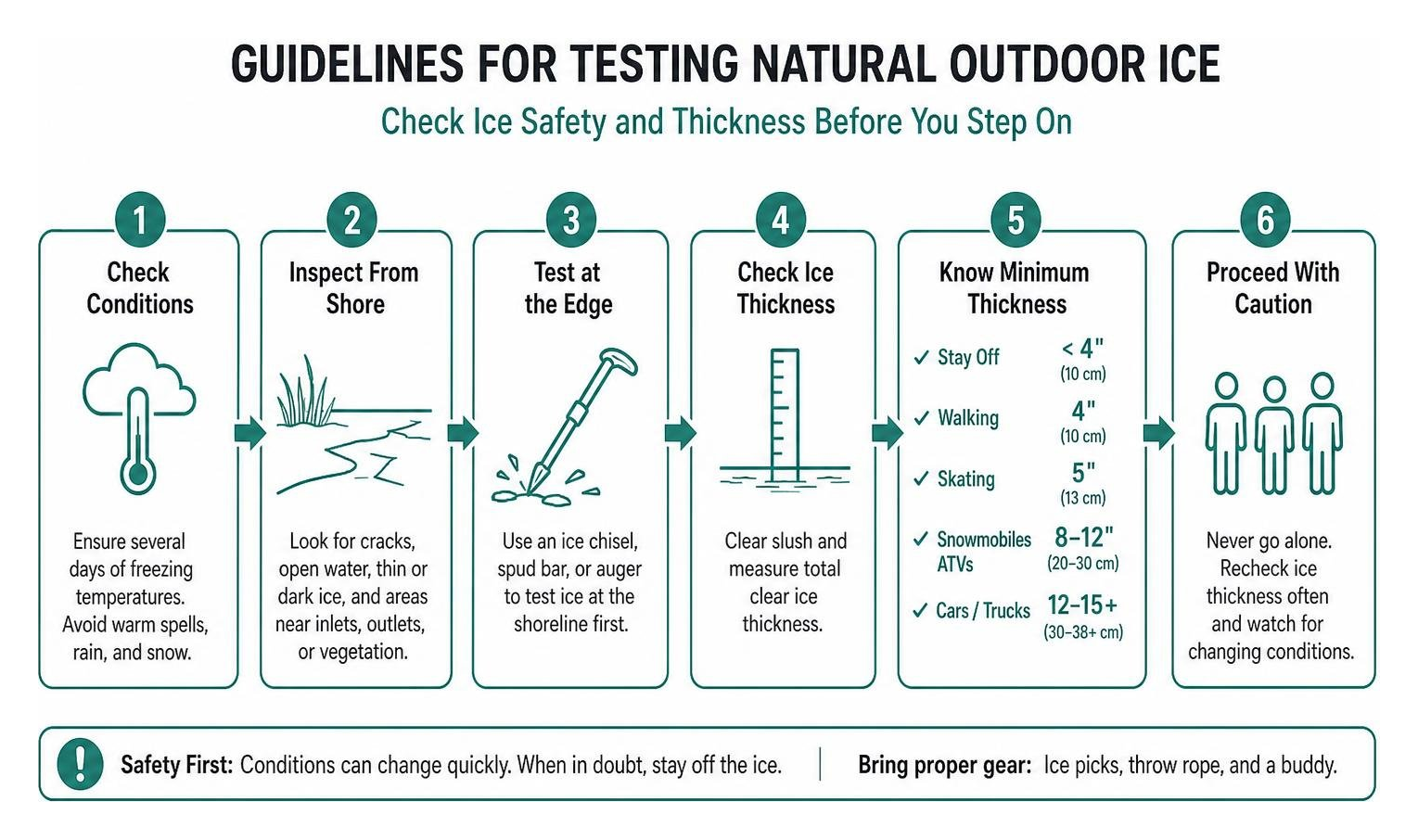
Never venture onto natural ice alone, and always ensure local authorities have officially measured and approved the ice thickness before stepping onto open water.
Public Session Rules and Etiquette
To keep public skating sessions smooth and enjoyable for visitors of all ages, rinks enforce standard behavioral etiquette:
- Respect Rink Flow: Move at a moderate, controlled speed matching the general crowd traffic. Avoid weaving abruptly through slower skaters.
- Keep Center Ice Clear: The center region inside the marker cones is typically reserved for figure skaters practicing spins or instructors conducting private lessons. Keep general gliding traffic along the outer perimeter.
- No Cell Phones or Earbuds: Using mobile phones or wearing noise-canceling headphones while on the ice is strictly banned at most facilities due to collision hazards.
- Supervise Young Skaters: Children under 12 should be directly supervised by an adult at all times.
Planning a winter outing in the city? Check out our top recommendations for a Festive Weekend: Enjoy a Winter Weekend in Detroit.
Frequently Asked Questions About Ice Skating
How much does public ice skating cost?
Public admission fees vary depending on the facility type. Municipal park rinks often charge $4.00 to $6.00 for admission, while premium resort or urban rinks range between $10.00 and $40.00 per session. Skate rentals typically cost between $3.00 and $12.00 per hour. Many municipal facilities offer resident discounts, season passes, or punch cards to lower total costs for frequent skaters.
Why is ice slippery enough to skate on?
Ice is slippery due to a microscopic, liquid-like “quasi-fluid” layer of mobile water molecules present on its surface, combined with friction melting. As your metal skate blade glides across the ice, physical friction creates localized heat that melts a microscopic layer of water beneath the blade, providing a virtually frictionless cushion to glide across.
Is it safe to skate on frozen lakes or ponds?
Skating on natural ice carries inherent safety risks and should only be done on officially tested bodies of water. Ice must be clear, solid blue-to-clear ice, and at least 4 inches thick for individual foot traffic or 5 to 7 inches thick for group activities. Never skate alone on natural ice, avoid slushy or white snow-ice, and always bring rescue equipment like ice picks and throw ropes.
Conclusion
Ice skating is a timeless winter sport that beautifully blends history, scientific physics, athletic conditioning, and festive community fun. From its ancient origins as a practical bone-bladed transit method across frozen Finnish lakes to modern downtown urban ice rinks, skating continues to captivate millions of participants every year.
Whether you’re practicing basic glides in a learn-to-skate class, cheering on elite athletes, or enjoying an evening glide surrounded by city lights, taking time to learn basic balance techniques, respect rink rules, and select proper gear ensures a safe, rewarding winter experience.
If you are planning a winter visit to Metro Detroit to explore Campus Martius Park or take a spin on local indoor ice sheets, we invite you to stay with us at Detroit Furnished Rentals. Our move-in ready, fully furnished apartments put you right near the city’s top attractions, dining hubs, and winter recreation venues. For more local tips and rink highlights, check out The Ultimate Guide to Ice Skating in Detroit to start planning your perfect winter trip!