How to Find Furnished Apartments Downtown Without Surprises
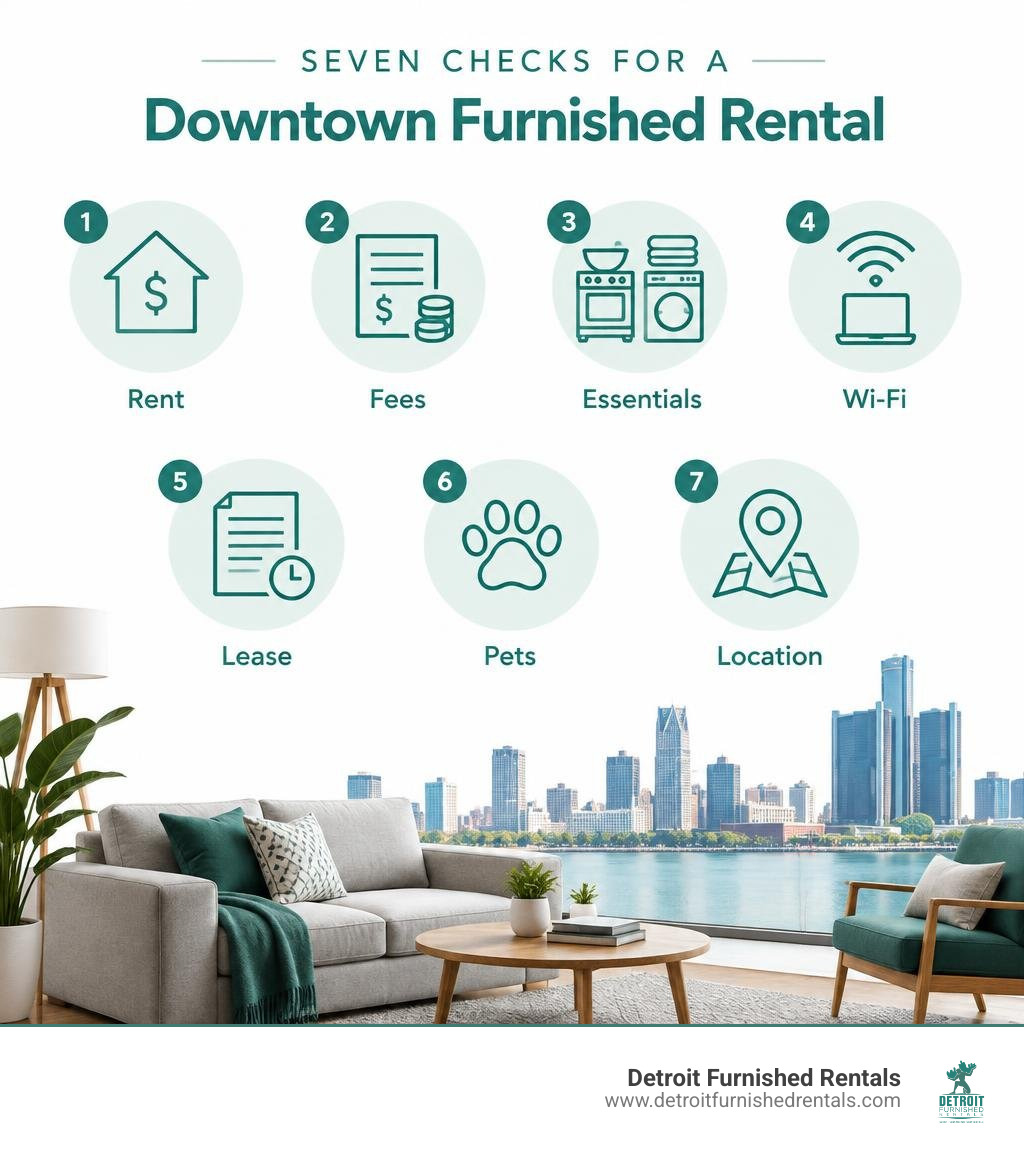
To find a furnished apartment downtown, compare the full cost and confirm what is included before you apply. Use these seven checks:
- Compare rents for the same bedroom count and area.
- Add utilities, parking, deposits, and other fees.
- Confirm the kitchen, linens, and laundry setup.
- Test the Wi-Fi and check for a workable desk.
- Ask about the minimum stay and extension rules.
- Get pet and building policies in writing.
- Check local taxes, transit, and your commute.
I’m Sean Swain. My wife and I have spent nine years hosting travelers, including guests seeking furnished apartments downtown in Detroit. We now manage 15 units across Detroit and Chicago, and I’ll walk you through each check so you can choose a place that fits your stay.
Key terms for furnished apartments downtown:
Downtown furnished rentals are not all the same. Some listings advertise a low base rent but leave out utility setup, parking, or basic kitchen supplies. Others include everything from cookware to high-speed Wi-Fi in one monthly payment. The difference can add hundreds of dollars to your monthly budget or save you from buying a full set of household goods for a three-month stay.
Before you apply, think about how you will actually use the apartment. If you are working remotely, a dedicated desk and reliable internet matter as much as the bed. If you are traveling with a pet, building policies can make or break your stay. If your project timeline shifts, a flexible 30-day lease can protect you from paying for unused weeks. The seven checks below help you evaluate each listing against your real needs, not just the photos.
Strategy 1 & 2: Benchmark Rental Rates for Furnished Apartments Downtown
When looking for furnished apartments downtown, prices can vary dramatically depending on the layout, luxury tier, and neighborhood. Before signing a lease or sending a deposit, you need a realistic view of how baseline rents compare across unit sizes. Securing the right home requires knowing how to score the best town apartments downtown Detroit has to offer while avoiding overpriced tourist traps.
| Unit Type | Typical Monthly Rent Range | Average Square Footage | Best Suited For |
|---|---|---|---|
| Studio | $1,200 – $2,200 | 450 – 600 sq ft | Solo travelers, digital nomads, short assignments |
| 1-Bedroom | $1,700 – $3,100 | 650 – 850 sq ft | Traveling nurses, corporate executives, couples |
| 2-Bedroom | $2,400 – $4,500+ | 950 – 1,300+ sq ft | Small families, shared coworker stays, extended relocations |
Evaluating Studio to Multi-Bedroom Rates for Furnished Apartments Downtown
Studios offer the most economical entry point for solo professionals needing clean, functional living spaces. If you need dedicated areas to host meetings or cook elaborate meals, stepping up to a one-bedroom apartment provides distinct living and sleeping quarters.
For traveling medical pairs, families, or coworkers splitting housing costs, two-bedroom suites provide expansive living spaces. Premium units, such as historic lofts or penthouse suites, command higher rates due to expansive square footage, historic architectural details, and elevated city views. Always factor in seasonality: downtown rates peak during summer and fall event surges, while winter bookings often yield flexible pricing and promotional move-in discounts.
When comparing listings, do not stop at the advertised monthly rent. Ask whether the rate includes utilities, internet, parking, and cleaning fees. A studio listed at $1,400 per month may actually cost more than a one-bedroom at $1,700 once you add separate utility bills and a parking space. Request a written breakdown of all recurring charges before you apply.
Assessing Furnished Rental Costs and Included Value
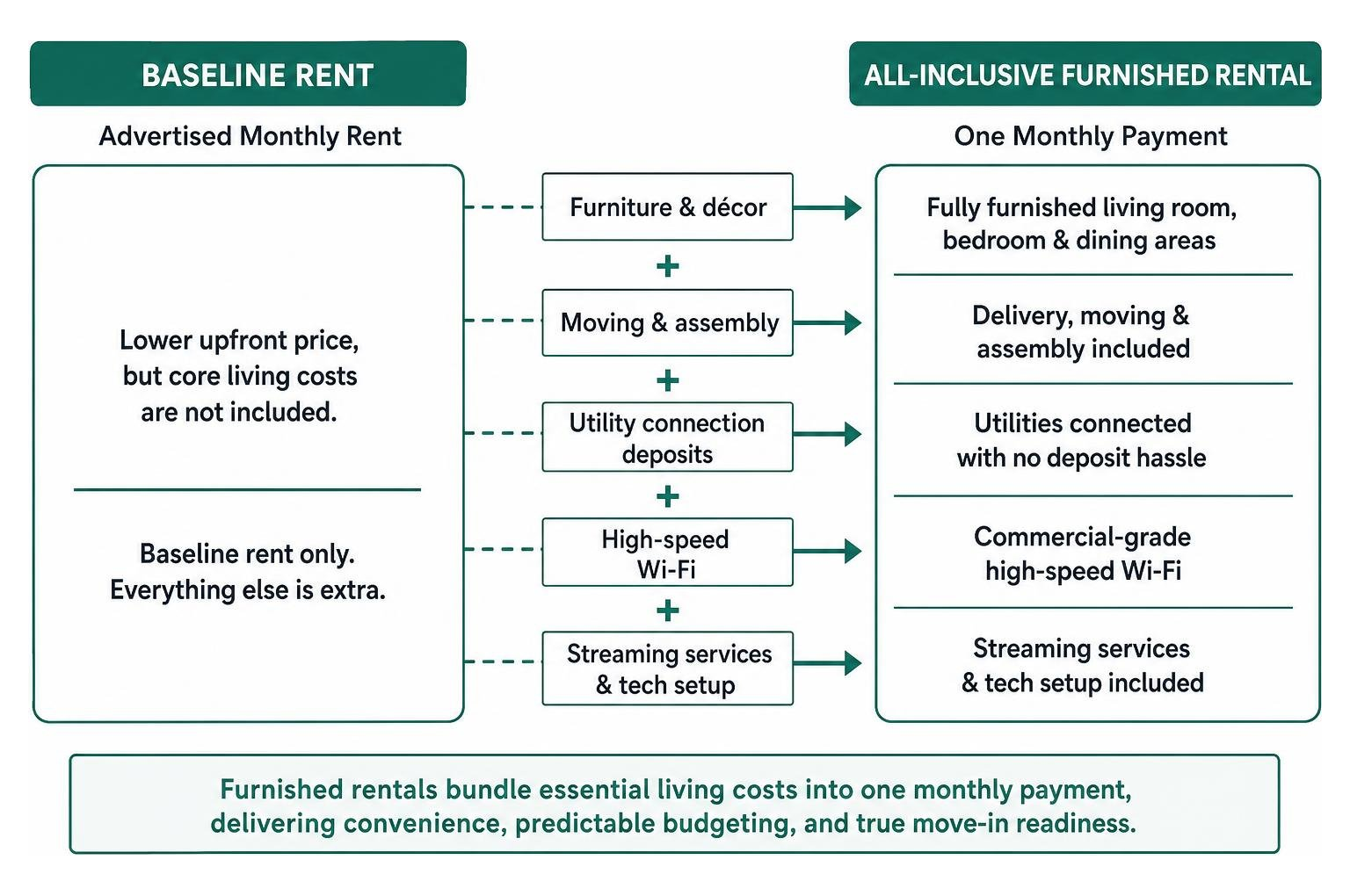
A standard unfurnished downtown apartment may advertise lower baseline rent, but that number is misleading. Once you factor in:
- Purchasing or leasing living room, bedroom, and dining furniture
- Moving and assembly fees
- Utility connection deposits (water, gas, electricity)
- High-speed commercial Wi-Fi packages
- Streaming services and tech setup
A fully equipped apartment bridges that gap. Furnished housing packages all essential living costs into a single monthly invoice, removing the hassle of utility setup and the physical toll of hauling furniture up an urban high-rise elevator.
To compare total stay costs fairly, build a simple spreadsheet with three columns: unfurnished rent plus setup costs, advertised furnished rent, and all-in furnished rent with fees. Include one-time deposits, monthly parking, pet charges, and any cleaning or administrative fees. This exercise often reveals that a slightly higher furnished rate is cheaper over a 60- or 90-day stay than furnishing an empty unit from scratch.
Strategy 3 & 4: Audit Amenities, Workspaces, and Move-In Checklists
Not every “furnished” property offers the same standard of living. Some spaces offer bare-bones staging, while others provide a complete turnkey experience. Reviewing the ultimate fully furnished apartment checklist ensures your home includes all the essentials needed for everyday living.
Critical In-Unit Features and Turnkey Essentials
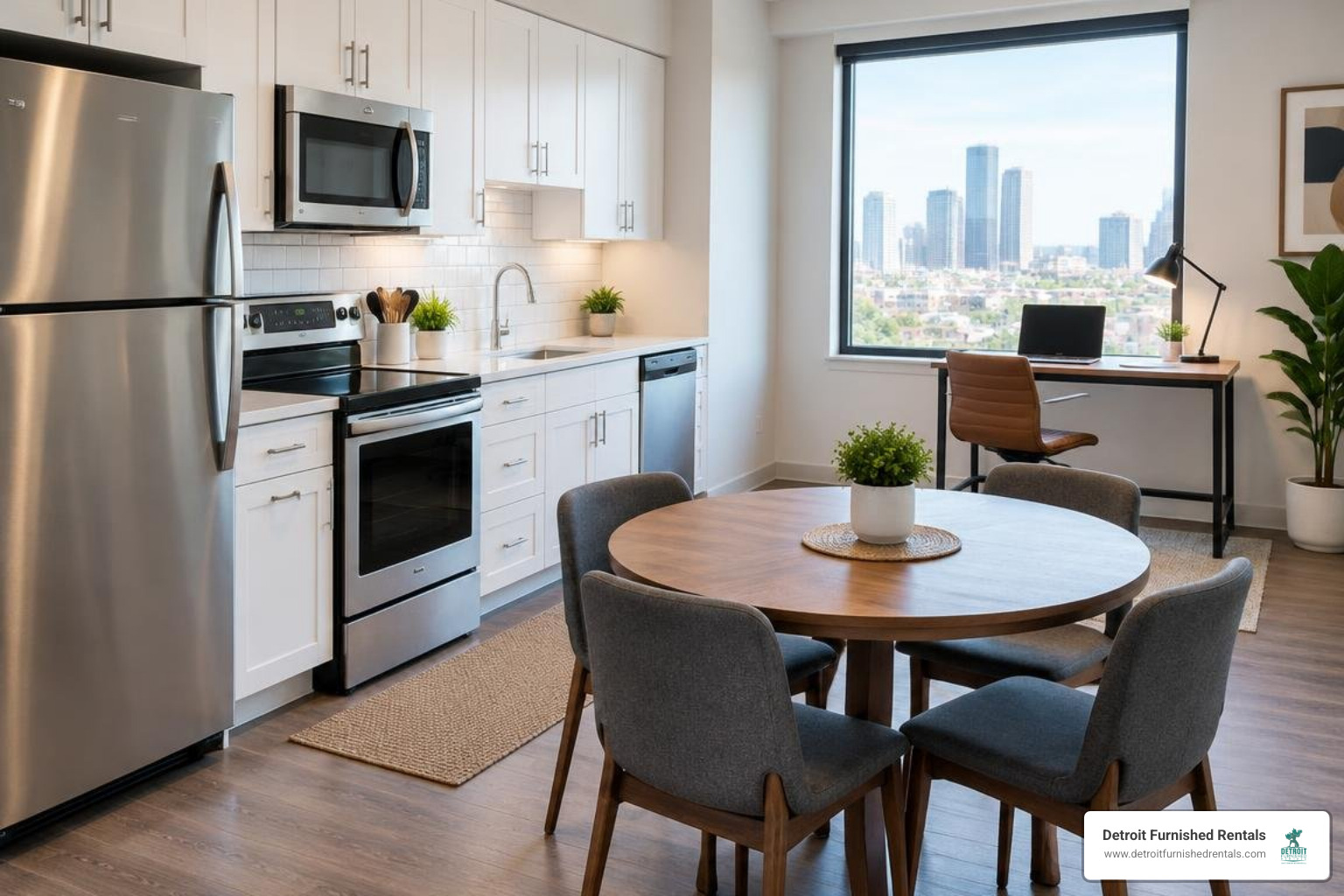
A proper downtown furnished stay should let you unpack your suitcase and get straight to living. Essential in-unit features include:
- Kitchen: Full-sized refrigerator, stove, dishwasher, microwave, cookware, silverware, chef’s knives, glassware, and a coffee maker.
- Sleeping & Bath: High-thread-count linens, comfortable supportive mattresses, blackout blinds, plush bath towels, and an iron with an ironing board.
- Laundry & Tech: An in-unit washer and dryer, central climate control, and ultra-high-definition smart TVs in living and bedroom areas.
- Maintenance & Support: Dedicated property management with 24/7 responsive emergency maintenance.
Before you commit, ask for a written inventory of what is included. Some listings show professionally staged photos but remove decorative items, extra seating, or small appliances before move-in. A detailed inventory protects you from arriving to find a missing coffee maker or a bare kitchen with no pots and pans.
Sourcing Live-Work High-Rises with Dedicated Office Spaces
Remote and hybrid work requires more than sitting on a sofa with a laptop. Downtown apartments should support productivity with:
- Dedicated workspaces featuring ergonomic chairs and spacious desks
- Secure, high-speed Wi-Fi (aim for 200+ Mbps download speeds)
- Ample electrical outlets and surge protectors near work zones
- On-site community amenities, such as co-working lounges, reservable conference rooms, and quiet business centers
If you take video calls regularly, test the internet speed during your tour or request a speed test screenshot from the property manager. Check whether the desk faces a window with controllable light and whether the chair offers real lumbar support. For longer stays, ask if the building has a business center you can use when you need a change of scenery or a private room for client meetings.
Strategy 5 & 6: Navigate Mid-Term Leases, Building Types, and Pet Rules
Traditional 12-month leases do not work for temporary assignments, project-based contracts, or relocations. Many traveling executives rely on month-to-month apartment rentals to retain total schedule control. Before applying, understand the truth about signing a short term apartment lease to ensure you are clear on notice periods, deposit structures, and renewal terms.
Navigating 30-Day Lease Terms for Furnished Apartments Downtown
The sweet spot for temporary urban housing is the 30-to-90-day mid-term window. In many downtown markets, stays of 30 or 31 days or longer exempt guests from hefty municipal hotel occupancy taxes. Choosing executive furnished rentals for mid-term housing provides residential protections, lower tax burdens, and flexible extension clauses if your downtown project timelines shift.
Ask for the exact lease language before you sign. Confirm the minimum stay, the notice required to extend or end the lease, and whether the rate changes after the initial term. Some properties offer a lower introductory rate for the first 30 days and then raise the monthly price. Others lock your rate for the full stay if you commit to 60 or 90 days upfront. Understanding these terms helps you avoid surprise charges when your assignment runs long.
Evaluating Building Management and Policies
Pet policies and building rules vary widely across downtown properties. While some properties welcome furry companions with open arms, others enforce strict weight caps, breed restrictions, or monthly pet rents. Always request pet fee schedules in writing—distinguishing between refundable pet deposits and non-refundable move-in cleaning fees.

Check building amenities, access control systems (such as key fob entry and virtual doormen), elevator reliability, and package concierge lockers. Responsive on-site teams make extended stays seamless.
When you tour a building, ask how maintenance requests are handled and what the average response time is for non-emergency issues. A building with a dedicated on-site manager and 24/7 emergency line will serve you far better during a 90-day stay than one where you leave voicemails and hope for a callback. Also confirm whether package deliveries are held securely, especially if you order work equipment or personal items during your stay.
Strategy 7: Factor in Taxes, Deposit Structures, and Neighborhood Transit
Understanding neighborhood infrastructure is key to a smooth downtown stay. When setting your final budget:
- Taxes & Fees: Confirm whether your lease term triggers short-term hospitality taxes or qualifies for residential status.
- Security Deposits: Clarify deposit amounts, acceptable payment methods, and standard return timelines.
- Transit & Commute: Choose locations with high Walk Score ratings near transit lines (like the QLine or People Mover in downtown Detroit) to reduce car dependency.
- Parking & EV Charging: Downtown street parking is often restricted. Look for properties with secure, covered parking garages and on-site EV charging stations.
Our team at Detroit Furnished Rentals ensures all pricing, parking options, and building policies are transparent, making corporate housing stays straightforward and reliable.
Before you commit to a neighborhood, map your daily route. Check the walk from the apartment to your office, hospital, or client site, and test the transit options during the hours you will actually travel. A location that looks close on a map may involve a long walk through poorly lit blocks or a transit line that runs infrequently after 7 p.m. If you drive, confirm that the building’s parking garage has available spaces and ask whether EV charging is included or billed separately.
Frequently Asked Questions About Downtown Furnished Rentals
What is the average rent for a furnished apartment downtown?
Downtown furnished apartments typically range from $1,200 to $2,200 per month for studios, $1,700 to $3,100 for one-bedroom apartments, and $2,400 to $4,500+ for spacious two-bedroom suites. Rates vary based on neighborhood demand, building amenities, and included utilities.
What amenities are typically included in a downtown furnished rental?
A fully furnished rental includes all core furniture (sofas, beds, dining sets), fully equipped kitchens with cookware and appliances, luxury bed and bath linens, smart TVs, high-speed Wi-Fi, all utilities, and in-unit or on-site laundry facilities.
How do minimum lease terms work for downtown furnished units?
Most executive and downtown furnished apartments require a minimum 30-day lease term. This keeps residential communities stable and avoids short-term hotel occupancy taxes. Month-to-month renewals and flexible extension options are standard for mid-term corporate leases.
What should I ask about before signing a downtown furnished lease?
Request a written breakdown of all monthly charges, including rent, utilities, parking, pet fees, and any administrative costs. Ask about the notice period for ending or extending the lease, the deposit return timeline, and whether the rate can change after the initial term. Confirm the in-unit inventory and test the Wi-Fi speed if you plan to work remotely.
Conclusion
Finding the right downtown furnished apartment comes down to planning: verify total monthly costs, confirm in-unit turnkey amenities, secure flexible 30-day lease terms, and choose walkable, transit-friendly neighborhoods.
At Detroit Furnished Rentals, we provide premium, fully equipped, pet-friendly homes across Detroit’s most exciting downtown and Midtown neighborhoods. Whether you are relocating for work, managing a healthcare assignment, or need a comfortable temporary home, explore our complete guide to furnished downtown apartments to find your next stay.
Take the time to compare listings line by line, ask for written policies, and test the details that matter most to your daily routine. A little extra diligence before you apply can save you from surprise fees, missing essentials, and lease terms that do not fit your schedule. When the details line up, a downtown furnished apartment becomes more than a place to sleep—it becomes a stable, comfortable base for your work and your life in the city.