What you need to know before signing a short term apartment lease
A short term apartment lease is any rental agreement lasting less than 12 months. Common options include:
| Lease Type | Typical Duration |
|---|---|
| Month-to-month | Renews monthly until canceled |
| Short-term fixed | 1, 3, or 6 months |
| Extended short-term | 9 months |
The key facts at a glance:
- Most short-term leases run 3 or 6 months, but can be as brief as 30 days
- Monthly rent is almost always higher than a standard 12-month lease
- Many short-term apartments come fully furnished
- Legal minimums apply in some cities (in NYC, for example, whole-apartment rentals under 30 days are illegal)
- Lease terms are often flexible and can sometimes be extended
So if you need housing for a few weeks or months — for a work assignment, a relocation, or a life transition — a short-term lease gives you a place to land without locking you in long-term.
But there’s a catch: short-term leases come with trade-offs. Higher rent, limited availability, and varying legal rules make them trickier to navigate than a standard lease. This guide walks you through everything you need to know.
I’m Sean Swain, founder of Detroit Furnished Rentals LLC, and my experience with short term apartment lease spans from renting out my own apartment on Airbnb while driving over-the-road trucks, to building a full portfolio of furnished short-term rentals in the Detroit metro area. That hands-on background — on both sides of the lease — shapes everything I share below.
Key short term apartment lease vocabulary:
- corporate apartments Detroit MI
- furnished pet friendly apartments
- month to month house rentals near me
What is a short term apartment lease?
In real estate, a short term apartment lease is essentially the “commitment-phobe’s” dream. While the standard American rental agreement typically locks you in for a full 12 months, a short-term lease is designed for life’s “in-between” moments. We define these as any contractual agreement for a residential space that lasts anywhere from 30 days up to about nine months.
These leases provide a legal framework for you to occupy a home without the heavy anchor of a year-long obligation. Because these are often managed by professional providers, they frequently come with “plug-and-play” convenience. For a deeper dive into how these differ from your standard rental, check out our Short Term Apartment Complete Guide.
Typical durations for a short term apartment lease
When you start your search, you’ll notice that “short-term” can mean different things depending on the landlord. Here are the most common timeframes we see in the Detroit market:
- 30-Day Minimum: Many professional short-term housing providers set a 30-day floor. This is often due to local zoning laws or tax regulations that distinguish “residential” stays from “hotel” stays.
- 3-Month Terms: This is the “sweet spot” for many traveling professionals. It’s long enough for a landlord to feel the stay is worth the turnover effort, but short enough to remain highly flexible.
- 6-Month Terms: Often used by people who are building a home or testing out a new neighborhood. Many traditional apartment complexes that usually prefer 12-month stays will offer a 6-month option, though usually at a premium.
- Month-to-Month: This is the ultimate flexibility. The lease automatically renews every 30 days until either the tenant or the landlord provides notice (usually 30 days in advance) to terminate.
Who benefits from a short term apartment lease
Who actually signs these things? It’s a wider group than you might think. We regularly work with:
- Traveling Professionals: Consultants, auditors, and contractors who are in Detroit for a specific project.
- Digital Nomads: People who can work from anywhere and want to experience the “Motor City” vibe for a season before moving on to the next destination.
- Relocating Families: If you’ve sold your house but your new one isn’t ready, or if you’re moving to Detroit from out of state and want to shop for a permanent home without rushing, a short-term lease is a lifesaver.
- Medical Staff: Travel nurses and resident physicians often need housing that aligns with their 13-week rotations or residency blocks.
- Students: Specifically those doing summer internships or short-term research projects who don’t need a dorm or a full-year off-campus apartment.
Weighing the advantages and disadvantages
Choosing a short term apartment lease is a balancing act. You are essentially trading money for freedom.
The Advantages: The biggest pro is flexibility. If your job contract ends early or you find your dream home sooner than expected, you aren’t stuck paying thousands in “lease-break” fees. Furthermore, most of these units are furnished. This means you can move in with just a suitcase—no hiring movers, no assembling IKEA bed frames, and no utility setup calls. Everything is ready from day one.
The Disadvantages: The most obvious downside is the higher monthly rent. Landlords charge more to offset the “vacancy risk”—the time the apartment sits empty between short-term guests. You may also find limited availability. In high-demand areas of Detroit, these units can be hard to snag. Additionally, some renters find that moving every few months creates a lack of “roots,” which can be taxing over time.
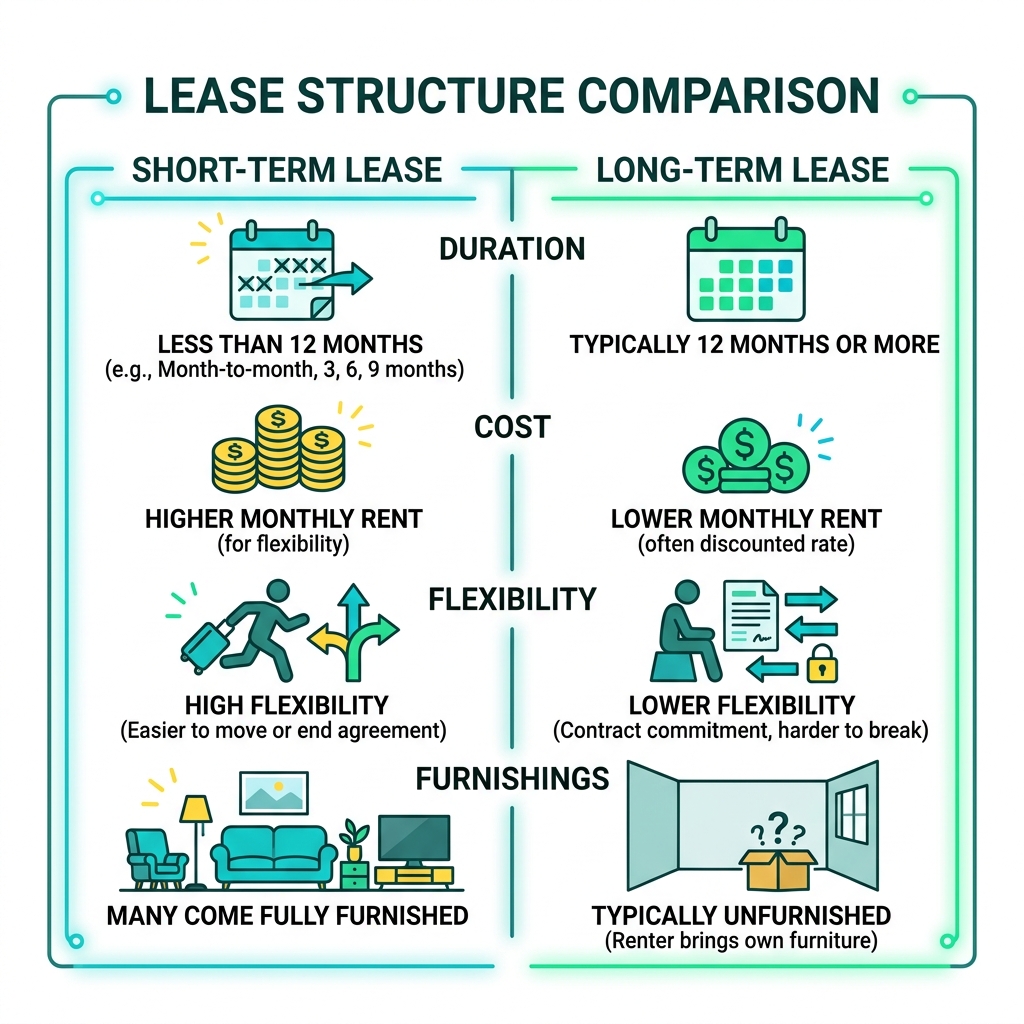
| Feature | Short-Term Lease | Long-Term Lease |
|---|---|---|
| Duration | 1–9 Months | 12+ Months |
| Monthly Cost | Higher (Premium) | Lower (Standard) |
| Furnishings | Usually Included | Usually Unfurnished |
| Flexibility | High | Low |
| Utilities | Often Included | Usually Tenant-Paid |
To see how these factors play out specifically in our local market, read more about the Short Term Lease Detroit landscape.
How to successfully find flexible housing
Finding a short term apartment lease requires a different strategy than finding a standard rental. You won’t always find these options on the big-name listing sites, which are geared toward 12-month commitments.
Instead, look for corporate housing providers. These companies specialize in the “mid-term” market. They manage a portfolio of properties specifically designed for people who need 30+ days of housing. You can also look for direct bookings on specialized platforms. By going through a dedicated provider, you often get a more streamlined experience, including 24/7 support and vetted properties. For a look at what’s available right now, browse our Short Term Rentals Detroit listings.
Effective ways to find a short term apartment lease
If you’re struggling to find a spot, try these tactics:
- Online Marketplaces: Use filters on rental sites specifically for “short term” or “furnished.”
- Landlord Negotiations: Sometimes, a landlord with an empty un-furnished unit will agree to a 6-month lease if you offer to pay a slightly higher monthly rate. It never hurts to ask!
- Networking: Join local Detroit housing groups on social media. Often, people looking to sublet their apartments for the remainder of their lease will post there.
- Specialized Providers: Reach out to us at Detroit Furnished Rentals. We specialize in exactly this niche, saving you the legwork of hunting through hundreds of 12-month listings.
Essential amenities in temporary rentals
When you are living somewhere for a short period, the “small things” become “big things.” You don’t want to spend your first week buying forks and setting up routers. Look for these essentials:
- Fully Equipped Kitchens: This goes beyond a fridge and stove. We’re talking about pots, pans, silverware, a coffee maker, and a toaster.
- High-Speed WiFi: Crucial for the modern remote worker or the traveler who wants to stream movies at night.
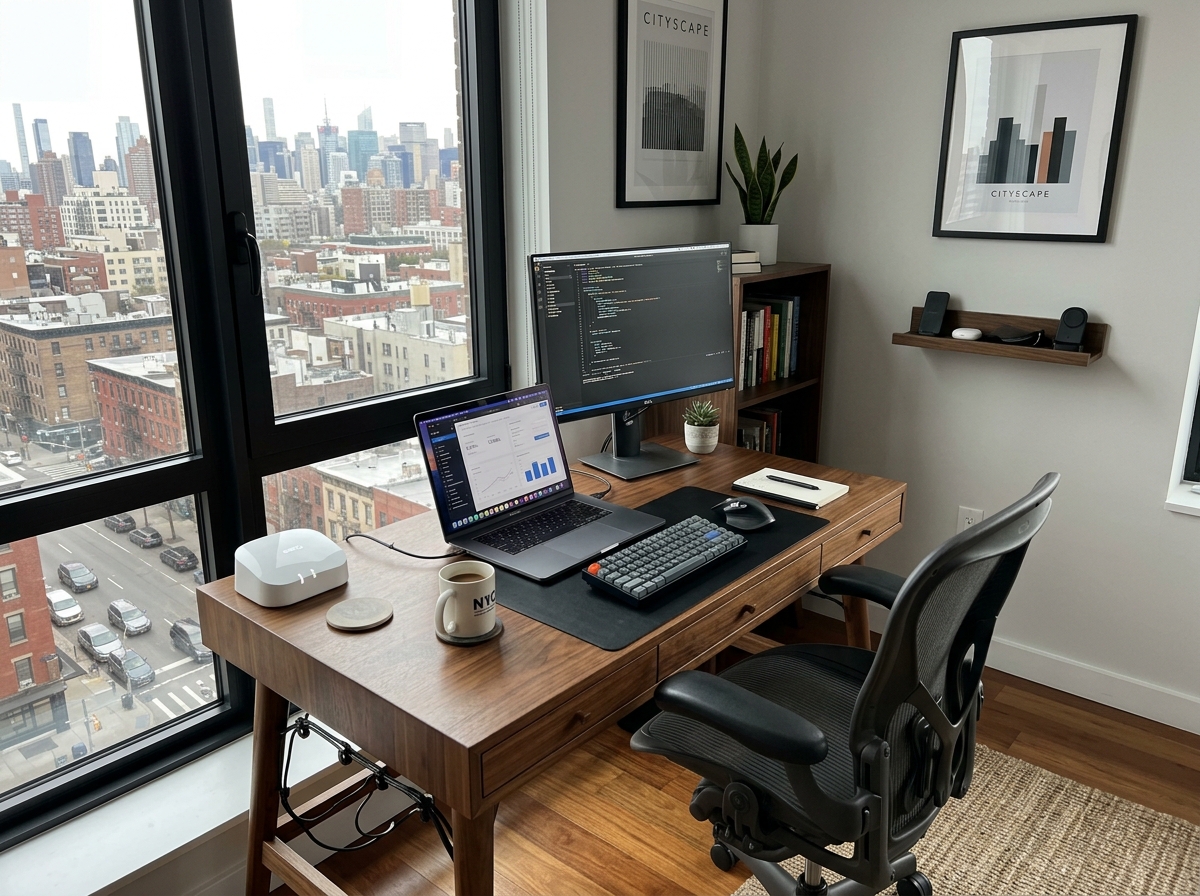
- Dedicated Workspaces: A kitchen table is fine for a day, but for a 3-month stay, you want a desk and a comfortable chair.
- In-Unit Laundry: Dragging a week’s worth of clothes to a laundromat is the last thing you want to do on a business trip.
- Pet-Friendly Policies: Many short-term rentals are surprisingly strict about pets. If you’re traveling with a furry friend, ensure the lease explicitly allows them.
For a checklist of what to look for, see our Short Term Furnished Apartments Detroit Guide.
Comparing apartments to extended-stay hotels
A common question we get is: “Why not just stay at a hotel?” While extended-stay hotels have their place, a short term apartment lease offers a vastly different experience.
Cost-Efficiency: For stays longer than 30 days, an apartment is almost always more affordable. Hotels charge daily rates that include high taxes and service fees. With an apartment lease, you typically pay a flat monthly rate that includes utilities, which can save you thousands over a 3-month stay.
Home-Like Atmosphere: In an apartment, you have a separate bedroom, a living room, and a full kitchen. You can cook a real meal, host a friend for dinner, and truly “decompress.” In a hotel, you are often living, sleeping, and eating in one room. The “walls” of a hotel room can start to feel very small after week three.
Square Footage: Even a modest studio apartment usually offers more square footage and better storage (closets!) than a standard hotel suite. This is especially important for relocating families who might have extra luggage or specialized equipment.
Frequently Asked Questions about short-term leasing
Are short-term rentals more expensive than traditional leases?
Yes, almost always. Landlords and management companies charge a premium to cover the costs of more frequent cleanings, higher wear and tear from turnovers, and the risk of the unit sitting empty between tenants. You can expect to pay 20% to 50% more per month than you would on a 12-month lease, but remember: this usually includes furniture and utilities!
Can I extend a short-term lease if my plans change?
In many cases, yes, but it’s not guaranteed. If you think you might need to stay longer, tell your landlord as early as possible. If they haven’t booked a new tenant to move in right after you, they are usually happy to extend your stay. However, if they’ve already signed a new lease with someone else, you’ll have to move out on your original end date.
Is a 3-month stay considered a short-term lease?
Absolutely. In the rental industry, anything under 12 months is considered short-term. A 3-month lease is one of the most common durations for traveling professionals and is widely available through specialized housing providers.
Conclusion
Signing a short term apartment lease is about more than just finding a roof over your head; it’s about finding a solution that fits your current chapter of life. Whether you are coming to Detroit for a new job, waiting for a home to be built, or just exploring a new city, the flexibility of a short-term stay is hard to beat.
At Detroit Furnished Rentals, we pride ourselves on offering more than just a place to sleep. We provide professionally managed, pet-friendly, and fully equipped homes that let you hit the ground running. From flexible move-in dates to dedicated workspaces, we’ve designed our rentals with the modern traveler in mind.
Ready to find your temporary home in the D? Find your next short term rental in Detroit and see how easy flexible living can be.