Why Fully Equipped Kitchen Rentals Are Changing the Food Industry
Fully equipped kitchen rental spaces are professional, licensed food preparation facilities available to rent by the hour, day, week, or month. Whether you’re launching a catering business, testing a new product line, or scaling your food truck operation, these spaces offer a ready-to-use solution without the massive upfront investment of building your own commercial kitchen.
Quick Overview: What You Need to Know
- Hourly rates typically range from $15 to $75 per hour, depending on location and amenities
- Equipment included: Commercial stoves, ovens, mixers, refrigeration, prep tables, and dishwashing stations
- Rental options: Hourly, daily, weekly, monthly, or yearly leases
- Who uses them: Caterers, food trucks, bakers, meal prep services, product developers, and culinary startups
- Key benefit: Access to licensed, health-department-approved facilities without six-figure construction costs
Starting a culinary business can be really difficult. Finding the place to cook from shouldn’t be.
Traditional commercial kitchens require massive capital investment—construction, permits, industrial equipment, and ongoing utilities can easily cost hundreds of thousands of dollars. For most food entrepreneurs, especially those just starting out, that’s simply not feasible.
Renting a fully equipped kitchen changes everything. You get immediate access to professional-grade equipment, regulatory compliance built in, and the flexibility to scale up or down based on your actual production needs. You can be operational within a week instead of waiting months for buildout and permits.
The model works for everyone from home bakers testing recipes for their first farmers’ market to established caterers managing seasonal demand spikes. Many shared kitchens also foster a collaborative community where food entrepreneurs exchange advice and build valuable connections.
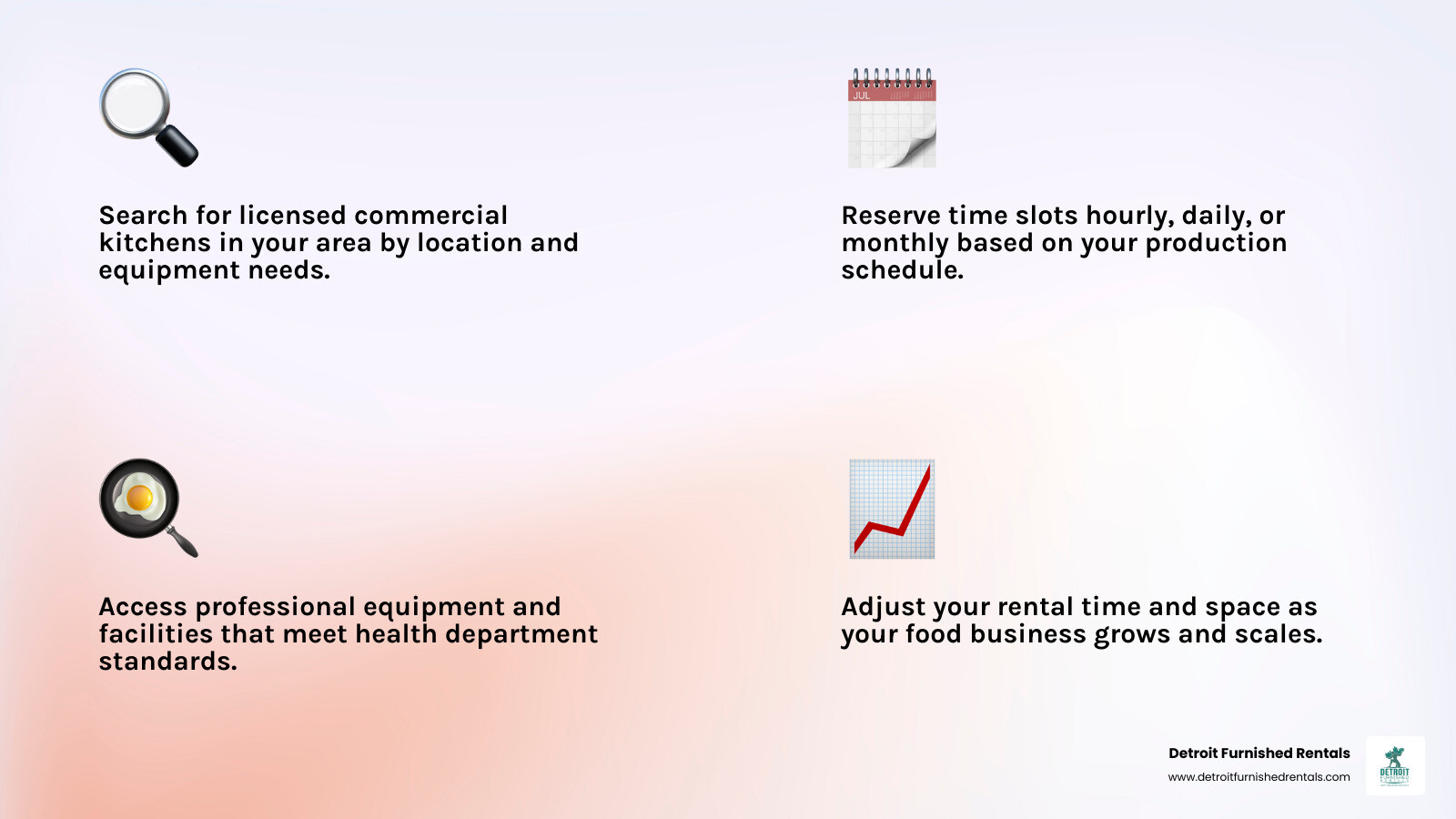
Handy fully equipped kitchen rental terms:
- Pet friendly furnished rentals
What is a Commercial Kitchen Rental and Who Uses It?

At its core, a commercial kitchen rental is a licensed, professional food preparation space you can rent for specific periods. Instead of investing in heavy-duty equipment and navigating complex permitting processes, you gain access to a ready-to-use facility that’s already up to code. The space meets stringent health department standards for food safety, sanitation, and operational requirements—a critical hurdle for any food business.
The key difference from a home kitchen is the industrial-grade equipment, scale, and regulatory compliance. Home kitchens are rarely approved for commercial food production, and building your own facility involves a massive upfront investment that can reach six figures. A fully equipped kitchen rental bypasses that, offering a streamlined path to market.
Who Rents These Kitchens?
A fully equipped kitchen rental is versatile, serving a wide array of culinary entrepreneurs and businesses. It allows them to operate legally and efficiently, from home bakers to established caterers.
Here’s a breakdown of who typically rents these kitchens:
- Caterers: Whether preparing for an intimate dinner party or a large corporate event, caterers need professional space and equipment to handle volume and maintain food safety standards.
- Food Truck Operators: Many food trucks use commercial kitchens as their commissary—a central base for prep, cooking, and storage, fulfilling health department requirements.
- Bakers and Pastry Chefs: For those who need industrial-sized ovens, mixers, and ample counter space to produce large batches of baked goods.
- Meal Prep Services: Businesses that prepare healthy, pre-portioned meals for weekly delivery or pickup rely on these kitchens for efficient production.
- Packaged Goods Producers: Makers of jams, sauces, snacks, or other packaged food items need certified facilities to produce their goods for retail sale.
- Startups Testing New Products: A low-risk environment to experiment with recipes, conduct market research, and refine their offerings before making larger investments.
- Pop-up Restaurants: Chefs looking to test new concepts or host temporary dining experiences without the overhead of a permanent restaurant space.
Common Use Cases
The flexibility of a fully equipped kitchen rental makes it suitable for countless scenarios within the food industry.
Here are some common ways these spaces are used:
- Event Prep for Weddings or Corporate Functions: Caterers can efficiently prepare large quantities of food, ensuring quality and consistency for their clients.
- Product Development and Recipe Testing: Entrepreneurs can use the professional equipment to perfect new recipes or scale up existing ones, moving from a home kitchen concept to a market-ready product.
- Scaling Production for Farmers’ Markets or Retail: As demand grows, businesses can easily increase their kitchen time to meet orders without investing in their own facility.
- Managing Seasonal Demand for Holidays: Think of the holiday rush for bakeries or special events. Hourly kitchen rentals allow businesses to expand capacity during peak seasons without long-term commitments.
- Hosting Pop-Up Restaurants or Cooking Classes: These kitchens often come with front-of-house space or are designed to accommodate events, offering a unique venue for culinary experiences.
- For entrepreneurs traveling for business, finding corporate housing in Detroit is a parallel need to finding a commercial kitchen. Just as you need a professional space to cook, you need a comfortable, convenient place to live while you’re focused on your business.
The Financial and Operational Edge of Renting
One of the most compelling arguments for a fully equipped kitchen rental is the significant financial and operational advantage it offers. It’s a game-changer for entrepreneurs looking to get their culinary ideas off the ground or expand an existing venture.
Lower Startup Costs
The traditional route to launching a food business involves a staggering initial investment. Building a kitchen from scratch—including construction, permits, specialized plumbing, and purchasing industrial-grade equipment—can easily cost six figures. This barrier stops many passionate food producers.
By renting a kitchen by the hour, you avoid this high initial investment in construction, equipment, and permits. You’re essentially leasing access to an already established, compliant, and well-equipped facility, freeing up your capital to invest in ingredients, marketing, and staff. This allows you to launch or scale your food business without the daunting financial burden.
Flexibility
Flexibility is a cornerstone of the rental model. Hourly kitchen rental lets you book as much or as little time as you need for nightly prep, weekly bakes, or seasonal surges. This pay-as-you-go model reduces financial risk. You’re not stuck paying for an underused space during demand fluctuations and can scale operations easily, adapting to market needs without a fixed overhead.
Access to Professional Equipment
Most home kitchens aren’t equipped to handle commercial-scale production. A fully equipped kitchen rental comes loaded with industrial-grade equipment—powerful ovens, heavy-duty ranges, commercial mixers, expansive refrigeration, durable prep tables, and efficient dishwashing stations. Access to this professional-grade machinery not only increases your production capacity but also improves the quality and consistency of your products.
Scaling Your Business
The ability to scale your business seamlessly is invaluable. As your demand grows, you can simply book more kitchen time. Need to fulfill a huge holiday order? Just reserve extra hours. Testing a new product that requires dedicated prep time? Book a block of hours for R&D. This agility allows you to respond to market opportunities and grow your business organically, without the constraint of your physical space or equipment.
Breaking Down the Cost of a Fully Equipped Kitchen Rental
Understanding the cost structure is crucial when considering a fully equipped kitchen rental. While it’s far more affordable than building your own, it’s important to factor in all potential expenses.
- Hourly Rates: Hourly rates for commercial kitchens typically range from $15 to $75 per hour. This range accounts for various factors, including location, amenities, and equipment.
- Location Impact: Major city kitchens are typically more expensive. In a busy urban center like Detroit, you might find rates closer to the middle or higher end of this range, while a suburban facility could be more affordable.
- Package Deals: Many providers offer package deals that reduce the effective hourly rate. For example, some facilities offer monthly bundles, like The Kitchen C+C (an example from Kansas) which offers 80 hours/month for $1,200 ($15/hour). Other packages might offer 40 hours for $750 ($18.75/hour) or 10 hours for $200 ($20/hour). These packages suit businesses with consistent needs.
- Potential Hidden Costs: Always ask about additional fees to avoid surprises. These can include:
- Membership or Application Fees: A one-time or annual fee to join the kitchen’s community.
- Security Deposits: Standard practice to cover potential damages or unpaid fees.
- Mandatory Cleaning Fees: Some facilities charge a cleaning fee per booking or per month, or they may require you to leave the kitchen spotless.
- Separate Charges for Storage: While some plans include basic storage, dedicated cold, freezer, or dry storage space may incur additional monthly fees.
- Insurance: Most facilities require you to carry general liability insurance, which can add $500–$2,000 per year to your operating costs.
Key advantages of hourly kitchen rental
The advantages of renting a commercial kitchen by the hour are clear, especially for burgeoning food businesses in Detroit.
- Cost-effectiveness for startups: It’s the most budget-friendly way to access a professional kitchen without the prohibitive upfront costs.
- Reduced overhead: You only pay for the time and resources you use, keeping your fixed costs low and improving your cash flow.
- Faster speed-to-market: You can get up and running almost immediately, allowing you to focus on developing your product and building your brand instead of waiting for permits and construction.
- Focus on product and brand, not facility management: With the kitchen’s operations and maintenance taken care of, you can dedicate your energy to what you do best: creating delicious food and growing your customer base.
Navigating the Types of Fully Equipped Kitchen Rental Options
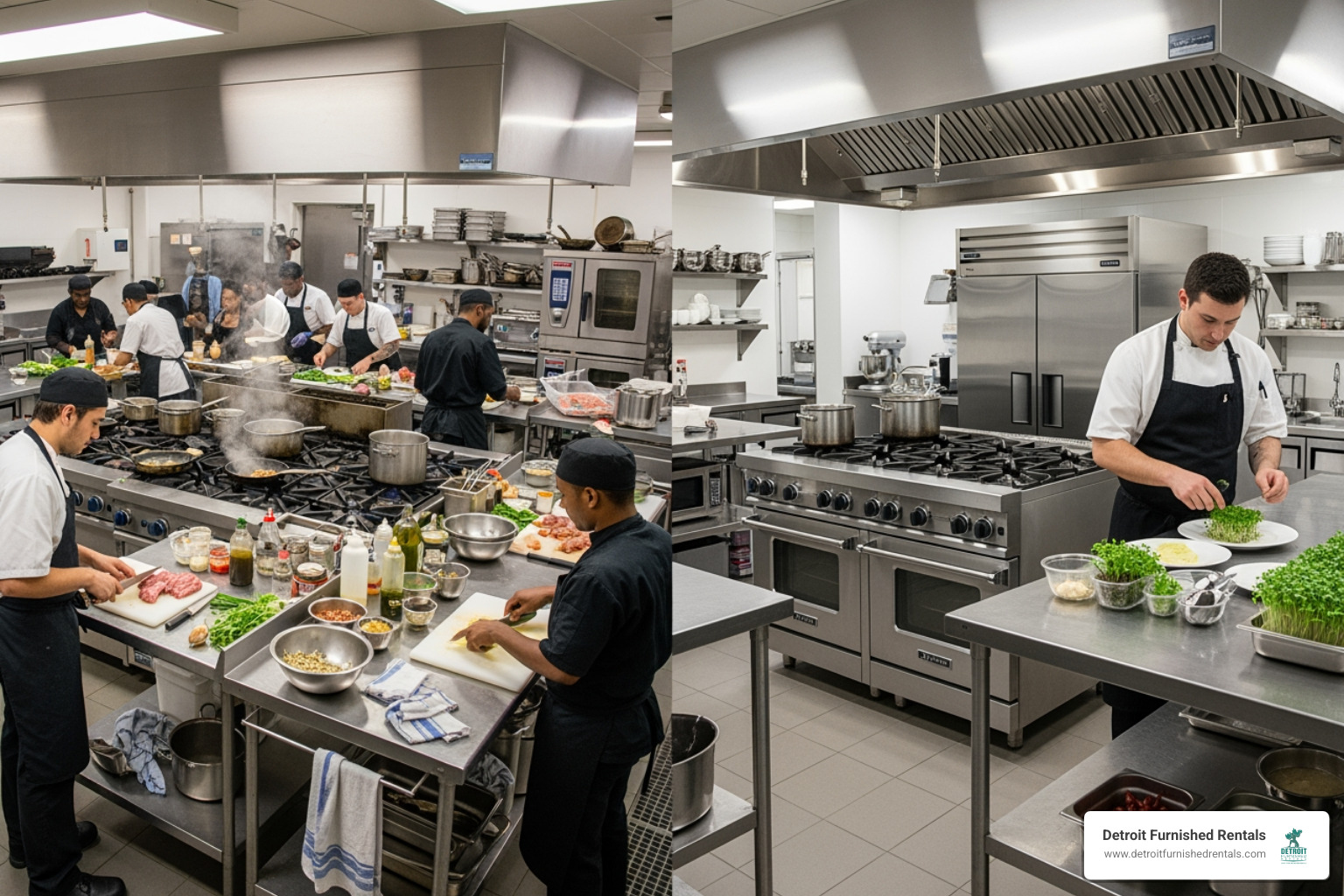
When looking for a fully equipped kitchen rental, you’ll find various models, each with unique benefits. This section helps you decide which model fits your business needs, from solo operator to growing team.
Shared Kitchens vs. Private Kitchens
The primary distinction in the rental kitchen world is between shared and private spaces. Choosing the right one depends on your need for collaboration, privacy, and budget.
-
Commissary Kitchens (Shared Kitchens):
- Concept: These are multi-tenant facilities where several food businesses share the same cooking equipment and prep spaces at different times. They are essentially a “cooking collective” or a “kitchen incubator.”
- Benefits: Lower cost, as overhead is split among many users. They often foster a strong sense of community, providing networking opportunities with other food entrepreneurs. Many shared kitchens are designed to encourage advice exchange and collaboration, which can be invaluable for startups.
- Ideal for: Caterers, food truck operators, meal prep services, or packaged goods producers who need flexible access without the need for a dedicated, round-the-clock space.
- Considerations: You’ll need to schedule your time carefully, and you’ll be sharing equipment and common areas, so clear communication and respect for other users are key.
-
Private Kitchens:
- Concept: An exclusive, permit-ready space that you can outfit and use on your own schedule, often 24/7. These kitchens offer more control and privacy.
- Benefits: Complete autonomy over your workspace, allowing for greater customization and consistent workflow. You won’t need to coordinate with other users, and you can leave your specialized equipment or ingredients in place. They are often “permit-ready,” meaning they’ve met the necessary health and safety codes, allowing you to get up and running quickly—sometimes in about a week.
- Ideal for: Businesses requiring high levels of security, specific equipment setups, consistent production schedules, or those who simply prefer a dedicated space. This might include larger catering operations, specialized food manufacturers, or even ghost kitchens.
- Considerations: Typically come at a higher cost due to the exclusivity and dedicated resources.
-
Ghost Kitchens:
- Concept: A type of private kitchen or a dedicated section within a shared kitchen, specifically optimized for delivery-only food concepts. They lack a traditional storefront or dining area.
- Benefits: Designed for efficiency in food preparation and packaging for delivery, reducing real estate costs associated with customer-facing operations.
- Ideal for: Delivery-only restaurants, virtual brands, or businesses looking to expand their delivery footprint in areas like Detroit without opening a full-service restaurant.
Here’s a quick comparison:
| Feature | Shared Kitchens (Commissary) | Private Kitchens |
|---|---|---|
| Cost | Lower, shared overhead | Higher, exclusive use |
| Flexibility | High (hourly, daily booking) | High (24/7 access, personal scheduling) |
| Privacy | Limited, shared space | High, dedicated space |
| Equipment Access | Shared industrial equipment | Dedicated industrial equipment, potential for customization |
| Community | Strong, networking opportunities | Limited, focused on individual business |
Exploring Different Rental Durations
Just as there are different types of kitchens, there are also various rental durations to match your business cycle.
- Hourly & Daily: These short-term options are best for one-off events, small batch production, recipe testing, or occasional overflow work. They offer maximum flexibility and minimal commitment, perfect for new businesses or those with unpredictable schedules.
- Weekly & Monthly: Ideal for businesses with a more regular production schedule. These options often come with slightly lower effective hourly rates than pure hourly rentals and can include dedicated storage space. They provide a stable base for consistent operations without the long-term commitment of a lease.
- Yearly Leases: Suited for established businesses needing a stable, long-term operational base. These leases offer the most cost-effective rates over time and provide the security of a permanent-feeling space without the property ownership responsibilities. They are often customizable, allowing businesses to tailor the kitchen to their specific needs.
Many entrepreneurs on temporary assignment in Detroit, whether they’re launching a new culinary venture or managing an existing one, find short-term rentals in Detroit to be a flexible housing solution. Just as flexible kitchen rentals support their business, flexible housing supports their lifestyle.
Your Checklist for Choosing the Right Kitchen Space
Finding the right fully equipped kitchen rental is about more than just equipment; it’s about ensuring safety, compliance, and a supportive environment. A thorough evaluation will save you headaches, so we recommend using a detailed checklist.
Licensing and Insurance Requirements
Operating a food business, even from a rental kitchen, comes with legal obligations. We can’t stress enough the importance of understanding and meeting these requirements.
- Business License and Registration: Ensure your business is a legal entity and registered with the state of Michigan and the city of Detroit. This is foundational for any legitimate operation.
- Food Handler Permits: You and your staff who handle food will need valid food handler permits or certifications, as required by the Detroit Health Department.
- General Liability Insurance: Most fully equipped kitchen rental facilities will require you to carry general liability insurance. This protects both you and the kitchen provider in case of accidents or incidents. Policies can vary, but expect to budget anywhere from $500–$2,000 per year for this.
- Health Department Compliance: This is non-negotiable. Verify that the kitchen is certified by the local health authority (e.g., Detroit Health Department) and regularly inspected. Renting a compliant kitchen means you’re operating out of a space that already meets the stringent codes for sanitation, fire safety, and food storage.
What to look for in a quality fully equipped kitchen rental
When you tour potential kitchen rentals, keep a keen eye on these critical aspects. Don’t be afraid to ask questions!
- Equipment Quality and Maintenance Schedule: Don’t just check if the equipment is there; assess its condition. Does it look well-maintained? Are there regular servicing records? You want reliable industrial-grade equipment like:
- 6-burner gas stoves and ovens
- Convection ovens
- Commercial mixers (stand mixers, planetary mixers)
- Walk-in refrigerators and freezers
- Stainless steel prep tables
- High-capacity dishwashing stations
- Specialty items like griddles, charbroilers, deep fryers, or even sous-vide machines, depending on your needs.
- Available Storage: Confirm the availability and cost of cold, dry, and freezer storage. Adequate storage is essential for ingredients and finished products.
- Cleanliness and Sanitation Protocols: A clean kitchen is a safe kitchen. Observe the general cleanliness during your tour and inquire about the facility’s sanitation protocols and cleaning schedules.
- Location, Parking, and Accessibility:
- Location: Is it conveniently located for your team, suppliers, and potential delivery routes in Detroit?
- Parking: Is there ample and safe parking for your vehicles and staff?
- Accessibility: Does the facility offer 24/7 access if your business operates outside standard hours? Is there easy loading dock access for deliveries?
- Booking Process: A user-friendly booking system is a huge plus. Look for providers that offer an online calendar system (like this example from Canada) that makes scheduling time efficient and transparent.
Community and Support
Beyond the physical space, a fully equipped kitchen rental, especially in a shared environment, can offer invaluable intangible benefits.
- Networking Opportunities: Many shared kitchens foster a collaborative environment. This means you’re not just renting a space; you’re joining a community of like-minded food entrepreneurs.
- Potential for Mentorship and Collaboration: Rubbing shoulders with other chefs, bakers, and food producers can lead to mentorship, shared insights, and even collaborative projects.
- Shared Resources and Knowledge Base: You might find opportunities to share resources, learn about new suppliers, or get advice on common business challenges from seasoned professionals.
For those relocating to Detroit to start their culinary venture, a comfortable living space like a furnished studio apartment in Detroit can make all the difference. Having a stable and well-equipped home base allows you to fully focus on building your business in your new fully equipped kitchen rental.
Frequently Asked Questions about Kitchen Rentals
Diving into fully equipped kitchen rental can bring up many questions. Here, we address common inquiries from food entrepreneurs in Detroit and beyond.
What kind of equipment can I expect in a rental kitchen?
A quality fully equipped kitchen rental typically includes a robust array of industrial-grade equipment for commercial production, far beyond what’s in a home kitchen. This includes:
- Cooking Equipment: Multi-burner gas stoves (often 6-burner or more), powerful convection ovens, commercial-grade flat-top griddles, charbroilers, and deep fryers. Some high-end facilities, such as the example chef’s kitchen rental in New York, might even offer specialized items like induction burners, commercial-grade ice makers, sous-vide machines, or industrial food processors and mixers.
- Refrigeration and Storage: Ample refrigeration, including walk-in refrigerators and freezers, along with plenty of dry storage space for non-perishable ingredients and packaging.
- Prep Areas: Large, durable stainless steel prep tables that are easy to clean and sanitize.
- Dishwashing Stations: High-capacity, commercial dishwashers and three-compartment sinks for efficient and compliant warewashing.
- Ventilation: Professional exhaust hoods with fire suppression systems (Ansul systems) are standard, especially for kitchens handling grease-laden vapors.
It’s always a good idea to confirm the specific equipment list with any Detroit kitchen rental provider you’re considering, especially if you have particular needs for your production.
Are there any hidden costs I should be aware of?
While fully equipped kitchen rental is cost-effective, additional fees can exist beyond the advertised rate. Always ask for a detailed breakdown of all potential costs upfront. These can include:
- One-time Membership or Application Fees: Some kitchens require an initial fee to join their community.
- Security Deposits: Similar to renting an apartment, a deposit is typically required to cover potential damages or outstanding balances.
- Mandatory Cleaning Fees: Even if you’re expected to clean up after yourself, some facilities charge a fixed cleaning fee per use or per month to cover deep cleaning or common areas.
- Separate Storage Charges: While basic storage might be included, dedicated cold, freezer, or dry storage space often comes with an additional monthly fee.
- Insurance Requirements: As mentioned, you’ll need general liability insurance, and while it’s not a fee paid to the kitchen, it’s a necessary cost of doing business there.
- Utility Surcharges: While many rentals include basic utilities, some might have surcharges for unusually high electricity or gas consumption.
Always get a comprehensive quote and clarify what is and isn’t included in the base price.
How does a commercial kitchen rental help with regulatory compliance?
Navigating health and safety regulations is a major headache for food businesses. A fully equipped kitchen rental provides a significant shortcut to compliance, letting you focus on your culinary craft instead of bureaucracy.
- Pre-approved Facilities: When you rent a licensed commercial kitchen, you are operating out of a space that has already been inspected, approved, and certified by the local health department (like the Detroit Health Department). This means the facility meets stringent codes for sanitation, fire safety, food storage temperatures, proper ventilation, and waste disposal.
- Regular Inspections: These commercial kitchens are typically subject to regular inspections by health authorities. This ensures ongoing compliance and means the facility management is responsible for maintaining the standards, not you.
- Access to Proper Equipment: The industrial-grade equipment in these kitchens is designed to meet commercial health and safety standards, from stainless steel surfaces to professional dishwashers that sanitize effectively.
- Reduced Personal Risk: Operating from an unapproved home kitchen can lead to fines, business closure, and reputational damage. A commercial rental eliminates this risk, providing a legal and safe environment for your production.
A commercial kitchen rental takes the heavy lifting of regulatory compliance off your shoulders, giving you peace of mind and a legitimate foundation for your food business.
Conclusion: Find Your Kitchen and Get Cooking
Renting a fully equipped kitchen rental is truly a game-changer, lowering the barrier to entry for passionate food entrepreneurs across Detroit and beyond. It provides a cost-effective, flexible, and professional solution that empowers you to launch, scale, or simply refine your culinary business without the monumental investment and logistical headaches of building your own facility. From accessing top-tier equipment to ensuring regulatory compliance and fostering a supportive community, these rentals offer a springboard for success.
We at Detroit Furnished Rentals are proud to support the city’s growing community of creators and business owners. We understand that while you’re busy perfecting your recipes and building your brand in a commercial kitchen, you also need a comfortable and convenient place to call home. That’s why we specialize in providing flexible, fully furnished accommodations designed to meet the needs of professionals and entrepreneurs.
Once you’ve found your dream fully equipped kitchen rental in Detroit, let us help you find your perfect home base. Explore our fully furnished apartments in Detroit to settle in and truly begin your culinary journey in our vibrant city.