DSO Detroit: America’s Fourth-Oldest Orchestra in the Heart of Midtown
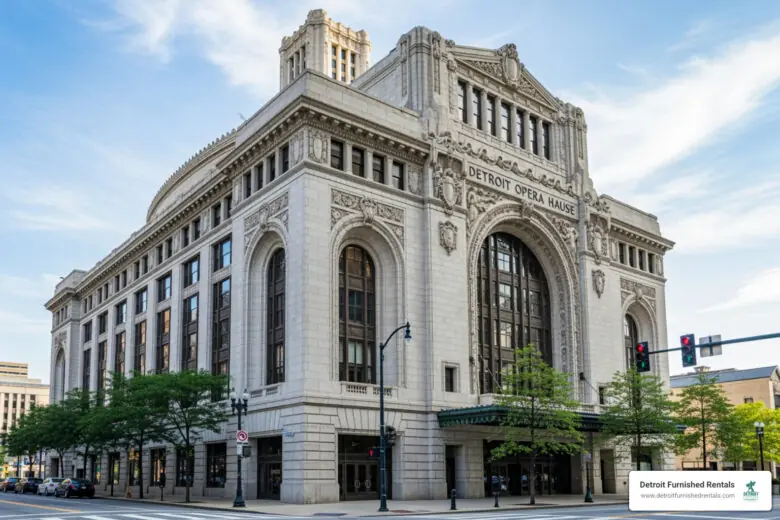
DSO Detroit — the Detroit Symphony Orchestra — is one of America’s most storied orchestras, performing at the iconic Orchestra Hall inside the Max M. & Marjorie S. Fisher Music Center at 3711 Woodward Ave, Detroit, MI 48201.
Here’s what you need to know at a glance:
| Founded | 1887 (permanently resumed 1914) |
| Venue | Max M. & Marjorie S. Fisher Music Center |
| Address | 3711 Woodward Ave, Detroit, MI 48201 |
| Music Director | Jader Bignamini (through 2030-2031) |
| Box Office Phone | 313.576.5111 |
| Box Office Hours | Mon-Fri 9am-5pm, plus 2 hours before concerts |
| Tickets | In-person, subscriptions, and free livestreams available |
| Annual Reach | 500,000+ people through music and education programs |
Whether you’re visiting Detroit for the first time or you’re a local looking for your next night out, the DSO offers everything from classical series and jazz concerts to sensory-friendly events and free online webcasts.
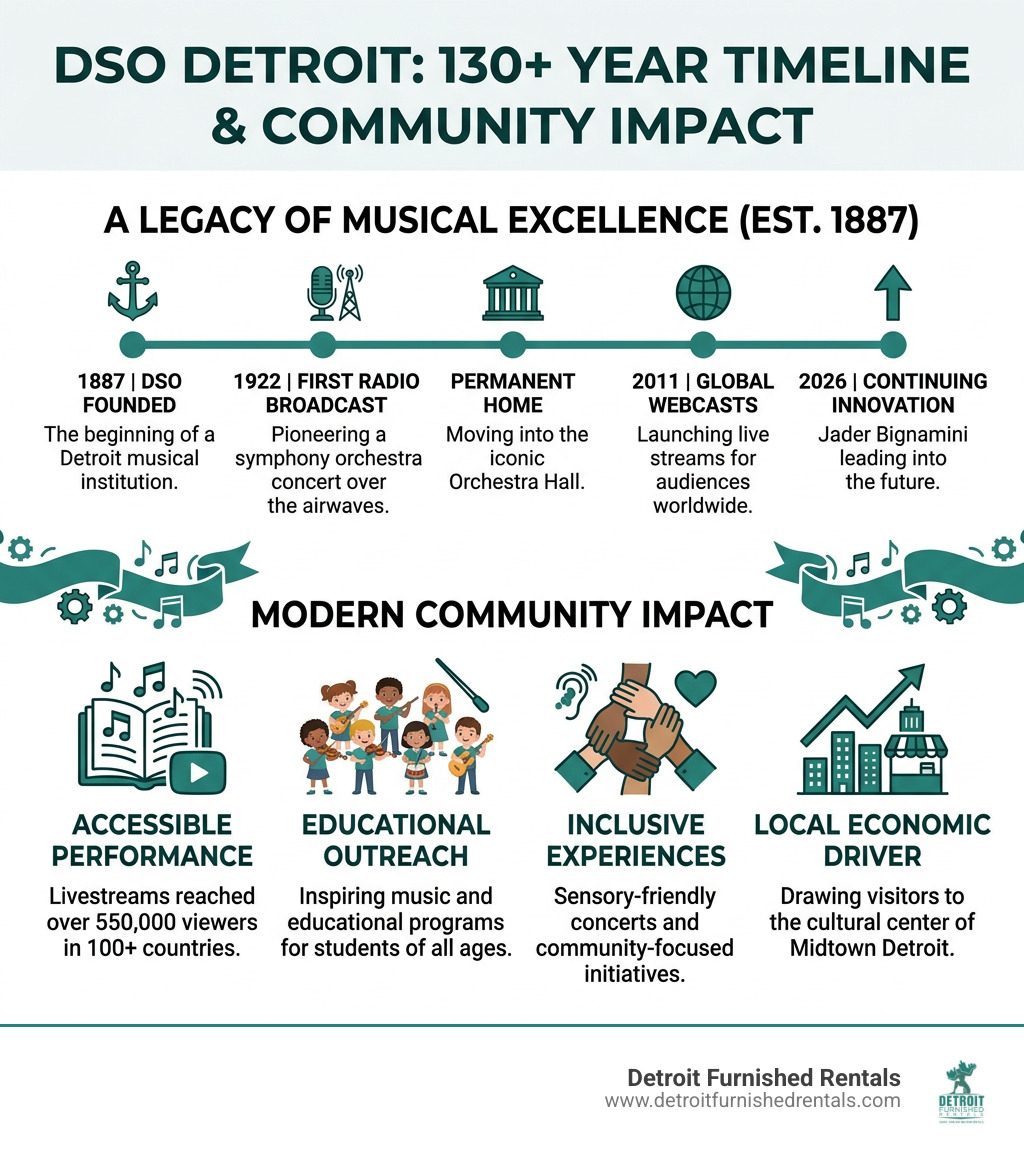
The orchestra’s history runs deep. It pioneered the first-ever radio broadcast of a symphony orchestra concert in 1922. Today it continues to push boundaries — streaming live concerts to over 550,000 viewers in more than 100 countries since 2011.
I’m Sean Swain, a Detroit-based hospitality operator with rentals steps away from the cultural landmarks that make this city special, including DSO Detroit. My experience helping guests explore Midtown Detroit gives me a front-row seat to what makes the orchestra such a draw for visitors and locals alike.
Dso detroit glossary:
The History and Significance of the DSO Detroit
The dso detroit is more than just a musical ensemble; it is a reflection of the city’s own resilience and innovation. Founded in 1887, it holds the distinction of being America’s fourth-oldest orchestra. While it faced a brief period of silence after 1910, it was revived in 1914 thanks to the efforts of ten dedicated Detroit society women who each contributed $100 to ensure the music continued.
One of the most remarkable chapters in its history is the construction of Orchestra Hall in 1919. Built in a staggering four months and twenty-three days, the hall was commissioned by the legendary Ossip Gabrilowitsch, who refused to accept the post of music director unless a suitable permanent home was built. This venue, known for its world-class acoustics, remains the heart of the orchestra’s operations today.
The dso detroit has always been a pioneer. In 1922, it became the first symphony orchestra to broadcast a concert on the radio. During the mid-20th century, it served as the official orchestra for “The Ford Sunday Evening Hour.” Perhaps most uniquely for a classical ensemble, the DSO played a hidden role in the “Motown Sound” of the 1960s, with its musicians frequently recording string accompaniments for legendary hits by artists like The Supremes.
The modern era has seen its own share of drama and triumph. The tenure of Neeme Järvi (1990–2005) brought international acclaim and a prolific recording schedule. However, the orchestra also faced a significant challenge during the 2010-2011 musicians’ strike, a difficult period that eventually led to a new vision for the organization. This “forward-thinking” approach focused on accessibility and community, resulting in a nearly 25% growth in subscriptions shortly after. For a deeper dive into these milestones, check out our Detroit Symphony Orchestra Complete Guide.
Artistic Leadership and Performance Series
Today, the dso detroit is led by Music Director Jader Bignamini. Appointed in 2020, Bignamini has quickly become a beloved figure in Detroit, known for his passion and precision. His connection with the musicians was so immediate that his contract has already been extended through the 2030-2031 season.
The leadership team also includes exciting new voices. The orchestra recently made waves with its Principal Pops Conductor announcement, ensuring that the popular music side of the house remains as vibrant as the classical.
Audiences can choose from a variety of signature series:
- PVS Classical Series: The core of the DSO’s programming, featuring timeless masterpieces and world premieres.
- Paradise Jazz Series: Celebrating Detroit’s rich jazz heritage in the venue formerly known as the Paradise Theatre.
- Pops Series: From movie scores to Broadway hits, these concerts are designed for broad appeal.
The DSO isn’t afraid to blend genres, either. Notable past events, such as the DSO Big Sean Concert at Orchestra Hall Detroit USA, demonstrate how the orchestra bridges the gap between classical tradition and modern Detroit culture.
Upcoming Highlights in the dso detroit Season
The current season is packed with must-see events. The “Holidays at the DSO” series is a local favorite, bringing festive spirit to Orchestra Hall with time-honored traditions. Another highlight is the Northern Lights Festival, which focuses on the lush, atmospheric works of Nordic composers like Sibelius and Nielsen.
Featured guest artists often include world-renowned names such as violinist Hilary Hahn and conductor Herbert Blomstedt. The orchestra also prioritizes contemporary voices, such as Michael Abels, whose work often explores social and historical themes.
If you’re planning to attend multiple shows, the Create Your Own Season package is the best way to save. You can pick any three or more concerts and enjoy subscriber benefits.
Visiting the Max M. & Marjorie S. Fisher Music Center
The Max M. & Marjorie S. Fisher Music Center, affectionately known as “The Max,” is a 135,000-square-foot facility that serves as a cultural anchor for Midtown. Located right on Woodward Avenue, it is easily accessible for those staying in our centrally located apartments. You can find the exact location by using this Open in Google Maps link.
The complex is a blend of the historic and the modern:
- Orchestra Hall: The 2,000-seat crown jewel known for its perfect acoustics.
- The Peter D. and Julie F. Cummings Cube (“The Cube”): A flexible, smaller space for contemporary music, jazz, and boundary-pushing performances.
- Sosnick Courtyard: An outdoor space used for community events and summer concerts.
- William Davidson Atrium: A stunning, glass-walled space perfect for pre-concert mingling.
Essential Venue Policies for dso detroit Attendees
To ensure everyone has a great time, the dso detroit maintains several helpful policies:
- Bag Policy: For safety, all bags are inspected. Purses, medical bags, and diaper bags smaller than 14” x 14” x 6” are permitted. Large backpacks and suitcases are not allowed, and there is no storage on-site.
- Accessibility: The venue is fully accessible. They offer sensory toolkits (including noise-reducing headphones and fidget toys) at the Box Office and have a dedicated quiet room on the third floor for those needing a sensory break.
- Dining: Starting in January 2025, Adobe Fine Dining will provide catering, featuring chefs with impressive backgrounds from Netflix’s “The Pressure Cooker” and local favorites like Selden Standard.
- Photography: Photography is encouraged in the lobby and before the show, but flash photography and video recording are strictly prohibited during the performance to respect the musicians and other patrons.
For a full breakdown of what to expect, we recommend reading the official In-Person Experience guide.
Community Engagement and Digital Innovation
The dso detroit mission extends far beyond the walls of Orchestra Hall. Each year, the organization reaches over 500,000 people through its community and educational initiatives. From the Detroit Symphony Youth Orchestra to the Neighborhood Series—which brings world-class music to venues across metro Detroit—the DSO is committed to being “the most accessible orchestra on the planet.”
Their digital innovation is particularly impressive. The Live from Orchestra Hall webcasts have allowed the DSO to build a global audience. If you miss a live show, the DSO Replay archive offers a treasure trove of past performances for you to enjoy from the comfort of your rental.
Inclusivity is also a major focus. The orchestra regularly hosts sensory-friendly events designed for children and adults with autism or other sensory processing differences. These concerts feature relaxed house rules, lower volume levels, and plenty of space to move around. You can learn more about these efforts on our Detroit Symphony Orchestra page.
Frequently Asked Questions about the DSO
When was the DSO founded and where is it located?
The DSO performed its first concert on December 19, 1887. After a brief hiatus, it permanently resumed in 1914. It is located in the heart of Midtown Detroit at the Max M. & Marjorie S. Fisher Music Center, 3711 Woodward Ave, Detroit, MI 48201.
What are the primary ticket and subscription options?
There are many ways to experience the dso detroit. You can buy individual tickets, but many patrons prefer the Subscribe Today option. The “Create Your Own” package allows you to choose 3+ concerts and save significantly. Additionally, the DSO offers “patron-minded pricing” with tickets as low as $15-$25 for many performances to ensure the music remains accessible to everyone. Corporate and social groups of 10 or more can also access discounts of up to 30%.
How does the DSO support accessibility and inclusion?
Accessibility is a core value for the Orchestra. The Max is equipped with wheelchair-accessible seating and elevators. For those with sensory sensitivities, the DSO provides noise-reducing headphones, sensory toolkits, and a dedicated quiet room. They also offer sensory-friendly concerts where the environment is adjusted to be more welcoming and less overwhelming.
Conclusion
The dso detroit is a crown jewel of the city’s cultural landscape. Whether you are supporting them through community donations, volunteering your time, or bringing your team for one of their unique corporate group experiences, you are participating in a 130-year legacy of excellence.
At Detroit Furnished Rentals, we love seeing our guests immerse themselves in the local arts scene. The DSO is just a short trip from our properties, making it the perfect centerpiece for your Detroit itinerary. After you’ve enjoyed the symphony, don’t forget to Plan your visit to Detroit’s historic theatres to see what else our incredible city has to offer. We look forward to hosting you on your next musical journey to Detroit!