Choose Beginner Ice Skates That Build Confidence
The best ice skates for beginners are supportive, properly fitted, and matched to how you plan to skate. Choose a recreational soft boot for casual rink visits, a figure-skate set for lessons and basic skills, or a hockey skate if you are joining a learn-to-play program.
For most adult beginners, look for a reputable skate set with a moderate support level and expect to spend about $150 or more. Avoid loose boots, overly stiff skates, and bargain pairs with weak ankle support. A secure heel, snug fit, and professionally sharpened blades will do more for a smooth first session than a flashy design.
This guide compares top beginner-friendly models from Riedell, Jackson, Rollerblade, and Bauer, plus the fit, break-in, and safety basics that help you move beyond uncomfortable rental skates.
I am Sean Swain, a Detroit-based hospitality operator and local travel writer who helps visitors make the most of their time in the city. While researching the best ice skates for beginners, I focus on practical, clear advice for adults and families planning an easy, confident day at the rink.
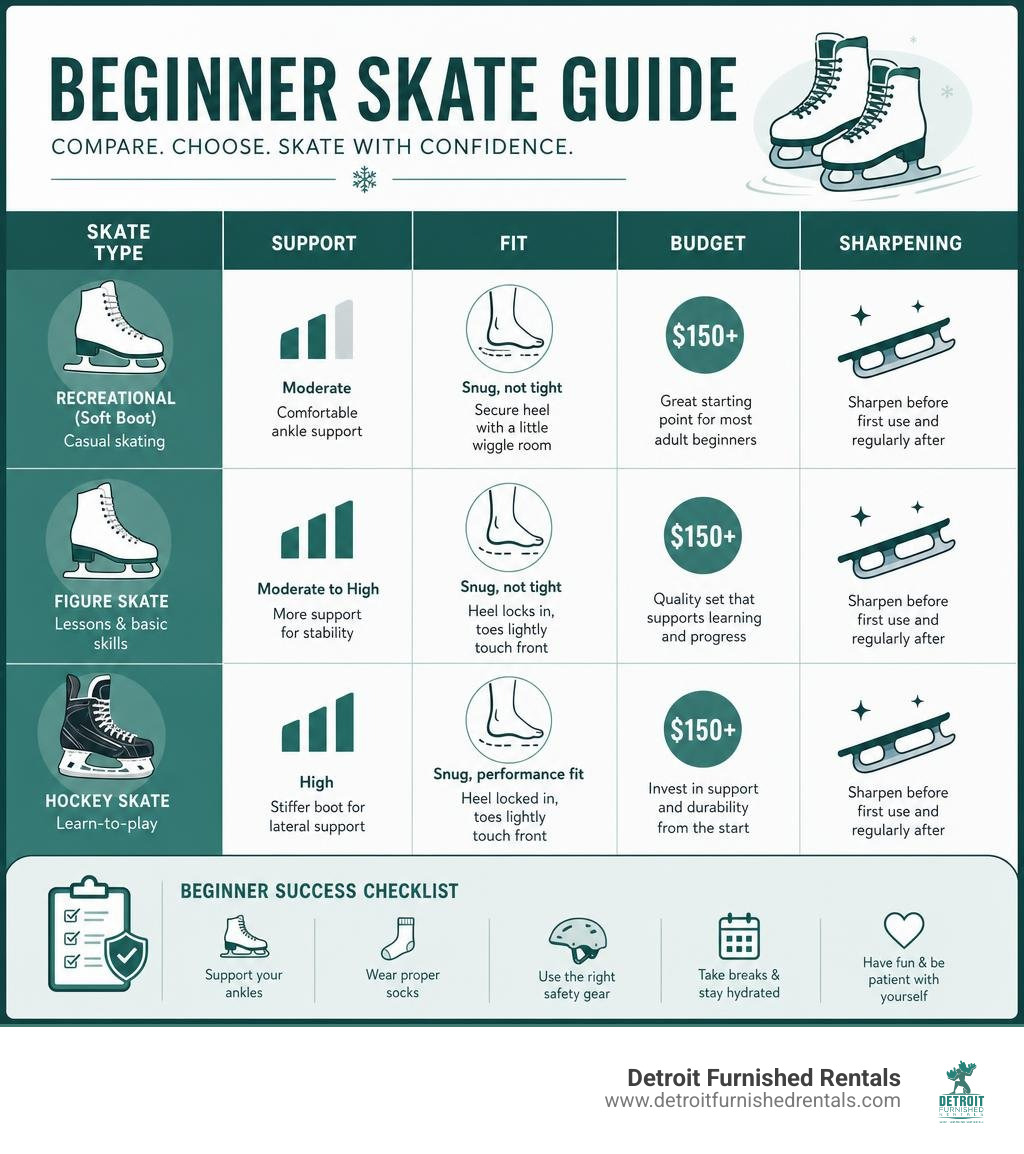
Common best ice skates for beginners vocab:
How to Choose the Best Ice Skates for Beginners
Stepping onto an ice rink in worn-out rental skates is the fastest way to convince yourself that ice skating is miserable. Flimsy ankle collars, broken-down leather, and dull blades leave your feet aching and your ankles wobbling outward. Investing in your own dedicated pair changes the entire experience.
When selecting your first pair, focus on structural integrity rather than cosmetic appeal. Department store skates priced under $50 often lack reinforced ankle counters, causing feet to pronate inward and making it nearly impossible to balance. A quality beginner setup aligns your body weight over the center of the blade, giving you the stability needed to master forward strides, gliding, and stopping.
Skate Types: Recreational vs. Figure vs. Hockey
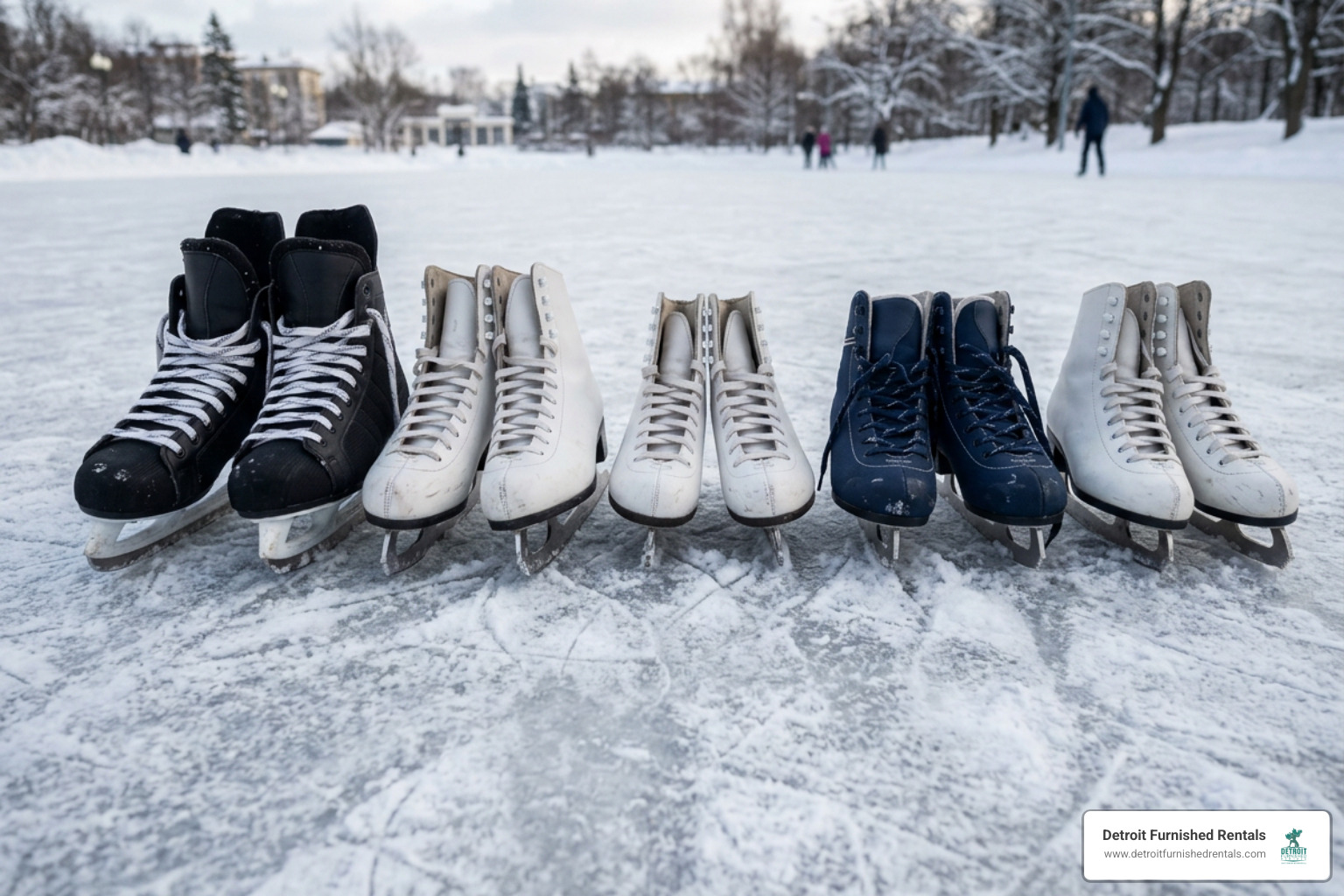
Before purchasing, determine which discipline matches your skating goals. The three primary styles of beginner ice skates feature distinct blade geometries, boot constructions, and closure systems.
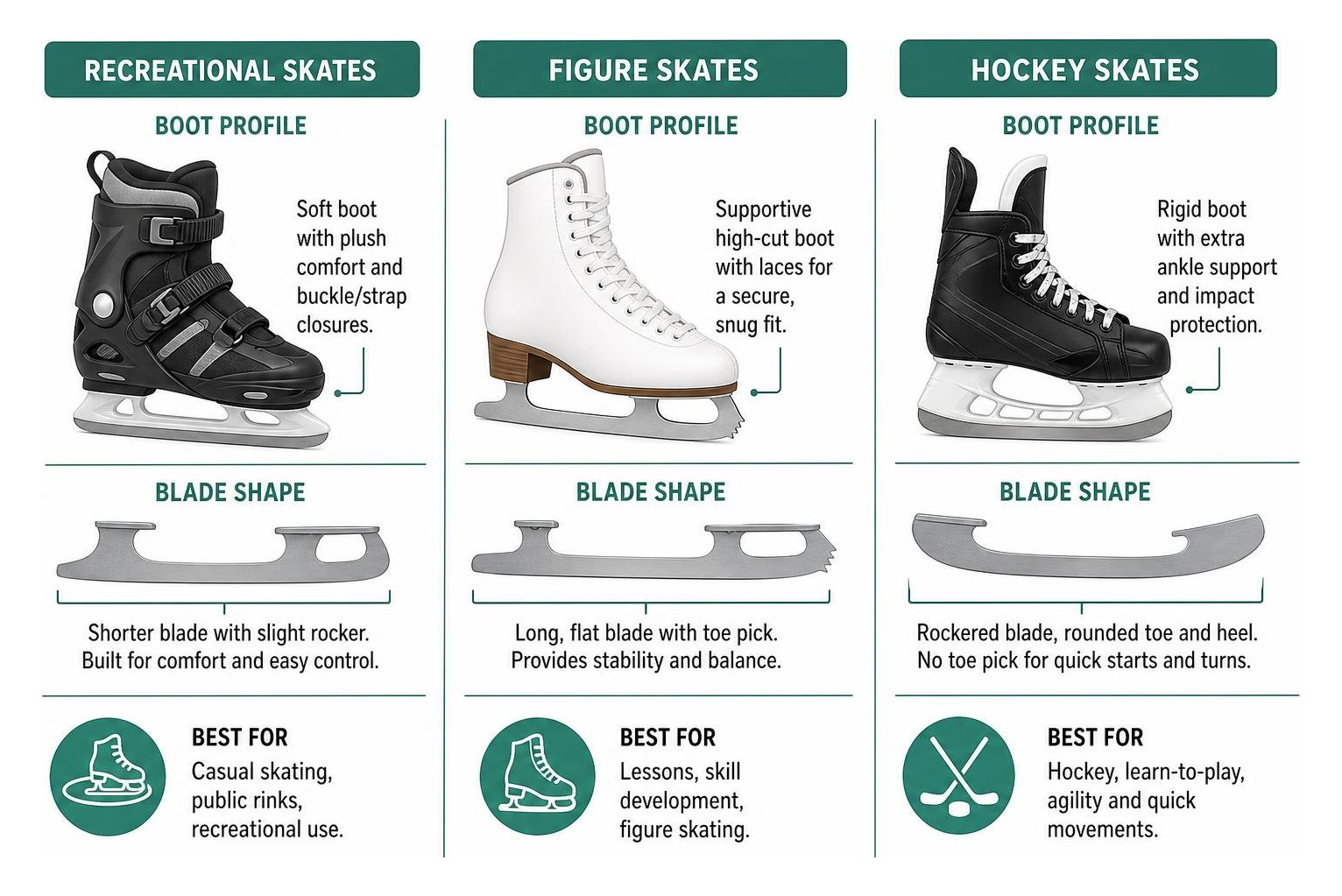
- Recreational Skates: Built with soft-boot architecture, plush insulation, and multi-retention buckle-and-strap closures reminiscent of inline fitness skates or ski boots. They offer out-of-the-box comfort with virtually no break-in period, making them ideal for casual public rink sessions or frozen ponds.
- Figure Skates: Feature longer, flatter blades with a serrated toe pick at the front. The extended blade provides longitudinal stability, helping new skaters maintain their balance front-to-back. To explore comprehensive boot-and-blade systems, consult The Complete Ice Skates Buying Guide.
- Hockey Skates: Designed with rockered (curved) blades, rounded at both the toe and heel, with no toe pick. They emphasize rapid acceleration, tight maneuvers, and lateral agility. The hard composite or molded shell protects feet from puck impacts while supporting upright posture.
| Feature | Recreational Skates | Figure Skates | Hockey Skates |
|---|---|---|---|
| Primary Blade Shape | Flat to slightly curved | Long, flat profile with toe pick | Short, rockered curve with no toe pick |
| Boot Construction | Cushioned soft boot, synthetic shell | Traditional reinforced vinyl or leather | Hard molded composite or nylon |
| Closure System | Laces, 45° powerstrap, cuff buckle | Traditional full-length lacing hooks | Heavy-duty waxed or standard laces |
| Best Suited For | Casual winter outings & leisure | Group lessons, edges, basic jumps | Learn-to-play hockey & quick agility |
| Typical Break-In | Minimal to zero | 5 to 10 skating hours | 5 to 8 skating hours |
Boot Stiffness, Budget, and Sizing Essentials
Boot stiffness measures the rigidity of the ankle support. For adult beginners, a stiffness rating between 20 and 30 provides the sweet spot. Boots that are too soft collapse under adult body weight, while boots with competitive stiffness ratings (50+) prevent the deep knee flexion required to learn edge work. Recreational-level boots in this range typically last adult learners one to two years of consistent weekly use.
For budget planning, expect to invest at least $150 for a dependable adult starter set. Quality materials like moisture-wicking Dri-Lex linings, reinforced PVC or lightweight Helios outsoles, and durable stainless steel runners provide the structural support necessary for safe learning.
Sizing differs dramatically from regular street shoes:
- Downsize Accordingly: Most figure skates run 1 to 2 sizes smaller than your standard US street shoe size.
- Verify Heel Lock: When standing with knees bent, your heel must remain firmly locked into the pocket without lifting when rising onto your toes.
- Check Toe Clearance: Toes should lie flat and lightly graze the front cap while standing upright, pulling back slightly as your knees bend into an athletic skating stance.
Finding the proper fit ensures you stay comfortable when exploring our best ice skating locations a detailed guide for local rinks.
Top Rated Ice Skate Models for New Skaters
Beginner skates should eliminate frustration, not create it. The following complete skate sets come pre-assembled with factory-mounted blades, dependable ankle support, and durable synthetic uppers engineered for longevity.
Best Ice Skates for Beginners in Figure and Recreational Skating
For skaters pursuing classical lessons, recreational figure skating, or leisure winter sessions, these models deliver exceptional balance, comfort, and lateral stability.
- Jackson Artiste: Frequently regarded as the gold standard for adult beginners entering group lessons. Priced around $150 to $180 with an approximate stiffness rating of 25, the Artiste features microfiber lining, reinforced vinyl uppers, and factory-mounted Ultima Mark IV blades that support basic edge work and introductory spins.
- Sparkle Skate Set | Riedell Casual Ice Skates: Retailing at $129, this set carries a light support rating of 25. Featuring 100% vegan uppers, a split-tongue design, maintenance-free PVC outsoles, and a Spiral stainless steel blade with a straight rake toe pick, it is an accessible starter choice for basic stroking and public sessions.
- AURORA W – Figure – Women – Rollerblade USA: Priced at $99.99, the Aurora blends classic figure skate aesthetics with soft-boot warmth. It incorporates synthetic fur lining, dual-density foam padding, and flex notches that promote forward knee bend without sacrificing lateral stability.
- Riedell Crystal Skate Set | Developmental Ice Skates: For beginners planning to progress quickly into single jumps and preliminary synchronized skating, the $275 Crystal set offers a firmer support level of 50. It pairs a lightweight Helios outsole (30% lighter than standard PVC) with an Eclipse Vesta 7-foot radius stainless steel blade.
- IGNITER ICE W – Fun – Women – Rollerblade USA: A dedicated recreational soft-boot skate priced at $119.99. Utilizing a triple-closure system (cuff buckle, 45-degree powerstrap, and traditional laces), it delivers immediate comfort and warm velvet insulation for leisure skaters who prefer skipping a traditional break-in period.
Best Ice Skates for Beginners in Learn-to-Play Hockey and Kids
If your path involves youth sports, agility training, or learn-to-play hockey clinics, these models provide impact resistance and stable profiles:
- BAUER X-LP SKATE INTERMEDIATE: Designed specifically for beginner and learn-to-play participants, the X-LP (priced around $112 to $150 across size ranges) features an easy-to-balance 13-foot blade radius. The profile offers generous surface contact with the ice, making upright balance intuitive, while a plush fleece liner and padded tongue keep feet warm and shielded.
- ALLURE G – Figure – Kids – Rollerblade USA: At $79.99, this youth figure skate provides reinforced vinyl uppers, padded velvet lining, and factory-sharpened stainless steel blades. Its fixed-size construction delivers stable ankle support that helps young skaters build proper technique compared to flexible adjustable models.
Equipping your family with dependable skates makes winter sessions on your own best home ice rink kits freeze the day with your own backyard rink rewarding and fun.
Skate Fit, Break-In, and Maintenance Tips
Breaking in a new pair of traditional skates typically requires 5 to 10 hours of on-ice use. To accelerate this process and avoid painful blisters:
- Wear Them Around the House: Fasten your skates over thin synthetic socks, put on hard plastic skate guards, and walk on carpeted floors for 15 to 20 minutes at a time.
- Lace with Flex: Use a half-knot lace-lock at the ankle instep, keeping the top hooks snug enough for support while allowing two fingers of forward flex at your shin.
- Keep Initial Sessions Short: Cap early rink sessions at 30 to 45 minutes to let boot padding mold to your ankle contours without causing foot fatigue.
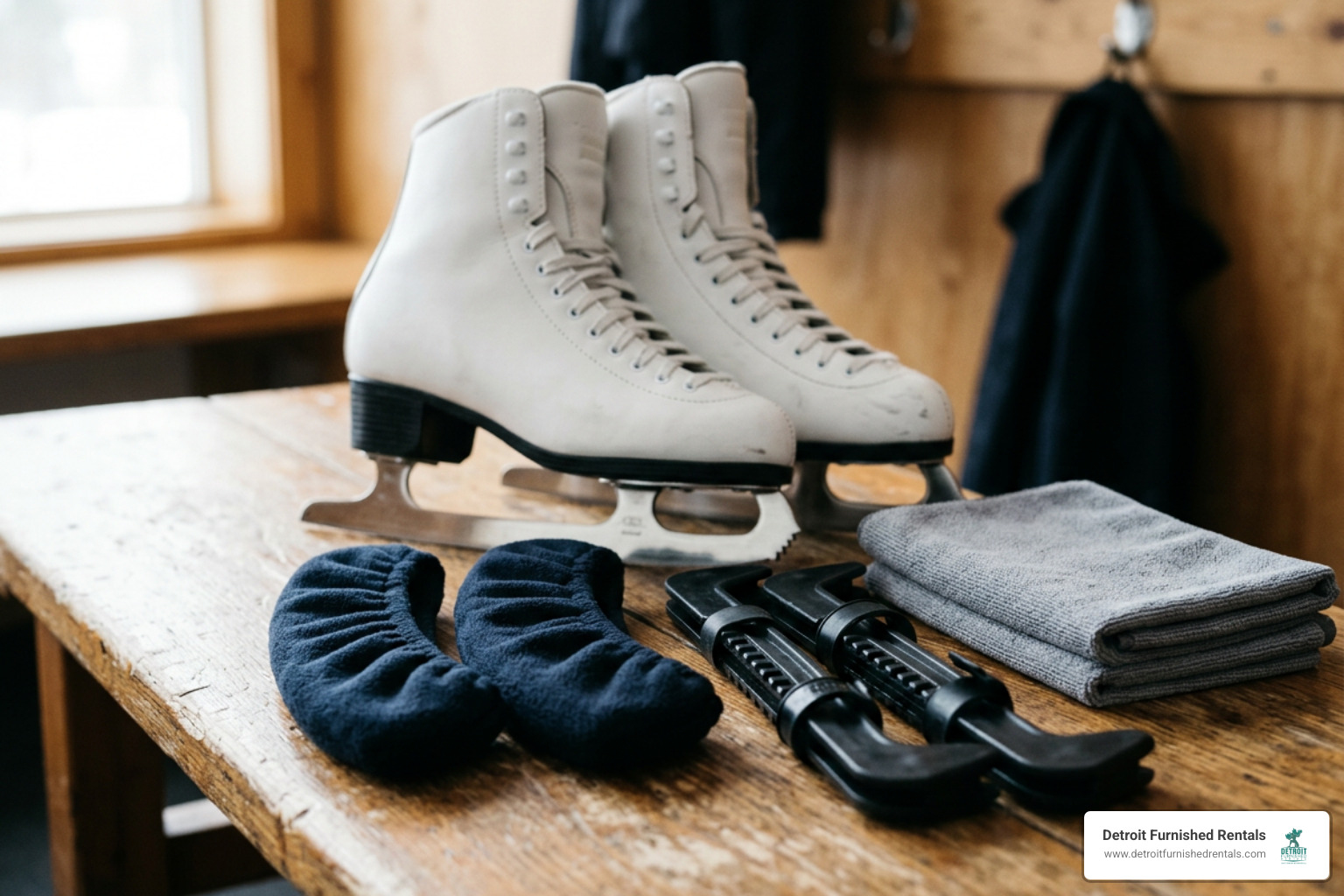
Blade maintenance is essential for safety and edge retention. While some recreational models arrive with factory-ground edges, most quality skates feature only transport edges that require professional sharpening before your first session. A beginner blade hollow (typically 1/2 inch to 5/8 inch radius of hollow) provides the right balance of glide and grip.
After stepping off the ice, dry your runners and soles with a microfiber towel to stop rust. Never leave hard walking guards on stored skates; use breathable fabric soakers to wick residual condensation away from the steel edges. To stay safe while building balance, review our smart headgear guide choosing the right ice skating helmet for every age.
Frequently Asked Questions About Beginner Ice Skates
Do new ice skates need to be sharpened before the first use?
Yes. Most quality ice skates leave the factory with a basic flat grind designed for shipping safety rather than on-ice performance. Before stepping onto the ice, take new skates to a certified rink pro shop to have a concave hollow groove ground into the runner. This edge provides the grip required for clean stroking and controlled stopping. After the initial sharpening, have blades tuned every 20 to 30 skating hours.
Should beginners buy skates with blades attached or separate?
Beginners should purchase a complete skate set with factory-mounted blades. Complete sets (like the Jackson Artiste or Riedell Sparkle) eliminate the extra $100+ cost of standalone blades and pro-shop mounting fees. Pre-attached blades are engineered to handle all foundational skating milestones, including crossovers, two-foot spins, and introductory single jumps, before advanced freestyle training requires separate component selection.
What protective gear should beginner ice skaters wear?
Beginner skaters should prioritize a properly fitted, certified helmet (such as an ASTM-certified hockey or winter sports helmet). Wrist guards, cushioned knee pads, and padded impact shorts provide vital fall protection during early sessions. Standard inline skating protective pads work well on the ice, offering impact absorption and wrist bracing while building edge confidence.
Conclusion
Finding the right beginner ice skates comes down to matching your boot stiffness, discipline, and foot shape to a dependable setup. Stepping away from loose rental skates and into a dedicated pair gives your ankles the structural stability needed to glide smoothly, execute clean stops, and build real confidence on the ice.
When visiting Detroit during the winter months, lace up your new skates and take a spin under the skyline lights at the Downtown Detroit Ice Skating Rink at Campus Martius Park. Whether you are traveling for business or enjoying a seasonal getaway, we at Detroit Furnished Rentals provide welcoming, centrally located accommodations that place you near the city’s winter events. For a complete look at local arenas and winter rinks, check out the ultimate guide to ice skating in Detroit to plan your next outing.