

Is an Exposed Brick Loft Apartment Worth Renting?
An exposed brick loft apartment is worth considering if you want natural light, an open layout, and a home with historic character. The trade-offs are real: high ceilings and older windows can affect heating costs, while hard surfaces and open rooms can make noise and privacy harder to manage. Before you rent, check for window drafts, listen for noise, and confirm the total cost of utilities, parking, and pet fees.
For a short stay in Detroit, also check the details that shape your daily routine: reliable Wi-Fi, a usable kitchen, laundry access, and a place to work or give your dog some space.
I’m Sean Swain, and my wife and I manage furnished rentals in Detroit and Chicago. Our experience helping travelers choose a comfortable stay shapes this guide to finding an exposed brick loft apartment that works as well as it looks.
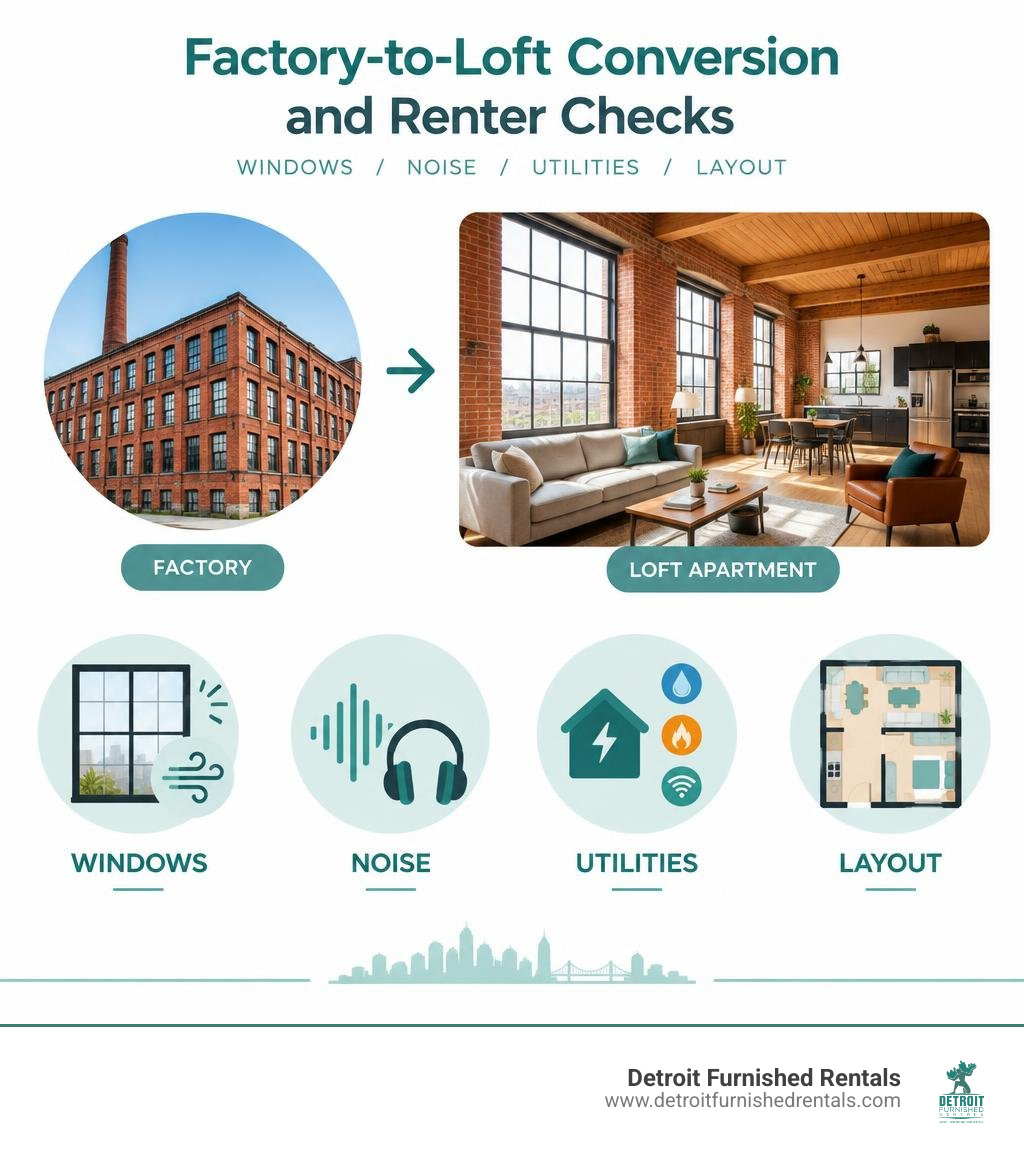
Exposed brick loft apartment vocabulary:
Architectural Styles of the Exposed Brick Loft Apartment
The term “loft” gets thrown around loosely in modern real estate, but architectural character comes down to how a building was constructed. True lofts were born from adaptive reuse—the process of converting defunct commercial, manufacturing, and civic spaces into residential homes. When you step inside an authentic converted space, you see structural history on display: rough-hewn support columns, heavy timber ceiling joists, steel support plates, and masonry walls laid by hand a century ago.
Understanding these architectural distinctions helps you choose a space that fits both your aesthetic taste and your daily lifestyle.
Hard Industrial, Warehouse, and School Conversions
“Hard lofts” are true historic conversions. These residences occupy buildings originally designed for heavy machinery, raw material storage, civic education, or religious gatherings.
- Industrial & Warehouse Conversions: Originally built with expansive floor plates to accommodate assembly lines or massive inventory, these spaces feature structural concrete or heavy timber framing. A classic example is the historic 1920 adaptive reuse at 310 Arlington Avenue (originally the Lance Cracker factory in Charlotte), where 12-foot ceilings and expansive walls of multi-pane glass preserve the building’s industrial manufacturing past. In former automotive and textile plants throughout the Midwest, it is common to find 15- to 20-foot ceilings, oversized support pillars, and raw red brick that still bears the patina of early 20th-century commerce.
- Schoolhouse & Civic Conversions: Converted schools, municipal halls, and churches offer a different architectural flavor. Rather than massive warehouse open spaces, schoolhouse lofts often showcase soaring arched windows, classroom chalkboards repurposed as design focal points, wide central hallways, and dramatic masonry detailing around original entryways.
- Artist Lofts: Emerging from the mid-century urban movements in industrial centers, artist lofts prioritize wide-open spans and abundant northern natural light. These live-work units frequently feature concrete floors, industrial utility sinks, and minimal interior dividing walls to give creators maximum flexibility.
Soft Lofts vs. Authentic Historic Conversions
If you love the visual texture of masonry and ductwork but prefer modern acoustic insulation and standard utility bills, you will encounter the “soft loft.” Soft lofts are newer constructions designed to emulate the industrial aesthetic while using contemporary building materials and techniques.
| Architectural Feature | Authentic Historic Hard Loft | Modern Soft Loft |
|---|---|---|
| Building Origin | Converted 19th/20th-century factory, warehouse, or school | Ground-up modern residential construction |
| Masonry Elements | Structural, load-bearing exterior brick with weathered patina | Decorative brick veneer, accent walls, or cast finishes |
| Interior Layout | Expansive open floor plans with minimal full-height walls | Traditional drywall-partitioned bedrooms with closet storage |
| Ceilings & Ductwork | Soaring structural timber/concrete spans (12–20+ ft); exposed HVAC | Finished drywall ceilings (9–11 ft) with exposed decorative spiral ducting |
| Acoustic Performance | Sound carries across hard masonry, open spans, and shared timber | Modern drywall framing with sound-dampening insulation batts |
| Energy Efficiency | Thick thermal mass brick; older multi-pane industrial window frames | Modern double- or triple-pane insulated low-E glazing units |
When planning to rent an apartment in Detroit, weighing these differences lets you decide whether you want the raw authenticity of early 1900s craftsmanship or the streamlined acoustic privacy of modern framing.
Rental Costs, Market Premiums, and Regional Price Trends
Because historic buildings have finite availability, authentic conversions occupy a unique position in urban rental markets. Demand for authentic architectural character consistently drives rental rates above those of cookie-cutter developments.
Why Choosing an Exposed Brick Loft Apartment Commands a Rental Premium
Across major metropolitan markets, lofts command an average rental premium of 10% to 20% over standard drywall apartments of comparable square footage. This price difference is driven by three main factors:
- Scarcity and Historic Value: You cannot easily build a new 1910 timber-frame warehouse. Historic properties like the 1912 Beaux-Arts Rowan Lofts in Downtown Los Angeles represent preserved history that attracts renters willing to pay for rare architectural details.
- Volumetric Living Space: While standard apartments offer 8- or 9-foot ceilings, industrial lofts offer 12- to 17-foot spans. Renters are paying for cubic volume and vertical breathing room, which creates an expansive living environment even within a modest floor plan.
- Walkable Urban Locations: Most historic factories were built along key transport lines, rivers, and downtown cores. Today, those districts boast high walkability scores—often between 90 and 97 out of 100—placing residents steps away from dining, transit, and entertainment.
If you are exploring your rental options, learning why renting a 1 BR loft apartment might be your best move yet can help clarify how square footage and vertical space translate into daily comfort.
Comparing Loft Rents Across Major Urban Centers
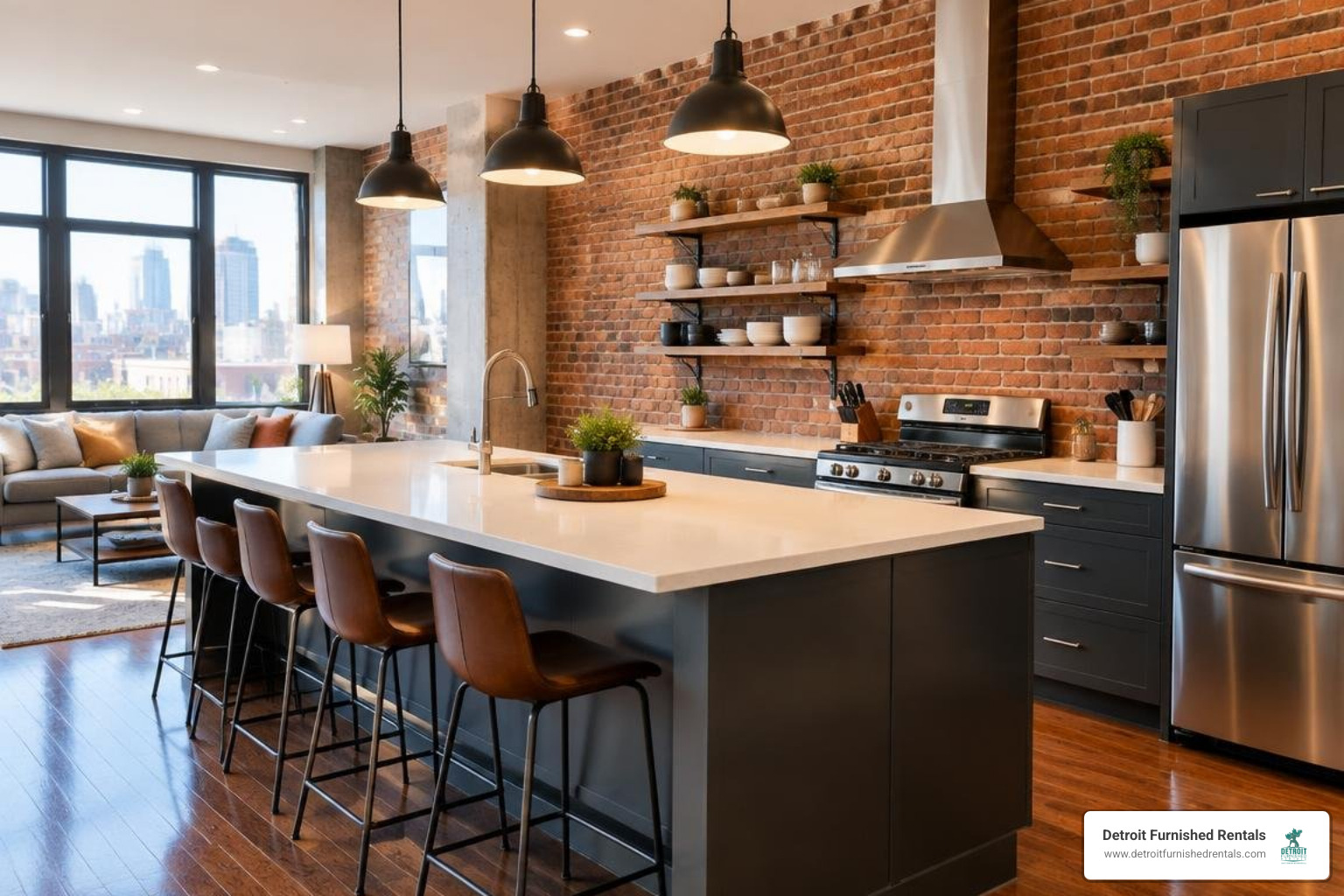
Rental rates for exposed brick lofts vary depending on city-specific inventory and local neighborhood demand:
- Midwest Urban Hubs (Columbus, Spartanburg): In Columbus, Ohio, median rents for 1-bedroom apartments sit around $1,140 as of late 2026, but authentic conversions in the historic Brewery District average $1,450 per month. Units at the Lear Block (a 1910 automobile manufacturing conversion) range from $1,425 to $1,685 for 1-bedroom layouts (815–933 sq ft) and $1,995 to $2,195 for 2-bedroom units. In emerging hubs like Spartanburg, South Carolina, properties like Magnolia Lofts provide accessible entry points from $875 to $1,175 per month for units ranging between 406 and 636 square feet.
- Metropolitan Factory Corridors (Chicago, Dallas): In Chicago’s West Loop and Fulton Market, timber lofts lease for $2,300 to over $4,000 per month depending on square footage, offering 11-foot ceilings, exposed ductwork, and direct neighborhood transit access. Similarly, Dallas properties like the 1901 Case Building and the Interurban Building command top market rents by pairing century-old brickwork with rooftop amenities.
- Detroit’s Historic Core: In Detroit, converted warehouses near Downtown, Corktown, and the Riverfront offer spacious footprints. When evaluating local rental costs, reviewing our 2 bedroom apartments downtown Detroit guide provides clear insight into neighborhood pricing and building layouts.
The Realities of Loft Living: Pros, Quirks, and Modern Functionality
Living in a converted historic property is different from residing in a newly built high-rise. Understanding the balance between physical masonry characteristics and daily lifestyle needs ensures you find a space that feels comfortable year-round.
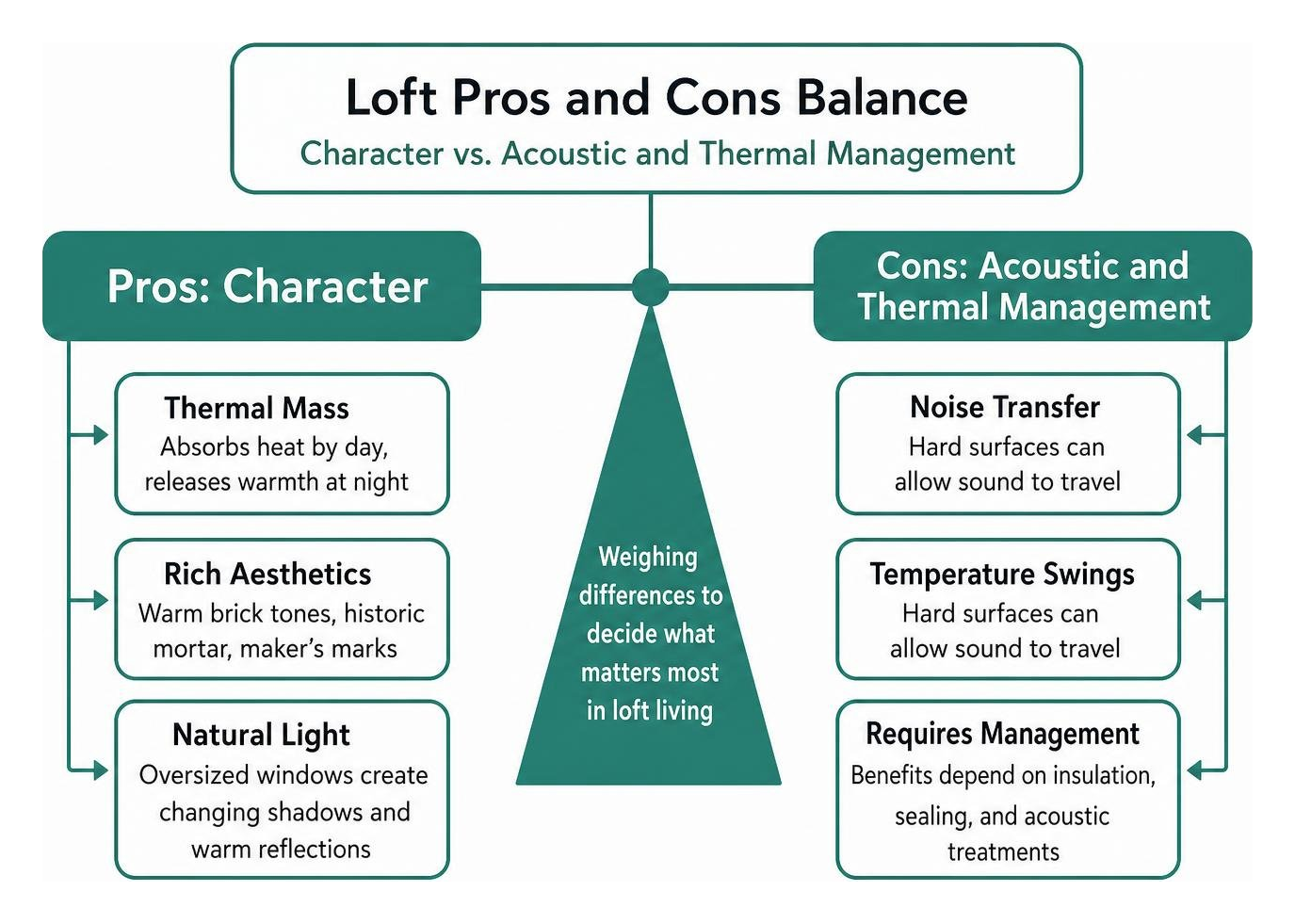
Thermal Mass, Aesthetics, and Natural Light
Exposed brick serves as a natural thermal mass. In historic construction, multi-wythe exterior brick walls absorb ambient heat during peak daylight hours and slowly radiate that warmth back into the interior as exterior temperatures drop at night. In warm climates like Dallas or transitional Midwest autumns, this thermal dampening can help moderate sudden indoor temperature swings.
Beyond temperature control, exposed masonry provides rich visual texture. The warm, earthy tones of natural red clay, weathered lime mortar, and historic maker’s marks give an apartment a grounded, authentic feel that drywall cannot duplicate. When illuminated by oversized factory windows, these brick textures create changing shadow lines and warm reflections throughout the day.
If you are relocating for a work contract, choosing furnished apartments in Detroit that incorporate authentic exposed masonry lets you enjoy this historic warmth without having to source oversized furniture to match the high ceilings.
Managing Acoustics, Heating Costs, and Open Layouts
While the aesthetic appeal is undeniable, industrial materials present unique functional quirks that require thoughtful management:
- Acoustic Reverberation: Hard brick, concrete subfloors, and expansive ceilings cause sound to bounce. Without intervention, an open loft can echo during phone calls or movie nights. To manage sound transmission, use plush high-pile area rugs with dense felt pads, hang velvet or acoustic drapery across expansive windows, and place fabric-upholstered furnishings near conversational zones.
- Vertical Heating Management: Warm air rises directly into the 15-foot rafters. During cold winters, heating an expansive vertical space can cause heating bills to rise by 10% to 15% if airflow is unmanaged. The simple fix: run your ceiling fans clockwise at low speed during the winter to push rising warm air back down into your primary living zone.
- Zoning Open Layouts: Because hard lofts often lack interior dividing walls, setting up clear functional boundaries is key. For those living in more compact layouts, our furnished studio apartments in Detroit demonstrate how open bookcases, directional accent rugs, and freestanding folding screens can cleanly separate your sleeping area from the main living room.
Accommodating Remote Work, Pets, and Modern Conveniences
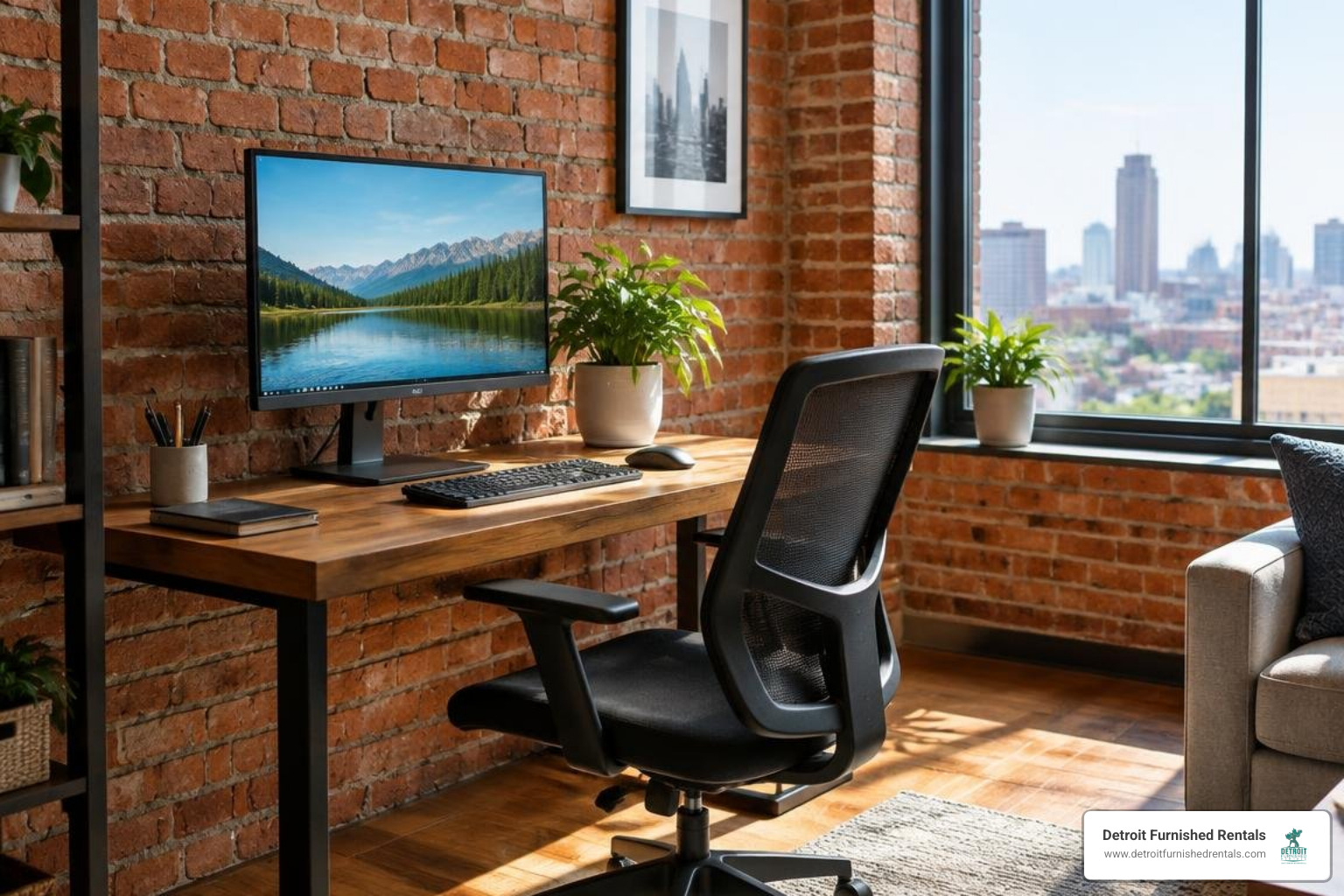
Modern urban living demands flexible workspaces, pet accommodation, and seamless daily utility.
- Work-From-Home Workstations: High ceilings and deep window embrasures provide an ideal setting for productive work. Setting up a desk alongside an exposed brick wall allows you to take advantage of indirect natural light while giving your video calls a clean, professional backdrop.
- Pet-Friendly Living: Concrete and distressed hardwood floors are naturally durable against pet claws and occasional spills. Many converted warehouse communities take advantage of large properties to include amenities like rooftop dog runs and wash stations. When planning a move with pets, explore our pet friendly lofts Detroit guide to evaluate local dog-friendly floor plans and nearby green spaces.
- Daily Utilities & In-Unit Laundry: Ensure your historic conversion does not sacrifice modern appliances. Look for updated units that feature dedicated in-unit laundry hookups, upgraded 200-amp electrical panels to support modern electronics, and high-speed fiber-optic lines.
- Scenic Locations: If waking up to water views is a priority, our Detroit Riverwalk loft listing pairs authentic brick-and-timber architecture with immediate access to miles of paved waterfront parkland.
Practical Leasing Tips and Tenant Inspection Checklist
Touring a historic property requires a sharper eye than walking through a new drywall apartment. To protect yourself from unexpected utility costs or maintenance headaches, use this practical walkthrough checklist before signing your lease agreement.
Touring an Exposed Brick Loft Apartment: What to Inspect
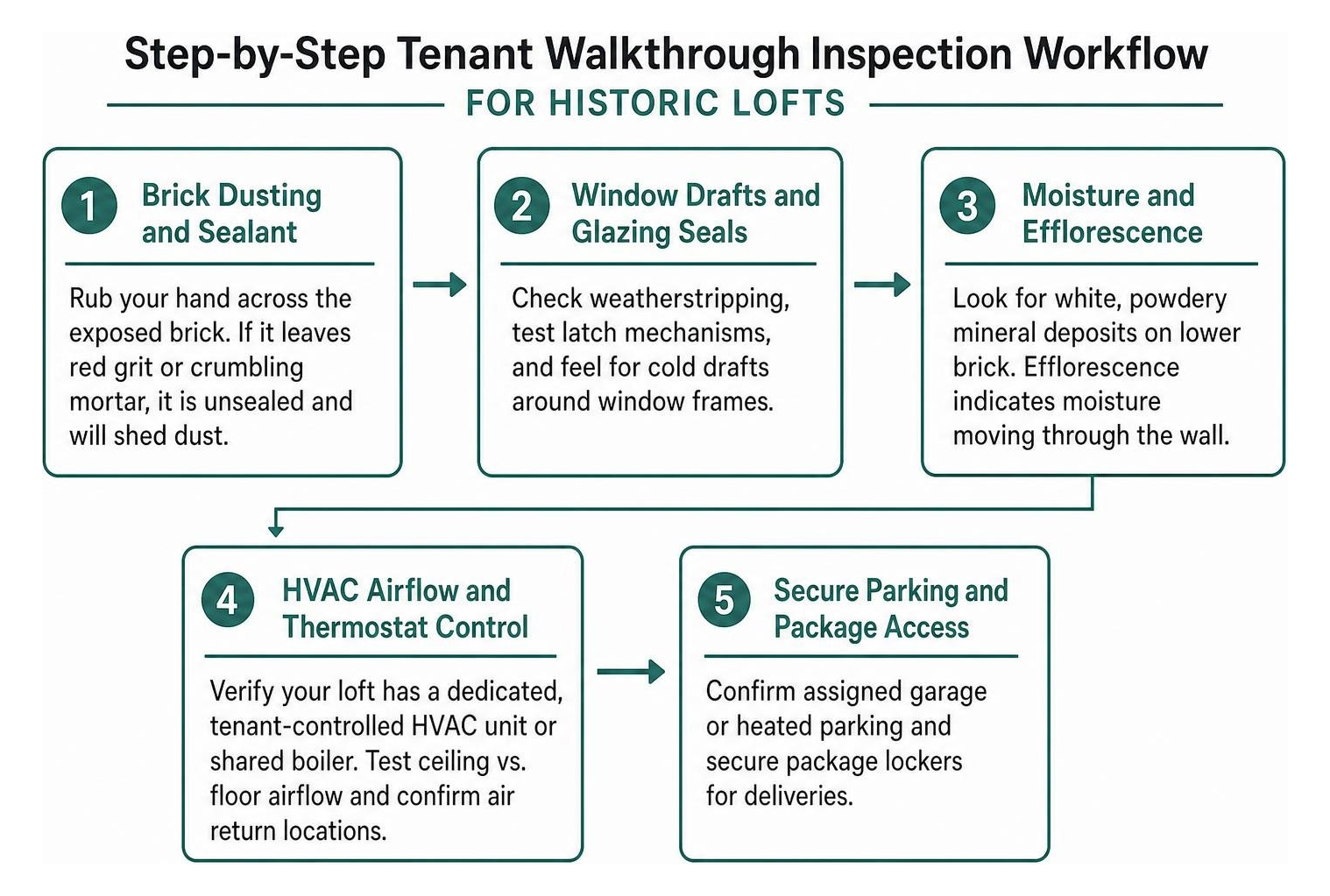
- Brick Dusting and Sealant: Rub your bare hand firmly across the exposed brick surface. If your hand comes away covered in red grit or crumbling mortar, the brick has not been properly sealed with a clear, breathable matte masonry sealant. Unsealed brick will continuously shed dust onto furniture and electronics.
- Window Drafts and Glazing Seals: Industrial steel-frame windows look stunning, but single-pane historic units can be drafty. Check window perimeters for proper weatherstripping, test whether latch mechanisms lock securely, and feel for cold drafts around the frame edges.
- Moisture and Efflorescence: Look closely for white, powdery mineral deposits (efflorescence) on the lower brick courses. As detailed in federal preservation standards such as the National Park Service’s Preservation Brief 39: Controlling Unwanted Moisture in Historic Buildings, surface salt deposits indicate that water is migrating through the masonry wall, which can cause dampness and peeling finishes.
- HVAC Airflow and Thermostat Control: Verify whether your loft has its own dedicated, tenant-controlled HVAC unit or relies on a shared central building boiler. Test the airflow near the ceiling versus floor level, and confirm the location of air return registers.
- Secure Parking and Package Access: Historic urban lofts often sit in dense, walkable districts where street parking is limited. Confirm whether your lease includes an assigned garage space, a heated parking deck, and secure package lockers for deliveries.
If you are evaluating short-term work assignments, choosing month-to-month furnished apartments in Detroit gives you the flexibility to experience loft living without locking into a rigid, multi-year lease.
Frequently Asked Questions About Exposed Brick Lofts
Do exposed brick walls make an apartment colder or increase utility bills?
Uninsulated brick walls have a lower steady-state R-value than modern insulated stud walls. However, interior brick acts as a thermal mass that absorbs room heat and stabilizes internal temperatures over time. Utility costs in lofts are driven primarily by ceiling height and large, single-pane historic window glass rather than the brick itself. You can keep heating costs manageable by using ceiling fans on low reverse to circulate warm air downward and hanging thermal curtains over large windows at night.
How do you create privacy in an open-concept loft layout?
Creating visual and acoustic privacy in an open floor plan is simple with the right layout strategy:
- Modular Bookshelves: Place backless 6-foot bookshelves perpendicular to the wall to create clear boundaries between your sleeping and living zones without blocking natural window light.
- Ceiling-Track Curtains: Mount heavy canvas or velvet drapery tracks to structural ceiling joists. This allows you to close off your bedroom space whenever guests visit.
- Area Rug Zoning: Use different color palettes and textured rugs to define distinct functional “rooms” across a continuous hardwood or concrete floor.
What is the difference between leasing a condo loft and an apartment building loft?
When you rent a condo loft, you are leasing directly from an individual property owner within a building governed by a Homeowners Association (HOA). This often means higher-end interior fixtures, unique custom millwork, and access to boutique residential amenities. However, you must follow strict HOA move-in rules and rely on a single landlord for maintenance repairs.
When you rent in a dedicated loft apartment community, you deal directly with on-site professional property management, streamlined 24/7 maintenance portals, and uniform leasing policies.
Conclusion
An exposed brick loft apartment offers a living experience that modern drywall construction simply cannot replicate. The combination of century-old masonry, soaring timber ceilings, expansive natural light, and authentic urban character turns an ordinary apartment into an inspiring personal retreat. While the quirks—such as managing open room acoustics and heating tall spaces—require minor adjustments, the architectural charm and vibrant lifestyle make it well worth the move.
If you are heading to Michigan for a short contract, relocation, or extended getaway, our team at Detroit Furnished Rentals provides turnkey, beautifully appointed properties that combine historic character with modern conveniences. Take a look at our available furnished urban lofts to find your next downtown home today.

