Why Short Term Stays Are the Smarter Way to Live Between Leases
Quick answer: Here’s what you need to know about short term stays at a glance:
| Feature | Short Term Stay |
|---|---|
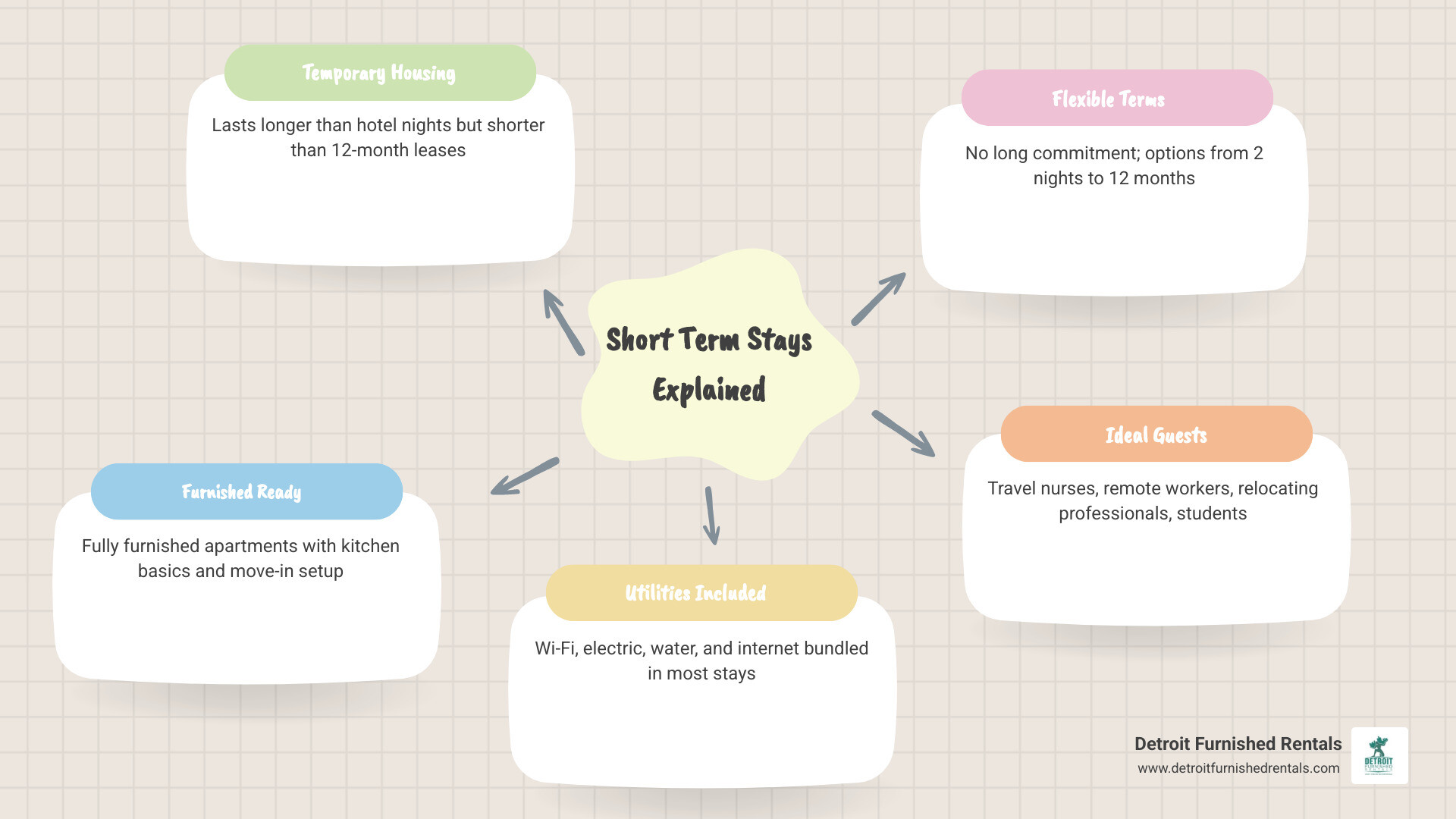
| Typical length | 2 nights to 12 months |
| Furnished? | Yes — move-in ready |
| Utilities included? | Usually yes (Wi-Fi, electric, water) |
| Vs. hotel | More space, full kitchen, lower long-term cost |
| Vs. traditional lease | No long-term commitment, flexible terms |
| Best for | Travel nurses, remote workers, relocating professionals, students |
| Min. stay (common) | 30–31 days for furnished apartments |
| Pet-friendly options? | Yes, at many properties |
Short term stays are one of the fastest-growing ways to find flexible, fully furnished housing — whether you’re on a work assignment, between leases, or just need a real home base for a few weeks or months.
But the options can feel overwhelming. Hotels, vacation rentals, corporate suites, furnished apartments — they all look similar on the surface. They’re not.
The right choice saves you money, stress, and a lot of time unpacking boxes. The wrong one leaves you eating takeout in a room with no kitchen and a 48-hour cancellation window.
This guide cuts through the noise and shows you exactly how to find, compare, and book the best short term stay for your situation.
I’m Sean Swain, co-founder of Detroit Furnished Rentals, and over nearly a decade of hosting short term stays across Detroit and Chicago — growing from one unit to a 15-property portfolio — I’ve learned what guests actually need to feel at home. That experience shapes everything in this guide.
What Short Term Stays Actually Mean
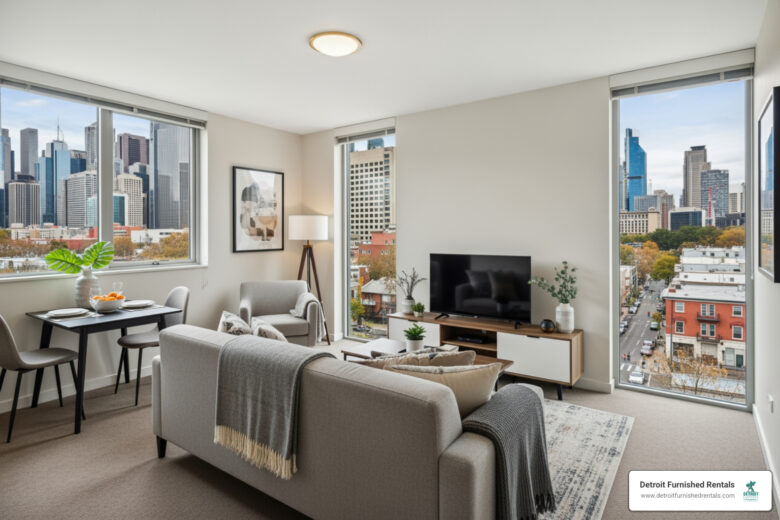
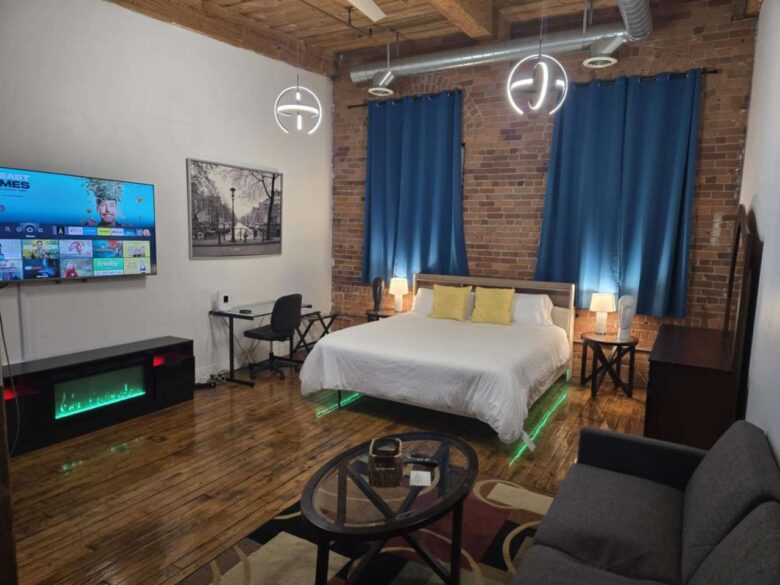
At the simplest level, short term stays are temporary housing arrangements that last longer than a typical hotel visit but shorter than a standard 12-month lease. In the furnished housing world, they usually mean a move-in-ready apartment, condo, or home with furniture, kitchen basics, utilities, and internet already set up.
That sounds simple enough, but there is one big wrinkle: the term means different things in different contexts.
- In travel lodging, “short term” can mean a few nights.
- In city regulations, “short term rental” often means under 30 consecutive days.
- In furnished apartment housing, many providers set a minimum around 30 or 31 days.
- In flexible housing, stays can extend month-to-month for several months.
So when people search for short term stays, they may actually be looking for:
- A weekend place
- A one-month furnished apartment
- Temporary relocation housing
- Corporate housing
- A semester rental
- A flexible place to live between homes
How short term stays differ from hotels, leases, and long-term rentals
Here is the easiest way to think about it:
| Option | Best for | Main tradeoff |
|---|---|---|
| Hotel | Very short visits | Less space, limited cooking, higher cost over time |
| Traditional lease | Stable long-term housing | Long commitment, furnishing and utility setup required |
| Long-term rental | 12+ month living | Usually unfurnished and less flexible |
| Furnished short term stay | Temporary living with comfort | Higher monthly rate than unfurnished rent, but more included |
Hotels are great when you need a bed, a shower, and maybe a tiny coffee maker that sounds like it is fighting for its life. They are less great when you need a kitchen, a work desk, laundry, privacy, or room to breathe.
Traditional leases work well if you know you will stay put for a year or longer. But they often require deposits, utility transfers, furniture, housewares, and commitment. That is a lot of work if your plans are still in motion.
Furnished short term apartments sit right in the middle. You get:
- More space than a hotel
- More privacy than most lodging options
- A real kitchen
- Home-style living
- Flexible lease terms
- Fewer setup headaches
If you want a deeper breakdown, our Short Term Apartment Complete Guide covers the basics in more detail.
Typical minimum and maximum lengths for short term stays
This is where many renters get tripped up, so let us make it plain.
Common stay lengths in the market include:
- 2 nights for some furnished lodging models
- 2 weeks for certain short-stay apartments
- 30 days or less for many vacation-style rentals
- 30 to 31 days as a common minimum for furnished monthly apartments
- 1 to 12 months for flexible furnished housing
- Up to 6 months for many temporary work or relocation stays
- Month-to-month renewals when guests need more time
In practice, Detroit renters often see two major buckets:
- Very short stays, usually hotel-style or vacation-style
- Monthly furnished stays, often starting at 30 days
For many professionals, 30+ day stays hit the sweet spot. You avoid the churn of nightly pricing, get a proper home setup, and keep flexibility if plans change.
Who short term stays are best for
We see short term stays work especially well for:
- Business travelers on project assignments
- Travel nurses and healthcare professionals
- Students needing semester or internship housing
- Remote workers and digital professionals
- Relocating individuals and families
- People between home closings or renovations
- Insurance-displacement guests
- Temporary contract workers
In other words, short term housing is ideal when life is in transition and you want your housing to be easier, not harder.
7 Ridiculously Awesome Ways to Book Short Term Stays
There is no single “best” way to book. The best method depends on your timeline, budget, and how much flexibility you need. But these seven strategies make the process much smoother.

Book short term stays directly with furnished housing providers
This is usually our favorite option, and yes, we are a little biased because we know how much smoother direct communication can make everything.
When you book directly with a furnished housing provider, you can often get:
- Clearer pricing
- Faster answers
- Better move-in coordination
- More transparency about what is included
- Easier extension requests
- Fewer misunderstandings about policies
Direct booking also helps you ask practical questions before committing:
- Is Wi-Fi included?
- Is parking available?
- Is the unit pet-friendly?
- Is there in-unit laundry?
- What happens if I need to extend by two weeks?
If you are comparing options in Detroit, our Short Term Furnished Housing page is a good place to start.
Use short term stays for work trips, relocation, and temporary assignments
One of the smartest booking strategies is to match the stay type to the reason you are traveling.
For example:
- A consultant in Detroit for 6 weeks usually needs a furnished apartment with a workspace and parking.
- A medical traveler may want proximity to hospitals and easy check-in.
- A relocating family may prioritize kitchen space, laundry, and pet-friendly policies.
- A student or intern may need predictable monthly pricing near campus or transit.
This is why purpose matters. The best short term stay for a weekend visitor is not necessarily the best one for an eight-week project assignment.
If your trip is tied to work or relocation, review options built for that use case. Our Short Term Business resource explains how temporary furnished housing fits business travel especially well.
Choose local neighborhoods that match your lifestyle and commute
The apartment matters. The neighborhood matters just as much.
In Detroit, popular areas for furnished stays often include:
- Downtown Detroit for offices, entertainment, and walkability
- Midtown for hospitals, universities, museums, and dining
- Corktown for character, restaurants, and central access
- New Center for healthcare and business convenience
When choosing a neighborhood, ask:
- How long is the commute?
- Will I need parking?
- Can I walk to coffee, groceries, or restaurants?
- Is transit nearby?
- Is the area lively or quiet?
- Am I close to the hospital, office, or school I need?
A stylish apartment that adds 45 minutes to your commute every day stops feeling stylish very quickly.

Filter for amenities before you book short term stays
Amenities are not just nice extras. For temporary living, they are quality-of-life essentials.
Important filters include:
- Fast Wi-Fi
- Fully equipped kitchen
- In-unit washer and dryer
- Parking
- Workspace or desk
- Smart TV
- Gym access
- Balcony or outdoor space
- Self check-in
- Pet-friendly settings
Research across the furnished housing market consistently shows that guests care most about bundled basics: internet, utilities, linens, towels, kitchen equipment, and laundry access. In many properties, extras like parking, pets, or housekeeping may cost more, so confirm before you book.
Compare stay length options before booking
Do not assume every property defines “short term” the same way.
Some common booking formats:
- Nightly
- Weekly
- 30-day minimum
- 31-day minimum
- Month-to-month
- Fixed 2- to 6-month terms
A stay that looks cheap nightly may become expensive over a month. On the flip side, a monthly apartment may be perfect if you need stability and all-inclusive pricing.
Before booking, compare:
- Minimum stay requirement
- Renewal options
- Earliest move-in date
- Notice required to extend
- Notice required to leave
The more your plans might change, the more these details matter.
Review all-inclusive pricing and lease terms carefully
This is the part everyone skips until it is too late. Please be the rare person who reads the details before sending money.
Look for whether the quoted rate includes:
- Furniture
- Utilities
- Wi-Fi
- Housewares
- Linens and towels
- Parking
- Cleaning
- Pet fees
- Taxes, where applicable
In furnished housing, one monthly payment often includes much more than traditional rent. That is part of the value. But you still want the breakdown.
We recommend checking:
- Total monthly cost
- Security deposit
- Cleaning expectations
- Notice period
- Cancellation terms
- Any extra charges for pets or parking
Ask about support, extensions, and move-in process
A good booking experience does not end when payment goes through. It starts there.
Before you commit, ask:
- How do I get check-in instructions?
- Who do I contact after hours?
- How are maintenance requests handled?
- Can I extend if my project runs longer?
- What is the move-out process?
- How much notice do you need?
Short term living is easier when support is responsive and the process is simple. That matters even more if you are arriving late, relocating from another city, or booking under time pressure.
What’s Usually Included in a Short-Term Furnished Apartment
A true furnished short-term apartment should feel like a ready-to-live home, not a scavenger hunt where you discover there is no frying pan after buying eggs.
Core amenities you should expect
Most quality furnished apartments include:
- Bed and bedroom furniture
- Living room furniture
- Dining setup
- Fully equipped kitchen
- Cookware and dishes
- Bed linens
- Towels
- Wi-Fi
- Utilities
- TV or streaming-ready setup
- Basic cleaning supplies
- Laundry access
- Workspace area
Many providers also bundle internet, water, electric, and household essentials into one payment. That all-inclusive format is one of the biggest advantages of short term stays.
For more detail on what to expect, see our Short Term Apartment Complete Guide.
Optional extras that affect comfort and price
Some features may be included, while others cost extra depending on the property:
- Housekeeping or biweekly cleaning
- Reserved parking
- Garage parking
- Gym access
- Pool access
- Balcony
- Concierge-style support
- Self check-in technology
- Premium workspace setup
- Accessibility features
These add-ons can absolutely be worth it. A parking spot in Detroit winter can feel less like an amenity and more like emotional support.
Are short-term rentals pet-friendly?
Many furnished short-term apartments are pet-friendly, including many of ours, but “pet-friendly” is not one-size-fits-all.
Typical pet policies may include:
- Monthly pet rent
- One-time pet fee
- Refundable pet deposit
- Breed restrictions
- Weight limits
- Limit on number of pets
- Required vaccination records
- Pet screening process
You should also ask:
- Are cats and dogs both allowed?
- Are service animals handled under different rules?
- Is there nearby green space or a dog-friendly walking area?
- Are there furniture protection or cleaning requirements?
Never assume a property accepts pets just because a listing says “pets considered.” Confirm the exact policy in writing.
Rules, Contracts, and Cancellation Policies You Need to Know
Short term housing is flexible, but it is not a free-for-all. There are still rules, contracts, and local compliance issues.
How short-term rental regulations vary by city
Local regulations can differ a lot from one city to another. In some cities, rentals under 30 days face stricter licensing, occupancy, and registration requirements than monthly stays. Research from other municipalities shows how sharply rules can vary, especially around:
- Under-30-day rentals
- Host registration
- permit fees
- occupancy caps
- local manager requirements
- advertisement disclosures
What matters for Detroit renters is this: always verify that the property you book is being operated in compliance with local rules and building policies. Regulation is not just a host problem. It can affect your reservation, check-in, and overall experience if something is not compliant. If you want a general overview of how these rules are commonly defined, Wikipedia’s short-term rental article offers helpful background.
Contracts, notice periods, and cancellation flexibility
Furnished housing contracts vary, but common structures include:
- Fixed-term agreements
- Month-to-month extensions
- 14-day notice requirements
- 30-day notice requirements
- Early termination terms
- Extension requests based on availability
Across the industry, more flexible operators often allow some combination of:
- Easy move-in
- open-ended month-to-month stays
- renewal options
- reasonable notice periods for cancellations or changes
The key is to ask before signing:
- Is the stay fixed or renewable?
- How much notice is needed to cancel?
- Can I shorten or extend the stay?
- Are there penalties for early move-out?
- What refunds, if any, apply?
Documents and steps to book a stay smoothly
Most bookings go faster when you have your paperwork ready. A typical booking process may include:
- Confirm availability for your dates
- Submit basic guest details
- Provide ID verification
- Complete an application if required
- Review and sign the lease or housing agreement
- Pay deposit and first rent installment
- Receive check-in instructions
- Complete move-in inspection, if applicable
Common documents or requirements:
- Government-issued ID
- Contact information
- Payment method
- Signed lease or occupancy agreement
- Sometimes employment or housing-related info
- Pet information, if applicable
Here is a simple checklist:
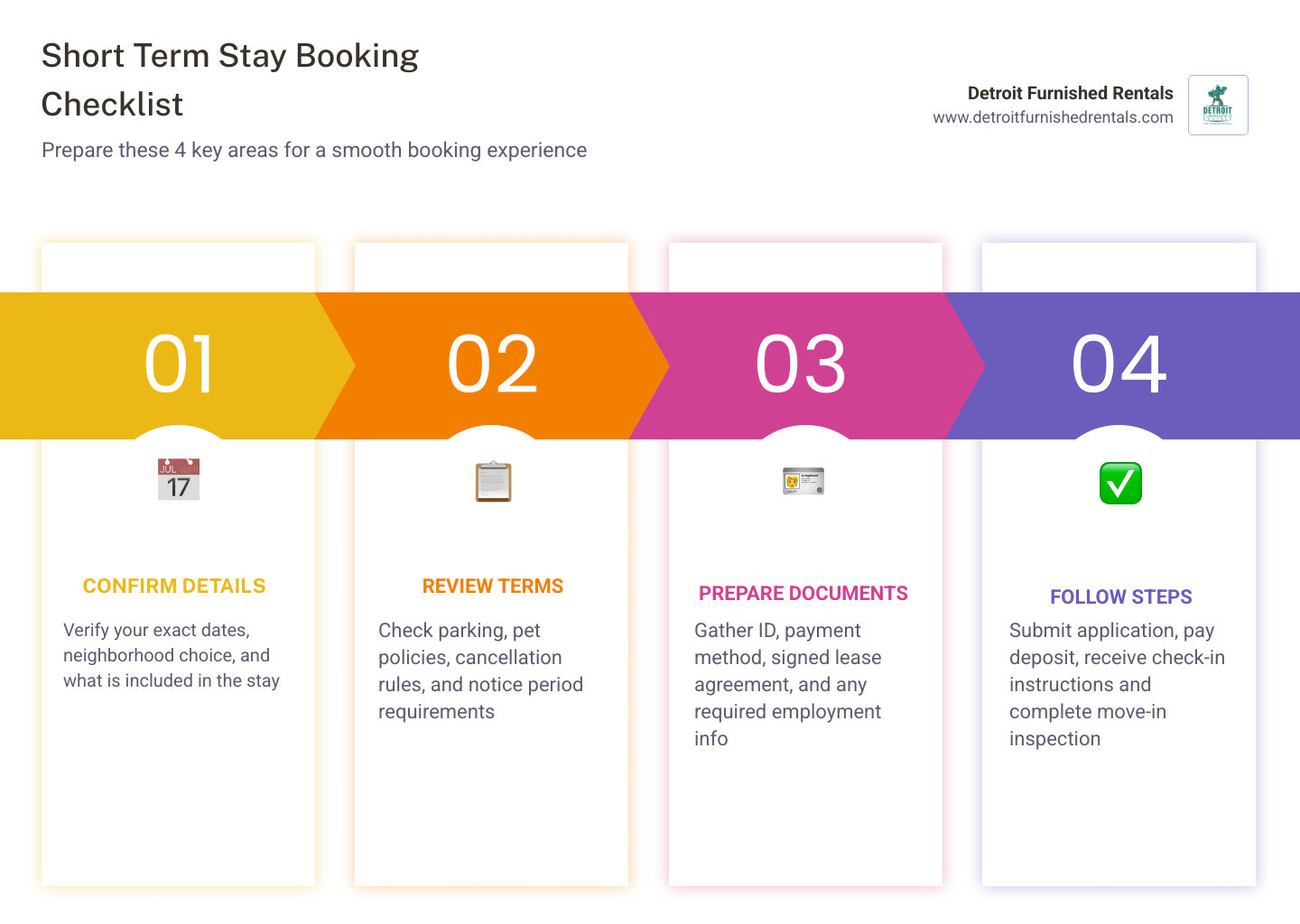
- Confirm dates and neighborhood
- Review what is included
- Ask about parking and pets
- Check cancellation and notice terms
- Read the lease
- Verify total move-in cost
- Save check-in instructions
- Keep support contact info handy
For a Detroit-specific breakdown, visit our Short Term Lease Detroit.
How Pricing Works for Short Term Stays
Pricing for short term stays can look higher at first glance than standard rent. That is normal. The better question is: what are you getting for that price?
Why furnished short-term stays can cost more upfront but save more overall
A furnished short-term apartment usually bundles:
- Furniture
- Utilities
- Wi-Fi
- Kitchen equipment
- Linens
- Turnkey setup
- Flexible term
That means you avoid paying separately for:
- Utility deposits
- Internet installation
- Furniture purchases
- Kitchen basics
- Moving costs
- Hotel meals from lack of a kitchen
- Laundry service or laundromat trips
For stays longer than a week or two, a furnished apartment often becomes the more practical value play, especially if you cook, work remotely, or need laundry access.
Common fees and where renters find discounts
Common fees may include:
- Application fee
- Security deposit
- Cleaning fee
- Parking fee
- Pet fee or pet rent
Potential savings often come from:
- Longer stays
- Monthly pricing instead of nightly pricing
- 30+ night bookings
- Reduced tax exposure in some stay formats
- Seasonal deals
- Direct booking
Industry-wide, longer stays usually unlock better average daily pricing. The longer you stay, the more the economics often improve.
If you are comparing costs in Detroit, our Short Term Housing Detroit MI Guide can help.
How to compare stay formats confidently
When comparing options, do not compare rent to rent. Compare total living cost to total living cost.
Ask for:
- Full monthly price
- Included utilities
- Internet details
- Parking cost
- Pet cost
- Cleaning terms
- Deposit amount
- Extension flexibility
And compare across formats:
- Hotel
- Unfurnished apartment
- Furnished short-term apartment
- Extended stay lodging
The winner is usually the one that fits your actual life, not just the lowest headline rate.
For broader Detroit and Michigan resources, you may also find these useful:
- Short Term Detroit Rentals Guide
- Short Term Housing Detroit
- Short Term Apartments Detroit
- Short Term Rentals Detroit
- Short Term Rentals in Michigan
- Short Term Apartment Rentals in Michigan
- Short Term Furnished Apartments Detroit Guide
- Short Term Housing in Detroit Flexible Furnished Stays
- Short Term House Rentals Guide 2025
Frequently Asked Questions About Short Term Stays
What is the best stay length for short term stays?
It depends on your reason for booking.
- Less than a week: usually better for travel lodging
- 2 to 4 weeks: good for transition periods, though options narrow
- 30 to 31 days: often the sweet spot for furnished apartments
- 2 to 6 months: ideal for work assignments, relocations, and semester housing
- 6 to 12 months: useful when you want flexibility without a long lease
If you need real living space, a kitchen, and predictable monthly costs, 30+ days is often the strongest option.
What should be included before I sign?
Before signing, confirm:
- Total price
- Furniture and kitchen setup
- Utilities
- Wi-Fi
- Laundry access
- Parking
- Pet rules
- Occupancy rules
- Cleaning terms
- Cancellation policy
- Notice period
- Move-in and move-out instructions
If any of those details are vague, ask again. Vagueness is rarely a luxury amenity.
Can I book a stylish stay for just a night or for several months?
Yes, depending on the stay format. Some furnished lodging options accept one-night or very short bookings, while many true furnished apartments focus on monthly stays and flexible mid-term housing. The right fit depends on whether you need travel lodging or temporary living.
Conclusion
The best short term stays are the ones that match real life: flexible dates, clear pricing, useful amenities, and a location that makes Detroit easier to enjoy.
Whether you are traveling for work, moving between homes, studying, or just need a comfortable place that already has the Wi-Fi turned on, furnished housing can be the sweet spot between a cramped hotel and a long lease you do not want.
At Detroit Furnished Rentals, we focus on exactly that: comfortable, centrally located, pet-friendly furnished housing designed to make temporary living feel simple.
If you are ready to book with confidence, explore our Short Term Rentals Detroit Michigan page and find a stay that feels like home from day one.