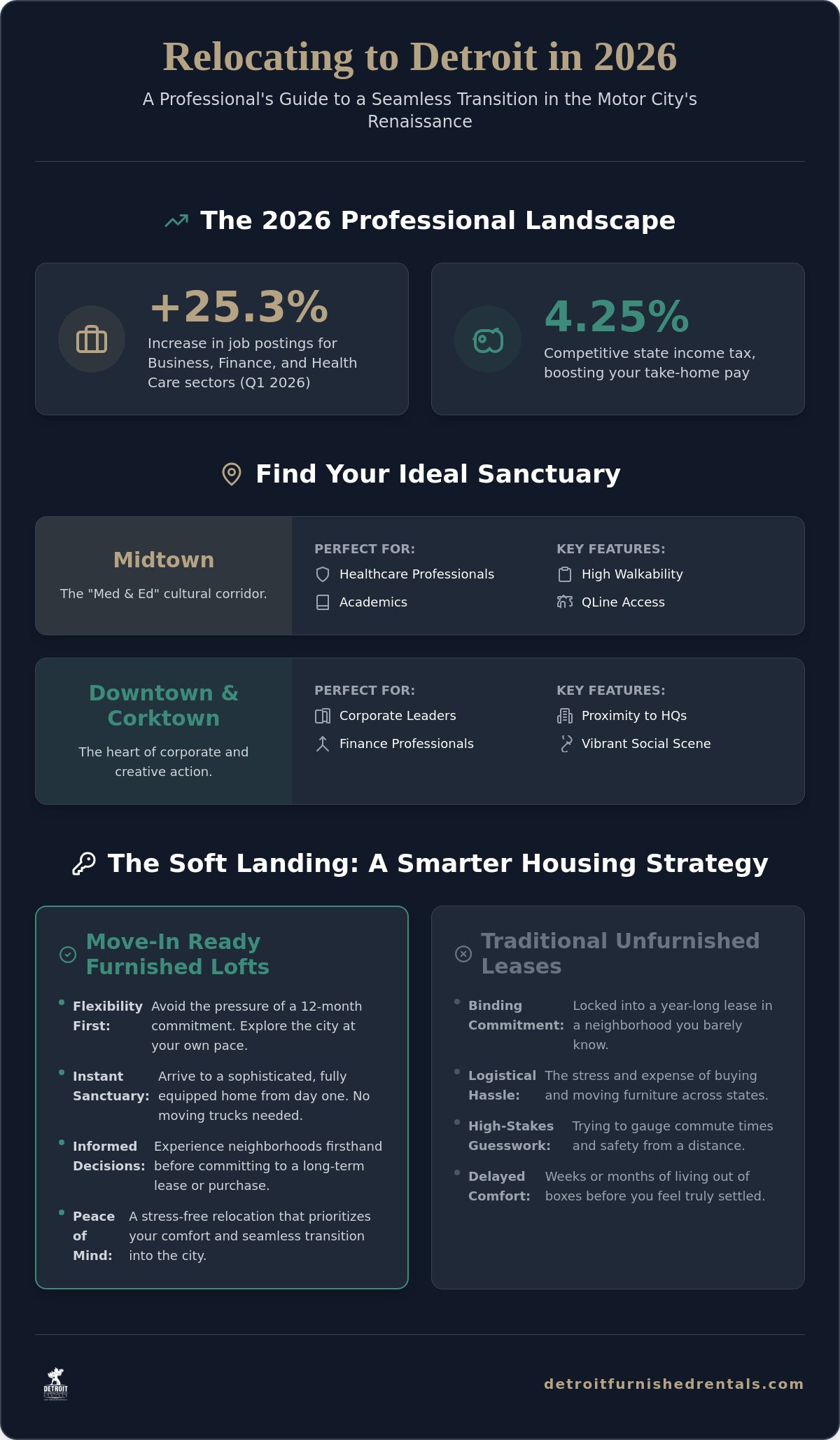
The smartest move you can make when relocating to Detroit in 2026 isn’t finding a permanent home, it’s refusing to commit to one. It’s natural to feel a sense of urgency to lock in a year-long lease or a mortgage when you see job postings in the city’s business and finance sectors jump by over 25 percent. You want to feel settled, but the city’s unique block-by-block revitalization means the neighborhood that looks perfect on a map might not match your daily rhythm once you’re on the ground. You shouldn’t have to guess where you belong before you’ve even unpacked your first box.
We understand the weight of that decision and the anxiety of trying to gauge safety and commute times from several states away. This guide provides the clarity you need for a seamless transition, offering deep neighborhood insights and a strategy for a soft landing in a move-in ready sanctuary. You’ll discover the current 2026 market trends, from the 4.25 percent state income tax to the most vibrant professional districts. We will walk you through a stress-free relocation timeline that prioritizes your peace of mind and introduces you to the sophisticated comfort of high-end, short-term lofts. By the time you finish reading, you’ll have a reliable roadmap to navigate the Motor City with confidence and ease.
Key Takeaways
- Discover how Detroit’s evolution into a tech and healthcare hub offers a dynamic landscape for your career growth in 2026.
- Find the perfect fit for your lifestyle by exploring the unique characteristics and professional advantages of Midtown, Downtown, and Corktown.
- Master the logistics of relocating to detroit with a professional checklist that guides you from your initial decision to your first night in the city.
- Explore the benefits of move-in ready furnished apartments that provide a sanctuary for your transition without the pressure of a 12-month commitment.
- Gain a clear perspective on the cost-of-living advantages that make the Motor City a sustainable and stylish choice for modern professionals.
What to Expect When Relocating to Detroit in 2026
Detroit in 2026 isn’t just a city in transition; it’s a destination that has found its second wind. While its history is famously built on the assembly lines of the automotive industry, the modern reality is a sophisticated blend of heritage and high-tech innovation. Professionals relocating to detroit today find themselves at the center of a genuine urban renaissance, where the grit of the past provides a sturdy foundation for a future defined by mobility, healthcare, and fintech. It is a city that rewards the curious and the bold, offering a level of career opportunity and community belonging that is increasingly rare in more saturated coastal markets. You aren’t just moving to a new zip code; you’re joining a movement of urban pioneers who value authenticity as much as efficiency.
The Motor City’s Modern Identity
The downtown core has evolved into a polished environment where glass skyscrapers stand alongside meticulously restored Art Deco landmarks. Walking through the streets, you’ll see how the “City with Soul” moniker comes to life through massive, world-class murals and vibrant public art installations that tell the story of resilience. This isn’t a sanitized version of urban life. It’s a textured, living gallery that celebrates local creators and a shared history. For a deeper look at the demographic and historical shifts that shaped this landscape, the Detroit Wikipedia page offers an excellent overview of the city’s journey from an industrial powerhouse to a diversified modern metropolis. Detroit’s 2026 economic outlook remains robust as a burgeoning ecosystem of tech startups and green energy ventures continues to diversify the local labor market beyond its traditional automotive roots.
Why Professionals are Choosing Detroit
Modern professionals are drawn here by more than just the competitive cost of living or the absence of coastal congestion. There is a palpable sense of pride in the “comeback” narrative that permeates every coffee shop and coworking space. With unique job postings in the city increasing by 25.3 percent in the first quarter of 2026, the demand for talent in Business, Finance, and Health Care is at an all-time high. Many newcomers find that relocating to detroit allows them to trade cramped, characterless apartments for expansive lofts that pair historic brickwork with sleek, modern interiors. This intersection of architectural history and contemporary style creates a living experience that feels both aspirational and deeply grounded. Whether you’re a remote worker looking for a more inspired home office or a corporate leader heading to a new headquarters, the city offers a sanctuary where you can truly make your mark. It’s a place where your presence is felt and your contribution to the community is genuinely welcomed.
Identifying the Best Neighborhoods in Detroit for Newcomers
Choosing where to plant your roots is the most consequential decision you’ll make when relocating to detroit. The city’s layout in 2026 rewards those who prioritize proximity to their professional hubs, as the block-by-block nature of urban renewal means that your experience can vary significantly from one street to the next. To find your ideal sanctuary, you should evaluate potential areas through a framework of commute efficiency, lifestyle amenities, and the specific “soul” of the community. For a deeper dive into the nuances of each district, our guide to the best neighborhoods in detroit provides a granular analysis of the city’s evolving map.
Midtown and the Cultural Center
Midtown is the heartbeat of Detroit’s “med and ed” corridor. It offers an effortless commute for healthcare professionals at the Detroit Medical Center (DMC) and academics at Wayne State University. This area seamlessly blends the historic charm of repurposed brick lofts with the sleek lines of contemporary new-build apartments. Residents here enjoy unparalleled access to the QLine, making it simple to glide down Woodward Avenue for meetings or weekend gallery openings. The neighborhood’s walkability is a major draw, allowing you to move from a quiet, tree-lined residential street to a bustling bistro in minutes. Securing a furnished apartment in this district provides a perfect home base to experience this vibrant cultural mix firsthand.
Downtown and Corktown: The Heart of the Action
For those who thrive on the high-octane energy of the Central Business District, Downtown is the premier choice. It’s a landscape of glass skyscrapers and restored landmarks where the city’s fintech and corporate leaders congregate. Just to the west lies Corktown, Detroit’s oldest neighborhood, which has undergone a massive tech-hub transformation anchored by the Michigan Central innovation district. Corktown offers a more intimate, historic feel with its Victorian architecture and a legendary restaurant scene that draws foodies from across the region. As you weigh the lifestyle benefits of these core hubs, it’s helpful to consider the broader economic context. Reviewing the Detroit area Consumer Price Index can give you a clearer picture of how local price trends for housing and services compare to national averages. This data-driven approach ensures your move is as fiscally sound as it is lifestyle-focused. Whether you prefer the polished skyline views of Downtown or the storied streets of Corktown, both areas offer a sophisticated urban experience for the modern professional.
Understanding the Cost of Living and Job Market
One of the most compelling reasons for relocating to detroit is the immediate financial breathing room the city provides. While other major professional hubs demand a premium just to be near the office, Detroit offers a sophisticated lifestyle that remains surprisingly accessible. As of June 2026, the median rent in the city sits at approximately $1,356 per month. This allows you to prioritize quality and design in your housing choices without sacrificing your long-term financial goals. Your paycheck simply works harder here. To understand how your salary translates to the local economy, reviewing the Detroit metropolitan area compensation costs provides essential context for current wage growth and benefit trends across the region.
The Healthcare and Tech Boom
The job market has seen a remarkable surge, with unique job postings in the city increasing by 25.3 percent in the first quarter of 2026 alone. The healthcare sector is a primary driver of this growth, anchored by the massive Detroit Medical Center (DMC), which continues to be a top employer for travel nurses and medical specialists. Simultaneously, the city has cemented its status as a leader in “Mobility Tech.” This evolution from traditional manufacturing to software-driven transportation has created a wealth of opportunities for engineers and tech innovators. In fact, Business and Finance occupations now represent one of the most in-demand groups in the city, reflecting a diversified economy that rewards specialized expertise.
Budgeting for Your Relocation
When you’re planning your move, it’s vital to look beyond the base rent. Michigan’s state income tax remains steady at 4.25 percent, but you should also factor in the city’s specific income tax of 2.4 percent for residents. While these figures are manageable, newcomers are often surprised by “hidden” urban costs like secure parking and slightly higher insurance premiums. Choosing an urban loft in a walkable district like Midtown can often offset these expenses by reducing your reliance on a car for daily errands. For a granular breakdown of monthly expenses, including utilities and grocery expectations, see our full guide on the cost of living in detroit. You might also consider leveraging the city’s vibrant network of independent coffee shops and public workspaces to save on home office overhead while you settle in. This strategic approach ensures that relocating to detroit feels like a promotion, both for your career and your bank account.
Navigating the Housing Market: Furnished vs. Unfurnished
The most common mistake professionals make when relocating to detroit is rushing into a long-term commitment. In the excitement of a new career move, it’s tempting to sign a year-long lease on an unfurnished apartment you’ve only seen through a screen. However, the “Soft Landing” approach has become the gold standard for savvy newcomers in 2026. By choosing move-in ready housing, you grant yourself the luxury of time. You can explore the city’s diverse districts without the pressure of a moving truck waiting at the curb. Opting for furnished apartments detroit professionals rely on allows you to settle in instantly, turning a stressful transition into an organized, sophisticated arrival.
Some travelers initially lean toward hotels, assuming they offer the most flexibility. While hotels provide a bed, they often lack the domestic comforts that sustain long-term productivity. A private, furnished loft offers a true sanctuary with a full kitchen, dedicated workspace, and the quiet privacy required for high-level professional focus. When you compare the daily rates of a cramped hotel room to the monthly value of a spacious apartment, the choice becomes clear. You aren’t just paying for a place to sleep; you’re investing in a home that supports your lifestyle from day one.
Why a Furnished Loft is the Professional Choice
For travel nurses and corporate executives, the move-in ready nature of our lofts is a logistical game-changer. These spaces are thoughtfully curated with high-end furniture and modern appliances, ensuring you don’t spend your first week in the city assembling desks or waiting for utility installation. Having a local property management team on your side also provides a level of care that national, faceless platforms simply can’t match. We know which coffee shops have the best Wi-Fi and which routes avoid the morning rush, acting as your personal guide to the local cultural fabric.
Avoiding the Pitfalls of Unseen Long-Term Leases
Signing a traditional lease before you’ve walked the streets of your new neighborhood is a significant risk. Detroit’s block-by-block evolution means that atmosphere and amenities can shift quickly. Mid-term rentals provide a risk-free way to test-drive the city, allowing you to live in Midtown or Corktown for a few months before deciding where to commit long-term. This flexibility is essential for those who value their peace of mind. If you’re ready to experience a seamless transition, browse our available furnished lofts and secure your Detroit sanctuary today.
Your Step-by-Step Detroit Relocation Checklist
Success when relocating to detroit depends on the sequence of your decisions. While the city’s energy is infectious, the logistics of a cross-country move require a steady, logical hand to ensure your arrival feels like a homecoming rather than a hurdle. By breaking the process into manageable phases, you can move from the initial research stage to your first morning in a sun-drenched loft with total confidence. This checklist is designed to eliminate logistical friction, allowing you to focus on the professional opportunities that brought you to the Motor City in the first place.
Phase 1: Research and Housing
- Determine your commute requirements: Detroit is a car-dependent city, so map the distance between potential neighborhoods and your office. If you’re working in the healthcare corridor, prioritize Midtown to stay within minutes of the major medical centers.
- Secure your soft landing: Don’t rush into a long-term lease. Book a move-in ready furnished apartment for your first 30 to 90 days. This gives you a high-end sanctuary to retreat to while you evaluate the local atmosphere in person.
- Audit professional documentation: If you’re a travel nurse or a fintech specialist, verify that your Michigan professional licensing is in order. Ensure all digital records are accessible before you begin the physical move.
Phase 2: Logistics and Integration
- Arrange car transport: Since a vehicle is essential for most Detroit professionals, coordinate your car shipping or driving route early. Check local parking availability near your chosen short-term stay to ensure a seamless arrival.
- Identify your “third places”: Explore the city’s sophisticated remote work cafes and co-working spaces in Downtown and Corktown. Establishing a routine outside your apartment helps you integrate into the local professional community quickly.
- Execute your neighborhood deep-dive: Use your initial months in a furnished loft to visit various districts during different times of the day. This “test-drive” period is the most effective way to find a permanent home that aligns with your long-term lifestyle goals.
As you check off these final steps, remember that relocating to detroit is about more than just a change of scenery. You’re joining a community that values grit, creativity, and mutual support. The city’s architectural heritage and modern innovation provide a stunning backdrop for this next chapter of your career. We’re here to ensure that your first night in the city is spent in a beautiful, stress-free environment. Welcome to the neighborhood; we can’t wait to see what you build here.
Embrace Your New Chapter in the Motor City
Relocating to Detroit in 2026 represents more than a career move; it is an invitation to join a community defined by its resilience and creative spirit. You’ve learned how the city’s robust growth in healthcare and fintech creates a fertile ground for professionals, and why a strategic “soft landing” is the most sophisticated way to navigate this evolving urban landscape. By choosing a flexible, move-in ready solution, you bypass the anxiety of unseen leases and give yourself the time to explore Midtown, Corktown, and beyond on your own terms.
Our curated selection of lofts and apartments is meticulously designed to serve as a true sanctuary for those in transition. With the reliability of trusted local management and the aesthetic appeal of high-end design, we ensure your arrival is as seamless as it is inspiring. Book your move-in ready Detroit loft and start your relocation with ease. We’re proud to be your local guide as you settle into a city that celebrates both its storied heritage and its brilliant future. Your new life in Detroit starts here, and we can’t wait to welcome you home.
Frequently Asked Questions
Is relocating to Detroit a good idea for young professionals in 2026?
Yes, relocating to Detroit is a strategic choice for young professionals in 2026 due to the city’s robust economic recalibration. With a 25.3 percent increase in unique job postings in early 2026, sectors like mobility tech and fintech are thriving. You’ll find a community of like-minded urban pioneers who value the city’s authentic soul and the professional growth opportunities found in its revitalized downtown core.
How much should I budget for a 3-month relocation stay in Detroit?
Your budget should reflect the city’s competitive cost of living while accounting for the convenience of move-in ready housing. While the median rent is $1,356, you must also factor in the 2.4 percent city resident income tax and the 4.25 percent state rate. Planning for these specific costs alongside your housing ensures a stable financial transition as you explore the diverse districts of the Motor City.
Which neighborhoods in Detroit are considered the safest for newcomers?
Midtown, Downtown, and Corktown are frequently cited as the most welcoming and secure districts for those new to the city. These areas are characterized by a high density of professional residents, well-lit walkable corridors, and a constant presence of local security patrols. Choosing a managed apartment in these core hubs provides an extra layer of peace of mind during your initial months in the city.
Can I find pet-friendly furnished apartments for my relocation?
Finding pet-friendly furnished apartments is entirely possible when you are relocating to detroit, as many modern lofts understand the importance of domestic companions. Most professional-grade stays in Midtown and Corktown offer dedicated spaces for pets, though you should always verify specific weight limits or breed restrictions during the direct booking process. This ensures your entire household feels settled and comfortable from the moment you arrive.
What is the best way to find travel nurse housing near the Detroit Medical Center?
The most efficient way to secure travel nurse housing is to work with a local property manager who specializes in the Midtown area. Proximity to the Detroit Medical Center is a priority for medical professionals, and specialized mid-term rentals offer the quiet, fully equipped environments necessary for recovery between shifts. Direct booking allows you to skip the logistical friction of national platforms and secure a stay tailored to your schedule.
How does the cost of living in Detroit compare to other major Midwest cities?
Detroit offers a significant cost-of-living advantage compared to Midwest peers like Chicago or Minneapolis, particularly regarding housing value. While you enjoy world-class cultural amenities and a burgeoning tech scene, your monthly expenses for high-end lofts and daily services generally remain more accessible. This financial flexibility allows professionals to invest more in their personal growth and enjoy the city’s legendary restaurant and arts scene.
Do I need a car when relocating to Detroit, or is public transit sufficient?
A car is generally considered essential for most professionals, especially those commuting to suburban ring cities or various medical campuses. While the QLine provides excellent service along the Woodward Avenue corridor and downtown is highly walkable, the city’s broader infrastructure is still car-dependent. Having your own vehicle ensures you can navigate the region’s development and access all the amenities the metro area offers.
What are the advantages of a mid-term rental over an Airbnb or hotel?
Mid-term rentals provide a level of domestic comfort and professional utility that nightly hotels or generic Airbnbs often lack. These lofts are designed as true sanctuaries, featuring full kitchens, dedicated high-speed workspaces, and the privacy required for a focused lifestyle. By choosing a managed stay, you benefit from a consistent standard of quality and a local guide who understands the specific nuances of your new neighborhood.