What You’re Actually Paying for High-Speed Internet in 2026
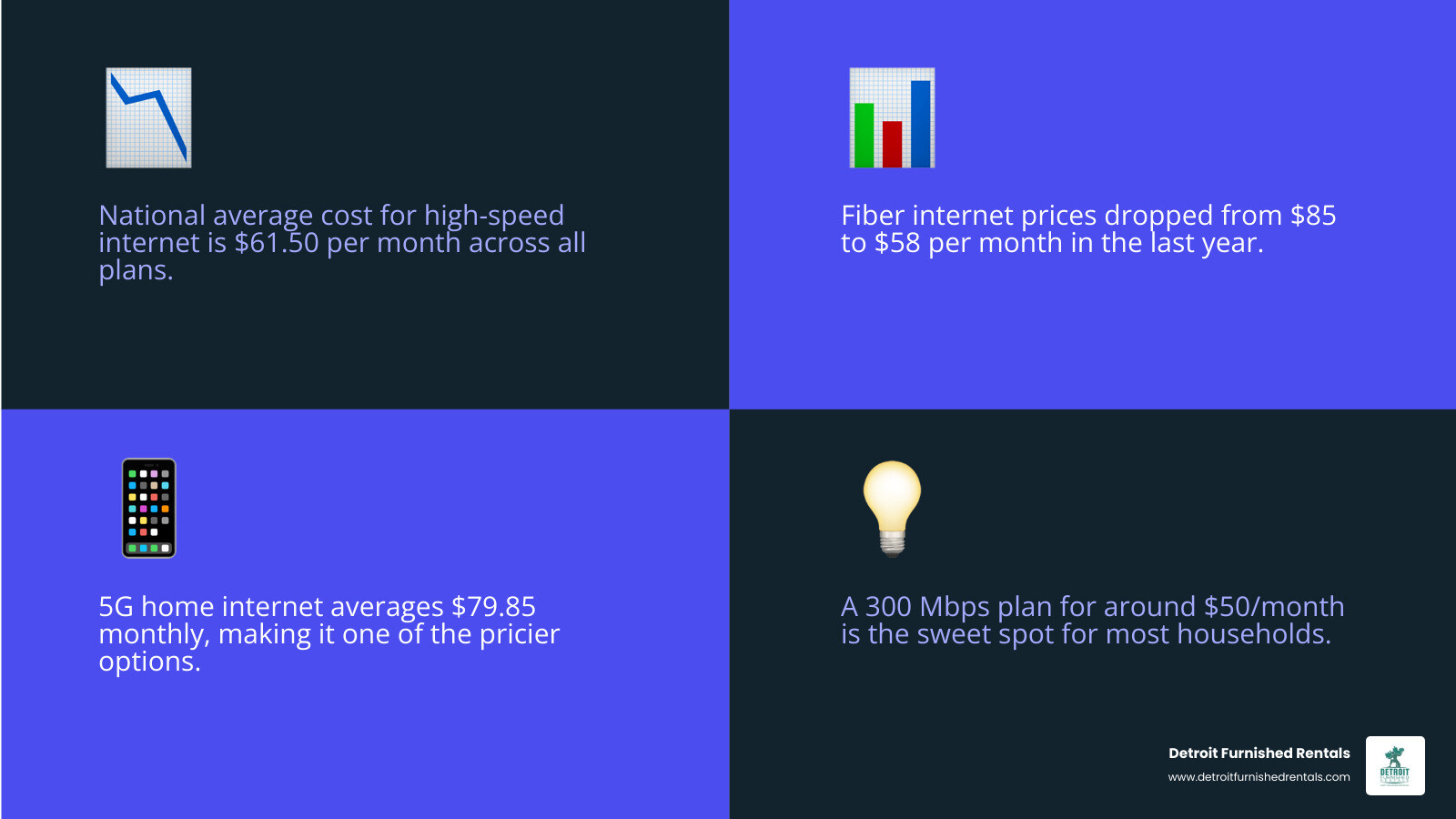
The average cost for high speed internet in the U.S. lands around $61.50 per month across all advertised plans — but what you actually pay depends heavily on your connection type, location, and how many hidden fees end up on your bill.
Here’s a quick snapshot of average monthly costs by connection type:
| Connection Type | Average Monthly Cost |
|---|---|
| Cable | $50 |
| DSL | $56 |
| Fiber | $58 |
| 5G Home Internet | $79.85 |
| Satellite | $95 |
The sweet spot for most households: A 300 Mbps plan for around $50/month covers streaming, remote work, and multiple devices without overpaying.
The good news? Prices are trending down. Fiber dropped from $85 to $58 per month year-over-year. Cable fell from $59 to $50. Even satellite came down significantly. More competition in the market is putting pressure on providers to offer better deals.
But the advertised price is rarely what you pay. Equipment rental fees, installation charges, taxes, and the inevitable post-promotion price hike can push your bill $15–$30 higher than expected each month.
For corporate travelers and traveling nurses staying in Detroit, reliable high-speed internet isn’t a luxury — it’s a work requirement. Knowing what fair pricing looks like before you commit to a plan or a furnished rental can save you real money.
I’m Sean Swain, founder of Detroit Furnished Rentals, and managing furnished properties across the Detroit metro area has given me hands-on experience navigating the average cost for high speed internet — from negotiating provider plans to troubleshooting connectivity issues for guests who depend on it for work. That experience informs everything in this guide.
Understanding the Average Cost for High Speed Internet in 2026
When we look at the landscape in May 2026, the internet market has become more competitive than ever. High-speed internet is now widely viewed as a utility, right alongside electricity and water. In fact, roughly 78% of Americans agree that a solid connection is essential for modern life.
The national median for plans offering at least 100 Mbps is approximately $60 per month. However, “high-speed” is a broad term. The FCC currently defines broadband as anything exceeding 25 Mbps download speeds, but for a modern household in Detroit, we usually recommend aiming much higher.
Average cost for high speed internet by connection type
The technology delivering the internet to your door is the biggest factor in your monthly bill. As of 2026, we see the following trends:
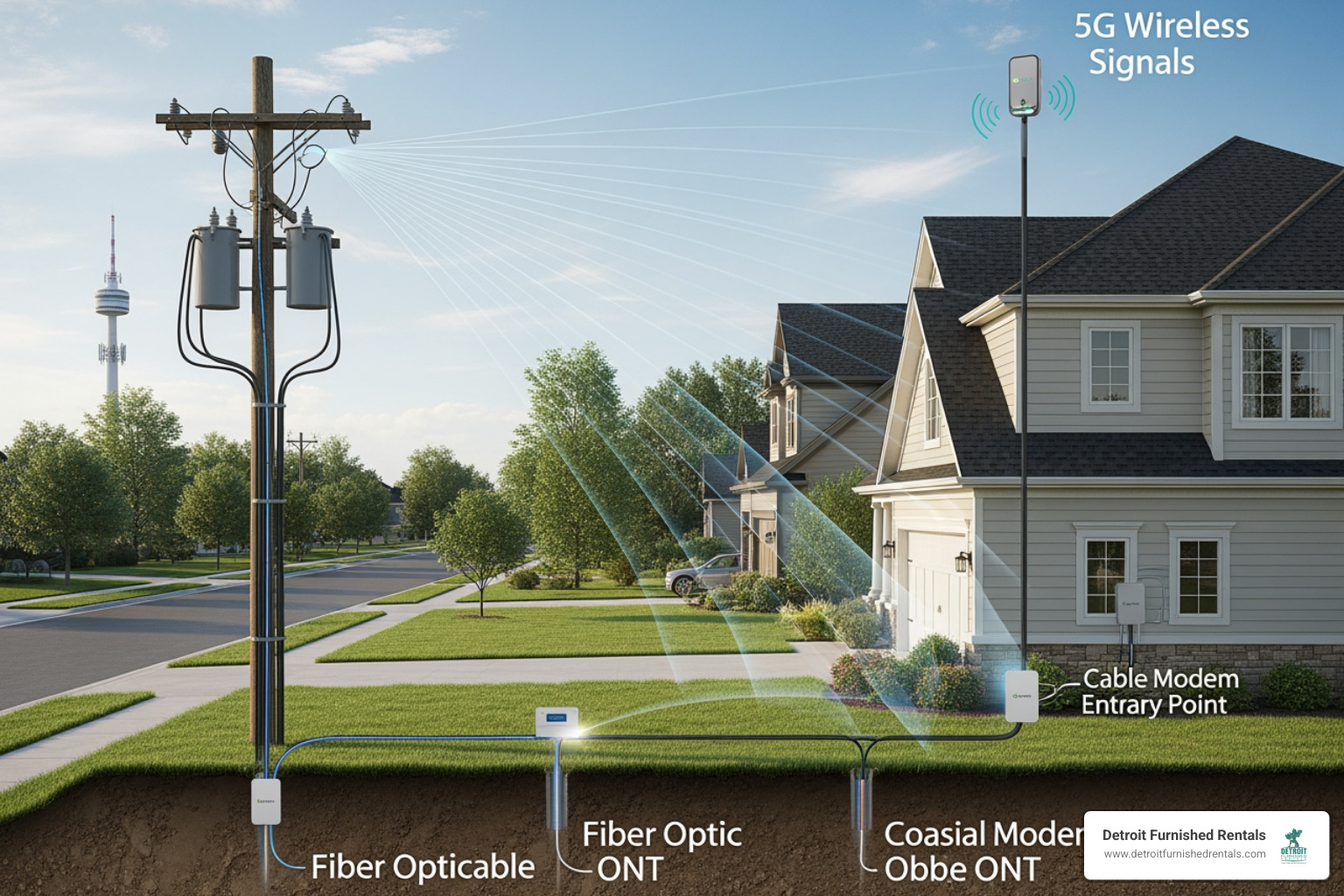
- Fiber Optics: This is the gold standard. It uses light through glass strands to provide symmetrical speeds (meaning your upload is as fast as your download). In 2026, the average price for fiber has settled at $58 per month. This is a massive drop from previous years, thanks to rapid infrastructure expansion.
- Cable: Utilizing the same coaxial cables as traditional TV, cable remains a reliable workhorse. With an average cost of $50 per month, it is often the most affordable “true” high-speed option for urban dwellers.
- 5G Home Internet: This has seen a price increase recently, averaging $79.85 per month. While it started as a cheap alternative, the introduction of “Ultra” tiers and premium 5G hardware has pushed the average up, though it remains a favorite for those who want to avoid wires.
- DSL: Surprisingly, DSL is still hanging around at an average of $56 per month. Despite being slower and based on older telephone lines, the lack of competition in some pockets keeps the price higher than it arguably should be.
- Satellite: Still the most expensive at $95 per month. While companies like Starlink have improved speeds, the high cost of maintaining space-based infrastructure means you’ll always pay a premium.
Regional price variations and competition
Where you live matters just as much as what connection you choose. According to the Internet Speeds and Costs by State [2026] report, states with more provider competition see significantly lower prices.
In Michigan, we sit in a relatively competitive pocket. The average price range for internet in Michigan is $40–$75 per month, with fiber availability currently hovering around 48%. If you are looking for the Top 8 Internet Providers in Detroit, MI (May 2026), you will find a mix of national giants and local fiber entrants.
In Detroit specifically, we benefit from being an urban hub. Competition between cable providers and new fiber rollouts keeps our entry-level prices closer to $35–$45 for basic high-speed tiers, which is better than the national average.
Factors That Inflate Your Monthly Internet Bill
Have you ever noticed that a “$50/month” plan somehow costs $78 when the bill actually arrives? We call this “bill creep.” Understanding why this happens is the first step to stopping it.
Equipment rentals vs. purchasing your own
The most common “hidden” cost is the equipment rental fee. Most providers charge between $10 and $20 per month just to use their modem and router.
- The Cost: At $15/month, you are paying $180 a year for hardware you will never own.
- The Solution: For cable and some fiber providers, you can buy your own modem and router. A high-quality Wi-Fi 6E mesh system might cost $200 upfront, but it pays for itself in just over a year and usually provides better coverage than the “free” unit from the ISP.
Introductory rates and the “Price Hike” reality
The “teaser” rate is the oldest trick in the book. You sign up for a 12-month promotion at $40/month, but in month 13, the bill jumps to $70.
- Contract Terms: Some providers require a 1- or 2-year contract to keep the low rate. If you leave early (say, your work contract in Detroit ends sooner than expected), you could be hit with an Early Termination Fee (ETF) of $10–$20 for every month remaining on the contract.
- Price-Lock Guarantees: In 2026, we are seeing more providers offer 3-year or even “Lifetime” price locks. These are worth their weight in gold for long-term budget planning.
- Data Overages: While most home internet plans have dropped data caps, some satellite and 5G plans still charge $10 per 50GB if you go over your limit.
According to research from How Much Does Internet Really Cost? | Allconnect.com®, these additional fees—including regulatory surcharges and taxes—can add 25% or more to your base cost.
Determining the Right Speed for Your Household
One of the easiest ways to lower your average cost for high speed internet is to stop paying for speed you don’t use. We often see people paying for “Gigabit” (1,000 Mbps) plans when they only have two people in the house.
Average cost for high speed internet by speed tier
Pricing scales with speed, but the jumps aren’t always linear. Here is what you can expect to pay based on the “size” of the pipe:
- Basic (25 Mbps): Average $35/month. Good for a single person who mostly checks email and watches Netflix in HD.
- Standard (100 Mbps): Average $47/month. This is the baseline for a couple working from home.
- Family Plan (300 Mbps): Average $50–$60/month. This is the “sweet spot” identified by How Much Should You Pay For Internet? | HighSpeedInternet.com. It handles multiple 4K streams and gaming simultaneously.
- Luxury (1,000 Mbps+): Average $77–$100+/month. Necessary only for large households (5+ people) or professionals moving massive video files daily.
Recommended speeds for 2026 activities
In 2026, our digital habits have changed. We aren’t just consuming content; we are creating it.
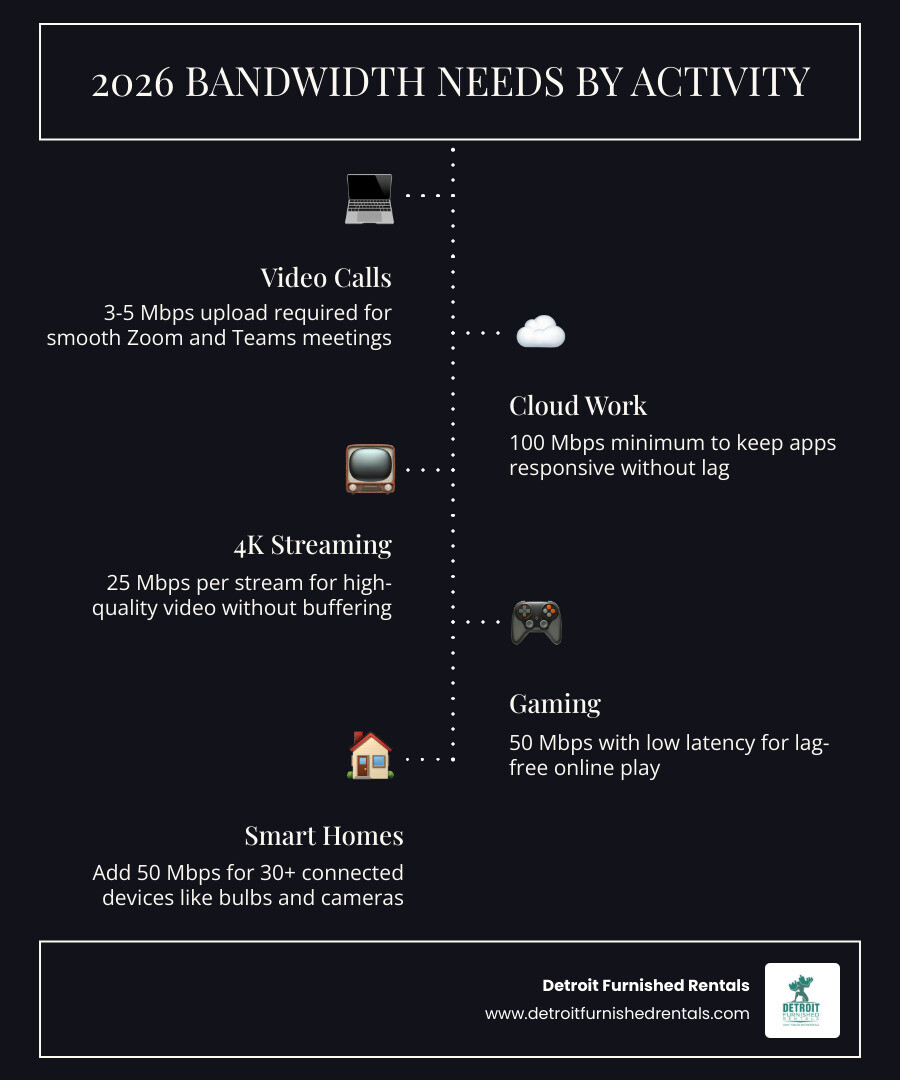
- Video Conferencing: A high-quality Zoom or Teams call requires about 3–5 Mbps of upload speed. This is why fiber is superior; cable often has high download but very low upload.
- Cloud Computing: If you work entirely in the cloud, you need at least 100 Mbps to ensure your apps don’t lag.
- Smart Home Devices: Every smart bulb, camera, and thermostat takes a tiny “sip” of your bandwidth. If you have 30+ devices, you need to add about 50 Mbps to your base requirement just to handle the overhead.
Strategies to Lower Your Monthly Internet Expenses
You don’t have to accept a high bill as a fact of life. We use several strategies to keep costs down for our properties, and you can use them too.
Finding the best average cost for high speed internet deals
- Shop Online: Many providers waive the $100+ installation fee if you complete your order through a web browser rather than calling a sales agent.
- Seasonal Offers: Back-to-school (August) and “Black Friday” (November) are the best times to find price-lock deals or get free “perks” like $200 gift cards.
- Bundle Services: If you already have a mobile phone plan with a major carrier, check if they offer a “Mobile + Home” discount. This can often shave $15–$20 off your monthly bill.
Government assistance and low-income programs
If the average cost for high speed internet is still out of reach, there are several safety nets available in 2026:
- Lifeline Program: A federal program that provides a $9.25 monthly discount on broadband for qualifying low-income households.
- BEAD Initiative: The Broadband Equity Access and Deployment program is currently funding new infrastructure in underserved parts of Michigan, which often brings new, cheaper providers into the market.
- Library Hotspots: In Detroit, many public libraries allow you to check out mobile hotspots for free. This is a great temporary solution if you are between moves.
- Municipal Broadband: Some cities have built their own networks, which are often $20–$50 cheaper than private ISPs.
For a deeper dive into these programs, How Much Does Internet Cost Per Month? provides an excellent breakdown of eligibility.
Frequently Asked Questions about Internet Costs
Is $100 a month too much for high-speed internet?
For most people, yes. Unless you are paying for a Gigabit fiber plan with no data caps and included equipment, $100 is on the high side. If you are a single person or a couple, you should be able to find a perfectly adequate plan for $50–$70.
Do I need to pay for unlimited data?
In 2026, most major cable and fiber providers have dropped data caps entirely. If your provider is trying to charge you an extra $30 for “unlimited,” it might be time to switch. The only exception is usually satellite or certain 5G “Lite” plans.
Can I avoid professional installation fees?
Almost always. Ask for a “Self-Install Kit.” They will mail you the modem and cables, and you just plug them in and activate the service via an app. This saves you the $100 “truck roll” fee.
Conclusion
Navigating the average cost for high speed internet in 2026 is all about being an active consumer. The market is shifting in your favor—prices are down, speeds are up, and fiber is becoming the new standard. By avoiding equipment rentals, choosing the right speed tier, and keeping an eye out for those post-promotional price hikes, you can keep your monthly bill closer to that $50 “sweet spot.”
At Detroit Furnished Rentals, we understand that a fast, reliable connection is the backbone of a successful stay, especially for professionals. That’s why we prioritize high-speed setups in our properties. If you’re looking for a place that’s already optimized for your career, check out our Work-from-home apartments in Detroit. We handle the provider negotiations and the hardware setups so you can just plug in and get to work.