Are Detroit Hospitals at Capacity Right Now?
Are detroit hospitals at capacity is a fair question — and the short answer is: several are, yes. Based on the most recent available data (week of April 21, 2024), multiple Detroit-area hospitals are operating at or near 100% bed occupancy.
Quick Status Snapshot — Wayne County Hospitals (April 21, 2024):
| Hospital | Bed Occupancy |
|---|---|
| Sinai-Grace Hospital (Detroit) | 100% |
| Detroit Receiving Hospital | 100% |
| Harper University Hospital | 100% |
| Beaumont Hospital – Wayne | 96.8% |
| Beaumont Hospital, Troy | 98.8% |
| Henry Ford Hospital (Detroit) | 82.2% |
| Karmanos Cancer Center (Detroit) | 85.1% |
Source: U.S. Department of Health and Human Services, weekly hospital data
This isn’t new territory for Detroit. During the COVID-19 surge in November 2020, six Michigan hospitals hit 100% capacity, with Detroit Receiving Hospital at 97% and Harper University at 90%. Today, some of those same hospitals are back at their limits — but the causes are more complex than a single outbreak.
High occupancy affects more than just patients. It ripples out to ER wait times, staffing levels, and how quickly beds turn over for the next person who needs one.
I’m Sean Swain, and while my background is in logistics, transportation, and hospitality — not medicine — I’ve spent years living and working in Detroit, hosting traveling nurses and medical professionals who need to stay close to the city’s hospital systems. That experience with people asking are detroit hospitals at capacity before booking a stay near the Detroit Medical Center gives me a practical, ground-level perspective on why this matters. In this guide, I’ll walk you through how to check current capacity, what’s driving it, and what it means for patients and visitors.
Know your are detroit hospitals at capacity terms:
Current Status: Are Detroit Hospitals at Capacity?
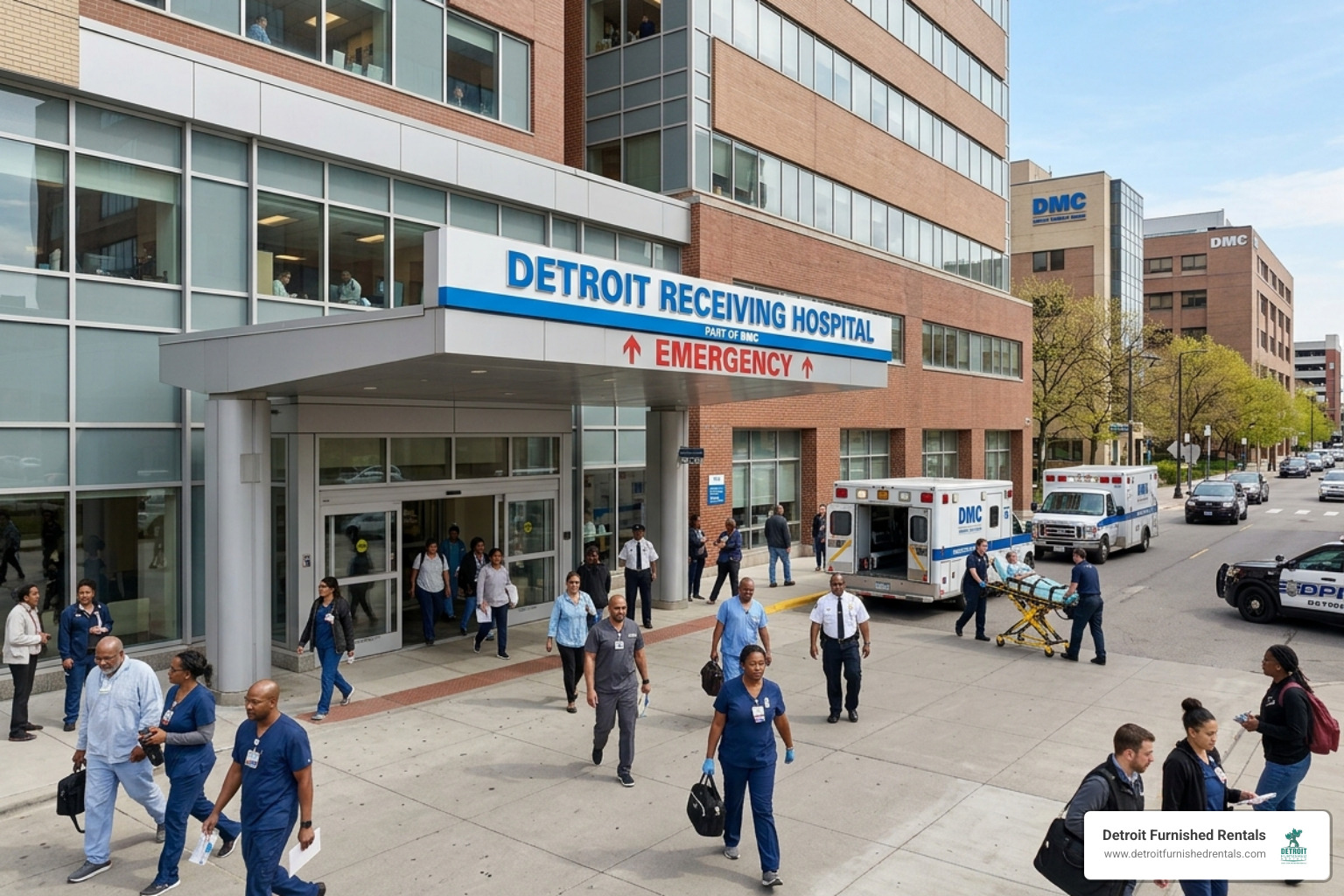
When we look at the numbers from April 2024, it is clear that the healthcare system in Detroit is under significant pressure. For anyone asking are detroit hospitals at capacity, the data shows a “full house” at several of our major institutions. Specifically, Sinai-Grace Hospital, Detroit Receiving Hospital, and Harper University Hospital all reported 100% bed occupancy during the week of April 21, 2024.
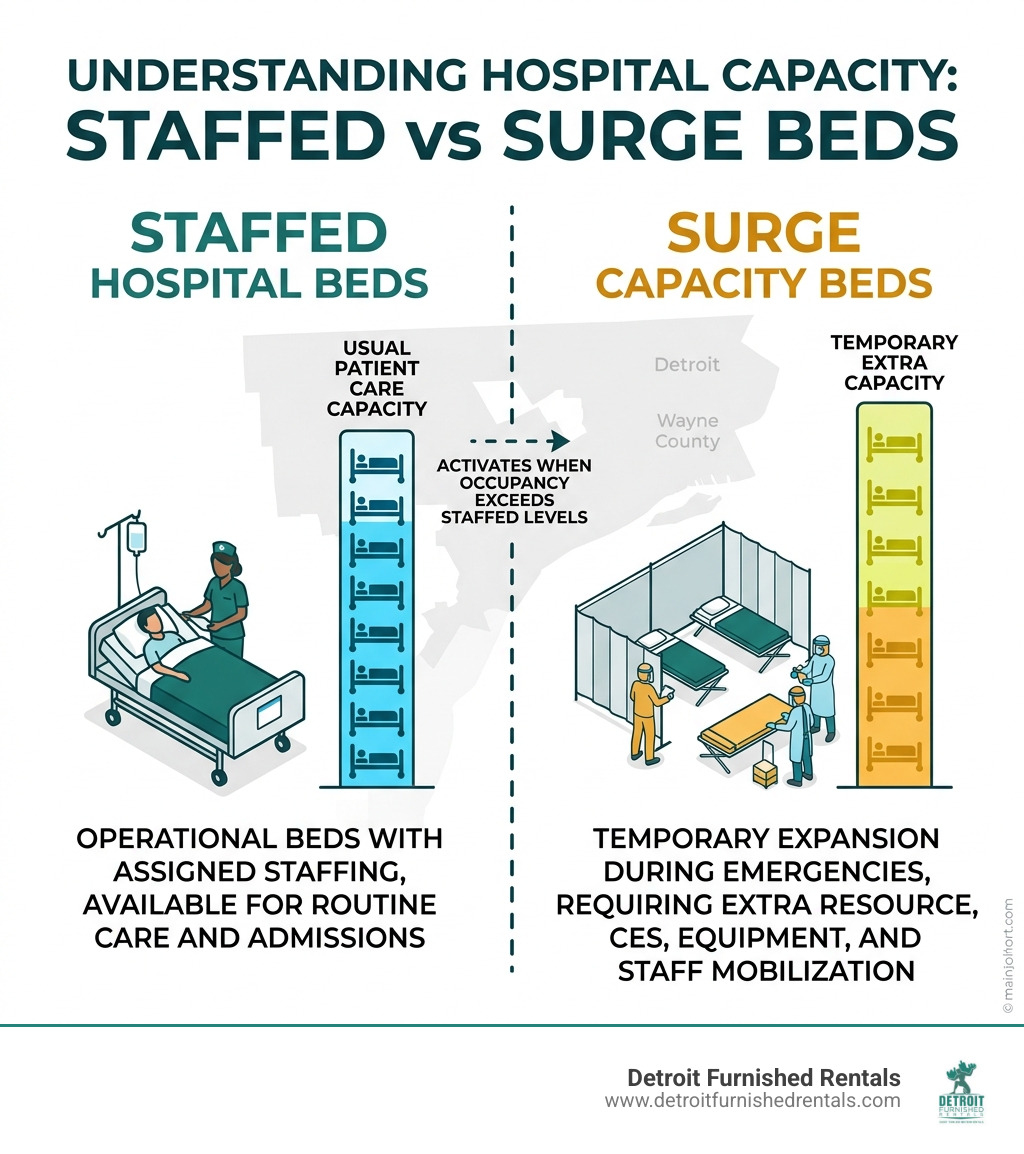
This 100% occupancy rate means that every staffed inpatient bed is currently filled. However, it is important to distinguish between “staffed beds” and “surge capacity.” A hospital might have physical space for more beds, but if they don’t have the nurses or doctors to staff them, those beds cannot be used. This is why we see hospitals hitting their limits even when the building itself isn’t physically overflowing into the streets.
In the broader Wayne County area, the situation remains tight. Beaumont Hospital in Wayne sat at 96.8% occupancy, while even specialized centers like the Karmanos Cancer Center were operating at 85.1% capacity. When hospitals hover above the 80% to 90% mark, the system loses its “buffer,” meaning a small influx of patients from a bad flu season or a local accident can trigger a crisis.
Understanding Why Sinai-Grace and Detroit Receiving are at Capacity
You might wonder why specific hospitals like Sinai-Grace and Detroit Receiving are consistently at the top of the occupancy charts. These are what we call “safety-net” hospitals. They serve a high volume of patients who may not have access to regular primary care, often leading to more emergency room visits and inpatient admissions.
Detroit Receiving Hospital, for instance, is a cornerstone of the Detroit hospital systems. It was Michigan’s first Level I Trauma Center and handles over 105,000 emergency visits annually. Because it specializes in trauma, burns, and emergency medicine, its 273 beds stay in high demand. If a major accident happens on I-75, those patients are going to Receiving.
Sinai-Grace, located on the city’s northwest side, serves a dense population and frequently operates at its 325-bed limit. These hospitals are the front lines of Detroit’s healthcare, and their “at capacity” status is often a reflection of the high medical needs of the community they serve.
How to Find Out if Other Detroit Hospitals are at Capacity
If you need to check the status of a specific facility, the U.S. Department of Health and Human Services (HHS) provides weekly updates that are often mirrored by local news outlets and data dashboards. For a more comprehensive Detroit hospitals list, you can see that capacity varies by specialization.
For example, while a general medical hospital might be at 100%, a specialized facility like the Karmanos Cancer Center might have slightly more breathing room (around 85% occupancy in recent reports). However, even Karmanos reported that its ICU beds were 76.2% full in April 2024. Monitoring these trends is vital for medical professionals and families who are planning for long-term care or elective procedures.
Factors Influencing Hospital Bed Availability in Michigan
It’s easy to blame a single virus for hospital crowds, but the reality is more like a “perfect storm” of several factors. Today, the primary bottleneck isn’t just a lack of physical beds; it’s a lack of people to work them.
1. Staffing Shortages and Burnout As healthcare leaders have noted, “We can buy a lot of beds… but we can’t make more workers overnight.” Staffing shortages are perhaps the biggest hurdle. Between nurses leaving the profession due to burnout and others falling ill themselves, hospitals often have to “close” beds simply because there isn’t a nurse available to monitor the patient. This creates a situation where a hospital might have 50 empty rooms but can only safely admit 40 patients.
2. Seasonal Illness and COVID-19 While we aren’t seeing the massive 2020-style spikes, COVID-19 hasn’t disappeared. It now sits alongside seasonal influenza and RSV. Even a small number of COVID patients can strain a system because they often require longer stays—sometimes 2 to 4 weeks—compared to a standard 2 to 3-day stay for other respiratory issues.
3. Operational Bottlenecks Sometimes the problem isn’t getting into the hospital; it’s getting out. Hospitals often face “discharge bottlenecks” where a patient is medically ready to leave but can’t be moved to a nursing facility because those facilities are also at capacity or have staffing issues. This keeps a hospital bed occupied by someone who no longer needs acute care, preventing a new patient from the ER from moving upstairs.
To combat this, institutions like University of Michigan Health have looked into scientific research on maximizing hospital bed efficiency, implementing high-tech “command centers” to track patient flow in real-time. This level of coordination is what allows for continued excellence in care at Detroit Medical Center even when the numbers look daunting.
Comparing Current Occupancy to 2020 Pandemic Peaks
To answer are detroit hospitals at capacity accurately, we have to look at how today compares to the darkest days of 2020. It’s a different kind of “full” than it was back then.
In April 2020, Henry Ford Hospital was the epicenter of the surge. At its peak on April 6, 2020, 68% of its 561 inpatients were confirmed or suspected COVID-19 cases. Back then, the crisis was defined by a lack of Personal Protective Equipment (PPE), a shortage of ventilators, and a total halt of elective surgeries to make room for a single type of patient.
By November 2020, the strain moved to the ICU. About 20% of all intensive care beds across Michigan were filled with COVID patients, and statewide occupancy sat at 78% for inpatient beds and 81% for ICUs.
How is today different?
- Resources: We generally have enough PPE and ventilators now. The “triage” decisions are no longer about who gets a breathing machine, but rather how long someone has to wait in the ER for a room.
- Patient Mix: In 2020, hospitals were almost exclusively COVID centers. Today, hospitals are trying to balance COVID care with “business as usual”—heart surgeries, cancer treatments, and trauma care.
- Staffing: This is the one area that has arguably gotten worse. The “hero” energy of 2020 has been replaced by the “exhaustion” of 2024.
Understanding what happens when Michigan hospitals reach capacity helps us appreciate the resilience of these systems. If you are a traveling nurse coming to help during these high-capacity periods, finding the right guide to Henry Ford Hospital housing is essential to ensuring you have a place to rest between those intense shifts.
How to Navigate Care During High Capacity Periods
If you or a loved one needs care when are detroit hospitals at capacity is the headline, don’t panic. Hospitals have “surge plans” designed for exactly this.
1. Prioritization (Triage) Hospitals will always see life-threatening cases immediately. If you have symptoms of a heart attack or stroke, you aren’t going to wait behind someone with a broken arm. However, if your condition is non-life-threatening, be prepared for wait times that can stretch from the pre-pandemic “29-minute guarantee” to 6 hours or more.
2. Elective Surgery Delays When capacity hits 90% or higher, hospitals may begin canceling elective surgeries (like hip or knee replacements). This is a financial hit for the hospital, but it frees up staff and beds for emergency cases.
3. Hospital Command Centers Many Detroit systems now use “NASA-style” command centers to manage patient flow. They use AI and real-time data to see which beds are opening up across multiple campuses, allowing them to transfer patients from a full hospital to one with an open bed.
For families of patients, being “at capacity” often means long hours in waiting rooms or searching for nearby accommodations. Finding a home away from home near Detroit hospitals can make a stressful situation much more manageable, especially if you need to be close for several days while a loved one is in the ICU.
Frequently Asked Questions about Detroit Hospital Capacity
What is the current ICU bed usage in Wayne County?
As of the latest reports, ICU occupancy in Wayne County remains high, often hovering around the 80% mark. While this is below the “crisis” levels of 2020, it is still considered a strained state. Health officials keep a close eye on the 81% threshold; once ICU usage exceeds this, it becomes much harder for hospitals to accept transfers from smaller regional facilities. You can check the latest data on Michigan hospital capacity for real-time updates.
Are elective surgeries being canceled in Detroit?
Currently, there is no city-wide mandate to cancel elective surgeries. However, individual hospitals like Sinai-Grace or Detroit Receiving may pause non-emergency procedures on a day-to-day basis if their bed occupancy hits 100%. Most hospitals are trying to avoid the total shutdowns seen in 2020 because they recognize the health risks of delaying non-COVID care.
How do staffing shortages affect hospital capacity?
Staffing is the “invisible” factor in capacity. A hospital might have 10 available beds in a wing, but if they only have enough nurses to maintain a safe 1:4 ratio for 5 of those beds, the other 5 are effectively “closed.” This leads to longer ER boarding times, where patients stay in the emergency department for hours or even days because there isn’t a staffed bed available upstairs.
Conclusion
So, are detroit hospitals at capacity? The data suggests that for several of our major city-center hospitals, the answer is a resounding yes. With 100% occupancy at Sinai-Grace and Detroit Receiving, the system is working at its absolute limit. This strain is a combination of high community need, staffing shortages, and the lingering effects of respiratory illnesses.
At Detroit Furnished Rentals, we see the human side of these statistics every day. We provide short to mid-term furnished apartment rentals in Detroit, MI, specifically designed for the people who keep these hospitals running—the traveling nurses, resident doctors, and medical specialists. We also serve the families who need to be near their loved ones during long hospital stays.
Whether you are a medical professional coming to help alleviate the staffing shortage or a family member looking for a comfortable, pet-friendly place to stay near the Detroit Medical Center, we are here to help. Our centrally located, fully equipped units offer a peaceful retreat from the high-pressure environment of a hospital at capacity.
For more information on navigating the city’s healthcare landscape, check out our area guide to Detroit hospitals. Stay safe, stay informed, and remember that even when the beds are full, Detroit’s medical community continues to provide world-class care.