Finding Apartments That Allow Dogs: What Every Dog Owner Needs to Know
Apartments that allow dogs are more plentiful than ever — but knowing where to look, what to expect, and how to prepare can save you a lot of stress.
Here’s a quick overview of what to expect when renting with a dog:
| What to Expect | Typical Range |
|---|---|
| One-time pet fee or deposit | $200 – $600 per pet |
| Monthly pet rent | $25 – $60 per pet |
| Pet limit per unit | Up to 2 pets |
| Breed/weight restrictions | Common — set by insurers |
| Key amenities to look for | Dog parks, pet wash stations, nearby trails |
Markets vary widely. NYC has over 11,000 pet-friendly listings. Philadelphia has nearly 8,000. Cleveland and Bloomington each offer over 1,400 options. Even smaller markets like Gainesville, FL have solid inventory — though policies and costs differ from city to city.
The catch? Not all pet-friendly apartments are created equal. Fees, breed restrictions, and available amenities can vary dramatically from one building to the next.
I’m Sean Swain, founder of Detroit Furnished Rentals, and my experience managing furnished short-term rental properties — including units that welcome four-legged guests — gives me a practical, ground-level understanding of what renters face when searching for apartments that allow dogs. In this guide, I’ll walk you through everything you need to know to find the right fit for you and your dog.
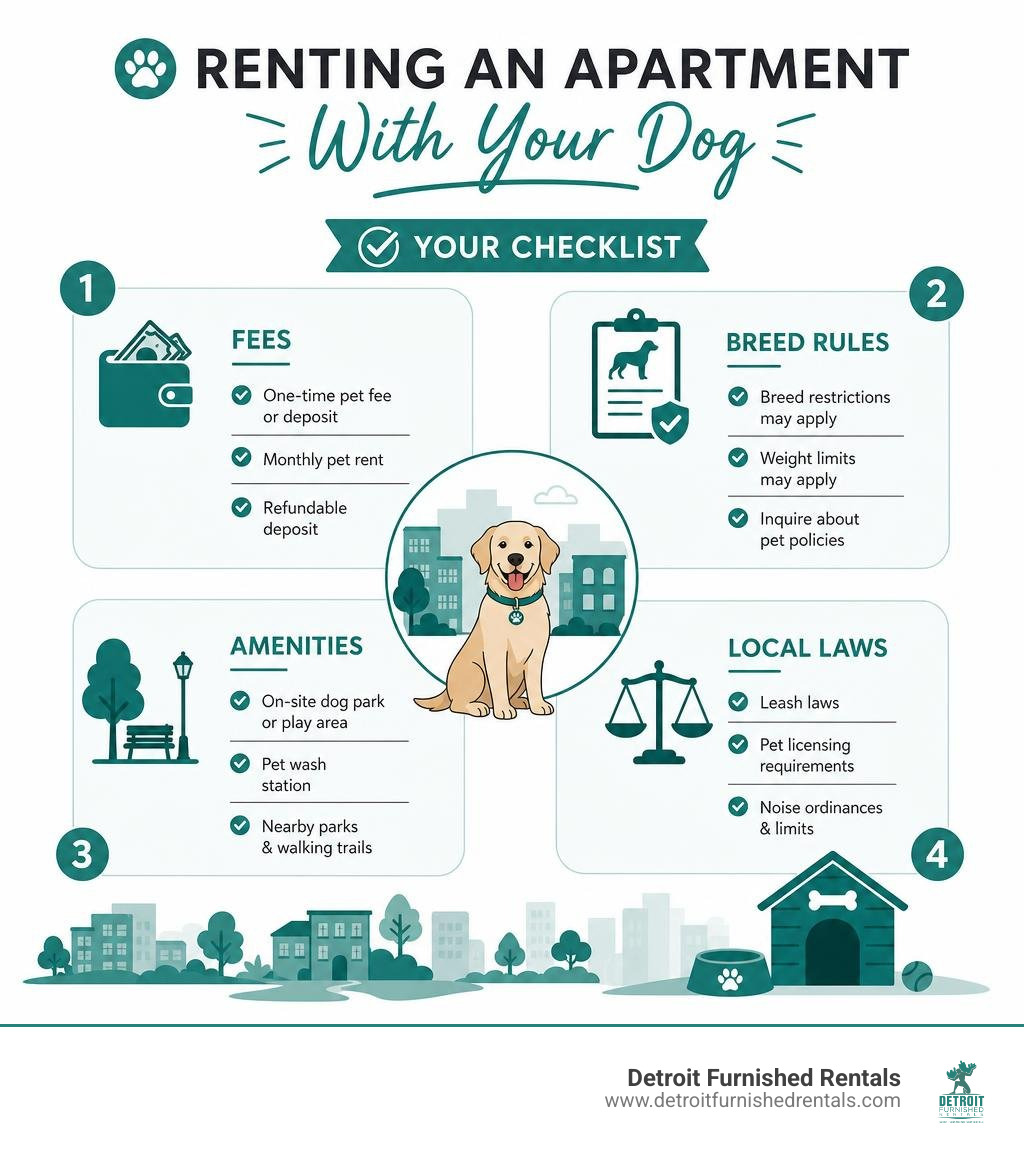
Navigating the Market for Apartments That Allow Dogs
When you begin your search for apartments that allow dogs, it is easy to assume that clicking the “pet-friendly” filter on a rental search engine is all it takes. However, the modern rental market is highly nuanced. A property that is labeled “pet-friendly” might welcome cats but draw the line at dogs, or they might allow small dogs while turning away larger breeds.
To successfully navigate this landscape, you must look beyond the initial search filters and thoroughly analyze the building’s specific pet policies. These rules are legally binding clauses embedded within your lease agreement. Understanding the fine print before you submit an application fee or sign on the dotted line is crucial to protecting both your living situation and your financial peace of mind.
Lease agreements typically outline:
- The maximum number of dogs permitted in a single unit (usually capped at two).
- Exact definitions of what constitutes “acceptable” pets (which may exclude certain exotic animals or specific dog breeds).
- The tenant’s responsibility regarding noise control, waste disposal, and property damage.
- The specific financial obligations tied to pet ownership.
By understanding these parameters early on, you can narrow down your search to properties that genuinely welcome your dog rather than merely tolerating them.
Understanding Pet Fees, Deposits, and Monthly Rent
Renting with a dog almost always comes with additional financial responsibilities. Landlords and property management companies structure these costs in a few different ways, and it is important to know the difference between them so you can budget accurately.
Here is a breakdown of the three most common charges you will encounter:
- Refundable Pet Deposits: This is a security deposit paid upfront before move-in. It is specifically earmarked to cover any physical damage your dog might cause to the apartment (such as scratched baseboards or stained carpets). Under most local rental laws, if your dog causes no damage, this deposit must be refunded to you in full when you move out.
- Non-Refundable Pet Fees: Unlike a deposit, a one-time pet fee is non-refundable. Property managers charge this fee to cover the general wear-and-tear that pets naturally bring to a building, such as deep-cleaning carpets in common areas or maintaining outdoor pet relief stations.
- Monthly Pet Rent: This is an ongoing monthly fee added directly to your base rent. Think of it as a small monthly premium for the privilege of housing your pet. Pet rent typically ranges from $25 to $60 per pet, depending on the market and the building’s amenity level.
To help you visualize these costs, let’s compare typical averages you might encounter across various rental markets:
| Charge Type | Refundable? | Average Cost Range | Purpose |
|---|---|---|---|
| Pet Deposit | Yes | $200 – $500 | Covers physical damage to the unit |
| One-Time Pet Fee | No | $300 – $600 | Covers general building wear-and-tear |
| Monthly Pet Rent | No | $25 – $60 per month | Ongoing fee for pet occupancy |
If you are planning a temporary move or need a flexible lease, these costs can add up quickly. For a deeper dive into managing these expenses during short-term stays, check out our comprehensive pet-friendly temporary housing guide.
Navigating Breed and Weight Restrictions
Even if an apartment building proudly advertises that it allows dogs, you are highly likely to run into breed and weight restrictions. These limits can be frustrating for dog owners, but they are rarely personal. In almost every case, these policies are dictated by the property management company’s commercial liability insurance provider.
Insurance companies maintain actuarial tables that classify certain dog breeds as “high risk.” If a property manager allows these breeds on-site, their insurance premiums may skyrocket, or their policy could be canceled altogether.
Commonly restricted breeds include, but are not limited to:
- Pit Bull Terriers (including Staffordshire Bull Terriers)
- Rottweilers
- Doberman Pinschers
- German Shepherds
- Chows
- Huskies and Alaskan Malamutes
- Great Danes
Additionally, many traditional apartment buildings enforce strict weight limits. It is common to see rules restricting dogs to “under 25 pounds” or “under 50 pounds.” Property managers often use weight limits as a proxy for managing noise levels (larger dogs can make more noticeable footsteps on upper floors) and potential wear-and-tear on unit flooring.
When searching for a home, always ask for the property’s written pet policy upfront. If your dog is a mixed breed that closely resembles a restricted breed, or if they are right on the borderline of a weight limit, having a conversation with the leasing office early in the process can save you from a rejected application later on.
Key Amenities to Look For in Dog-Friendly Rentals
Finding an apartment that legally allows your dog is only step one. Step two is finding a home where your dog can actually thrive. The physical environment of the building and its surrounding neighborhood plays a massive role in your dog’s daily happiness and your overall convenience as an owner.
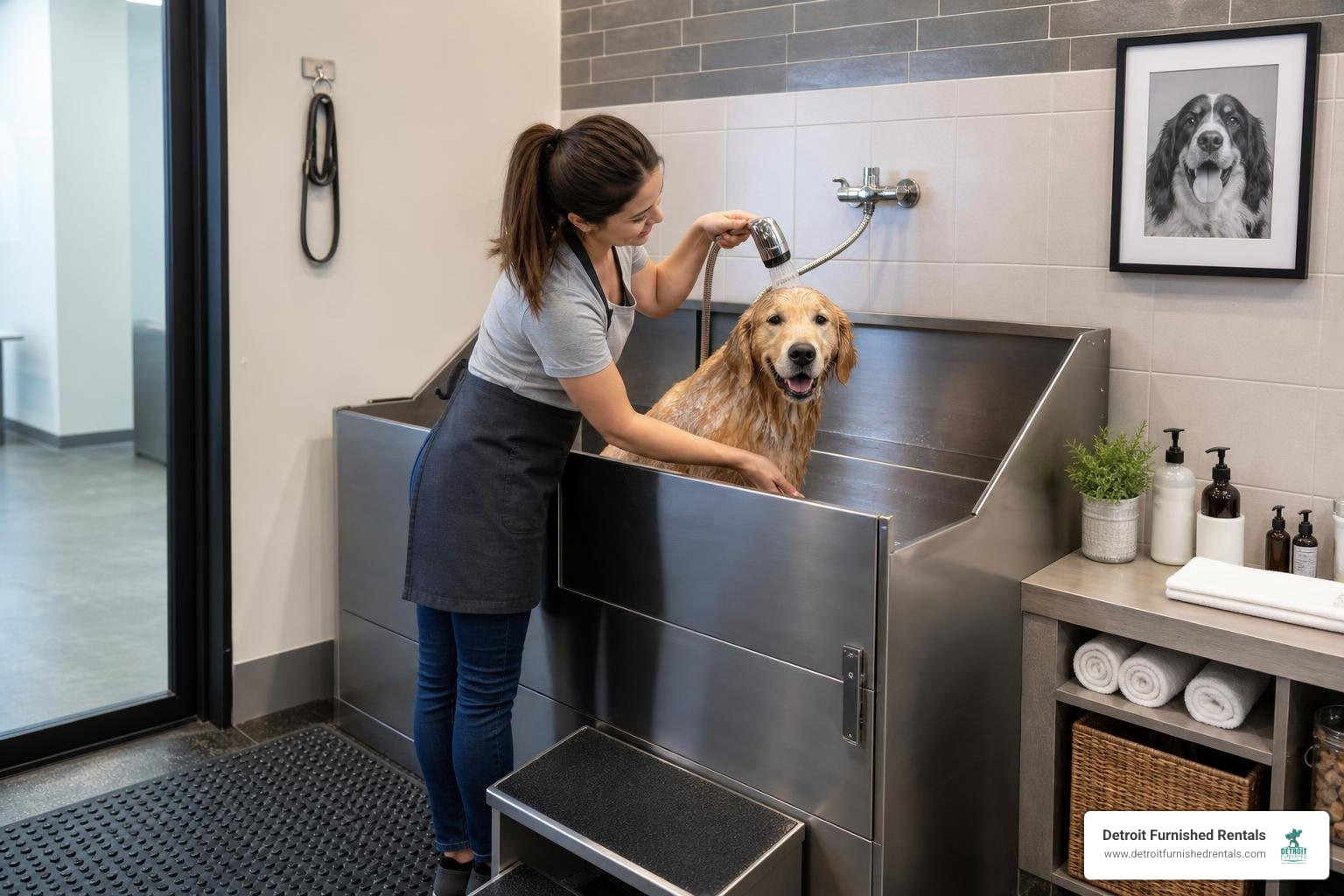
When touring potential rentals, look beyond the countertops and stainless steel appliances to evaluate the pet-specific infrastructure. High-quality pet amenities save you time, reduce your daily stress, and keep your living space cleaner.
On-Site Dog Parks and Pet Washing Stations
Two of the most valuable amenities for modern pet owners are on-site dog parks and dedicated pet washing stations.
An on-site dog park (especially a fenced-in, off-leash area) is a game-changer. It provides a safe, controlled environment where your dog can burn off energy, play fetch, and socialize with other neighborhood pups without requiring a drive to a public park. For busy professionals, having a secure spot to let your dog stretch their legs right outside your door is incredibly convenient.
A pet washing station (or pet spa) is another amenity that you won’t want to live without once you’ve experienced it. Instead of trying to hoist a muddy, wet dog into your personal bathroom tub—which inevitably leads to clogged drains, wet walls, and a backache—you can use a professional-grade, elevated washing station located in the building’s common area.
Inside your individual unit, there are also design features that make life with a dog much smoother. From durable, scratch-resistant flooring to smart layouts, choosing a space designed with animals in mind is key. For creative ideas on setting up your living space, take a look at our guide on dog-friendly kitchen features to see how minor design choices can make a major difference.
Proximity to Green Spaces and Walking Trails
While on-site amenities are fantastic, your dog will still need to explore the world beyond the apartment walls. A building’s proximity to neighborhood green spaces, paved walking paths, and public parks is a vital consideration.
Before signing a lease, take a walk around the surrounding neighborhood. Ask yourself:
- Are there wide, well-maintained sidewalks with plenty of shade?
- Is there a park or grassy relief area within a five-minute walk of the property?
- Are there local dog-friendly businesses, patio cafes, or walking trails nearby?
If you live on an upper floor of a high-rise, quick access to a ground-floor green space is especially important for those late-night or early-morning bathroom trips. A neighborhood with heavy traffic and no grassy parkways can make daily walks stressful for both you and a sensitive dog.
Comparing Pet-Friendly Rental Markets Across Major Cities
Pet policies, rental availability, and overall dog-friendliness can vary dramatically depending on where you live. Local real estate trends, city density, and regional culture all shape how landlords approach pet ownership.

Navigating High-Density Markets vs. Mid-Sized Cities
In high-density, ultra-competitive rental markets like New York City or San Francisco, finding apartments that allow dogs requires persistence. Because space is at a premium and many historic buildings lack elevators or green space, landlords in these cities often enforce stricter weight limits (often capping dogs at 25 pounds) and require extensive pet interviews or references.
By contrast, mid-sized cities and spreading metropolitan areas generally offer more breathing room. Properties in these markets are more likely to feature larger floor plans, private balconies, and dedicated community courtyards, making them highly accommodating for larger dog breeds.
Pet-Friendly Trends in Midwest and College Towns
The Midwest is widely recognized for its pet-friendly rental markets. Cities across this region often boast a lower cost of living and a higher concentration of properties with yards, neighborhood parks, and accessible green spaces.
In college towns, the rental market is often split between student-focused housing and conventional joint-lease apartments. Student housing communities (which often rent by the individual bedroom) may have unique restrictions regarding pets to prevent conflicts between random roommates. Conventional apartment communities in these areas, however, are typically very welcoming to pets, frequently offering on-site dog runs and waste-cleanup stations to appeal to long-term residents and young professionals.
Tips for Securing a Dog-Friendly Apartment
When rental inventory is tight, pet owners often face stiffer competition. To stand out to potential landlords and prove that you and your dog will be exemplary tenants, you need to be proactive and highly organized during the application process.
Creating a Pet Resume and Getting References
One of the most effective ways to ease a landlord’s anxiety about renting to a dog owner is to present a professional pet resume. This simple document shows that you are a responsible owner who takes pet care seriously.
Your pet’s resume should include:
- A high-quality, friendly photo of your dog.
- Basic details: breed, age, weight, and spay/neuter status.
- Up-to-date vaccination and health records.
- Certificates of completion from puppy training or obedience classes (such as the AKC Canine Good Citizen award).
- A brief, written bio highlighting your dog’s temperament, daily routine, and house-training status.
Additionally, secure written references from your current or previous landlords. A note confirming that your dog never barked excessively, caused no damage to the property, and that you always cleaned up after them is incredibly powerful. For more practical advice on preparing your application, explore our top pet-friendly rental tips.
Understanding Local Pet Laws and Tenant Rights
Before moving into a new city or neighborhood, familiarize yourself with local pet ordinances. Most municipalities require dogs to be registered, licensed, and fully vaccinated against rabies. Many cities also enforce strict leash laws in public spaces and heavy fines for owners who fail to clean up pet waste.
Additionally, it is crucial to understand your legal rights as a tenant:
- Service Animals and ESAs: Under the federal Fair Housing Act (FHA), legitimate service animals and Emotional Support Animals (ESAs) are not legally classified as “pets.” Consequently, they are exempt from standard pet fees, monthly pet rent, and breed or weight restrictions. Landlords are legally required to provide reasonable accommodation for these animals, provided you have proper, verifiable documentation from a licensed healthcare professional.
- Lease Clauses: Ensure that any pet agreement, deposit amount, and monthly fee is clearly documented in writing within your lease. Verbal agreements with a landlord or leasing agent are incredibly difficult to enforce if a dispute arises later.
For a comprehensive breakdown of tenant rights, legal considerations, and temporary housing options, check out our pet-friendly temporary housing guide.
Frequently Asked Questions About Pet-Friendly Rentals
Do pet-friendly apartments charge a pet deposit?
Yes, the vast majority of pet-friendly apartments require some form of financial commitment upfront. This typically comes in the form of a refundable pet deposit (usually ranging from $200 to $500) to cover potential damage, a non-refundable one-time pet fee, or both.
Why do apartments have breed or weight restrictions?
These restrictions are almost always established by the property’s commercial liability insurance provider rather than the property manager. Insurers classify certain breeds as higher risk, and properties that allow them face significantly higher premiums or policy cancellations. Weight limits are often used to manage noise transmission between floors and minimize wear-and-tear.
How many pets can I have in an apartment?
Most standard apartment leases limit residents to a maximum of two pets per household. This limit helps property managers control wear-and-tear, maintain community hygiene, and prevent noise issues. If you plan to live with roommates, ensure your roommate agreement clearly outlines who is responsible for the pets and their associated fees.
Finding Your Perfect Dog-Friendly Home in Detroit
If you are planning a move to Southeast Michigan, you are in luck. Detroit is an incredibly welcoming city for dog owners, boasting a fantastic array of dog-friendly parks, outdoor restaurant patios, and vibrant neighborhoods.
At Detroit Furnished Rentals, we specialize in providing high-quality, comfortable, and centrally-located short- and mid-term furnished apartments across the city. We know that your dog is a beloved member of your family, which is why we offer fully pet-friendly accommodations designed to make you both feel right at home.
Our properties feature:
- Fully equipped kitchens (perfect for whipping up home-cooked meals or storing your dog’s favorite treats).
- Dedicated workspaces with high-speed internet (ideal for remote professionals who love working alongside their canine assistants).
- Convenient access to local parks and walking routes.
Whether you are looking for spacious dog-friendly lofts in Detroit, a stylish home near the cultural hub with our pet-friendly apartments in Midtown Detroit, or a flexible stay through our broader inventory of pet-friendly rentals in Detroit, we are here to help you find the perfect fit.
Ready to secure a beautiful, hassle-free home for you and your dog? Explore our available listings and book your stay directly on our Detroit Furnished Rentals Pet-Friendly Page today!