Why Medical Resident Housing Matters for Your Training Success
Medical resident housing is one of the first major decisions you’ll face after Match Day, and it directly impacts your success during training. Here’s what you need to know:
Quick Answer: Your Housing Options
- University-Affiliated Housing – Limited availability, subsidized rates, close to campus
- Short-Term Furnished Rentals – Flexible lease terms, move-in ready, ideal for rotations
- Long-Term Leases – Lower monthly costs, requires furniture, best for entire residency
- Platform Resources – MedsHousing, university listservs, hospital housing boards
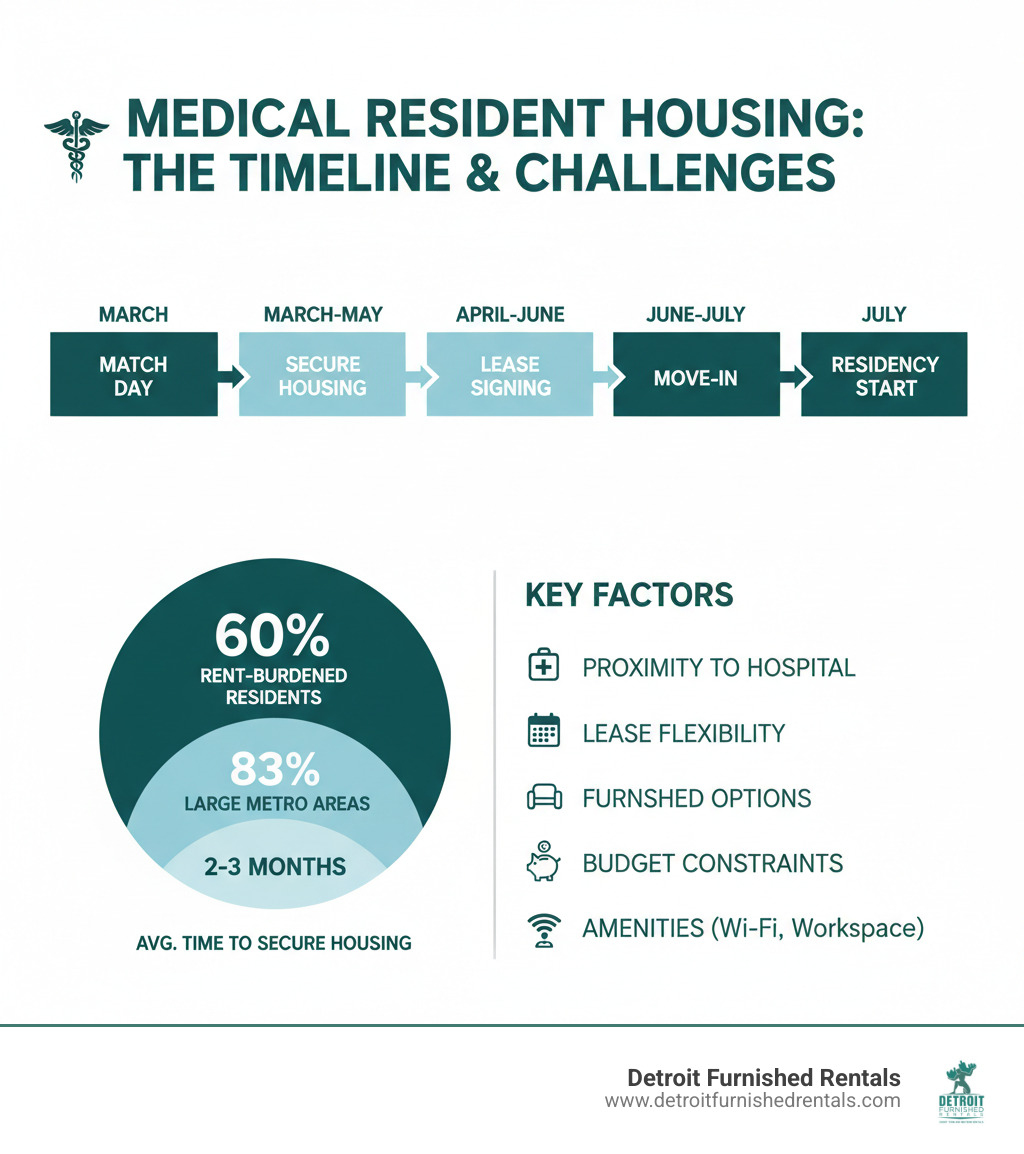
- Budget Reality – Nearly 60% of residents are “rent-burdened” (rent exceeds 30% of take-home pay)
After the excitement of Match Day comes a pressing reality: finding housing in a new city within months. You’re juggling this search while finishing medical school and preparing for 60-80 hour workweeks. Your housing is more than a place to sleep—it’s your recovery space, study area, and sanctuary between demanding shifts.
Between 2000 and 2022, inflation-adjusted resident salaries fell slightly while rental prices rose 17.8%. In large metro areas, 83% of training institutions have rent-burdened residents. This financial pressure makes finding the right housing—one that balances cost, convenience, and comfort—critical.
I’m Sean Swain, founder of Detroit Furnished Rentals. For over a decade, I’ve helped medical professionals find comfortable, move-in ready housing in the Detroit metro area. My experience with traveling nurses and residents has given me deep insight into the unique medical resident housing challenges you face. Let me guide you through your options so you can focus on your training.
The Financial Diagnosis: Resident Salaries vs. The Rental Market
Your future paycheck is already playing catch-up with the rental market. And it’s losing.
Between 2000 and 2022, first-year resident salaries barely budged when adjusted for inflation, while rental prices climbed 17.8%. This gap is why you might be wondering how you’ll afford to live in the city where you matched.
Recent research on resident housing affordability in JAMA Network Open defines rent burden as spending 30% or more of your take-home pay on rent. According to the study, nearly 60% of residents are rent-burdened.
In large metropolitan areas, where many major teaching hospitals are located, the situation is worse. A staggering 83% of institutions in these areas have rent-burdened residents. This financial reality influences where you can afford to train and how you live during residency.
We’ve heard the stories from residents in Detroit. Many share apartments, pick up extra moonlighting shifts to cover rent, or sell their cars to make ends meet. These aren’t isolated cases—they’re the norm.
So what help can you expect from your program? Unfortunately, not much. The same research found that only 28.8% of programs offer moving allowances and just 13.7% provide housing stipends. This means finding affordable medical resident housing falls largely on your shoulders.
However, there are some bright spots. As a medical learner, you’re often eligible for government rates at hotels—always ask when booking. Many universities also negotiate discounts with hotel chains and other vendors, often 10-20% off flexible rates. Every bit helps when you’re on a tight budget.
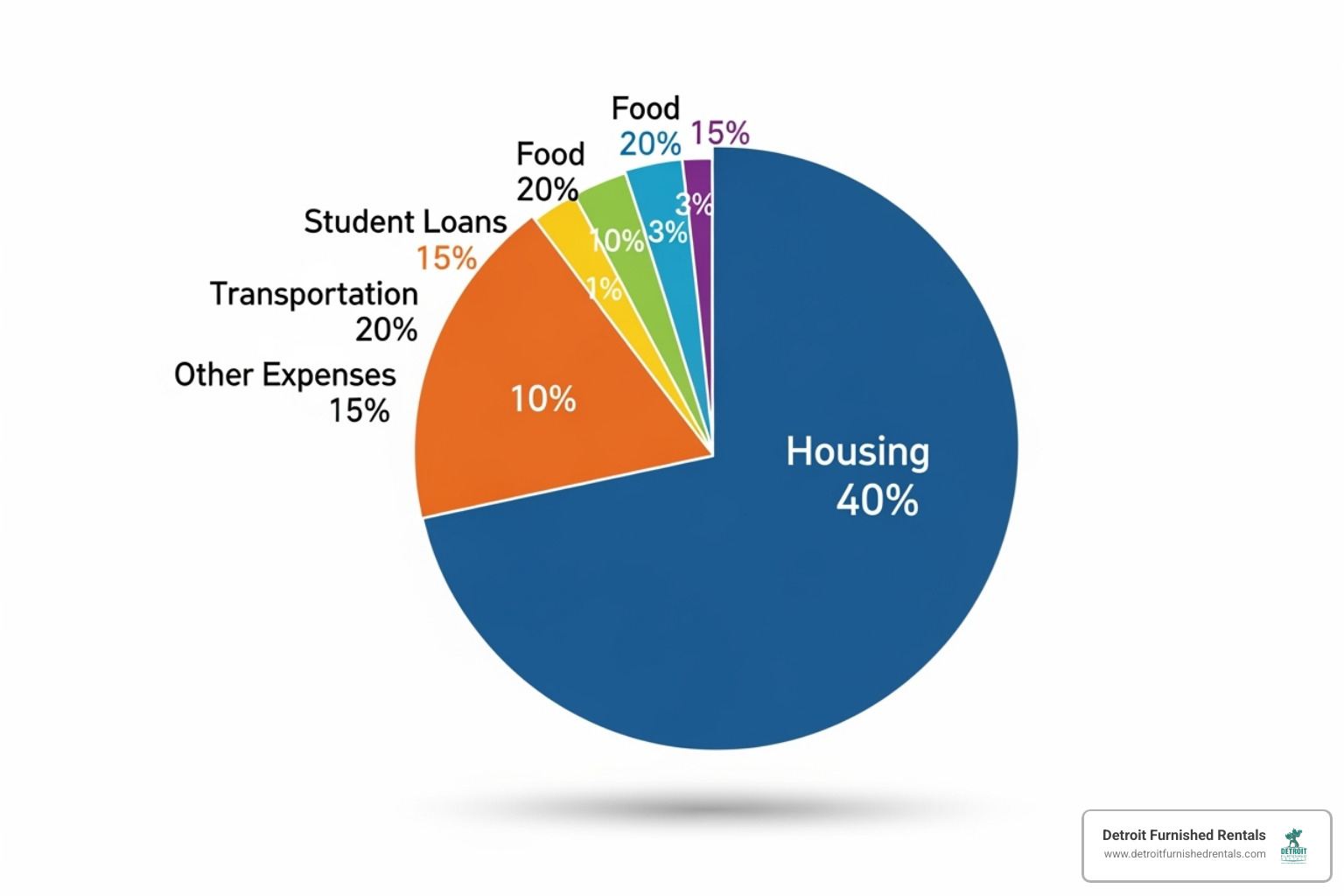
Your housing will likely be your biggest monthly expense, potentially over a third of your paycheck. Choosing the right accommodation—balancing cost, location, and necessary amenities—is crucial for your financial wellbeing and peace of mind.
Your Prescription for a Perfect Place: Types of Accommodations
Choosing where to live during residency requires matching your housing to your rotation length, budget, and lifestyle. The good news is you have options. The first question is how long you’ll be staying, as a four-week elective requires a different strategy than a three-year program.
Finding Flexible Accommodations for Medical Residents
Medical training is unpredictable, making housing flexibility essential. You might have a two-month rotation in one hospital, then six weeks somewhere else.
Short-term furnished rentals are designed for this life. They are move-in ready spaces without the hassle of furniture shopping or utility setup. At Detroit Furnished Rentals, we specialize in Month to Month Apt Rentals that adapt to your schedule, whether you need a place for six weeks or six months.
The beauty of Temporary Housing Rentals is that they remove the stress of timing. If your rotation is extended or you need to leave early, flexible terms are invaluable.
Long-term leases (12+ months) are the traditional route and usually have lower monthly rent. However, you must furnish the entire place yourself and then deal with selling or moving it all later. For many residents, the hassle isn’t worth the savings.
| Feature | Short-Term Furnished Rentals | Long-Term Leases (Unfurnished) |
|---|---|---|
| Cost | Higher monthly rate, but no upfront furnishing costs | Lower monthly rate, but significant upfront furnishing costs |
| Convenience | Move-in ready, fully equipped, utilities often included | Requires furnishing, setting up utilities, more effort |
| Flexibility | Ideal for rotations (weeks to months), easy transitions | Typically 12+ month commitments, less flexible |
| Suitability | Rotations, electives, temporary assignments, initial residency | Full residency (if staying in one location), post-residency |
The Case for Furnished Medical Resident Housing
After a 12-hour shift, the last thing you want is to assemble furniture. This is why furnished medical resident housing is so valuable. Move-in ready convenience means your bed is made, your kitchen is stocked, and you have a couch and workspace waiting for you. This setup is perfect for temporary assignments and rotations.
Our Fully Furnished Apartments Detroit take this seriously. A fully equipped kitchen is essential for cooking healthy meals at home, saving you money and keeping you fueled. We also include dedicated workspaces because your work doesn’t end when you leave the hospital. You need a proper desk and chair for studying or virtual meetings.
We also stand out by being pet-friendly. We know your pet is family and should be with you. Many traditional rentals don’t allow pets, but we do. If you’re wondering Is Corporate Housing Furnished?, the answer is yes—and ours is designed to support your lifestyle as a medical professional.
University-Affiliated Housing Support
Many medical schools offer university-managed residences for residents. These can be a solid, affordable, and convenient option. The application process usually starts through your program coordinator or the university housing office. Institutions like the University of Toronto offer various residence options with furnished rooms.
The pros are clear: these residences are often subsidized, affordable, and close to campus, cutting your commute. You’re also surrounded by peers, creating a built-in support system. Some networks, like Bassett Healthcare Network, offer subsidized townhouses with utilities included.
But there are potential cons. Availability is often limited. The living arrangements can feel like dorm life with shared spaces, tight quarters, and strict rules. For some, this is perfect; for others, it’s too restrictive.
Detroit Furnished Rentals complements university housing by offering more flexibility and amenities. If you need more space, want your pet with you, prefer a private kitchen, or desire more independence, our rentals provide that. We offer the comforts of home without the long-term commitment of traditional leasing.
The Ultimate Guide to Finding Medical Resident Housing
Finding the perfect medical resident housing requires a strategic approach. Like preparing for rounds, you must gather information from various sources to make the best decision. You have more tools at your disposal than you might realize, from institutional resources to specialized platforms.
Leveraging University and Hospital Resources
Your Postgraduate Medical Education (PGME) office should be your first call. Many programs maintain internal listservs or housing boards where current residents and understanding landlords post properties. These networks are valuable because posters understand your schedule, budget, and need for proximity to the hospital.
University support varies. NOSM University provides comprehensive housing information, while UBC’s PGME program offers resources and hotel discounts. The University of Toronto has robust services via U of T Housing Services. If you’re heading to Henry Ford Hospital, explore their on-campus housing options early. Other institutions like the University of Wisconsin and the Medical College of Wisconsin also offer dedicated housing support.
Your program coordinator is another key resource. They often have insider knowledge on safe neighborhoods, resident-friendly landlords, and available apartments.
Using Specialized Housing Platforms
Specialized housing platforms for medical professionals can open up more options. They understand you need medical resident housing with flexible leases near major medical centers. These platforms let you search by hospital and filter for needs like furnished units or short-term availability. Vet each property carefully by reading reviews and verifying what’s included.
When using any platform, check the details. Are utilities included? Is the internet fast enough for research? Can you move in on short notice? These practical questions matter more than fancy amenities. For more information about local options, you can explore more about accommodation options in Detroit.
Location-Specific Resources for Medical Resident Housing
Hyperlocal resources are often best. In Chicago, the University of Illinois Chicago offers Medical Student Rotation Housing. In Canada, provincial resources like those in Nova Scotia or regional ones like Muskoka Algonquin Healthcare provide targeted options.
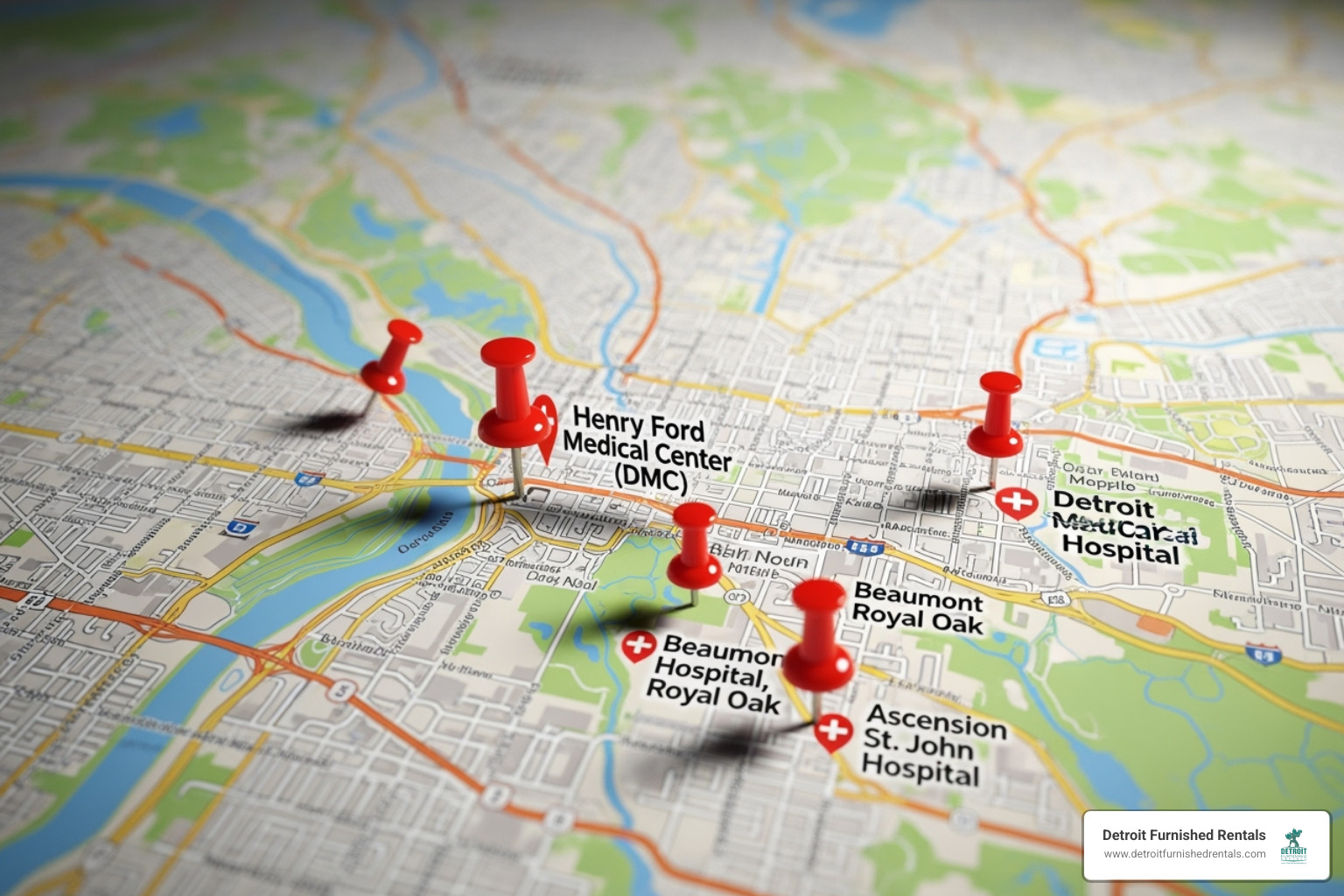
Here in Detroit, we know you’re training at demanding institutions like the Detroit Medical Center (DMC), Henry Ford Hospital, Ascension St. John’s Hospital, DMC Harper University Hospital, and St. John Hospital Detroit (Moross). Getting to these sites quickly is crucial.
We focus on central locations with amenities that matter: equipped kitchens, dedicated workspaces, high-speed internet, and pet-friendly policies. We’ve furnished hundreds of apartments with medical residents in mind. Start your search early, use every resource, and don’t settle for a place that adds stress to your life.
Key Considerations Before You Commit
Finding your medical resident housing is like creating a treatment plan. A clear checklist helps you balance your budget with what you need to thrive during residency. Let’s walk through the essentials.

Proximity, Commute, and Safety
After a 14-hour shift, the last thing you need is a long commute. This is why proximity to your training site is a top priority for medical residents. Walkability is the gold standard, saving you time, money, and mental energy. If walking isn’t an option, look for reliable public transportation or ensure parking is included or easily accessible.
Neighborhood safety is critical, especially for late-night commutes. Talk to current residents for honest feedback on which neighborhoods feel safe. Online forums and local guides can also help. If you’re heading to Detroit, resources like Top Detroit Neighborhoods for Resident Doctors – Robertson Homes can point you in the right direction.
Essential Amenities for a Resident’s Lifestyle
Your apartment is your command center, recovery room, and sanctuary. The right amenities make a huge difference. A dedicated workspace is non-negotiable for studying and telehealth. At Detroit Furnished Rentals, we make this a priority.
In-unit laundry is a lifesaver on an 80-hour workweek, and high-speed internet is essential for work and relaxation. If you have a pet, finding pet-friendly housing is a must. We understand your pet is family and offer pet-friendly options for that crucial emotional support.
A fully equipped kitchen helps you save money and eat healthier. Our rentals include everything you need to prepare a meal after a long shift. Finally, access to fitness centers or green spaces is valuable for stress relief and maintaining your health.
Understanding Lease Terms and Reimbursement
The fine print matters. Lease flexibility is crucial for unpredictable training schedules; short-term or month-to-month options provide breathing room. Understand the difference between primary and secondary accommodations for reimbursement. Your primary residence is usually not reimbursed, but you may qualify for reimbursement for temporary housing during an away rotation if you maintain your primary home. Always clarify policies with your PGME office.
Be aware of institutional requirements like renter’s insurance, which is a smart investment regardless. Have your documentation ready (employment verification, references, credit check) to speed up the application process. Read everything carefully, ask questions, and get all agreements in writing.
Conclusion: Finding Your Home Away From the Hospital
Your search for medical resident housing is about creating a foundation for your career. This guide has covered the financial pressures, housing options, and practical strategies to find a home that supports your demanding schedule.
The numbers are sobering: nearly 60% of residents are rent-burdened. Relocating to a new city after Match Day adds to the pressure. But with the right information, you can make a choice that reduces stress.
Your home during residency is where you decompress, study, and recharge. That’s why proximity to your hospital, essential amenities like a dedicated workspace and a fully equipped kitchen, and lease flexibility are necessities, not luxuries.
With over a decade of experience serving medical professionals in Detroit, we understand these unique needs. At Detroit Furnished Rentals, we’ve designed our properties for residents, fellows, and traveling nurses. Our fully furnished apartments mean you can arrive with your suitcase and focus on your patients immediately—no furniture shopping or utility setup hassles. Our equipped kitchens let you prepare healthy meals, and our pet-friendly options welcome your four-legged family members who provide essential support.
Whether you’re training at the Detroit Medical Center, Henry Ford Hospital, or another major teaching facility in our area, we’re here to provide a comfortable home base. We’ve helped countless residents find their footing, and we’d be honored to help you too.
Your residency is demanding enough. Let us handle your housing so you can focus on what you do best: learning, growing, and caring for your patients. Find your ideal home base for your residency or rotation with our Travel Nurse Housing Options, and find how the right living environment can make all the difference.