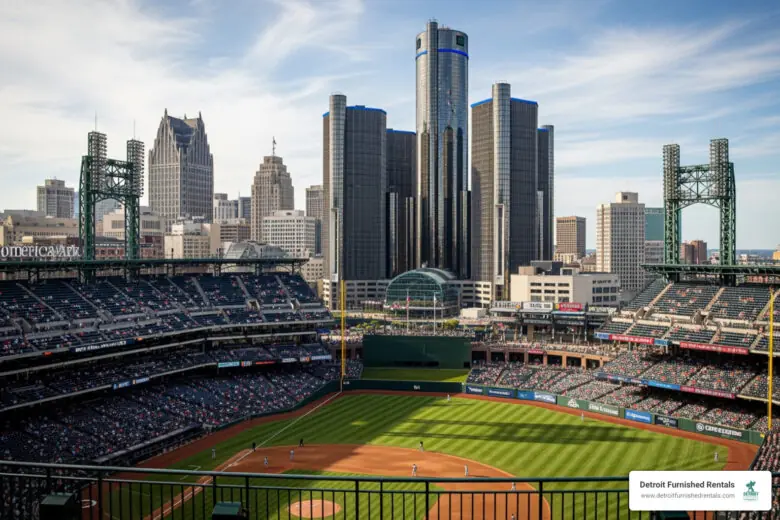
Why the Detroit Symphony Orchestra Matters to Detroit
The Detroit Symphony Orchestra is one of America’s oldest and most respected orchestras, founded in 1887 and based at Orchestra Hall in Detroit’s Midtown neighborhood. Led by Music Director Jader Bignamini since 2020, the DSO presents classical, pops, jazz, and family concerts while pioneering digital broadcasts and serving over 500,000 people annually through music education and community programs.
Quick Facts:
- Founded: 1887 (resumed operations 1914)
- Home Venue: Orchestra Hall at the Max M. Fisher Music Center
- Current Leadership: Jader Bignamini (Music Director), Erik Rönmark (President & CEO)
- Notable Achievement: First orchestra to broadcast a concert on radio (1922)
- Concert Series: PVS Classical, PNC Pops, Paradise Jazz, Family Concerts, Neighborhood Series
- Community Programs: Detroit Harmony (free instruments and instruction for students), Civic Youth Ensembles, sensory-friendly concerts
If you’re exploring Detroit for an extended stay, you’ll quickly find that the city’s cultural landscape is defined by more than its automotive heritage. The Detroit Symphony Orchestra stands as a cornerstone of this vibrant arts community.
For over 135 years, the DSO has weathered financial storms, labor disputes, and the city’s own economic challenges. Yet it continues to innovate. In 1922, it became the first orchestra in the world to broadcast a live concert on radio. In 2011, it launched “Live from Orchestra Hall,” a groundbreaking series of free webcasts that has reached over 550,000 viewers in more than 100 countries.
The orchestra’s story is also surprisingly intertwined with Detroit’s popular music legacy. In the 1960s, DSO musicians moonlighted as the string section for Motown Records hits, sometimes recording under the name “San Remo Golden Strings.” This unique crossover between classical and popular music reflects the DSO’s deep roots in Detroit’s broader cultural fabric.
Today, the DSO doesn’t just perform. It teaches, collaborates, and serves. Through programs like Detroit Harmony—which provides free instruments and instruction to any city student who wants to learn—the orchestra actively shapes the next generation of musicians and music lovers.
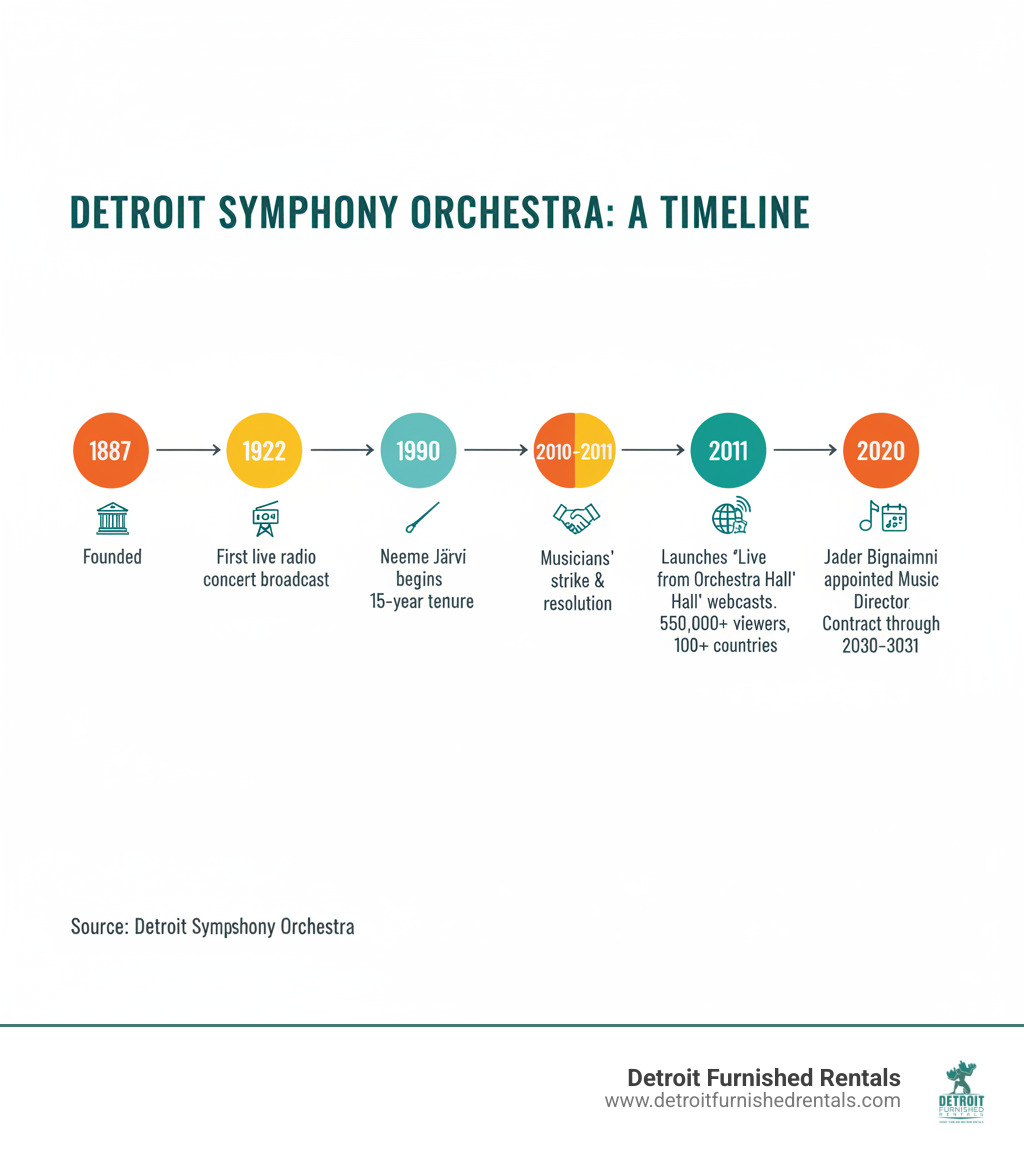
Detroit Symphony Orchestra glossary:
A Storied History: From Founding to Global Recognition
The story of the Detroit Symphony Orchestra is like a grand symphony itself – full of dramatic highs, challenging lows, and incredible moments of beauty and resilience. Imagine, it all began way back in 1887! The orchestra played its very first concert that December at the Detroit Opera House. But like many new ventures, it faced some early problems. Happily, the orchestra had a wonderful “rebirth” and its operations resumed in 1914, setting the stage for the amazing journey we know today.
#
A truly pivotal moment in the Detroit Symphony Orchestra‘s early days came with the arrival of Ossip Gabrilowitsch as Music Director. He was a visionary who knew that a great orchestra needed a great home. He insisted on a dedicated concert hall as a condition of his leadership! And just like that, Orchestra Hall was built in a hurry in 1919. This beautiful venue quickly became the heart and soul of the DSO.
#
The Detroit Symphony Orchestra wasn’t just about beautiful music; it was also a pioneer! In 1922, it made history by becoming the first orchestra in the world to broadcast a concert live on the radio. Talk about being ahead of its time! This groundbreaking spirit continued, with the DSO becoming the official orchestra for ‘The Ford Sunday Evening Hour’ from 1934 to 1942. Imagine millions of families across the country gathering around their radios to enjoy classical music, all thanks to the DSO.
#
After the war, the Detroit Symphony Orchestra continued to grow and adapt, just like the city it calls home. It steerd changing times and, yes, faced its share of financial challenges – a common tune for many arts organizations. But each time, the DSO proved its mettle. Its history truly shows how an institution can adapt, persevere, and thrive, becoming a global ambassador for Detroit’s vibrant spirit.

Key Figures Who Shaped the Detroit Symphony Orchestra
The Detroit Symphony Orchestra‘s incredible journey has been shaped by a host of brilliant leaders, both on the stage and behind the scenes. These amazing individuals have guided the orchestra through thick and thin, leaving a lasting mark on its unique sound and its connection to the community.
#
Let’s meet some of the luminaries who have truly made the DSO what it is:
#
First up, Ossip Gabrilowitsch, as we mentioned, was instrumental in building Orchestra Hall. He set incredibly high artistic standards that continue to inspire the orchestra today. Then came Neeme Järvi, who led the DSO for 15 years, from 1990 to 2005. He was known for his wide range of music and energetic leadership, which truly brought a new level of artistic life to the orchestra, leading to many recordings and critical praise.
#
Later, Leonard Slatkin took the baton as Music Director from 2008 to 2018. He had a special love for American music and a fresh way of putting concerts together. He also played a huge role in helping the orchestra through a really tough financial time, even taking a pay cut to support them! During his time, the DSO even returned to the famous Carnegie Hall in 2013 for the first time in 17 years.
#
Today, our current Music Director is the vibrant Jader Bignamini, who started in 2020. His energetic conducting style has completely charmed audiences, and we’re thrilled that his contract was extended through the 2030-2031 season in December 2023! This truly signals a bright future for the orchestra.
#
It’s not just conductors who shape an orchestra! Anne Parsons, who was President and CEO from 2004 until her retirement in 2022 (and sadly passed away shortly after), was a transformative administrative leader. She’s widely credited with helping the DSO recover from huge financial challenges and encouraging its innovative spirit, especially in how it connects with the community and uses digital broadcasting. Her leadership paved the way for the orchestra’s current stability and success.
#
Building on that foundation, Erik Rönmark was appointed President & CEO in March 2022, continuing the important administrative work. And making history, Tabita Berglund was named Principal Guest Conductor Designate for the 2024-2025 season, becoming the first female conductor to hold such a prominent position with the Detroit Symphony Orchestra!
Navigating Turmoil: The 2010 Strike and Rebirth
Every great story has its dramatic moments, and the Detroit Symphony Orchestra‘s journey includes one of its most significant challenges: the musicians’ strike of 2010-2011. This period was incredibly tough, testing the very core of the institution, but it ultimately showed the DSO’s amazing resilience and its deep connection to the Detroit community.
#
On October 4, 2010, the DSO musicians went on strike due to difficult negotiations over proposed pay and benefit cuts. This intense situation lasted for six long months, creating a lot of uncertainty for everyone involved. But hope prevailed! A tentative agreement was finally reached on April 3, 2011, and concerts joyfully resumed on April 9, 2011, with a weekend of free performances that felt like a true new beginning.
#
The strike had a huge impact, but the orchestra, with strong leadership, began a remarkable recovery. One clever strategy was to really focus on reaching out to the community and making music more accessible. This included the popular William Davidson Neighborhood Concert Series, which brought performances to various venues all over metro Detroit. This effort helped boost subscription growth by nearly 25% from 2011 to 2014!
#
The Detroit Symphony Orchestra‘s determination to rebuild and reconnect shone brightly when it returned to Carnegie Hall in 2013. This was a massive achievement, being the first time the orchestra had played there in 17 years! This national appearance proved that the DSO wasn’t just surviving; it was thriving and showing off its renewed artistic brilliance. The orchestra also acceptd new technologies to reach even more people, as detailed in this article about the DSO’s resilience. It’s clear that innovation was a key ingredient in its powerful rebirth.
The Sound of the Symphony: Music, Media, and Motown
The Detroit Symphony Orchestra is so much more than just a classical ensemble; it’s a vibrant, dynamic group always finding fresh ways to share beautiful music, while still honoring the classics we all love. Under the exciting leadership of Music Director Jader Bignamini, our current artistic direction is all about bringing you a wide world of musical experiences.
We truly believe there’s something for everyone! Our diverse programming includes the beloved PVS Classical Series, which showcases timeless orchestral masterpieces, and the lively PNC Pops Series, where popular tunes come alive with symphonic flair. If you love jazz, our Paradise Jazz Series brings world-class talent right to Detroit. And for our youngest music lovers, we have engaging Family Concerts and Tiny Tots series that introduce the magic of the orchestra. We also make sure to reach out with our William Davidson Neighborhood Concert Series, bringing high-quality performances to communities all across Metro Detroit. Plus, for something a little different, The Cube offers unique, multi-genre shows in a more intimate setting.
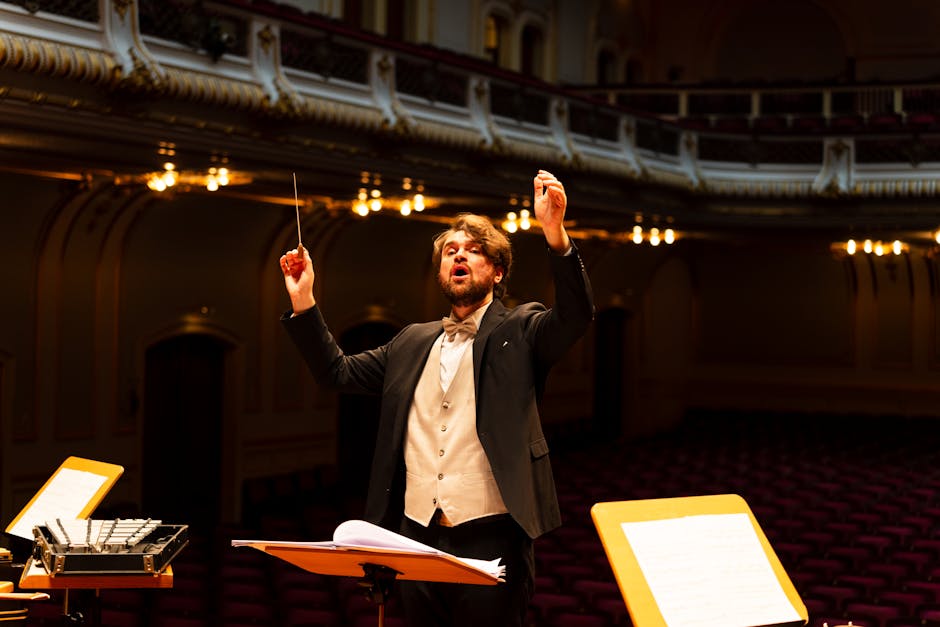
Jader Bignamini, whom the Detroit Free Press called a new Detroit maestro, brings an incredible energy to the orchestra. His passionate Italian style has captivated audiences, and with his contract now extended through the 2030-2031 season, we know there are many exciting collaborations and innovative performances ahead. Get ready for our upcoming 2025-2026 season, promising a lineup of “breathtaking Classics, showstopping Pops, vibrant Jazz, and family-friendly concerts—each performance an invitation to experience Life. Amplified.”
A Pioneer in Broadcasting and Recording
Did you know the Detroit Symphony Orchestra has been a trailblazer in sharing music through technology for over a century? They’ve always found innovative ways to bring the joy of music to more people. Back in 1922, they made history by becoming the first orchestra in the world to present a live concert on the radio! That was just the beginning of their long tradition of media innovation.
Then, from 1934 to 1942, they became a household name across the country. The DSO was the official orchestra for ‘The Ford Sunday Evening Hour’ radio show, bringing classical music right into millions of homes. This commitment to reaching listeners far beyond the concert hall also led to many award-winning recordings. One incredible achievement was their recording of Igor Stravinsky’s ‘The Rite of Spring,’ which was the first CD ever to win the prestigious Grand Prix du Disque award!
But the innovation didn’t stop there. In 2011, the DSO launched its ‘Live from Orchestra Hall’ series of free webcasts. This groundbreaking idea allowed audiences worldwide to experience their amazing performances right from the comfort of their own homes. It’s been a huge success, reaching over 550,000 viewers in more than 100 countries! Imagine enjoying world-class performances no matter where you are – that’s the Detroit Symphony Orchestra‘s dedication to digital innovation and global accessibility.
The Unexpected Connection: The DSO and Motown
Now, here’s a fun fact you might not expect: the Detroit Symphony Orchestra has a secret connection to the legendary Motown sound! While the DSO is famous for its classical music, in the 1960s, some of our very own talented DSO musicians traded their classical concert attire for studio sessions.
Picture this: members of the Detroit Symphony Orchestra often provided the lush string arrangements that became a signature part of countless Motown hits. These skilled musicians, sometimes performing under the name ‘San Remo Golden Strings,’ contributed their talents to recordings for legendary artists. While The Funk Brothers were the iconic house band, it was often DSO members who added those soaring, unforgettable string arrangements that gave Motown its unique sparkle. A perfect example? Their beautiful contribution to The Supremes’ classic, ‘My World Is Empty Without You.’ The San Remo Golden Strings even released their own albums and singles, further cementing this incredible crossover!
This unique blend of classical precision and Motown magic is a truly special part of Detroit’s musical story. It’s a wonderful reminder of the city’s rich and diverse musical heritage. If you’re curious to learn more about this golden era, we highly recommend you visit the Motown Museum and experience it firsthand!
The Heart of the Music: Orchestra Hall and The Max
When you think of the Detroit Symphony Orchestra, you’re really thinking about Orchestra Hall. This amazing building is much more than just a place to hear music. It’s a living, breathing part of our history and the artistic heart of the symphony.
Can you believe it? It was built in a super quick four months and twenty-three days back in 1919! This rush was all because Music Director Ossip Gabrilowitsch insisted. He knew a world-class orchestra needed its own special home with fantastic sound.
And he was right! From the very start, Orchestra Hall was famous for its “perfect acoustical qualities.” People instantly recognized it as one of the best concert halls anywhere.
But even the grandest buildings can face tough times. After years of being unused, a huge rescue mission began. It took 20 years of hard work, but the hall finally reopened in 1989. This careful restoration brought back all its old glory. It saved that legendary sound and its beautiful look.
The story didn’t end there! In 2003, Orchestra Hall became part of something even bigger: the Max M. Fisher Music Center. This was a $60 million addition that seamlessly connected the old hall with new spaces. These new areas include offices, places for learning, and other performance spots.
Inside the Max M. Fisher Music Center, you’ll also find The Cube. This cool, mid-size venue is perfect for all sorts of different shows. It offers a more personal, up-close experience for many kinds of art.
Today, Orchestra Hall at the Max M. Fisher Music Center stands tall in Detroit’s Midtown neighborhood. It’s a true guide of culture, a premier Detroit cultural landmark that welcomes music lovers from all over the globe.
It’s a special place where every note carries history, and where the exciting future of music in Detroit is always taking shape.
The Detroit Symphony Orchestra’s Commitment to Community
The Detroit Symphony Orchestra is more than just a place to hear incredible music; it’s a true partner in the heart of Detroit. We believe deeply that music has a special power. It can teach, bring people together, and make our community stronger. That’s why our programs go far beyond the concert stage, reaching out to touch lives across the city.
We’ve been leaders in music education for a very long time, with our first school concerts happening over a century ago! This dedication to young people continues today through wonderful programs like the Detroit Symphony Youth Orchestra, which started back in 1970. It gives talented young musicians amazing training and chances to perform. But perhaps our biggest dream is Detroit Harmony. This groundbreaking program promises to give an instrument and free lessons to any student in Detroit who wants to learn. Imagine the future talent that will grow from this!
Beyond the classroom, the DSO loves connecting with everyone in the community. Our William Davidson Neighborhood Concert Series brings world-class performances right to venues across the metro area. This makes orchestral music easy to access for all kinds of audiences and has even helped grow our concert subscriptions significantly. Plus, our Detroit Neighborhood Initiative shows how much we want to be part of Detroit’s growth and well-being, working hand-in-hand with local communities.
We also make sure everyone feels welcome. Our Sensory-Friendly concerts are specially designed for people with sensory sensitivities, offering a comfortable and enjoyable experience for all. This really shows our core mission and values: to be a cultural hub for every Detroiter, to inspire, to teach, and to help our city thrive through the power of music. The DSO touches over 500,000 people each year through its shows and learning programs – truly a community partner! When you’re in town, we hope you’ll explore more things to do in Detroit and see all the ways the DSO adds to our vibrant city.
Frequently Asked Questions about the Detroit Symphony Orchestra
If you’re planning an extended stay in Detroit with Detroit Furnished Rentals, you might be curious about attending a Detroit Symphony Orchestra performance. Here are answers to the questions we hear most often from visitors and newcomers to the city.
Who is the current music director of the DSO?
Jader Bignamini leads the Detroit Symphony Orchestra as Music Director, a position he’s held since January 2020. This talented Italian conductor brings an infectious energy to the podium that audiences absolutely love. His artistic vision clearly resonates with both musicians and music lovers—in December 2023, his contract was extended all the way through the 2030-2031 season, a clear vote of confidence in his leadership.
What sets Bignamini apart is his passionate, dynamic conducting style and his commitment to programming that speaks to diverse audiences. Whether you’re a classical music devotee or someone attending their first symphony performance, his approach makes every concert feel fresh and engaging.
Where does the DSO perform?
The Detroit Symphony Orchestra calls Orchestra Hall home, and what a home it is. Located within the Max M. Fisher Music Center in Midtown Detroit, this historic venue has been celebrated for its “perfect acoustical qualities” since it opened in 1919. When you’re sitting in those seats, you’re experiencing sound the way it was meant to be heard.
If you’re staying in one of Detroit Furnished Rentals’ centrally located apartments, you’ll find Orchestra Hall wonderfully accessible in the heart of Midtown. But the DSO doesn’t just stay put—they also bring music directly to neighborhoods across the region through the William Davidson Neighborhood Concert Series. These performances happen at various metro Detroit venues, making it even easier to catch world-class music no matter where you’re staying.
How can I get tickets for a performance?
Getting tickets to see the Detroit Symphony Orchestra is refreshingly straightforward. The easiest way is through the official website at dso.org, where you can browse the full calendar and purchase tickets with just a few clicks. If you prefer talking to a real person (and who doesn’t sometimes?), the box office staff are friendly and helpful.
The DSO offers several ticketing options to fit different schedules and budgets. Season subscriptions are popular—you can “Create Your Own” package by choosing three or more concerts and saving money in the process. Prefer to keep things flexible? Single tickets for individual performances are always available. And keep an eye out for special event pricing on unique concerts like holiday spectaculars or sensory-friendly performances. Whatever brings you to Detroit, experiencing the DSO is one of those things that makes a visit truly memorable.
Conclusion
The Detroit Symphony Orchestra stands as so much more than an ensemble of talented musicians. It’s a living, breathing part of Detroit’s identity—a cultural pillar that has weathered storms, celebrated triumphs, and continually reinvented itself while staying true to its mission. Over 135 years, this remarkable institution has shown us what resilience and innovation truly look like.
Think about it: from that groundbreaking radio broadcast in 1922 to today’s digital webcasts reaching viewers in over 100 countries, the DSO has never stopped finding new ways to bring music into people’s lives. And those unexpected connections to Motown? They’re a perfect reminder that Detroit’s musical heritage is wonderfully interconnected, with classical musicians helping create the soundtrack of a generation.
What truly sets the DSO apart, though, is its deep commitment to our community. Through Detroit Harmony, thousands of city students receive free instruments and instruction. Through sensory-friendly concerts, everyone can experience the joy of live music. Through neighborhood performances across metro Detroit, world-class artistry comes directly to you. This isn’t just an orchestra that performs—it’s an organization that genuinely cares about enriching lives and building connections through music.
If you’re planning to spend time in Detroit, experiencing a performance at Orchestra Hall should be high on your list. Whether you’re drawn to a sweeping classical masterwork, an energetic pops concert, or an intimate jazz evening, there’s something magical about settling into your seat in that acoustically perfect hall and letting the music wash over you. It’s one of those quintessentially Detroit experiences you won’t forget.
And if you’re looking for a comfortable home base during your Detroit stay, Detroit Furnished Rentals offers the perfect solution. Our short to mid-term furnished apartments put you right in the heart of the city, with easy access to Orchestra Hall and all of Detroit’s cultural treasures. You’ll have everything you need to feel at home while you explore everything our vibrant city has to offer. While you’re finding the DSO, don’t miss the chance to explore Detroit’s vibrant theatre district for even more unforgettable performances.
The Detroit Symphony Orchestra isn’t just playing music—it’s helping write Detroit’s ongoing story of creativity, perseverance, and community spirit. We invite you to become part of that story. Plan your visit, grab your tickets, and find why this orchestra has been capturing hearts for more than a century.