Find a Historic Cultural Landmark in Downtown Detroit
The Detroit Opera House stands as one of Detroit’s most magnificent cultural treasures, located at 1526 Broadway Street in the heart of the Grand Circus Park Historic District. Whether you’re planning a visit or simply curious about this iconic venue, here’s what you need to know:
Quick Facts:
- Location: 1526 Broadway Street, Downtown Detroit, Michigan
- Current Capacity: 2,700 seats
- Opened: January 22, 1922 (as the Capitol Theatre)
- Architect: C. Howard Crane
- Architectural Style: Italian Renaissance
- Home to: Detroit Opera (formerly Michigan Opera Theatre)
- Hosts: Opera productions, touring dance companies, Broadway shows, and concerts
- Historic Status: Contributing property to the Grand Circus Park Historic District
This ornate opera house has lived many lives. Originally built as a movie palace, it claimed to be the fifth largest theater in the world when it opened its doors. The building went through several name changes—Capitol Theater, Paramount Theater, Broadway Capitol Theater, and Grand Circus Theater—before becoming the Detroit Opera House after an extensive restoration in 1996.
Today, the venue hosts approximately five opera productions and five dance performances annually, along with Broadway shows, concerts, and special events. The reopening gala in 1996 featured legendary tenor Luciano Pavarotti, marking the beginning of a new era for this historic space.
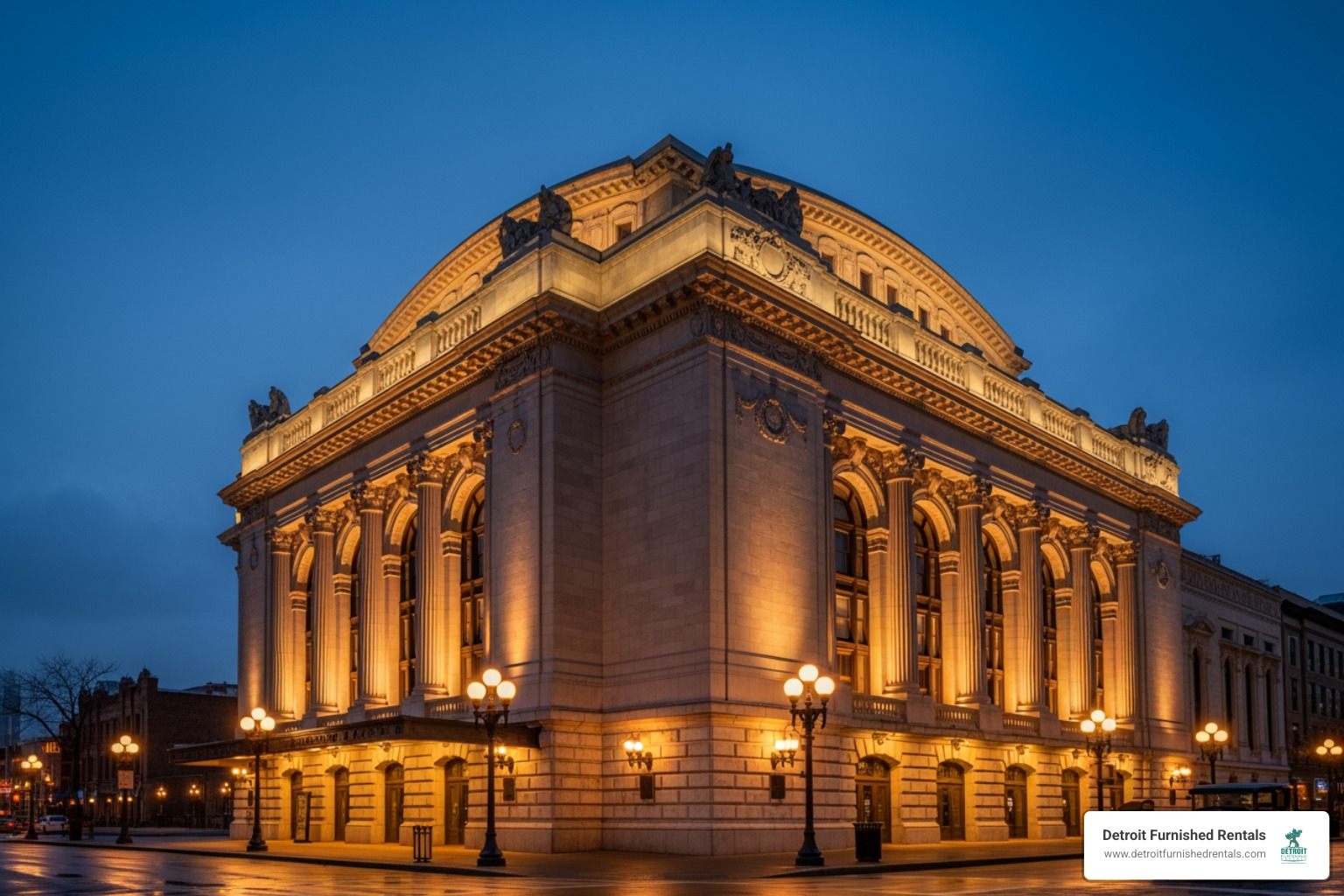
The theater’s Italian Renaissance design features lavish crystal chandeliers, intricate frescoes, brass fixtures, and marble stairways. The building’s superb acoustics and grand European styling make it a world-class venue for performing arts.
If you’re relocating to Detroit or visiting for an extended stay, the Detroit Opera House offers an unforgettable cultural experience just minutes from many furnished rental options in downtown Detroit.
A Storied History: From Movie Palace to Opera Mecca
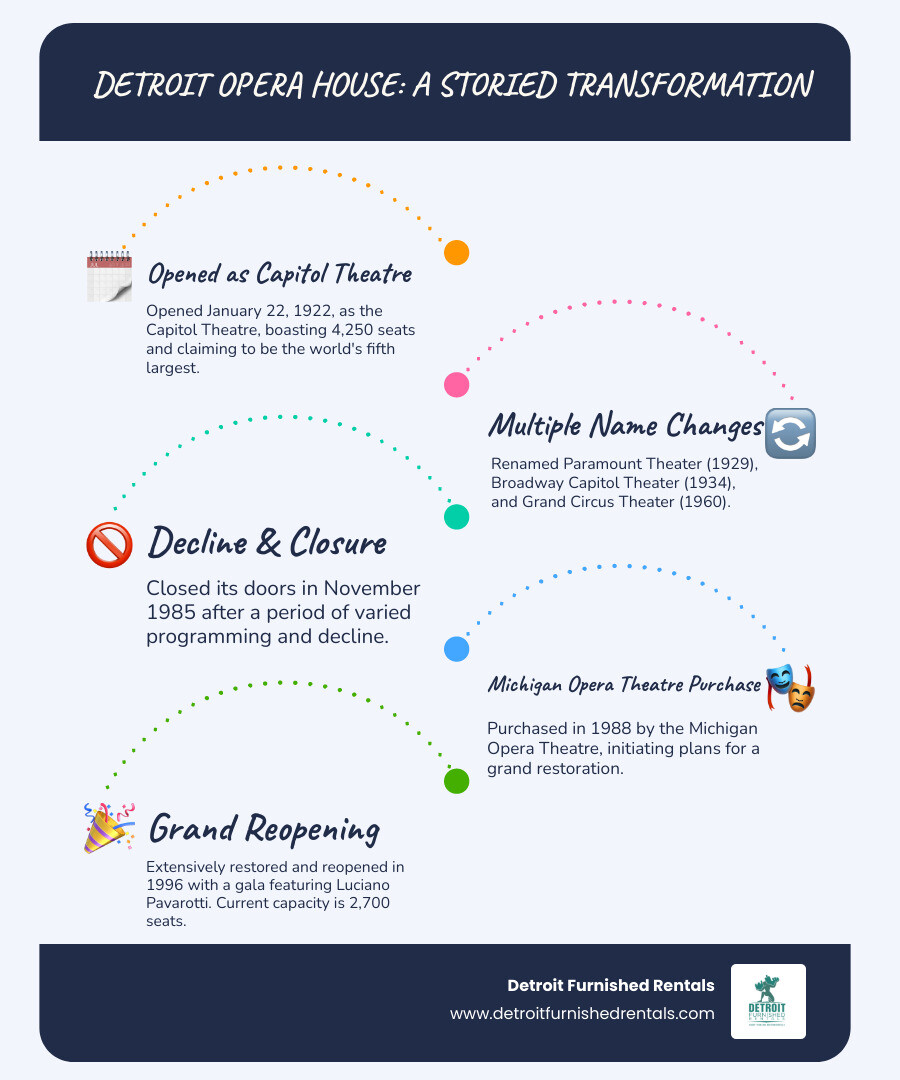
The Detroit Opera House has lived many lives, each chapter reflecting a different era of American entertainment. When it first opened as the Capitol Theatre on January 22, 1922, it was nothing short of spectacular. With 4,250 seats, it claimed the title of the fifth largest movie theater in the world. Imagine walking into that grand space for the first time—the sheer scale must have taken everyone’s breath away.
Those early years were magical. The Capitol Theatre wasn’t just showing movies; it was hosting vaudeville acts that brought live entertainment to eager audiences. Performers would take the stage between film screenings, creating an experience that was part cinema, part variety show. This was entertainment at its finest, and Detroit couldn’t get enough.
But as the decades rolled on, the building went through changes that reflected the shifting landscape of American theater. In 1929, it became the Paramount Theater. By 1934, it had transformed again into the Broadway Capitol Theater. Then came 1960, when a minor restoration brought a new name: the Grand Circus Theatre. With capacity now at about 3,367 seats, it continued to evolve, even hosting an alternative rock series called “Grand Circus Live” that drew a whole new generation of fans.
Sadly, like so many historic theaters, the building eventually faced hard times. It closed in November 1985 following a fire, and for a while, its future looked uncertain. The grand old theater sat empty, waiting for someone to believe in it again.
That someone arrived in 1988. The Michigan Opera Theatre purchased the building with a bold vision: to transform this sleeping giant into a world-class home for opera and dance. It was an ambitious dream, but one that would ultimately save this Detroit treasure and give it new life as the Detroit Opera House.
The Vision of Architect C. Howard Crane
Behind the original magnificence of the Detroit Opera House was the brilliant mind of C. Howard Crane, one of Detroit’s most celebrated theater architects. When he designed the Capitol Theatre, he drew inspiration from the grand opera houses of Europe, creating a space that felt both luxurious and intimate.
Crane had a special gift for understanding how sound moves through a space. His theaters weren’t just beautiful—they were acoustically brilliant. Every note, every whisper from the stage would reach the audience with perfect clarity. It’s a quality that still amazes performers and audiences today.
His architectural legacy extends far beyond this single building. Crane also designed the stunning Fox Theatre and the renowned Orchestra Hall, both still standing as testaments to his genius. The Italian Renaissance style he chose for the Capitol Theatre featured ornate details, rich materials, and a sense of drama that made even entering the building feel like a special event.
The Grand Restoration of the Detroit Opera House
When the Michigan Opera Theatre bought the building in 1988, they knew they had a monumental task ahead. This wasn’t going to be a simple renovation. Under the guidance of Dr. David DiChiera, the company’s general director, they started on an extensive restoration project that would take years to complete.
The goal was ambitious: bring back every bit of the theater’s original 1922 glory while adding modern features that would make it suitable for world-class performances. It meant painstaking attention to detail, from restoring frescoes to updating technical systems behind the scenes.
The hard work paid off spectacularly. When the Detroit Opera House reopened in 1996, it was with a gala performance that perfectly captured the moment. Legendary tenor Luciano Pavarotti took the stage, his voice filling the restored hall and announcing to the world that this Detroit treasure was back. For those who remember that night, it was more than just a concert—it was a promise that Detroit’s cultural heart was still beating strong. You can find more details on the restoration project in historical accounts of this remarkable achievement.
Architectural Splendor and Notable Features
Walking into the Detroit Opera House feels like stepping through a portal to another era—one where elegance wasn’t just an aspiration but a standard. The theater’s Italian Renaissance style creates an atmosphere of timeless grandeur that still takes your breath away, nearly a century after it first opened its doors.
The moment you enter the lavish interior, you’ll understand why this place has captivated audiences for generations. Magnificent crystal chandeliers hang overhead, their light dancing across intricate frescoes that decorate the ceilings and walls. These aren’t just decorations—they’re works of art that tell stories and transport you to the grand theaters of Europe.
As you make your way through the building, you’ll notice the gleaming brass fixtures and the sweeping marble stairways that connect the different levels. Every detail was carefully considered, from the ornate plasterwork to the smallest architectural flourishes. But perhaps the most striking feature is the rose-red damask curtain that graces the main stage—a rich, Italian fabric that adds both drama and warmth to the performance space.
C. Howard Crane didn’t just design a theater; he created an experience. The superb acoustics mean that whether you’re sitting in the front row or the upper balcony, you’ll hear every note with crystal clarity. Combined with the visual splendor surrounding you, it’s easy to see why this venue ranks among the finest in the country.

A Cornerstone of the Grand Circus Park Historic District
The Detroit Opera House doesn’t stand alone—it’s a vital piece of Detroit’s architectural heritage and a contributing property to the Grand Circus Park Historic District (ID83000894). This designation, made official on February 28, 1983, means the building’s preservation matters not just for itself but for the entire neighborhood’s historical character.
In the early 1920s, the Grand Circus Park area was at the heart of Detroit’s City Beautiful movement. This urban planning philosophy championed grand architecture, beautiful public spaces, and civic pride. The Capitol Theatre (as the Detroit Opera House was originally known) was among the first of several spectacular vaudeville and movie palaces that transformed the area into Detroit’s premier entertainment district.
The architectural significance of this building goes beyond its stunning looks. It represents a moment in time when Detroit was investing in culture and beauty, when theaters were built like palaces, and when going to a show was an event worthy of marble, crystal, and gold leaf. Today, the Detroit Opera House continues to anchor this historic district, drawing visitors who appreciate both world-class performances and architectural treasures.
If you’re interested in exploring more of Detroit’s theatrical history, check out our Area Guide: Detroit Theatres to find other gems in the city’s vibrant performing arts scene.
The Detroit Opera House Today: A Hub for World-Class Entertainment
The Detroit Opera House has truly come into its own as a guide of artistic excellence in downtown Detroit. While it proudly serves as the home of Detroit Opera (formerly Michigan Opera Theatre), the venue’s stage welcomes an incredible variety of world-class entertainment that goes far beyond traditional opera.
On any given night, you might find yourself swept away by internationally acclaimed touring dance companies, bringing breathtaking ballet and contemporary dance to Detroit audiences. Broadway shows arrive straight from the bright lights of New York City, giving theater lovers the chance to experience top-tier musicals and plays without leaving Michigan. The venue also hosts concerts spanning every musical genre imaginable, from classical symphonies to unique events like “Symphonic PFunk: Celebrating the Music of Parliament Funkadelic!” And yes, even comedy shows find their way to this grand stage, proving that laughter belongs in palatial settings too.
This diverse programming makes the Detroit Opera House an essential part of Detroit’s performing arts landscape, standing alongside other beloved venues like the Detroit Music Hall.
Performances, Capacity, and Resident Companies
The Detroit Opera House now seats 2,700 people, creating an atmosphere that feels both intimate and grand. As the permanent home of Detroit Opera, the venue presents approximately five opera productions each year, ranging from beloved classics to bold contemporary works. Dance enthusiasts can enjoy about five dance productions annually from various touring companies.
The theater serves as a performance home for several artistic organizations. Detroit Opera leads as the resident company, dedicated to presenting exceptional opera and nurturing new talent. The stage regularly welcomes touring dance companies like Dance Theatre of Harlem and Hubbard Street Dance Chicago, each bringing their unique artistic vision to Detroit.
Broadway in Detroit brings major touring productions to the theater, with extended runs of beloved shows like The Phantom of the Opera and The Lion King. The venue also hosts family-friendly entertainment such as “Bugs Bunny at the Symphony,” cultural showcases including “Shen Yun” and “Mariachi Vargas: El Legado Tour,” and special concert events. This remarkable variety ensures there’s truly something for everyone at the Detroit Opera House.
Planning Your Visit to the Detroit Opera House
Making your way to the Detroit Opera House is straightforward, and we want to help you plan the perfect evening out. Here’s what you need to know before you go.
The Box Office keeps helpful hours throughout the year. During non-show weeks, you can visit Monday through Friday from 10:00 a.m. to 5:00 p.m. Summer months (June through August) have slightly different hours: Monday through Thursday from 9:30 a.m. to 4:00 p.m., and Friday from 10:00 a.m. to 2:00 p.m. On show days, the Box Office opens two hours before curtain time, giving you plenty of opportunity to pick up tickets or ask questions. If you need information about Michigan Opera Theatre events, you can call (313) 237-SING.
Ticket Purchasing & Payment Methods: You can buy tickets directly at the Box Office, through the official Detroit Opera website (detroitopera.org), or via authorized ticketing partners. The venue accepts Visa, MasterCard, Find, American Express, and cash.
Will Call: Planning to pick up tickets at Will Call? They’re available starting one hour before the performance. Just bring your confirmation number and a valid photo ID.
Parking Information: The Detroit Opera House Parking Center makes parking easy, with entrances on John R Street and Grand River Avenue. The center offers 24-hour access and security. For detailed parking information, call (313) 965-4052.
Accessibility Details: The Detroit Opera House welcomes all patrons and offers handicapped seating arranged exclusively through the Box Office. Please call (313) 237-SING to discuss your specific accessibility needs, and the staff will ensure you have a comfortable experience.
General Rules: To keep everyone’s experience enjoyable, smoking, video recording, and audio recording aren’t permitted inside the theater.
For a complete guide to planning your Detroit visit, including where to stay and what else to explore in the city, check out our Plan Your Trip page.

Frequently Asked Questions about the Detroit Opera House
What significant performers have appeared at the Detroit Opera House?
The Detroit Opera House has welcomed some of the most celebrated artists in entertainment history. Throughout its many lives—as the Capitol, Paramount, Broadway Capitol, and Grand Circus Theatre—this stage has been a magnet for legendary talent spanning nearly a century of performances.
In its early decades as a movie palace and vaudeville venue, the theater hosted jazz giants like Duke Ellington and Louis Armstrong, whose music defined an era. The beloved humorist Will Rogers entertained audiences with his wit and wisdom, while Hollywood stars including Betty Hutton, Guy Lombardo, Gale Storm, and Sal Mineo graced the stage during the golden age of American entertainment.
After its magnificent restoration and reopening as the Detroit Opera House in 1996, the venue set a new standard for excellence. The legendary tenor Luciano Pavarotti performed at the gala reopening, an unforgettable evening that signaled the theater’s return to greatness. Since then, the stage has continued to attract world-class opera singers, major Broadway stars, and internationally acclaimed dance companies, maintaining its reputation as one of the finest performance venues in the country.
What is the best way to get tickets for a show?
Getting tickets to see a performance at the Detroit Opera House is easy and convenient. You have several reliable options to choose from, depending on what works best for you.
The most direct approach is to visit or call the Detroit Opera House box office during regular hours. This gives you the chance to speak with knowledgeable staff who can answer questions about seating, accessibility needs, and upcoming shows. You’ll find the box office hours listed in the “Planning Your Visit” section above.
You can also purchase tickets online through the official Detroit Opera website at detroitopera.org, which is convenient if you prefer to browse shows and select seats from the comfort of your home. For many events, authorized ticketing partners like Ticketmaster also carry listings. If you’re specifically interested in Broadway productions, check with Broadway in Detroit, which manages many of the musical theater engagements at the venue.
We always recommend buying from official sources to ensure you’re getting legitimate tickets at fair prices. This also gives you access to customer support if you need to make any changes to your order.
Is there a dress code for attending a performance?
One of the wonderful things about the Detroit Opera House is that there’s no strict dress code to worry about. The theater welcomes everyone, and the goal is for you to feel comfortable and enjoy the performance.
That said, many people view a night at the opera house as a special occasion and dress accordingly. You’ll see a wide range of attire, from business casual—think slacks and a nice shirt or a comfortable dress—to more formal wear like suits, ties, and evening gowns. Opera premieres, opening nights, and gala events tend to bring out the most neat attire, with patrons treating it as a chance to dress up and celebrate.
The key is to wear what makes you feel good and matches the spirit of the evening. Whether you choose to go formal or keep it more casual, you’ll fit right in. Most importantly, dress in a way that lets you relax and immerse yourself in the incredible performances this beautiful venue has to offer.
Conclusion: The Enduring Legacy of a Detroit Icon
The Detroit Opera House represents something truly special—it’s more than just a venue where performances happen. It’s a cultural anchor that has witnessed and shaped over a century of Detroit’s story, from the roaring twenties to today’s renaissance. Every velvet seat, every crystal chandelier, and every note that echoes through its halls tells a story of resilience, change, and unwavering dedication to the arts.
What started as a grand movie palace claiming to be the fifth largest theater in the world has evolved into something even more remarkable—a world-class home for opera, dance, and Broadway that draws visitors from around the globe. The building’s journey from near-abandonment to its spectacular 1996 reopening mirrors Detroit’s own narrative of revitalization. When the city needed it most, visionaries stepped forward to preserve this treasure, and today it stands as living proof of what’s possible when a community refuses to let its cultural heritage fade away.
For anyone exploring Detroit, whether you’re here for a weekend or planning a longer stay, the Detroit Opera House is an absolute must-visit destination. The experience of settling into one of those 2,700 seats and watching the rose-red damask curtain rise is something that stays with you. And this is just one jewel in Detroit’s cultural crown—you’ll also want to find the Detroit Institute of Arts and the many other performance venues that make this city so vibrant.
If you’re considering an extended visit to fully immerse yourself in everything Detroit has to offer, Detroit Furnished Rentals can help you find a comfortable home base right in the heart of the action. Our Short-Term Rentals Detroit properties put you within easy reach of the Detroit Opera House and all the city’s incredible attractions. There’s something magical about being able to walk back to your apartment after a night at the opera, still humming the melodies and replaying the performance in your mind.
Detroit’s arts scene is alive and thriving, and the Detroit Opera House is at its very heart. Whether you’re drawn to grand opera productions, breathtaking ballet, or the spectacle of Broadway, this historic venue delivers experiences you simply can’t find anywhere else. Ready to explore more? Explore more of Detroit’s world-class theatres and start planning your cultural adventure in the Motor City. We think you’ll find that Detroit’s performing arts scene is one of America’s best-kept secrets—and we can’t wait for you to find it for yourself.