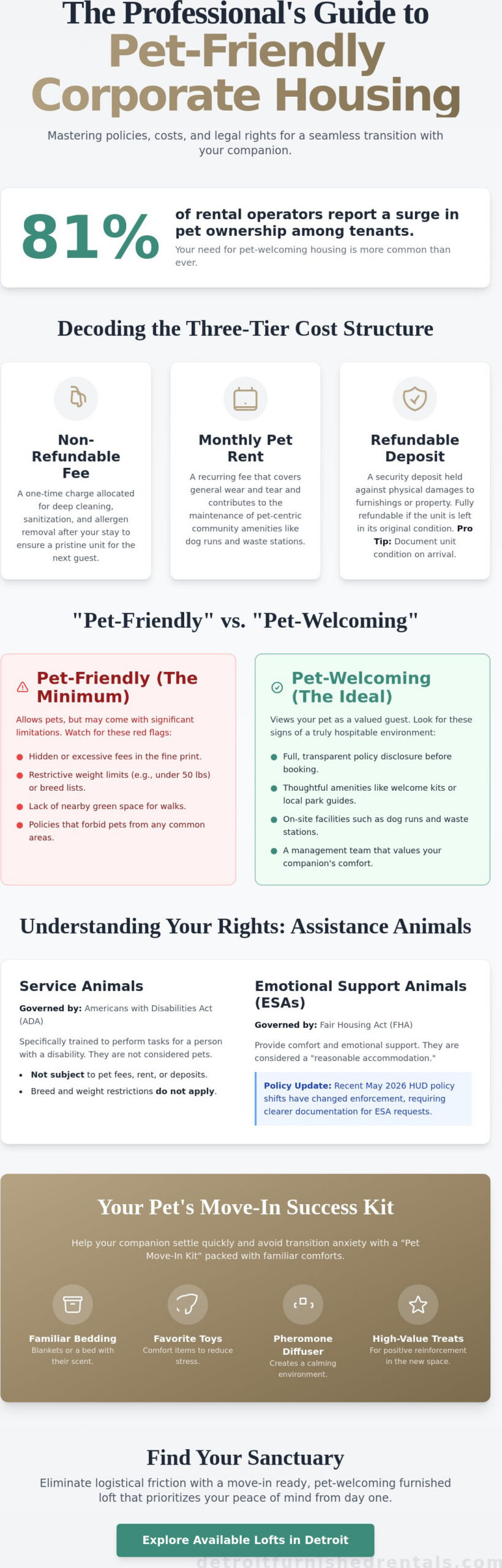
With 81% of rental housing operators reporting a surge in pet ownership in 2026, the modern professional traveler is no longer just looking for a desk and a view; they’re seeking a sanctuary for their entire family. Understanding the specifics of a corporate housing pet policy is the key to avoiding the common pitfalls of hidden fees or restrictive weight limits that can disrupt an otherwise perfect relocation. You deserve a move-in ready home that offers the sophisticated comfort of a boutique hotel with the practical warmth of a local residence.
It’s natural to feel a sense of unease when faced with restrictive breed lists or the recent May 2026 HUD policy shifts regarding emotional support animals. This guide promises to help you master these nuances to ensure a seamless, stress-free move for you and your companion. We’ll provide a clear preview of current pet-related fees, explain the latest federal enforcement changes, and show you how to secure a home where your peace of mind is the top priority.
Key Takeaways
- Understand how a corporate housing pet policy functions as a specialized addendum to mid-term rental agreements, offering more flexibility than a hotel stay.
- Navigate the three-tier cost structure of premium stays to clearly budget for non-refundable fees, monthly pet rent, and refundable deposits.
- Learn the critical distinctions between the ADA and the Fair Housing Act to understand your rights regarding service animals and recent shifts in ESA enforcement.
- Master the use of a “Pet Move-In Kit” to help your companion settle quickly into a high-end furnished loft without the stress of marking or transition anxiety.
- Discover how to select a move-in ready sanctuary that eliminates logistical friction, ensuring a welcoming environment for both you and your pet from day one.
Navigating Corporate Housing Pet Policies for Professional Travelers
A corporate housing pet policy is more than a simple list of rules; it’s a tailored addendum to a mid-term rental agreement designed for the modern nomad. While traditional hotels often feel cramped and restrictive for long stays, and standard year-long leases demand too much commitment, these policies offer a balanced middle ground. To understand the foundation of these stays, one might ask, What is Corporate Housing? It’s a fully furnished, all-inclusive living solution that prioritizes immediate comfort and domestic ease. In 2026, the industry is shifting toward “pet-centric” amenities, moving beyond basic acceptance to include dedicated dog runs and waste stations. This evolution ensures that your companion feels as much at home as you do. Transparency is vital during the selection process. You should always insist on a full policy disclosure before the booking phase to avoid the frustration of last-minute restrictions or hidden logistical friction.
How Corporate Policies Differ from Standard Apartment Leases
Standard leases are built for the long haul, often requiring hefty security deposits and rigid terms that don’t suit a professional on a three-month assignment. Corporate stays are different. Because these are mid-term rentals, the deposit structures are typically more streamlined, though they often include specific “wear and tear” clauses. These clauses are essential for protecting high-end furnishings while acknowledging that pets live in the space. Professional management teams play a crucial role here. They ensure that community standards are upheld, maintaining a peaceful environment for all residents while providing the reliability you’d expect from a luxury boutique hotel. This professional oversight means you don’t have to worry about the maintenance of common areas or the safety of the neighborhood.
The “Pet-Friendly” vs. “Pet-Welcoming” Distinction
There’s a subtle but significant difference between a property that is “pet-friendly” and one that is truly “pet-welcoming.” A pet-friendly building might simply permit animals but hide restrictive weight limits or excessive fees in the fine print. Red flags often include a lack of nearby green space or policies that forbid pets from common areas. In contrast, a truly hospitable environment views your pet as a guest rather than a liability. A pet-welcoming policy prioritizes guest comfort alongside animal safety. Look for properties that offer local guides for nearby parks or provide welcome kits upon arrival. When a property manager understands that your pet is part of your professional success, the entire stay feels more like a sanctuary and less like a temporary stop.
Decoding the Costs and Restrictions of Pet-Friendly Stays
Understanding the financial and logistical fine print is essential for any professional traveler. When you review a corporate housing pet policy, you’ll typically encounter a three-tier cost structure that ensures your stay is both luxurious and well-maintained. This includes a one-time non-refundable fee, a recurring monthly pet rent, and a refundable security deposit. Each tier serves a specific purpose, from covering the specialized sanitization needed after your departure to protecting the high-end finishes of your temporary home. Decoding the Costs and Restrictions helps you budget effectively while ensuring your peace of mind. Finding the right balance between style and pet-friendly functionality shouldn’t be a struggle. If you’re ready to find a home that truly welcomes your companion, explore our available furnished lofts today.
Non-Refundable Pet Fees vs. Refundable Security Deposits
Non-refundable pet fees are standard in the industry. These funds are allocated for deep cleaning and the removal of allergens, ensuring the next guest enjoys a pristine environment. On the other hand, refundable security deposits act as a safeguard against physical damage to the lofts or custom furnishings. To protect your investment, always take a quick video or set of photos when you first arrive. This documentation provides a clear record of the unit’s condition, preventing any misunderstandings when it’s time to move on to your next assignment.
Navigating Breed and Weight Restrictions
Weight limits, often capped at 50 or 75 pounds, are common in high-rise or historic loft environments where space and noise management are priorities. Breed restrictions, such as those for Pit Bulls or Rottweilers, are frequently dictated by insurance providers rather than the property managers themselves. If your companion falls into a restricted category, consider creating a “pet resume” that includes training certifications and veterinary references. In many furnished apartments, managers also consider the specific flooring. Hardwood or luxury vinyl plank is often preferred for larger dogs to maintain the aesthetic integrity of the space. If you’re traveling with two or more animals, transparency is your best tool for negotiation. Many boutique providers are willing to accommodate multiple pets if you can demonstrate their good behavior.
Service Animals, ESAs, and the Legal Landscape of Housing
Understanding the intersection of federal law and your corporate housing pet policy is vital for a smooth transition. The Fair Housing Act (FHA) governs most mid-term rentals, ensuring that individuals with disabilities have equal access to housing through reasonable accommodations. This legal framework is distinct from the rules governing hotels or public spaces; it recognizes the home as a private sanctuary where you deserve to feel supported. While a property manager might have strict rules for standard pets, assistance animals are viewed through a different lens to ensure your professional relocation isn’t hindered by unnecessary bureaucratic hurdles. These protections don’t grant a blank check. Property damage or direct threats to the safety of other residents remain valid grounds for intervention, maintaining the high standards of the community.
Service Animals vs. Emotional Support Animals (ESA)
The distinction between service animals and emotional support animals is often misunderstood. Service animals are defined by the ADA requirements for service animals as dogs or miniature horses individually trained to perform specific tasks for a person with a disability. In contrast, an ESA provides therapeutic support through its presence alone. Under the Fair Housing Act, housing providers cannot charge monthly pet rent or non-refundable pet fees for documented assistance animals. This mandate applies even in luxury lofts that otherwise maintain a strict corporate housing pet policy. While the animal isn’t a “pet” in the eyes of the law, it must still be under the owner’s control at all times to preserve the quiet enjoyment of the building.
Documentation Requirements for Professional Stays
Securing an accommodation for an ESA requires specific documentation from a licensed healthcare professional. This letter should confirm the need for the animal as it relates to a disability, though you aren’t required to disclose the specific nature of your medical condition. Since the HUD policy shift in May 2026, property managers may look more closely at whether an animal is trained for specific tasks, making clear and professional documentation more essential than ever. Housing providers are legally permitted to ask if the animal is required because of a disability and what work it has been trained to perform. They cannot demand medical records or a demonstration of the animal’s tasks. Disclosing these needs early in the booking process is the best way to ensure a stress-free stay. By being transparent about your assistance animal, you allow the management team to prepare your move-in ready home with the hospitality and care you deserve.
Preparing for Success: A Checklist for Mid-Term Stays with Pets
Moving into a new city feels like a fresh start, but for your pet, it’s a sensory overload. While a corporate housing pet policy provides the legal and financial framework for your stay, your personal arrival strategy ensures the experience is truly seamless. Success begins with a “Pet Move-In Kit” designed to anchor your companion in their new environment. This kit should include familiar food bowls, their favorite bedding, and pheromone diffusers to signal a sense of safety. Maintaining a rigid routine is equally important. Try to keep feeding and walking times consistent with your previous home to reduce transition anxiety. To help you settle in, we recommend scouting local vets and professional dog walkers before you arrive. This proactive approach turns a temporary apartment into a true sanctuary for both of you.
Protecting Furnished Interiors and Avoiding Damage
Living in high-end accommodations requires a mindful approach to maintenance. Many furnished lofts feature open floor plans and custom upholstery that demand extra care. Consider using stylish furniture covers or heavy blankets to protect sofas from pet hair or accidental snags. We also suggest a “scratch check” upon arrival. If your unit features industrial-style elements or delicate hardwood floors, placing area rugs in high-traffic zones can prevent claw marks. With 31.5% of rental units experiencing some form of pet-related damage according to 2026 industry reports, these small steps protect your security deposit and maintain the pristine condition of your home. If you’re ready to experience a stay designed for your lifestyle, explore our pet-welcoming properties today.
Etiquette for High-Density Professional Housing
Sharing a building with other busy professionals requires a commitment to community etiquette. Managing noise is the first priority; if your dog is prone to barking at hallway sounds, a white noise machine can be incredibly effective. Proper use of common areas is also essential. Always follow building-specific rules for elevators and dog runs, ensuring you leave shared spaces cleaner than you found them. This professional courtesy helps maintain the welcoming atmosphere that boutique properties are known for. By adhering to these simple protocols, you ensure that your presence is a positive addition to the neighborhood fabric.
- Immediate Arrival: Limit your pet to one room for the first few hours to prevent marking.
- Hydration: Ensure fresh water is available immediately to help them recover from travel stress.
- Local Connections: Save the contact info for the nearest 24-hour emergency vet in your phone.
Choosing a Sanctuary: The Detroit Furnished Rentals Approach
At Detroit Furnished Rentals, we believe your temporary residence should be a true sanctuary rather than just a place to sleep. A corporate housing pet policy shouldn’t be a source of stress; it should be a clear blueprint for a welcoming, high-end stay. We specialize in move-in ready environments that masterfully balance modern interior design with the practical durability required by pet owners. Our professional oversight ensures that every guest, whether human or animal, feels supported from the very first day. By focusing on the unique nuances of our local neighborhoods, we provide more than just a roof. We offer a sense of belonging in the heart of a revitalized urban landscape.
Seamless Move-Ins for Professionals and Pets
Our direct booking process is designed to eliminate the logistical friction often found with national, faceless rental platforms. When you disclose your pet’s needs during the initial inquiry, we provide immediate, transparent information regarding fees and community standards. Choosing one of our entire units ensures your companion has the privacy and quiet they need to adjust, which is rarely possible in shared spaces or hotel environments. We prioritize your peace of mind by handling the details before you arrive. This allows you to book your ideal rental with total confidence, knowing your home is ready for your entire family.
Curated Amenities for the Modern Pet Owner
We carefully select our furnished lofts and apartments based on their proximity to the city’s best green spaces and walking trails. Being a knowledgeable local expert means we know which neighborhoods offer the best cultural fabric for a morning walk or a weekend stroll. Inside the home, convenience is the standard. In-unit laundry is a vital feature for pet owners on extended stays, allowing you to maintain your space effortlessly. These domestic comforts are paired with the historical context of our local architecture, creating a living experience that feels both grounded and sophisticated. A true professional home away from home must include the whole family. We take pride in ensuring that every member of your household finds comfort and domestic ease in our curated spaces.
- Direct Communication: Speak with local managers who understand the specific layout of your unit.
- Private Entrances: Many of our properties offer easy access for quick outdoor breaks.
- High-End Durability: Our flooring and furniture are chosen to withstand daily life without sacrificing style.
Secure Your Seamless Professional Relocation
Mastering the nuances of a corporate housing pet policy transforms a potentially stressful move into a sophisticated transition. By understanding the three-tier cost structure and the legal protections afforded by the Fair Housing Act, you can budget with precision and advocate for your companion with confidence. Preparation is your greatest tool. Using a specialized move-in kit and maintaining a steady routine will help your pet feel at home amidst the high-end finishes of your new environment. You don’t have to navigate these complexities alone.
Our professionally managed, move-in ready units are curated specifically for corporate professionals and travel nurses who refuse to compromise on style or comfort. We provide transparent pet policies and dedicated support to ensure your peace of mind from the moment you book. Your next assignment deserves a home that feels like a true sanctuary. Find your pet-friendly sanctuary and book your stay today. We look forward to welcoming you and your companion to a space where you both can thrive.
Common Questions About Corporate Housing Pet Policies
Do all corporate housing providers allow pets?
No, pet acceptance is not universal across the industry. While approximately 68% of property managers consider their buildings pet-friendly as of 2026, some boutique residences maintain strict no-pet rules to preserve historic architecture or custom interiors. It’s essential to verify the specific corporate housing pet policy for a property before you begin the booking process. Always look for providers that explicitly market themselves as pet-welcoming to ensure your companion receives the same level of hospitality as you do.
What is the average pet fee for a 3-month corporate housing stay?
National averages in 2026 show that most travelers should budget for a one-time non-refundable pet fee between $250 and $500. Additionally, monthly pet rent typically ranges from $25 to $75 per animal. For a three-month stay, these costs are often bundled into your all-inclusive billing to reduce logistical friction. Luxury lofts often fall at the higher end of this scale because they include specialized deep-cleaning services to maintain pristine standards for every guest.
Can a housing provider reject my pet based on its breed?
Yes, breed restrictions are a common reality, with 66.7% of property managers reporting specific exclusions in 2026. These lists are usually dictated by insurance providers rather than the property managers themselves. Common restricted breeds often include Pit Bulls, Rottweilers, and Dobermans. If your pet is on a restricted list, providing a “pet resume” with training certifications and veterinary references can sometimes help you negotiate an exception with boutique providers who prioritize individual guest needs.
How do I get my pet deposit back after a mid-term stay?
Securing your refund depends on a successful move-out inspection and clear evidence that no damage occurred. Only 23.5% of property managers currently offer refundable deposits, as many have shifted toward non-refundable fees. To protect your funds, take time-stamped photos of the lofts and furnishings upon arrival. This documentation is your best defense against claims for pet-related damage, which affects roughly 31.5% of rental units according to recent industry data.
Are there weight limits for dogs in corporate apartments?
Weight limits remain a standard feature of the corporate housing pet policy landscape, enforced by 59.8% of properties in 2026. These limits are often set at 50 or 75 pounds to manage noise levels and floor wear in high-density professional housing. If you travel with a larger dog, look for industrial-style lofts or units with luxury vinyl plank flooring. These spaces are often more resilient and better suited for larger companions than units with delicate hardwood or high-pile carpeting.
Do I have to pay a pet fee for an Emotional Support Animal (ESA)?
The legal environment for ESAs changed significantly on May 22, 2026, when HUD rescinded previous guidance that treated untrained ESAs as assistance animals. While the Fair Housing Act still exists, federal enforcement has shifted to prioritize animals individually trained to perform specific tasks. Many housing providers now charge standard pet fees for untrained ESAs. However, documented service animals remain exempt from all pet-related fees and rent. You should disclose your animal’s status early to navigate these updated regulations smoothly.
What happens if my pet damages the furniture in a furnished rental?
If damage occurs, the cost of repairs is typically deducted from your security deposit. Industry data from 2026 shows that the mean repair cost for pet-related damage is $567. If the damage to high-end upholstery or custom furniture exceeds your deposit, you’ll be billed for the remaining balance. To avoid these costs, we recommend using furniture covers and maintaining a consistent routine to keep your pet calm in their new move-in ready home.
Can I bring more than one pet to a corporate apartment?
Most mid-term rentals allow for multiple pets, though 78.4% of property managers set a limit of two animals per household. You should expect to pay a separate non-refundable fee and monthly pet rent for each companion. Boutique providers are often more flexible with multi-pet families than national platforms, especially if you can demonstrate that your pets are well-behaved. Always confirm the total pet count during your initial inquiry to ensure the unit provides enough space for everyone to feel comfortable.