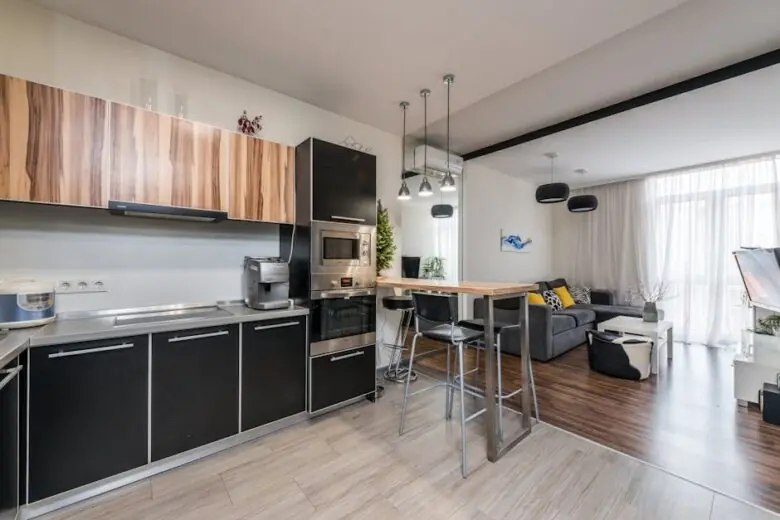
Why Company Housing Matters for Today’s Mobile Workforce
Company housing is temporary, fully furnished accommodation that employers provide or arrange for their employees during relocations, assignments, or business travel. It offers a complete living solution with utilities, furniture, housewares, and amenities already in place—allowing workers to simply bring their suitcase and settle in immediately.
Key Facts About Company Housing:
- What it includes: Furnished apartments, condos, or homes with all utilities, WiFi, kitchen supplies, linens, and furniture
- Typical stay length: 83-84 days on average, though stays range from 30 days to over a year
- Who uses it: Relocating employees, business travelers, interns, project teams, traveling nurses, and military personnel
- Cost structure: All-inclusive monthly rates that bundle rent, utilities, internet, and furnishings
- Industry size: The corporate housing market generated $10 billion in revenue in 2019
The need for flexible, short-term housing has exploded in recent years. As Tommie Jones, a quality control inspector at Cook Medical, finded when her employer built homes for workers: “I don’t have to worry about where I’m going to live anymore.”
Whether you’re a traveling nurse seeking pet-friendly accommodation with a full kitchen, a company relocating employees to Detroit, or an individual in transition, understanding how company housing works can save you time, money, and stress. Unlike traditional apartment leases that require long-term commitments and leave you sleeping on an air mattress for weeks, corporate housing provides an immediate, comfortable solution.
The shift from century-old company towns to today’s flexible corporate housing reflects changing workforce needs. Modern workers demand mobility without sacrificing comfort, while employers recognize that providing quality temporary housing helps them recruit talent and retain employees in competitive, expensive markets.
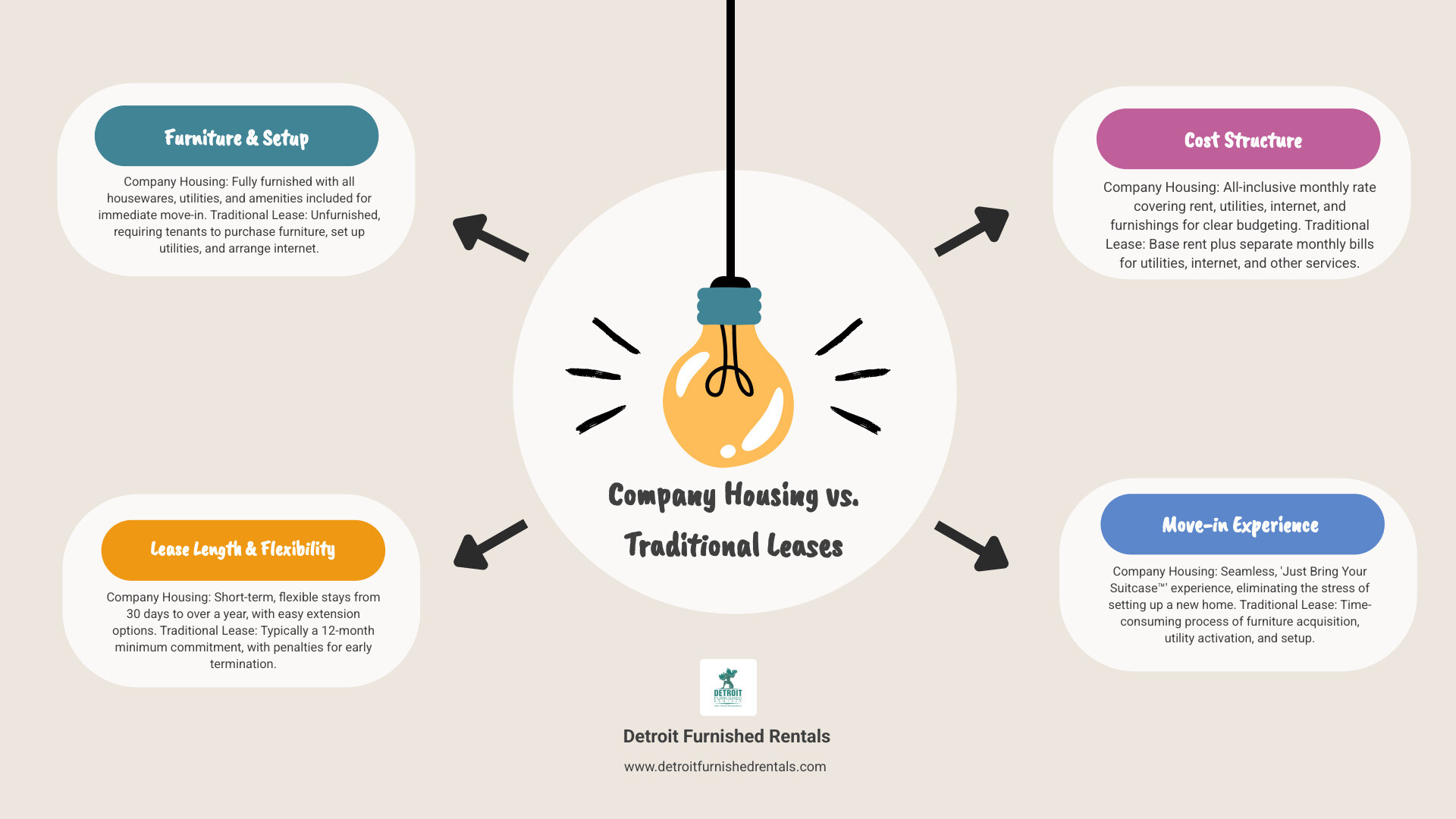
What is Corporate Housing and How Does It Compare?
At its core, corporate housing (often used interchangeably with company housing or employee housing) refers to furnished apartments, condos, or homes rented on a temporary basis. It’s a distinct alternative to traditional hotels and even extended-stay hotels, designed to offer a more stable, residential experience for individuals and corporations alike. We provide solutions that allow you to simply “Just Bring Your Suitcase™,” because everything else is handled.
The defining characteristics of corporate housing include:
- Temporary Housing: Stays typically range from 30 days to several months, or even a year or longer, catering to short to mid-term needs.
- Furnished Apartments: Every unit comes fully furnished, from sofas and beds to kitchenware and linens. There’s no need to buy furniture or move your own. If you’re wondering, Is Corporate Housing Furnished?, the answer is a resounding yes!
- All-Inclusive Pricing: Rates generally bundle rent, utilities (electricity, gas, water), high-speed internet, and sometimes even cable TV. This simplified billing means no surprise utility bills or frustrating setup processes.
To truly understand its value, let’s compare company housing to traditional apartment leases and hotels:
| Feature | Corporate Housing | Traditional Apartment Lease | Hotel/Extended Stay Hotel |
|---|---|---|---|
| Furniture | Fully furnished, ready for immediate move-in | Unfurnished (requires furniture purchase) | Furnished, but often limited |
| Lease Length | Flexible, often month-to-month or project-based (30+ days) | Typically 6-12+ months | Nightly/weekly, less flexible for long-term |
| Utilities | Included in one bill, pre-set up | Tenant responsible for setup & payment | Included, but often with limited bandwidth/services |
| Living Space | Residential-sized (600-1300 sq ft typical) | Residential-sized | Typically small (around 300 sq ft) |
| Amenities | Full kitchen, separate living/sleeping areas, in-unit laundry often | Full kitchen, separate living/sleeping areas, in-unit laundry often | Mini-fridge, microwave, shared laundry, limited privacy |
| Cost Structure | All-inclusive monthly rate | Rent + separate utility bills + setup fees | Nightly rate, often with hidden fees |
| Move-in Time | Immediate | Weeks (furniture, utility setup) | Immediate |
The “Home Away From Home” Difference
What truly sets company housing apart is its ability to create a genuine “home away from home” experience. Unlike the transient nature of a hotel, corporate rentals offer a stable, residential setting. Imagine coming back after a long day to a space that feels distinctly yours:
- Full-sized kitchens: Prepare your own meals, save money on dining out, and maintain your dietary preferences.
- Separate living areas: Unwind in a comfortable living room, distinct from your sleeping space. Perfect for hosting guests or relaxing after work.
- In-unit laundry: No more hauling clothes to a communal laundry room or expensive dry cleaning.
- Privacy: Enjoy the quiet and personal space that a hotel simply can’t match.
Many of our furnished lofts in Detroit, for example, provide ample space and all the comforts you’d expect from a permanent residence. You can Explore Furnished Lofts For Rent that offer this liftd experience.
Who Uses Corporate Housing?
The demand for company housing spans a wide range of individuals and organizations, reflecting the dynamic nature of today’s workforce and personal lives. We see various clients utilizing our services in Detroit:
- Business Travelers: For extended projects, conferences, or temporary assignments, corporate housing offers more comfort and cost-efficiency than hotels.
- Relocating Employees: Companies often provide housing for employees moving to a new city, giving them time to find permanent housing without stress.
- Project Teams: Groups working on specific, time-bound projects benefit from having a shared, comfortable base near their worksite.
- Interns: Providing intern accommodation ensures young professionals have a safe, affordable, and convenient place to stay during their programs.
- Government and Military Personnel: These individuals often require flexible, secure, and fully equipped temporary housing during deployments or transfers.
- Individuals in Transition: Anyone needing temporary housing due to home renovations, insurance claims (displacement), or personal life changes finds corporate housing an ideal solution. This also includes professionals like traveling nurses, who often seek comfortable, flexible, and pet-friendly options. Learn more about Travel Nurse Housing Options here.
The Key Benefits for Employers and Employees
The rise of company housing isn’t just a trend; it’s a strategic move for both employers and employees, driven by the evolving demands of the modern workforce and the realities of today’s housing market.

Advantages for Employers
For companies, providing company housing is more than just a perk; it’s a powerful business tool that addresses several critical needs:
- Recruitment Tool: In competitive job markets, especially those with high housing costs like many urban centers, offering furnished housing can be a significant differentiator. It helps attract top talent who might otherwise be deterred by relocation logistics or the initial expense of moving. Companies like Cook Medical are even building homes for workers to combat labor shortages caused by unaffordable housing.
- Employee Retention: Employees who feel supported and comfortable in their temporary living arrangements are more likely to be satisfied and remain with the company long-term. Reducing stress related to housing allows them to focus on their work.
- Cost-Effectiveness: While it might seem like an added expense, corporate housing can be more cost-effective than long-term hotel stays. For example, stays over 30 days are often hotel tax exempt, and all-inclusive rates simplify budgeting. Our unique business model at Detroit Furnished Rentals keeps operational costs low, allowing us to offer competitive prices compared to national providers.
- Increased Productivity: A comfortable, stable living environment contributes directly to an employee’s well-being and, consequently, their productivity. Employees with full kitchens and private spaces are better rested and less stressed, leading to better performance.
- Simplified Logistics: Companies often face a logistical nightmare arranging temporary housing. We simplify this with instant move-in options, 24/7 customer service, and simplified billing, allowing HR and relocation teams to focus on their core responsibilities. More on Business Travel in Detroit explains how effective planning can lead to productive stays.
Advantages for Employees
For employees, company housing transforms a potentially stressful period into a seamless transition:
- Convenience: The “Just Bring Your Suitcase™” promise is a game-changer. Everything from furniture to utilities is ready upon arrival, eliminating the hassle of setting up a new home.
- Comfort and Space: Unlike cramped hotel rooms, corporate apartments offer significantly more living space, including separate bedrooms, living rooms, and fully equipped kitchens. This allows for a more normal daily routine and greater privacy.
- Reduced Stress: Relocation is inherently stressful. Having a pre-arranged, comfortable home waiting significantly reduces anxiety, allowing employees to settle into their new role and city more smoothly. As Tommie Jones, a quality control inspector, shared, having her own place provided immense relief.
- Cost Savings: With a full kitchen, employees can save substantially by cooking at home instead of dining out. All-inclusive rates mean no unexpected utility bills.
- Better Work-Life Balance: A home-like environment supports a healthier work-life balance, providing space for relaxation, personal hobbies, and even hosting family visits. See our comfortable Furnished Apartments in the Detroit Area that cater to these needs.
The Evolution of Company Housing: From Past to Present
The concept of employers providing housing for their workers is far from new. It has a rich, complex history that has evolved dramatically from the industrial age to meet the demands of our modern, mobile workforce.
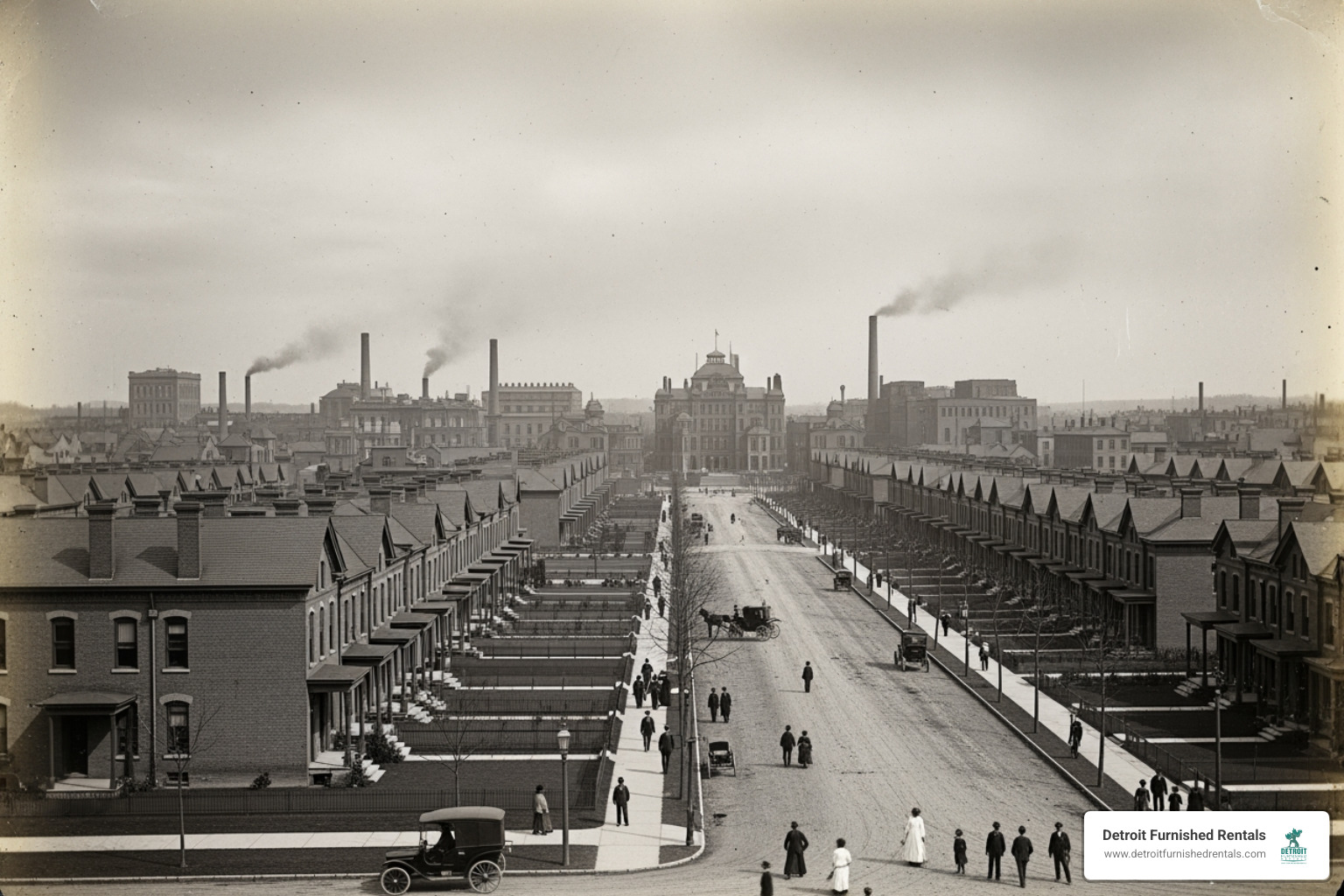
Historical Precedents: The Rise of the Company Town
The most famous historical precedent for company housing is undoubtedly the “company town.” These communities, which flourished during the late 19th and early 20th centuries, were built and owned entirely by industrial enterprises to house their employees.
- Pullman, Illinois: Perhaps the most well-known example, George M. Pullman’s town, founded in 1880, was a carefully planned community designed to foster specific worker virtues. Houses featured amenities like running water and gas, which were luxuries at the time. However, the Pullman companies maintained total control over housing, setting rents and dictating tenant relations. This paternalistic model, while providing better living conditions than many urban tenements, also led to significant worker resentment and protests, most famously during the 1894 strike over rent policies. As the Chicago Encyclopedia notes, while some companies intervened, most preferred to leave worker housing to real-estate speculators.
- Paternalism and Control: Early company towns often reflected a paternalistic approach, where employers believed they knew what was best for their workers. This extended beyond housing to include company stores, churches, and schools, giving companies immense control over their employees’ lives.
- Labor Relations: The control inherent in company towns often led to strained labor relations. Workers could be easily evicted, and rents might not decrease even during economic downturns, fueling discontent.
To dig deeper into this fascinating history, you can explore the History of company towns and understand their impact on industrial development.
Modern Trends in Company Housing
Today’s company housing looks very different from the company towns of old. The driving forces behind its resurgence are primarily the soaring housing costs and the intense competition for talent in many markets, including our vibrant city of Detroit.
- Response to High Housing Costs: Median U.S. wages have struggled to keep pace with rising housing costs, making it difficult for many middle-income workers to afford housing, especially in desirable urban areas. This creates a significant barrier for companies trying to recruit and retain staff.
- Recruitment in Expensive Markets: Major employers are increasingly stepping in to provide housing solutions. We’ve seen this trend nationally, with companies like Disney and Meta exploring housing initiatives for their workers. While these national examples might not directly apply to Detroit, the underlying motivation—to attract and retain employees where housing is a challenge—is highly relevant. Companies understand that if there’s “no place to live,” it’s tough to be a big employer.
- Provider Models: The modern corporate housing market is segmented, featuring:
- Local, unit-centered companies: Like us, who manage individual properties and focus on specific geographic areas, offering personalized service.
- Apartment communities: That furnish a small portion of their inventory for short-term rentals.
- Client-centered models: Who locate and create fully furnished units based on specific client needs.
Our services for Corporate Rentals Detroit exemplify this modern approach, offering flexible, high-quality solutions custom to today’s workforce needs without the paternalistic overtones of historical company towns.
A Practical Guide to Arranging Company Housing
Arranging company housing involves more than just finding a place to stay; it requires careful consideration of financial implications, legal aspects, and potential challenges. Our goal is to make this process as smooth and transparent as possible for our clients in Detroit.
Financial Implications and Cost-Effectiveness
Understanding the financial side of company housing is crucial for both employers and individuals.
- Cost Comparison: While the upfront monthly rate for a fully furnished corporate apartment might seem higher than an unfurnished traditional lease, it’s often more cost-effective in the long run. Traditional leases involve security deposits, first and last month’s rent, furniture purchases, utility setup fees, and ongoing utility bills. Corporate housing bundles all these into one predictable, all-inclusive rate.
- All-Inclusive Rates: As mentioned, these rates cover rent, utilities, internet, and furnishings, eliminating hidden fees and simplifying budgeting. This is especially beneficial for companies managing multiple employee stays.
- Tax Benefits: For stays over 30 days, corporate housing can often be hotel tax exempt, leading to significant savings for companies.
- Industry Revenue Statistics: The corporate housing market is a robust and growing industry. Revenue reached $10 billion in 2019, a substantial increase from $2.47 billion in 2010. In 2015 alone, the industry generated $2.93 billion in the US, marking a 7% increase over the previous year. This growth highlights the increasing recognition of its value and cost-effectiveness compared to other accommodation options. For a deeper dive into weekly costs, check out our guide on Extended Stay Cost Per Week.
Legal and Regulatory Aspects of Company Housing
While our focus is on providing comfortable housing, we also understand the importance of legal and regulatory compliance.
- Lease Agreements: Our lease agreements are designed to be clear, outlining terms of occupancy, included services, and responsibilities. These are typically shorter-term and more flexible than standard residential leases.
- Occupancy Rules: Like any residential property, corporate housing comes with occupancy rules to ensure the comfort and safety of all residents and compliance with local ordinances.
- Health and Safety Standards: All our properties adhere to rigorous health and safety standards. While California’s Employee Housing Program (see California’s Employee Housing Program overview) specifically addresses housing for five or more employees in that state, it highlights the universal importance of ensuring living quarters meet standards for construction, maintenance, and use to assure employee well-being. We apply similar principles to our properties in Detroit, ensuring they are safe and well-maintained.
- Local Regulations: We operate within Detroit’s local housing laws and regulations, ensuring all our company housing options are compliant.
Challenges and Key Considerations
Despite its many advantages, there are challenges and considerations when arranging company housing:
- For Companies:
- Landlord Duties and Liability: If a company directly owns and manages housing, they take on landlord responsibilities, including maintenance, tenant relations, and legal liabilities. This is why many companies prefer to partner with specialized providers like us, who handle these complexities. As one employer noted in NPR, it’s “too messy to be both employer and landlord.”
- Costs and Management: While often cost-effective, managing a portfolio of housing units can be resource-intensive for a company.
- For Employees (in employer-owned housing models):
- Resale Restrictions: In situations where companies build and sell homes to employees (like Cook Medical), there might be resale restrictions. For example, Cook Medical had options to buy back homes within the first few years to ensure affordability and employee access. This can limit an employee’s ability to build equity or sell freely.
- Tying Housing to Employment: In some direct employer-owned models, housing can be tied to employment, which might raise concerns about job security impacting living situations.
- Finding Flexible Options: The key to mitigating many of these challenges is finding flexible, reliable company housing providers. We specialize in offering flexible lease terms, including Month to Month Rentals in Detroit, which provides freedom and adaptability for both companies and individuals.
Frequently Asked Questions about Company Housing
We often get questions about company housing, and we’re happy to clear up common misconceptions.
How long is a typical corporate housing stay?
The average company housing stay is quite substantial, typically lasting around 83-84 days. However, flexibility is a hallmark of corporate housing. While many providers have a 30-day minimum stay, we also see:
- Stays of “more than 100 days for Managed Corporate Housing Companies.”
- “13% of CHBO property owners report their properties were rented for a year or longer.”
This wide range means corporate housing can accommodate everything from a short project assignment to an extended relocation or long-term temporary need. Our flexible lease options are designed to fit your specific timeline, whether it’s short-term or a more extended stay.
Is company housing only for executives?
Absolutely not! While executives certainly use company housing, the service is increasingly vital for a broad spectrum of the workforce. Our properties in Detroit serve a diverse clientele:
- Workforce Housing: It’s a solution for employees at all levels, from quality control inspectors (like Tommie Jones, mentioned earlier) to project managers and engineers.
- Interns: Many companies use corporate housing to accommodate intern groups, providing them with a safe and comfortable environment.
- Project Teams: Entire teams working on temporary assignments often use corporate housing for collaboration and convenience.
- Travel Nurses: A significant portion of our clients includes travel nurses who need comfortable, fully furnished housing close to Detroit’s medical facilities. You can learn more about Travel Nurse Housing options.
The goal is to support employee mobility and well-being, regardless of their role or position.
Can I bring my pet to a corporate rental?
Yes! We understand that pets are family, and leaving them behind during a temporary assignment or relocation is often not an option. Many company housing providers, including Detroit Furnished Rentals, offer pet-friendly options.
However, it’s essential to:
- Check Pet Policies: Always inquire about specific pet policies before booking. These can vary by property and provider.
- Understand Pet Fees: There may be additional pet fees, either a one-time charge or a monthly fee, to cover potential wear and tear or cleaning.
- Breed Restrictions: Some properties may have breed or weight restrictions for pets.
We pride ourselves on offering pet-friendly solutions to ensure your furry companions can join you. For a comprehensive guide, check out The Ultimate Guide to Pet-Friendly Temporary Housing.
Conclusion
From its historical roots in company towns to its modern, flexible iterations, company housing has consistently adapted to meet the evolving needs of employers and employees. Today, it stands as a strategic business tool that offers unparalleled benefits: enhancing recruitment and retention, boosting employee productivity and satisfaction, and simplifying complex relocation logistics.
For employees, it provides a “home away from home” – a comfortable, convenient, and stress-free living solution that allows them to thrive in their professional and personal lives. For companies, especially in dynamic markets like Detroit, it’s a smart investment that supports workforce mobility and strengthens organizational resilience.
As the workforce continues to become more mobile and housing costs remain a significant concern, the role of company housing will only grow. We are committed to providing exceptional furnished rental experiences in Detroit, ensuring that every employee can find their ideal temporary home with ease and comfort.