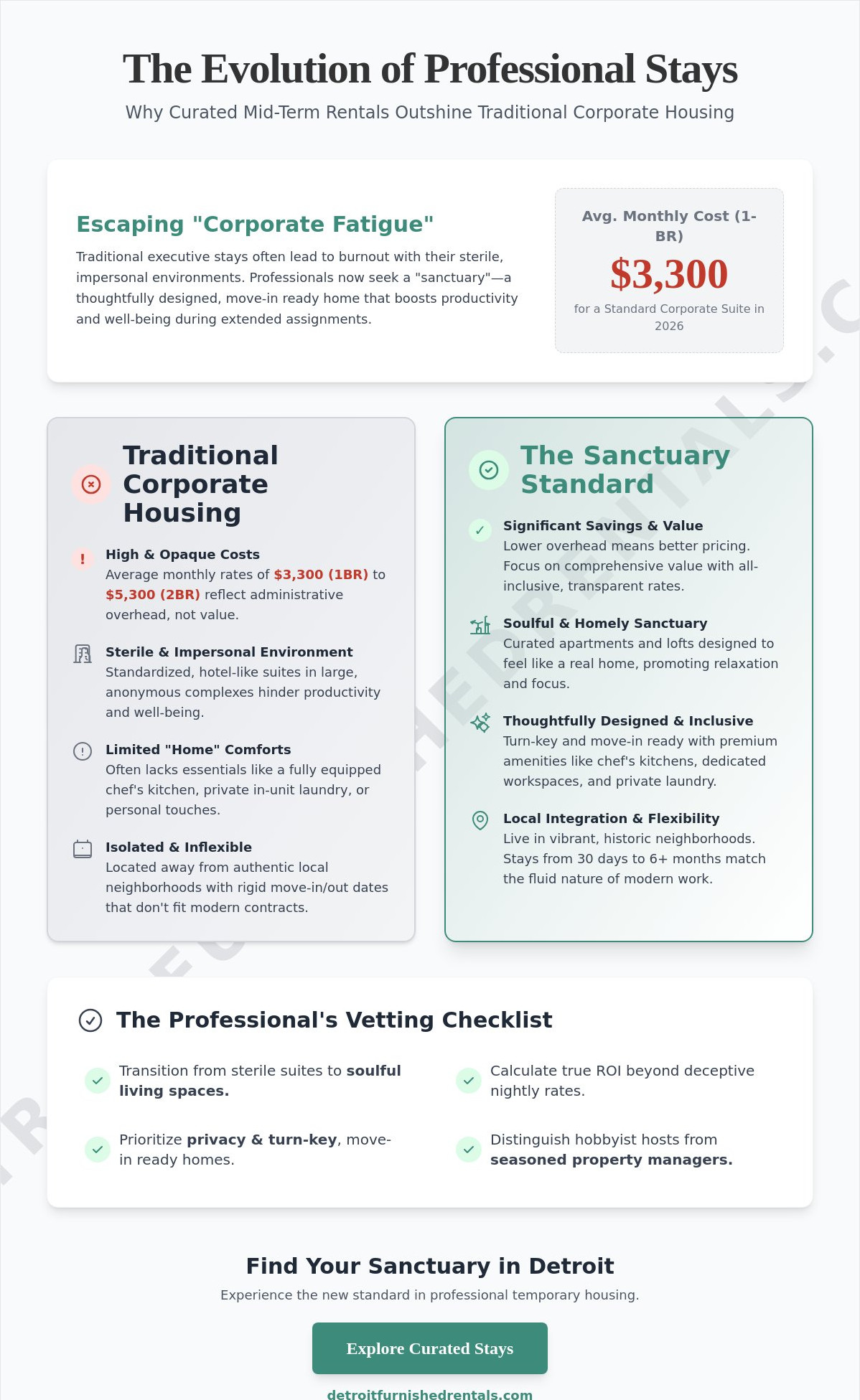
With the average monthly cost for a one bedroom corporate suite hitting $3,300 in 2026, many professionals are realizing that the traditional executive stay is often more of a budget drain than a luxury. You shouldn’t have to settle for a sterile, hotel like atmosphere that lacks the simple comforts of a private laundry or a chef’s kitchen. It is entirely possible to find alternatives to corporate housing that offer the professional reliability you need alongside the local warmth you crave.
We believe your temporary residence should be a move-in ready sanctuary rather than just another stop on a business trip. This guide provides a clear path to discovering curated mid-term rentals that offer significant savings and a stress-free booking process. We will look at how the 21st Century ROAD to Housing Act, passed by the Senate on March 12, 2026, is reshaping the rental market and how you can secure a thoughtfully designed home that serves as a true home away from home.
Key Takeaways
- Understand the impact of “corporate fatigue” and why transitioning from sterile suites to soulful living spaces enhances both your productivity and your peace of mind.
- Discover the top four alternatives to corporate housing that balance boutique hospitality with the privacy of a turn-key, move-in ready home.
- Master the art of calculating true ROI by looking past deceptive nightly rates to the comprehensive value of fully inclusive, thoughtfully designed amenities.
- Acquire a professional vetting checklist to distinguish between “hobbyist” hosts and seasoned property managers who prioritize your safety and comfort.
- Learn why curated mid-term rentals are becoming the new standard for professionals seeking a stress-free sanctuary during extended assignments.
The Shift in Temporary Stays: Why Seek Alternatives to Corporate Housing?
Traditional corporate housing has long been the default for traveling executives and relocating families. These accommodations are typically standardized, managed suites located within large, anonymous apartment complexes. While they offer a predictable baseline of service, they often lack the character and warmth of a real home. By May 2026, many professionals are actively seeking alternatives to corporate housing to escape the “corporate fatigue” that sets in after weeks of living in a sterile, hotel like environment. A room that looks exactly like a thousand others can quickly hinder your productivity and dampen your mental health.
The market is currently witnessing a significant pivot toward mid-term rentals as the primary solution for extended assignments. Mid-term rentals are fully furnished stays ranging from 30 days to six months. This model offers a bridge between the transient nature of a vacation rental and the heavy commitment of a long term lease. As the U.S. faces a housing shortage of nearly 10 million homes, the demand for these flexible, move-in ready spaces has never been higher. They provide a sense of stability and belonging that standardized corporate suites simply cannot replicate.
The Limitations of Traditional Corporate Models
One of the most pressing issues with traditional models is the high overhead cost passed directly to the guest or their employer. In 2026, the average monthly cost for a two bedroom corporate apartment has climbed to approximately $5,300. These price points often reflect the administrative weight of large management firms rather than the actual quality of the living space. Beyond the cost, these units frequently lack neighborhood integration. You might find yourself in a centrally located glass tower but remain completely isolated from the local flavor of a historic district or the best coffee shops in Corktown. Rigid move-in and move-out dates further complicate the experience, as they rarely align with the fluid nature of modern professional contracts.
The Rise of the “Sanctuary” Mindset
Modern professionals, including travel nurses and digital nomads, now prioritize domestic ease over basic hotel services. They view their temporary housing as a sanctuary rather than a mere pit stop. This shift is driving the growth of Serviced accommodation that feels more like a private residence and less like a business transaction. A thoughtfully designed space is essential for maintaining mental clarity during a high stakes assignment at the Medical Center. When a home is turn-key and move-in ready, it provides immediate relief. It allows you to focus on your work and your new surroundings from the moment you turn the key, ensuring a seamless and stress-free transition into your new city.
The Top 4 Alternatives for Professional Extended Stays
The landscape of temporary housing has evolved into a sophisticated spectrum of choices that cater to the modern professional’s need for both efficiency and soul. While the global corporate housing market is forecasted to reach $44.0 billion in the U.S. by 2033, the actual variety of alternatives to corporate housing available today allows for a much more personalized experience. You’re no longer restricted to a cookie-cutter suite in a high-rise. Instead, you can choose a living situation that aligns with your specific requirements for privacy, service level, and neighborhood vibe.
The “entire unit” vs. shared space debate has largely been settled for the professional traveler; privacy is paramount. A true sanctuary requires a door you can close and a space that’s entirely your own. Whether you’re a consultant on a 90 day project or a relocating executive, the goal is to find a residence that fulfills the stress-free promise through professional management and thoughtful design.
1. Managed Mid-Term Rentals (MTRs)
Managed mid-term rentals are the primary choice for those seeking a balance between boutique hospitality and residential comfort. These curated apartments and lofts are specifically designed for professionals on 30, 60, or 90 day assignments. According to the Mid-Term Rental Market Research Report, this sector is expanding rapidly as it fills the gap between transient hotels and long term leases. These properties offer a “home away from home” feel with the reliability of a seasoned property manager who understands the medical or corporate commute. If you’re looking for this level of detail, exploring furnished lofts in Detroit can provide that perfect blend of professional oversight and local charm.
2. Serviced Apartments and Aparthotels
Serviced apartments offer hotel-like amenities, such as a concierge or on-site gym, within a traditional apartment layout. They provide a consistent, turn-key experience but often come at a higher price point. In 2026, these units average about $5,100 per month. They’re excellent for short duration relocations where you need the support of a front desk but want the convenience of a full kitchen.
3. Extended Stay Hotels
Extended stay hotels remain a reliable, if somewhat sterile, alternative. While they offer functional kitchens, they often lack the “real home” amenities like private laundry or high-end interior design. Living in a commercial hospitality environment can feel repetitive over an 83 day average stay. However, for those who prioritize daily housekeeping and a predictable footprint, they remain a viable fallback.
4. Managed Marketplaces (Airbnb & Google Travel)
Platforms like Airbnb and Google Travel Rentals offer infinite variety, with monthly costs averaging around $4,100. The challenge here is the “hobbyist” host vs. the professional portfolio manager. To ensure a seamless stay, look for listings that specialize in mid-term stays and offer move-in ready features. These platforms are best used to find specialists who have a proven track record of hosting traveling professionals and providing a truly stress-free experience.
Calculating the ROI: Cost vs. Value in Temporary Housing
Judging a temporary stay solely by its nightly rate is a common mistake that can lead to significant budget overruns. While a hotel room at $171 per night might seem comparable to other options, the final invoice often tells a different story. These rates rarely account for the full spectrum of living expenses required for an average stay of 83 days. By choosing alternatives to corporate housing, you gain access to a pricing structure that reflects the reality of long-term professional life. This shift in perspective allows you to see the true return on investment that comes with a move-in ready home.
All-inclusive pricing is a budget-saving tool for professional travelers that consolidates rent, high-speed Wi-Fi, and all utilities into one predictable monthly cost.
The Hidden Costs of Hotel Stays
The most significant drain on your wallet during an extended hotel stay isn’t the room itself; it’s the “Dining Out Tax.” Without a full kitchen, you’re forced to rely on restaurants or expensive room service for every meal. This can easily add over $2,000 to your monthly expenses. Laundry fees and daily parking surcharges further inflate the cost, often adding hundreds of dollars per week that aren’t visible in the initial booking price. Beyond the financial impact, there’s a heavy psychological cost to living in a cramped space where your bed, office, and dining table are all within arm’s reach. A lack of separate zones for work and rest can lead to burnout during a demanding professional assignment.
Mid-Term Rentals: The Middle Ground
Mid-term rentals bridge the gap between the exorbitant costs of commercial hospitality and the rigid, often impossible requirements of unfurnished leases. These stays offer significant discounts for bookings of 30 days or more. In 2026, while an average Airbnb might cost $4,100 per month, a curated mid-term rental often aligns more closely with the $3,300 average for a one bedroom furnished apartment. As professionals seek more sustainable alternatives to corporate housing, these rentals have emerged as the gold standard for value. You avoid the stress of credit checks, utility setup fees, or the logistical nightmare of purchasing furniture for a temporary stay.
The value-add amenities in a turn-key rental are designed with the modern professional in mind. Private, thoughtfully designed workspaces allow for deep focus, while in-unit laundry provides the domestic ease needed to maintain a busy schedule. For those relocating to the Dallas-Fort Worth area, services like DFW SpinCycle Rentals make it easy to add these essential appliances to any rental. This approach ensures that your transition is seamless and your budget remains predictable. It’s about finding a sanctuary that respects both your professional needs and your financial boundaries, providing a sense of belonging without the long-term commitment.
The Professional’s Checklist: How to Vet an Alternative Provider
Finding the right space shouldn’t feel like a gamble. When you step away from traditional chains, you need a vetting framework that guarantees safety and reliability. Many travelers rely on surface level reviews, but a professional stay requires deeper scrutiny. You are looking for a partner who understands that a broken Wi-Fi connection isn’t just an inconvenience; it’s a threat to your productivity. Identifying red flags in temporary housing listings is the final step in securing alternatives to corporate housing that actually deliver on their promises.
Step 1: Verify Professional Management
Start by looking for a dedicated brand presence. Does the provider have a standalone website, or are they only visible on third party marketplaces? A professional firm will showcase a consistent portfolio of curated properties. This consistency is your best insurance policy against “bait and switch” tactics. In early 2026, with institutional investors owning over 2.2 million apartments in the U.S., choosing a boutique manager ensures you receive personalized care rather than becoming a number in a database. Check for 24/7 maintenance protocols to ensure any issues are handled with hotel like efficiency.
Step 2: Confirm Essential Amenities
A truly move-in ready apartment must be functional from the moment you arrive. Don’t just take their word for it. Request a recent Wi-Fi speed test result if your work involves heavy data or video conferencing. A “full kitchen” should include more than a microwave; look for a complete inventory of cookware and utensils. Safety is non-negotiable. Ensure the property features smart locks, secure building access, and modern smoke detectors. These details transform a simple rental into a secure sanctuary that supports your lifestyle.
Step 3: Analyze Lease Flexibility
Professional contracts are often fluid. You need to understand the cancellation policy if your assignment is cut short or extended unexpectedly. Ask if there are options to transition to a month-to-month arrangement after the initial term. Be clear on the security deposit and cleaning fee structure before signing any documents. Transparency in these financial details is a hallmark of a reliable provider. If you want a partner who prioritizes your peace of mind, consider booking one of our furnished apartments in Detroit for a seamless and stress-free experience.
The Sanctuary Standard: Why Curated Mid-Term Rentals are the Future
The evolution of professional travel has reached a turning point where the standardized suite is no longer enough. Modern professionals are increasingly choosing alternatives to corporate housing that offer a deeper sense of belonging and a connection to the local community. A thoughtfully designed home provides the mental clarity needed for high-stakes assignments, whether you’re a travel nurse at the Medical Center or an executive overseeing a local revitalization project. This Sanctuary Standard is about more than just aesthetics; it’s about supporting career longevity by reducing the friction of life on the road. When your living space feels like a true refuge, you can perform at your peak without the looming threat of burnout.
Choosing a whole-unit rental over a shared space or a cramped hotel room is the most effective way to protect your privacy and comfort. As we’ve seen throughout 2026, the rise of mid-term rentals has provided a necessary bridge for those who need the reliability of a professional manager and the warmth of a residential neighborhood. Prioritizing these curated environments ensures that your focus remains on your professional goals rather than the logistics of your living situation.
A Seamless Move-In Experience
There is a profound sense of relief that comes with walking into a fully equipped, beautiful home after a long journey. You avoid the logistical nightmare of buying and selling furniture for a stay that might only last three to six months. In a turn-key residence, every detail is handled before your arrival, from the high-end linens to the stocked kitchen essentials. This move-in ready approach allows you to hit the ground running on day one of your assignment. You don’t have to worry about utility setups or Wi-Fi installations; you simply turn the key and start living. This level of organization transforms a potentially chaotic relocation into a smooth, stress-free transition.
Finding Your Home Away From Home
The true value of a mid-term rental often lies in the local expertise that comes with it. A seasoned property manager acts as your guide, helping you choose a vibrant neighborhood that matches your lifestyle, whether that’s the historic charm of Corktown or the central energy of Downtown. These curated rentals offer a sense of belonging that national, faceless platforms can’t replicate. You aren’t just a guest; you’re a member of the neighborhood who knows the best local coffee shops and the most reliable commute. If you’re ready to move beyond the sterile corporate suite, it’s time to discover stress-free, move-in ready housing for your next assignment and experience the difference of a true sanctuary.
Step Into Your Next Sanctuary
Transitioning to a new city for a 90 day assignment shouldn’t mean sacrificing your quality of life or your peace of mind. You’ve seen how the 2026 market is shifting toward mid-term rentals that prioritize your mental clarity and your budget. By choosing these alternatives to corporate housing, you avoid the sterile atmosphere of standardized suites and the thousands of dollars in hidden costs associated with extended hotel stays. It’s about finding a move-in ready space that feels like a true home away from home from the moment you turn the key.
Since 2015, we’ve dedicated over a decade of hospitality expertise to crafting these exact environments. We specialize exclusively in entire furnished units, ensuring you never have to navigate the discomfort of shared spaces or single rooms. Our lofts and apartments are thoughtfully designed for the specific needs of travel nurses and executives who value both style and safety. Explore our curated selection of professional mid-term rentals to secure your seamless, stress-free stay today. Your next assignment deserves a sanctuary that feels as vibrant and welcoming as the city itself.
Frequently Asked Questions
Is corporate housing more expensive than a mid-term rental?
Yes, mid-term rentals are typically more cost-effective because they lack the heavy administrative layers of large management firms. While traditional corporate housing averages around $3,300 for a one bedroom, alternatives to corporate housing often provide higher-end design and more living space for a similar or lower investment. This allows you to redirect your budget toward experiencing the local culture in vibrant neighborhoods like Corktown rather than paying for corporate overhead.
Can I find pet-friendly alternatives to corporate housing?
You can certainly find pet-friendly options among boutique rental providers. Unlike standardized hotel suites, these residences often feature durable, high-quality flooring and proximity to historic local parks. It’s best to confirm the specific pet policy and any associated cleaning fees during your initial inquiry to ensure a seamless transition for every member of your household, including your four-legged companions.
How do I verify if a furnished apartment is safe for a solo traveler?
Start by confirming the presence of modern safety features like smart locks and secure building entrances. A professional manager will be happy to provide details about the neighborhood’s character and the building’s security protocols. You can also look for properties located in well-lit, centrally located areas with high pedestrian activity to ensure peace of mind throughout your entire professional stay.
What is the difference between a serviced apartment and a mid-term rental?
Serviced apartments generally mimic a hotel experience with frequent housekeeping and a front desk presence. In contrast, mid-term rentals prioritize a move-in ready residential feel. They offer larger floor plans, private laundry facilities, and fully equipped kitchens that go far beyond a simple microwave. This makes them a superior choice for those who want to live like a local rather than a transient guest.
Do mid-term rentals include utilities and internet in the price?
Most professional mid-term rentals use an all-inclusive pricing model. This means your monthly rate covers high-speed internet, electricity, gas, and water without the need for individual utility accounts. This turn-key approach eliminates the stress of administrative setup, allowing you to focus entirely on your professional assignment from the moment you arrive in your new sanctuary.
What happens if my professional contract is cancelled early?
Flexibility is a hallmark of the mid-term rental model. Many providers offer specific lease addendums for travel nurses or corporate relocations that outline the procedure for early departures. It’s vital to discuss these terms upfront to understand notice periods or potential fees, ensuring your housing remains as fluid as your professional contract requires during your time in the city.
Are these alternatives available for 30-day stays?
Mid-term rentals are the perfect solution for 30 day stays. They fill the gap between short vacation rentals and the rigid requirements of a year long lease. These properties are move-in ready and fully furnished, making them a sophisticated choice for consultants or executives on month long projects who crave more soul and privacy than a standard hotel can provide.
How far in advance should I book an alternative to corporate housing?
Aim to book your stay 30 to 60 days before your arrival date. While last minute options occasionally appear, the most thoughtfully designed lofts in historic districts tend to be reserved early. Planning ahead ensures you secure a sanctuary that perfectly aligns with your commute to the Medical Center and your personal style preferences for a stress-free experience.