In 2026, a staggering 60% of remote professionals prioritize “living like a local” over traditional hotel stays, yet the charm of a standard airbnb often fades when you’re hit with 15% service fees on a three-month booking. It’s exhausting to spend hours scrolling through listings, only to worry if the vibrant Corktown loft you booked actually looks like the photos or if the Wi-Fi can handle a Monday morning board meeting. You deserve a space that feels like a true home away from home, not a gamble.
We agree that the freedom of flexible living shouldn’t come at the cost of your peace of mind or professional productivity. This article shows you how to bridge the gap between flexible living and professional hospitality, ensuring your next stay is defined by transparency and thoughtfully designed comfort. We’ll examine the rise of turn-key, mid-term rentals that offer the seamless booking experience you crave with the local expertise you need to truly thrive in Detroit’s historic neighborhoods.
Key Takeaways
- Understand the evolution from nightly tourism to a “live anywhere” lifestyle that prioritizes thoughtfully designed, move-in ready environments for the modern professional.
- Discover why the 30-day stay has become the strategic sweet spot for securing a seamless, turn-key residence while avoiding regulatory hurdles.
- Learn how to navigate the rising costs and fatigue of the traditional airbnb platform by identifying hidden fees and inconsistent host standards.
- Master a professional vetting checklist to evaluate your next sanctuary beyond its aesthetic appeal, focusing on building security and neighborhood connectivity.
- Transition from the uncertainty of app-based searching to the peace of mind found in a professionally managed, stress-free home that offers a true sense of belonging.
Understanding the Airbnb Phenomenon: From Vacation App to Lifestyle Standard
The landscape of global travel changed forever when the digital nomad movement transitioned from a niche subculture to a standard professional expectation. Since 2021, when remote work participation rates stabilized at approximately 28% of the U.S. workforce, the demand for flexible housing has surged. Understanding the Airbnb Phenomenon helps us see how a simple room-sharing app evolved into the infrastructure for a new nomadic economy. By 2026, the focus has shifted away from the frantic 48-hour tourist trip toward a more intentional, “live anywhere” philosophy. Professionals no longer want to just visit a city; they want to inhabit it. They seek out move-in ready spaces that offer the stability of a home without the rigid constraints of a 12-month lease. This cultural shift birthed the mid-term rental, a strategic bridge that offers the convenience of short-term apps with the soul of a permanent residence.
The Anatomy of a Modern Move-In Ready Rental
A thoughtfully designed space in 2026 is defined by its ability to support both deep work and genuine relaxation. These curated environments move beyond basic aesthetics to provide functional luxury that caters to the specific needs of a traveling executive or medical professional. Essential amenities now include:
- High-speed connectivity: Symmetrical gigabit Wi-Fi is no longer a perk; it’s a requirement for seamless video conferencing.
- Ergonomic zones: Dedicated workspaces featuring height-adjustable desks and supportive seating prevent the fatigue of “laptop-on-the-couch” living.
- Culinary readiness: Full-sized kitchens stocked with high-end appliances allow for healthy, home-cooked meals during extended stays.
The turn-key rental serves as a comprehensive solution that removes every point of friction from the relocation process.
Why Traditional Hotels are Losing the Long-Stay Battle
Hotels often feel like transit hubs, offering a sterile atmosphere that wears thin after the third night. In contrast, a home away from home provides a sense of neighborhood integration that’s vital for mental well-being. In vibrant, historic Detroit neighborhoods like Corktown or Midtown, living in a real apartment allows guests to shop at local markets and walk to the best coffee shops. The lack of in-unit laundry and specialized kitchen equipment in hotels makes a 30-day stay feel like a series of compromises. For the modern professional, having a private entrance and a quiet, residential street creates a stress-free sanctuary that no lobby or concierge can replicate. This sense of belonging is why more travelers are choosing the airbnb model for their long-term assignments, prioritizing privacy and local flavor over the repetitive nature of hospitality chains.
The Shift to Mid-Term Stays: Why 30+ Days is the New Strategic Sweet Spot
The landscape of temporary housing has moved beyond the frantic weekend getaway. Savvy travelers and professionals now seek a slower, more intentional pace. This transition stems from a deeper understanding of the economic costs and benefits of Airbnb, specifically how long-term occupancy stabilizes local housing markets while providing guests with significant cost savings. By crossing the 30-day threshold, guests move from being tourists to temporary residents.
There’s a profound psychological benefit to “unpacking once” in a thoughtfully designed environment. Living out of a suitcase for a week is a novelty; living out of one for three months is a burden. Mid-term stays provide a curated sanctuary where the kitchen is stocked and the linens are high-quality. This stability allows professionals to focus on their work rather than the logistics of their next move. It’s about finding a home away from home that feels like a sanctuary, not just a stopover.
Rigid 12-month leases don’t fit the rhythm of a modern career. If a project in a new city lasts only four months, a year-long commitment is a financial trap. Month-to-month arrangements offer the agility required for the 2026 workforce. You get the protection of a lease without the long-term anchor. This flexibility is the hallmark of the airbnb evolution, turning the platform into a tool for lifestyle design rather than just vacation planning.
Financial Incentives for Extended Stays
Booking for 31 days or more often triggers a radical shift in pricing. Most hosts offer a long-stay discount that can reduce the nightly rate by 25% to 40%. In many jurisdictions, stays exceeding 30 days are exempt from transient occupancy taxes. This can save an additional 6% to 15% on the total bill depending on local laws. Choosing a move-in ready home also eliminates the high cost of moving personal furniture for a short-term contract, which often exceeds $3,000 for a single bedroom setup.
Tailoring the Experience for Travel Professionals
Travel nurses and healthcare consultants require more than just a bed. They need proximity to major medical centers and a quiet, restorative atmosphere for day-sleeping after night shifts. High-end corporate housing must bridge the gap between professional reliability and the soul of the neighborhood. Following a model like furnished apartments detroit ensures that guests feel connected to the city’s pulse while enjoying a stress-free, turn-key experience. If you’re planning your next professional rotation, consider how a seamlessly managed home can serve as your foundation in a new city.
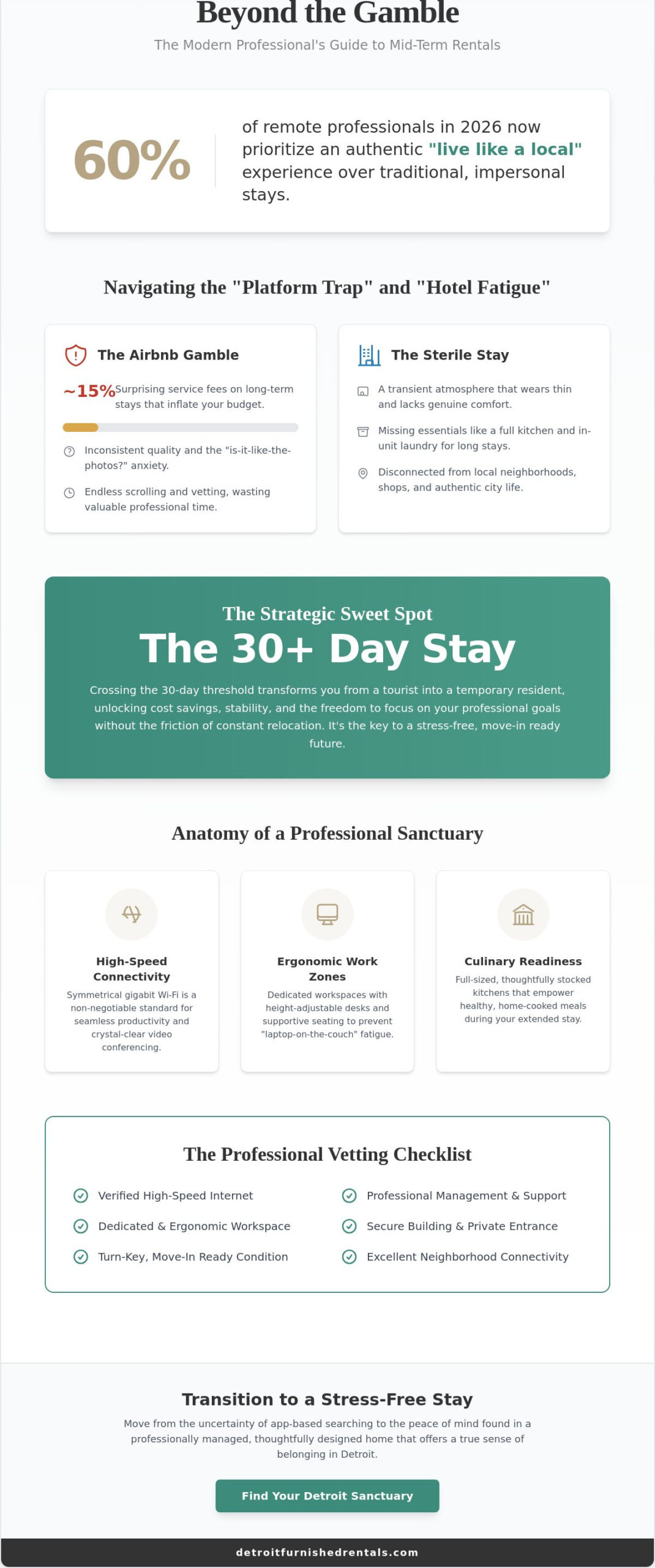
Navigating the Platform Trap: Avoiding Hidden Fees and Airbnb Fatigue
The early magic of the sharing economy has been replaced by a growing sense of “Airbnb Fatigue.” This frustration stems from a combination of inconsistent host communication and the unpredictable quality of individual listings. For professionals who value their time, the gamble of a peer-to-peer rental often feels like a liability rather than a benefit. You aren’t just looking for a room; you’re seeking a reliable sanctuary where you can focus on your work and enjoy the local culture of Detroit without the stress of a last-minute cancellation. When your career depends on being present, you can’t afford to arrive in a new city only to find your accommodation has vanished from the app.
The “Platform Tax” is a real financial burden for long-term travelers. Over a three-month stay, service fees and cleaning fee bloat can add thousands to your total budget. These costs don’t improve your living experience. They simply act as a middleman fee. Avoiding these traps requires a shift toward professional management where the value is found in the property, not the platform’s marketing budget. A curated home should offer peace of mind, not a list of hidden charges that appear only at the final checkout screen.
Deconstructing the Service Fee
When you analyze a typical invoice, the 14% to 17% guest service fee is often the most jarring line item. This fee rarely benefits the guest directly. It doesn’t pay for better maintenance or a more comfortable mattress; it stays with the corporation to fund global operations. By choosing to book directly with professional firms, you eliminate this unnecessary markup. Direct booking allows for more personalized, stress-free communication that bypasses automated chatbots and generic templates, connecting you immediately with a local expert who cares about your stay.
- Recapture 14-17% of your travel budget for actual living expenses or premium upgrades.
- Eliminate the cleaning fee bloat often used by individual hosts to artificially lower their nightly rates in search results.
- Ensure your funds support the local Detroit economy and the actual upkeep of your home.
Consistency is the Ultimate Luxury
Individual hosts often lack the resources to provide a brand standard. One stay might be perfect, while the next features outdated photos and a slow response time. Professional managers maintain a curated portfolio of homes that are thoughtfully designed to meet the specific needs of modern travelers. They offer 24/7 support, ensuring that a broken appliance or a lost key doesn’t derail your entire week. This professional oversight means your home is move-in ready the moment you arrive in vibrant neighborhoods like Corktown or the historic West Village.
You aren’t waiting for a part-time host to finish their day job before they can help you with a Wi-Fi connection. A professional team treats every property as a flagship, maintaining a level of reliability that is the true mark of luxury. This turn-key approach allows you to step off the plane and into a home that feels like it was prepared specifically for you. It’s the difference between a random collection of listings and a dedicated hospitality brand that understands the rhythm of your life.
The Professional Vetting Checklist: How to Choose Your Next Sanctuary
Selecting a home for a month or longer is a high-stakes decision that requires a discerning eye. You aren’t just booking a room; you’re auditing a lifestyle. While a standard airbnb might look stunning through a wide-angle lens, the reality often hides in the fine print. A true sanctuary requires a safety-first mindset. Look for buildings that offer 24/7 monitored access and smart-lock technology. Research neighborhood data through local precinct reports or platforms like NeighborhoodScout to ensure the area aligns with your comfort level. A truly turn-key property means you arrive with a suitcase and find a curated environment where every utility, from 300 Mbps fiber optic internet to the locally roasted coffee in the pantry, is ready for your arrival. Verify a manager’s legitimacy by checking their business registration or professional LinkedIn presence to ensure they have a physical footprint in the city.
Platform vs. Professional Property Manager
The difference between a faceless app-based booking and a professional direct booking often comes down to the human element. While a global airbnb listing provides a generic template, a professional property manager acts as a local expert who knows the 5-minute commute to the Detroit Medical Center or the quietest corner of a neighborhood park. Choosing a managed property ensures a standardized level of cleanliness and maintenance that individual hosts often struggle to replicate. For those seeking a blend of history and modern utility, exploring lofts in detroit exemplifies finding a property with character and context. These spaces offer the industrial soul of the city paired with the professional oversight that guarantees your peace of mind.
Vetting the Work-from-Home Readiness
In 2026, a “workspace” must be more than a laptop on a dining table. When vetting a potential stay, ask for a verified Wi-Fi speed test screenshot showing at least 50 Mbps upload speeds for seamless video conferencing. Inquire about the ergonomics of the setup; a dedicated desk and a chair designed for eight-hour shifts are non-negotiable for the remote professional. Consider the lighting and background of the room. A thoughtfully designed space with soft, natural light and a clutter-free backdrop ensures you maintain a professional image during virtual meetings. It is the difference between surviving a remote assignment and thriving in it.
Experience a stress-free transition by browsing our curated Detroit properties today.
Securing Your Move-In Ready Future: The Stress-Free Path Forward
The journey from the early days of scrolling through airbnb to securing a professionally managed home marks a significant evolution in how we live and work. In 2026, the uncertainty of amateur hosting has been replaced by a rigorous standard of excellence that prioritizes your peace of mind above all else. You aren’t just looking for a temporary place to sleep; you’re seeking a foundation where you can thrive. Transitioning into a new market is a complex process, but it becomes a joyful experience when you have the right tools. Using our best neighborhoods in detroit guide allows you to filter for your specific cultural and professional needs before you even pack a suitcase.
Feeling a sense of belonging from day one is essential for any high-performing professional. It’s the difference between feeling like a visitor and feeling like a resident. When your housing is handled by experts who understand the local landscape, you gain more than a roof. You gain an immediate connection to the city’s heartbeat. This shift toward move-in ready housing is about more than convenience; it’s about the psychological relief of knowing your environment is stable, secure, and thoughtfully prepared for your arrival.
The Seamless Booking Process
A professional mid-term stay relies on a transparent rental agreement that protects both the guest and the property. In 2026, these documents outline everything from high-speed fiber internet guarantees to specific maintenance response times, ensuring there are no surprises after you move in. The arrival experience is the hallmark of a boutique stay. Instead of fumbling with faulty lockboxes in the dark, you’ll find a home that is pre-inspected, climate-controlled, and stocked with high-end local essentials. A sanctuary is a private retreat that restores your energy and shields you from the chaos of relocation.
Your Turn-Key Invitation
Choosing a boutique experience over a faceless, global platform makes a measurable difference in your daily quality of life. Local managers bring a level of pride and accountability that ensures your home is a vital part of Detroit’s ongoing revitalization. We understand that a 10-minute commute to the Detroit Medical Center or a two-block walk to a historic Corktown coffee shop is what makes a stay successful. This turn-key approach removes the heavy mental load of moving, allowing you to focus on your career and your new community from the moment you arrive. Discover your next professionally curated sanctuary with Detroit Furnished Rentals.
Your Seamless Transition into Detroit Living
The landscape of flexible travel has shifted. By 2026, the demand for mid-term stays of 30 days or longer has transformed from a niche trend into a lifestyle standard. Industry reports from 2024 indicate that these extended stays now represent 21% of all nights booked in the flexible housing sector. While platforms like airbnb paved the way for short-term visits, the modern traveler now seeks the stability of a true home without the burden of hidden service fees or impersonal management.
You deserve a sanctuary that bridges the gap between a boutique hotel and a permanent residence. Our properties offer thoughtfully designed interiors nestled within Detroit’s most vibrant, historic districts. We provide professionally managed, move-in ready spaces specifically tailored for the high-pressure needs of corporate leaders and medical staff. By booking directly, you bypass platform markups while securing a high-end, turn-key environment. It’s time to trade the exhaustion of endless scrolling for a reliable, local expert who understands the heartbeat of this city. Explore our curated collection of move-in ready lofts and apartments. We look forward to welcoming you home to a stress-free stay in the D.
Frequently Asked Questions
Is Airbnb cheaper than a hotel for a month-long stay?
Airbnb is often more cost-effective because monthly discounts typically range from 30% to 50% on the platform. Hotels in urban centers often charge a daily occupancy tax that adds 15% to your bill, while long-term stays frequently bypass these transient fees. You also gain a private kitchen and laundry, saving an average of $15 per meal compared to dining out every night during your stay.
What is the difference between a short-term rental and a mid-term rental?
The primary difference lies in the duration and intent of the stay, with short-term rentals lasting under 28 days and mid-term rentals spanning one to ten months. Mid-term stays focus on relocation or corporate assignments, providing a stable sanctuary rather than a weekend home base. Industry data from 2024 shows mid-term stays now account for 20% of the flexible housing market as professionals seek deeper community roots.
Are service fees on Airbnb negotiable for stays longer than 30 days?
Service fees are set by the platform and aren’t negotiable, but you can often secure a lower total price by messaging the host for a custom monthly rate. While airbnb collects a guest service fee usually under 14.2%, booking a month-long stay often triggers automatic discounts of 10% or more. This makes the total investment more predictable for professionals transitioning into a new city like Detroit.
How do I ensure an Airbnb is safe for a solo professional traveler?
Prioritize listings with “Superhost” status and at least 50 positive reviews that specifically mention safety and neighborhood quietude. Look for properties offering keyless entry via smart locks and 24/7 exterior security cameras, which are standard in 90% of premium professional rentals. Checking local precinct maps for historic districts like Corktown ensures your sanctuary is located in a secure, well-lit environment that feels like home.
What are the benefits of booking directly with a professional property manager?
Booking directly eliminates third-party service fees and provides a direct line to a local expert who manages the property’s maintenance and cleaning. You receive a curated, move-in ready experience with turn-key amenities that national, faceless platforms can’t guarantee. Professional managers in Detroit offer a personalized touch, ensuring your stay is stress-free and anchored in the city’s unique cultural fabric from the moment you arrive.
Can I find pet-friendly furnished apartments for a 3-month contract?
Yes, approximately 40% of mid-term rental listings now accommodate pets to meet the needs of modern travelers. These apartments often feature durable flooring and are located near green spaces like the Detroit Riverfront or local parks. Finding a pet-friendly, thoughtfully designed home ensures your entire family, including four-legged members, feels a sense of relief and belonging during your professional contract.
What happens if I need to extend my mid-term rental stay?
You should notify your property manager at least 30 days before your original move-out date to secure the space for a longer period. Extension availability depends on the booking calendar; however, professional managers often prioritize existing guests to maintain a seamless experience. In 2025, flexible lease extensions became a standard request for 15% of corporate travelers who need extra time for project completion.
How do I calculate the real cost of living when choosing between furnished and unfurnished?
Total your monthly rent plus an estimated $3,000 to $5,000 for initial furniture purchases and utility setup fees required for unfurnished units. Furnished stays offer a turn-key solution where high-speed internet, electricity, and water are included in one transparent price. Choosing a move-in ready home saves you the 10 to 15 hours typically spent coordinating movers and setting up essential services in a new city.