Why Downtown Detroit Housing is Experiencing Unprecedented Growth
Downtown Detroit housing has transformed into one of the Midwest’s most dynamic urban residential scenes. Here’s what you need to know:
Quick Overview:
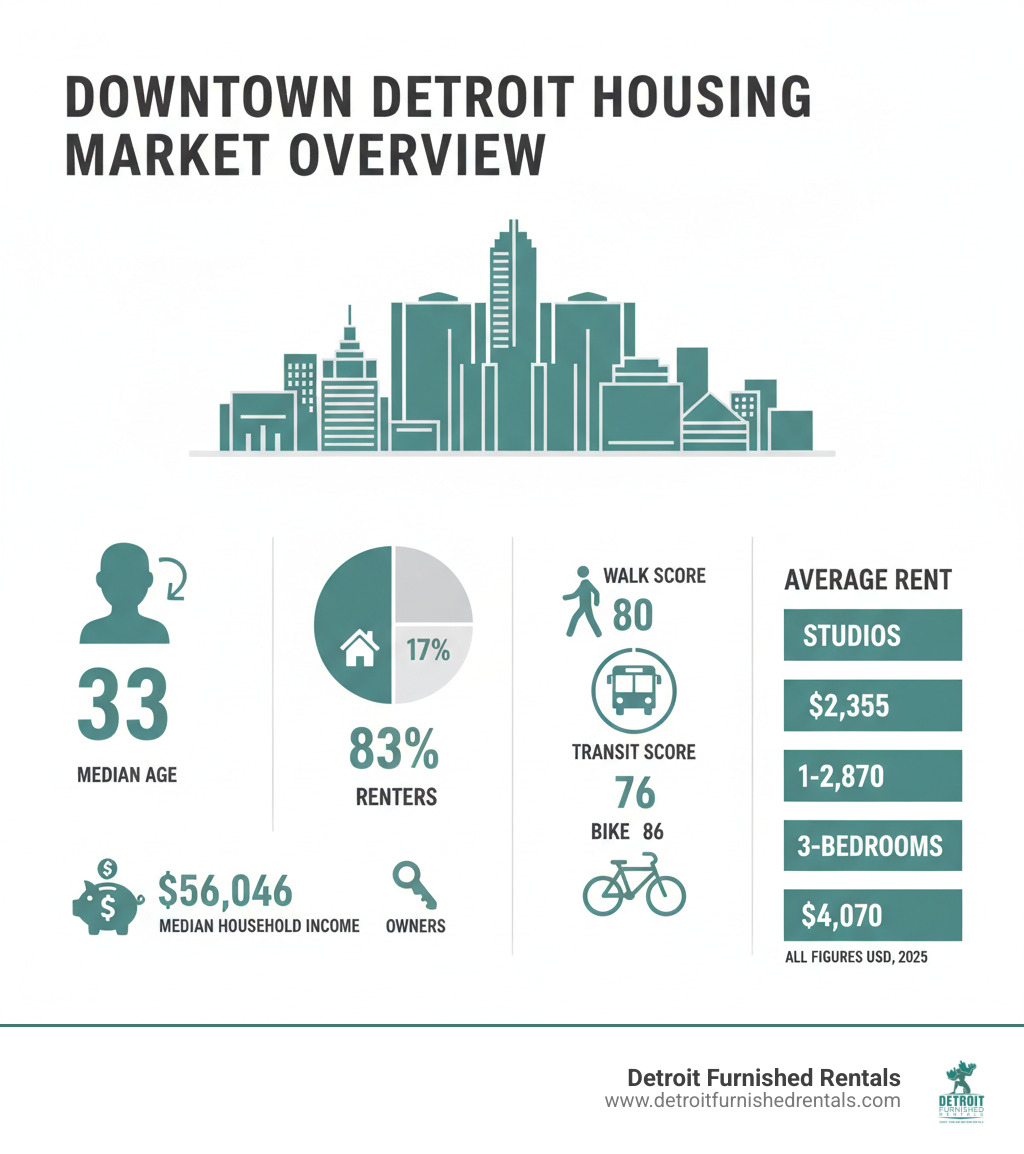
- Average Rent: $1,896-$2,747/month depending on source
- Housing Mix: 83% rented, 17% owned
- Building Type: 65% in large buildings (50+ units)
- Median Resident Age: 33 years old
- Median Income: $56,046/year
- Walkability: Walk Score 80, Transit Score 76, Bike Score 86
The narrative around Detroit’s urban core has shifted dramatically. Once marked by quiet streets, today’s downtown pulses with life, from renovated Art Deco high-rises to new mixed-use neighborhoods in Brush Park. Developers have converted historic buildings into modern residences, and the city has added $1 billion in affordable housing. The result is a vibrant, walkable community where 83% of residents rent.
The housing landscape offers something for everyone, from micro-loft studios to penthouses with skyline views. Historic Victorian mansions sit alongside contemporary high-rises, and pet-friendly buildings with modern amenities cater to remote workers. The area connects seamlessly to cultural anchors like the Fox Theatre and the scenic riverfront.
I’m Sean Swain, founder of Detroit Furnished Rentals, and I’ve been providing comfortable, centrally-located accommodations for corporate travelers and traveling nurses throughout downtown Detroit for years. My experience with downtown Detroit housing has given me insight into what makes this market unique—from the flexible rental terms professionals need to the pet-friendly spaces that feel like home.
Understanding the Downtown Detroit Housing Market

The downtown Detroit housing market is a story of change, where historic preservation meets modern innovation. The market is unique for its rental focus: a striking 83% of housing units are rented, versus just 17% owned. This reflects the mobile lifestyle of its residents—young professionals, students, and traveling workers who need flexibility. About 65% of all housing is in large buildings with 50 or more units, which are communities offering amenities from fitness centers to rooftop terraces. Developers have revitalized architectural treasures and built modern complexes, creating a market with options from luxury to affordable.
What Types of Housing Are Available?
Downtown Detroit housing offers remarkable variety. Whether you dream of floor-to-ceiling windows or exposed brick walls, you’ll find your match here.
Luxury high-rise apartments dominate the skyline, with former office skyscrapers now stylishly housing residents. Many restored historic towers blend architectural heritage with modern finishes like chef’s kitchens and spa-like bathrooms, offering incredible city views.
Historic lofts in converted industrial buildings celebrate Detroit’s manufacturing legacy with exposed brick, soaring ceilings, and massive windows. Several Art Deco-era towers exemplify this blend of old-world grandeur and contemporary comfort.
In Brush Park, renovated Victorian mansions offer a unique way to live surrounded by history. These homes feature traditional exteriors with modern interiors.
New construction developments bring fresh energy, offering contemporary apartments and townhomes designed for modern urban living.
You’ll also find condos for rent throughout downtown. Single-family rentals, representing about 9% of the stock, are also available, typically just beyond the central core.
What is the Cost of Downtown Detroit Housing?
Downtown Detroit housing costs vary, but understanding the landscape helps you budget. The average monthly rent is $1,896, but actual prices swing dramatically based on your needs.
Here’s what you can expect to pay:
| Apartment Size | Average Rent (per month) | Price Range (per month) |
|---|---|---|
| Studio | $2,355 | $800 – $3,150 |
| 1-Bedroom | $2,747 | $975 – $6,000 |
| 2-Bedroom | $3,310 | $1,552 – $6,000 |
| 3-Bedroom | $4,070 | $1,295 – $4,795 |
The wide ranges reflect a market that spans from budget-friendly studios to luxury penthouses. The average monthly housing cost for residents is $1,282, accounting for the full spectrum of options.
Location drives price more than almost anything else. An apartment overlooking Campus Martius Park commands premium rent. Proximity to the riverfront, entertainment venues, and major employers all factor into the equation.
Amenities matter too. Buildings with rooftop pools, state-of-the-art fitness centers, and co-working spaces naturally cost more. These are lifestyle features that make urban living more convenient.
Building age and condition round out the pricing picture. Freshly renovated historic buildings and new constructions typically sit at the higher end, while older buildings often provide more affordable entry points.
Who Lives in Downtown Detroit?
Downtown residents paint a picture of Detroit’s renaissance. The median age is 33, reflecting an energetic and ambitious population where careers launch and creativity flourishes. Young professionals are drawn by job opportunities in technology, finance, healthcare, and creative industries.
The median household income is $56,046 annually, reflecting a diverse economic mix. This proves that downtown Detroit housing serves various income levels.
The average household size is 1.4 people, indicating a population of primarily singles and couples. Of 5,840 households, only 475 include children. These statistics reflect an urban lifestyle where residents value proximity to work over square footage.
Students from nearby Wayne State University, College for Creative Studies, and Wayne County Community College add vibrancy to the area. Some established residents—long-time Detroiters—have also chosen to stay or return, appreciating the new amenities that make urban living comfortable. This demographic diversity creates a dynamic community that makes downtown Detroit feel alive.
A Neighborhood Guide: Where to Live in Downtown Detroit
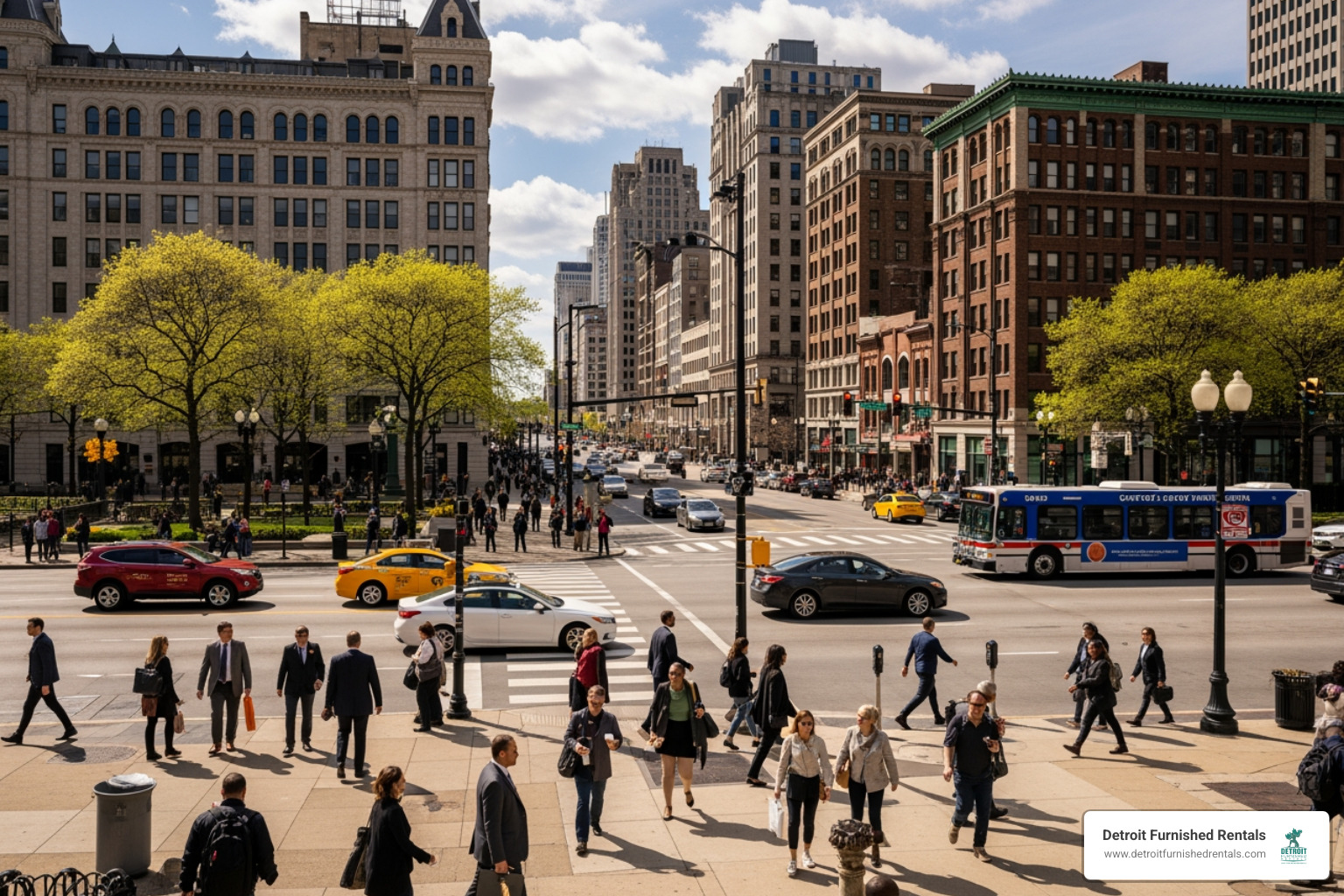
Searching for downtown Detroit housing reveals that “downtown” is a collection of distinct districts, each with its own personality. Understanding these areas, from energetic entertainment hubs to quiet historic spots, will help you find the perfect match for your lifestyle.
Brush Park & The District Detroit
Brush Park has a remarkable story of change. Known for its “Victorian Row,” the neighborhood showcases restored Victorian mansions alongside modern developments, creating a fascinating architectural timeline.
A signature mixed-income project here blends historic preservation with new construction. It offers contemporary apartments and townhomes alongside restored Victorian homes and street-level retail, delivering a complete, walkable neighborhood.
The District Detroit is where the action happens. Home to Little Caesars Arena, Comerica Park, and Ford Field, this area thrums with energy. The housing here is predominantly newer construction. Several refurbished landmarks and new mid-rises add modern apartments with thoughtful amenities. Living here means you’re blocks from major events, with ever-expanding dining and nightlife options.
Capitol Park & Central Business District
For a classic urban setting, consider Capitol Park. This charming green space is surrounded by beautiful historic skyscrapers, many now housing apartments. Residents experience coming home to a piece of history daily.
The walkability here is exceptional. Campus Martius Park is just steps away, hosting everything from summer concerts to winter ice skating. The streets are lined with local businesses, and you’re in the heart of everything.
Restored Art Deco and Beaux-Arts towers in this area combine historic character—loft-like brick walls and soaring ceilings—with modern amenities such as fitness centers, co-working spaces, and resident terraces. The Central Business District features a range of boutique and larger apartment communities, each with its own character.
Corktown & The Riverfront
For a slightly different vibe, these two areas offer compelling alternatives to the high-rise downtown Detroit housing experience.
Corktown, Detroit’s oldest neighborhood, is lined with colorful, restored Victorian-era homes. It has a strong identity centered around community pubs and local businesses. While traditionally a single-family home area, new apartment developments are adding rental options in a way that keeps the community’s character intact.
The Riverfront offers stunning water views and access to nature via the award-winning Detroit Riverwalk. Living here means panoramic views, miles of paths for walking and biking, and parks that provide a peaceful counterpoint to urban energy. It’s the best of both worlds: serene natural beauty with the city’s excitement just behind you.
The Downtown Lifestyle: Amenities, Transportation, and Culture

Living in downtown Detroit means embracing a 24/7 lifestyle. The city’s core pulses with energy, offering easy access to the majestic Fox Theatre, the renowned Detroit Institute of Arts, and countless restaurants and shops. It’s not just a place to live—it’s a place to experience.
Common Amenities and Pros & Cons
When exploring downtown Detroit housing, you’ll find modern buildings loaded with features for comfortable urban living. Most include on-site fitness centers and rooftop terraces with stunning city views, perfect for gatherings.
The shift to remote work has made co-working spaces a standard amenity. At Detroit Furnished Rentals, we understand this need, which is why our properties feature dedicated workspaces for productivity and comfort.
Pet lovers will be happy to know that pet-friendly policies are increasingly common. Many buildings welcome your furry companions, sometimes even offering pet spas. We’re proud to offer pet-friendly options because we believe your whole family should feel at home. Other conveniences like in-unit laundry and concierge services are becoming the norm.
The advantages of downtown living are compelling. With a Walk Score® of 80, most daily errands can be done on foot. The access to dining and entertainment is best, and neighborhoods foster a strong community feel. The way historical charm meets modernity here is special—you might live in a restored Art Deco tower one block and walk past a sleek new development the next.
Of course, urban living has its challenges. Noise can be an issue near construction or delivery zones, so ask about soundproofing. Parking often comes at an additional monthly cost, and street parking can be scarce and expensive.
The higher cost of living compared to suburban areas is real. There are practical considerations, too. One resident noted, “they modified the elevator after I moved in. Be very careful before assuming your furniture will fit.” Ask about such logistics during your search. Some residents also mention internet reliability issues, so research providers beforehand.
Getting Around Downtown
Getting around downtown without a car is easy. The city’s transportation scores tell the story: a Walk Score® of 80 (very walkable), a Transit Score® of 76 (excellent public transportation), and a Bike Score® of 86 (very bikeable). You can learn more about how these scores are calculated at Walk Score® information.
The QLine streetcar connects downtown to Midtown and New Center. The Detroit People Mover offers a quick loop around the central business district, perfect for accessing sports venues and major attractions. The DDOT bus system extends your reach throughout the entire city.
For drivers, downtown connects easily to major highways like I-75 and I-375. While rush hour can slow things down, the road network is generally straightforward. Detroit Metropolitan Wayne County Airport (DTW) is accessible for both business and leisure travel.
Education and Institutions
The concentration of educational institutions adds intellectual vibrancy to the area. Wayne State University, a major research university, is a short QLine ride away in Midtown. Also in Midtown, the College for Creative Studies draws talented artists and designers from around the world. In the heart of downtown, Wayne County Community College District provides accessible education and workforce development programs.
These institutions create a diverse, intellectually curious population that shapes the character of downtown Detroit, improving the downtown Detroit housing experience.
Frequently Asked Questions about Downtown Detroit Housing
Here are answers to common questions about downtown Detroit housing for those considering a move to Detroit’s vibrant core.
What is the average rent for an apartment in downtown Detroit?
The rental landscape offers a wide spectrum of pricing. Based on current data, studio apartments average $2,355 per month (range: $800-$3,150). One-bedroom apartments average $2,747 per month (range: $975-$6,000). For more space, two-bedroom units average $3,310 per month (range: $1,552-$6,000), and three-bedroom apartments average $4,070 per month (range: $1,295-$4,795).
Different sources report slightly different averages (from $1,896 to $2,747), reflecting the market’s diversity from budget-friendly to luxury options. The key takeaway is that there’s something for almost every budget, and it pays to shop around. Many properties also run leasing specials, so timing your search can lead to savings.
At Detroit Furnished Rentals, we understand that flexibility matters. Our short and mid-term furnished options give you the chance to experience downtown living without a long-term commitment, helping you figure out which neighborhood and price point works best for your lifestyle.
How do I find affordable downtown detroit housing?
Finding affordable downtown Detroit housing is achievable thanks to city resources and development initiatives. The city and state have invested heavily in making downtown accessible to residents across income levels.
Your first stop should be Detroit Home Connect, a housing search tool designed to help residents find affordable rental housing based on income. Another valuable tool is the Michigan Housing Locator, managed by the Michigan State Housing Development Authority (MSHDA), where landlords list privately operated rental units.
Also, look for mixed-income developments. The city has added $1 billion in affordable housing, with many new projects incorporating units at various affordability levels. Examples include City Modern’s The Flats (for residents 55+ with LIHTC options), the 124 Alfred building (for seniors at 30%-60% AMI), and developments like The Brush, The Beaubien, and The Anchor @ Mariners Inn.
The City of Detroit’s commitment to housing opportunities means new affordable options are constantly being developed. Check the City of Detroit housing pages for the latest information.
Is downtown Detroit a good place to live?
Yes. For anyone seeking a vibrant, walkable urban lifestyle, downtown Detroit delivers an experience that’s hard to match in the Midwest.
The lifestyle is engaging. You’re walking distance from world-class entertainment at the Fox Theatre, Tigers games at Comerica Park, and the Detroit Institute of Arts. The Detroit Riverwalk offers beautiful green spaces for jogging, biking, or relaxing. With a Walk Score of 80, a Transit Score of 76, and a Bike Score of 86, you can easily steer the city without a car.
The job market has flourished, bringing opportunities across many sectors. This economic vitality creates a dynamic community of young professionals, students, and established residents.
What really sets downtown Detroit housing apart is the variety. You’ll find everything from historic lofts to modern high-rises. While there are challenges like noise, parking, and higher costs, residents consistently find the benefits far outweigh these urban trade-offs. The unique blend of Detroit’s spirit, heritage, and development creates a special place to call home, whether for a few months or for years.
Conclusion: Finding Your Place in the Motor City’s Heart
The story of downtown Detroit housing is one of change and possibility. From the Art Deco towers of Capitol Park to the Victorian charm of Brush Park, and from the riverside views to the buzz of The District, Detroit has truly come into its own.
It’s about finding a place where you can enjoy skyline views, walk to a coffee shop, and feel part of a real community. The residential landscape offers historic lofts, modern high-rises, and everything in between. With investment in both luxury and affordability, there’s a home here to fit your lifestyle and budget.
The numbers (high Walk Scores, a median age of 33) only tell part of the story. They don’t capture the feeling of strolling the Riverwalk or the energy of a neighborhood that’s alive at all hours. Downtown Detroit delivers on its promise of vibrant city life for young professionals, traveling nurses, or anyone who loves urban living.
For those needing flexibility or not ready for a long-term lease, we can help. At Detroit Furnished Rentals, we understand what professionals and travelers need. Our short and mid-term furnished apartments include fully equipped kitchens, dedicated workspaces, and pet-friendly policies because we know your furry family members are part of the adventure.
We’ve seen how downtown Detroit has evolved, and we’re excited to help you become part of this incredible urban renaissance. Your perfect spot in the Motor City’s heart is waiting.