Find the Clinton River Trail: Your Metro Detroit Cycling Gateway
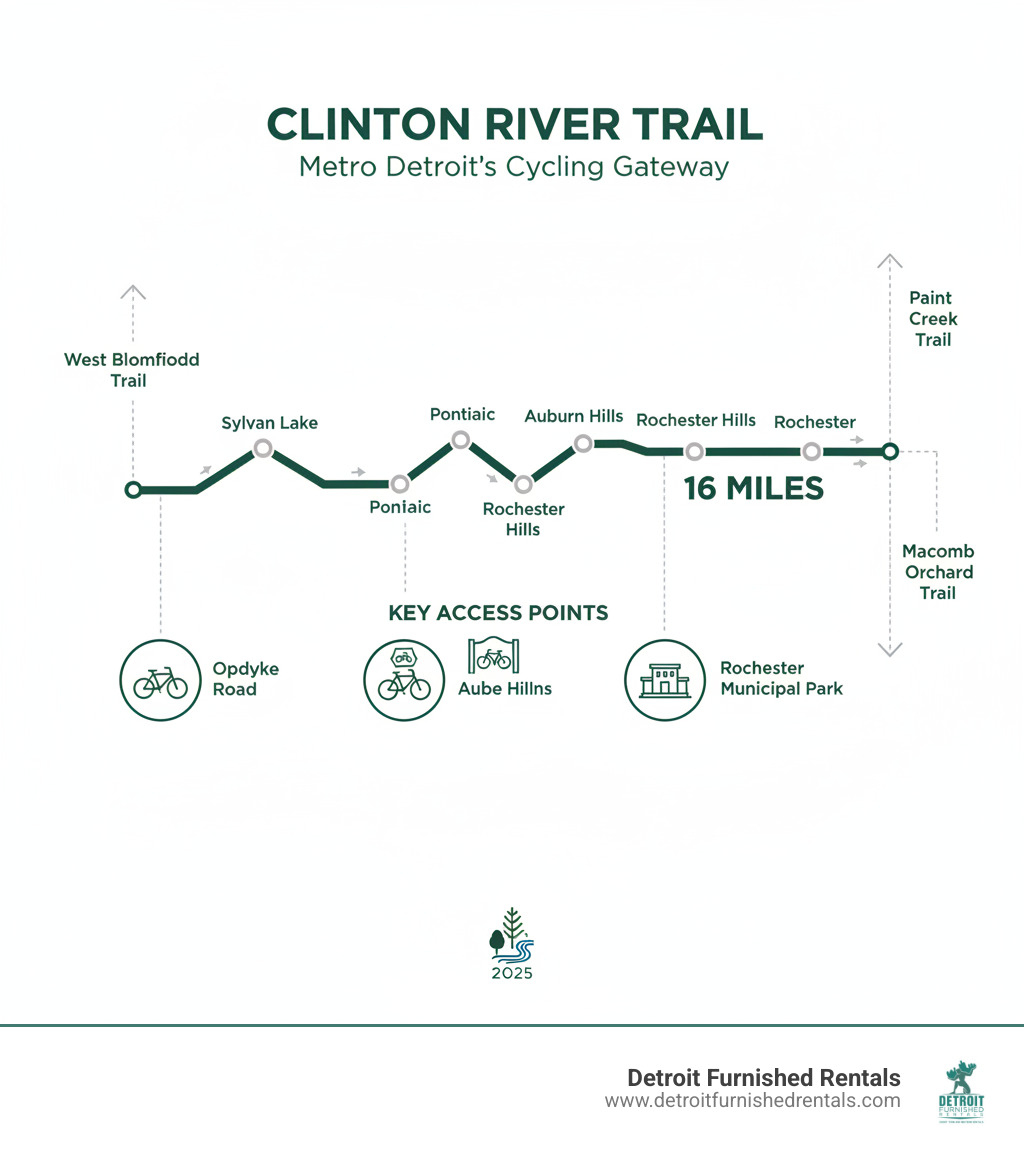
The Clinton River Trail is a 16-mile multi-use path through five Oakland County communities in southeastern Michigan. Originally a railway from 1880, this rail-to-trail conversion opened in 2004 and connects the West Bloomfield Trail and Macomb Orchard Trail.
Quick Facts:
- Length: 16 miles
- Location: Sylvan Lake, Pontiac, Auburn Hills, Rochester Hills, and Rochester
- Surface: Mixed (crushed limestone and paved asphalt)
- Activities: Biking, hiking, running, cross-country skiing, dog walking
- Best for: Cyclists seeking variety, from urban rides to wooded scenery
- Connections: Part of the Iron Belle Trail and Great Lake to Lake Trail Route #1
For traveling professionals needing a workout or weekend adventurers, the Clinton River Trail offers diverse experiences. It transitions from urban landscapes in Pontiac to scenic riverside paths in Rochester, making it a versatile cycling route.
The eastern sections near Rochester offer the smoothest, paved riding through wooded corridors. The western portions through Pontiac are more challenging with crushed limestone and on-road segments, but improvements are ongoing.
The Clinton River Trail: An Overview of this Oakland County Gem
The Clinton River Trail offers a 16-mile escape in the heart of Oakland County, Michigan. This multi-use path connects five communities: Sylvan Lake, Pontiac, Auburn Hills, Rochester Hills, and Rochester. Each section has a unique character, from urban energy to peaceful woods, making every ride a new adventure.
The Clinton River Trail is part of something bigger. It’s a key segment of Michigan’s Iron Belle Trail, a route stretching from the Upper Peninsula to Detroit. It also plays an important role in the Great Lake to Lake Trail Route #1, linking Lake Michigan to Lake Huron.
At its western end, the trail connects with the West Bloomfield Trail, while the eastern terminus links to the Macomb Orchard Trail and Paint Creek Trail. This seamless integration lets you easily extend your ride and explore more of Oakland County’s outdoor recreation opportunities.
The trail’s central location makes it accessible. If you’re staying in Metro Detroit, perhaps in one of our furnished apartments, the trail is a short drive away for a quick workout or a Sunday exploration. The Clinton River Trail is a true Oakland County gem that brings people together outdoors.
From Steam Engines to Spokes: The History of the Trail
The Clinton River Trail has a compelling story of how communities can repurpose forgotten infrastructure. What was once a rail line now carries cyclists, runners, and families.

The Michigan Air Line Railway first laid tracks here in 1880. The Grand Trunk Western Railroad later took over, but by 1998, the line was obsolete. The railroad abandoned the line, and the rails were pulled up in 1999, leaving a 16-mile empty corridor.
Community leaders and the Rails to Trails Conservancy saw potential. In 2003, they funded a master plan to convert the historic railway into a modern trail. You can read the official history on the trail’s website.
The Clinton River Trail officially opened in spring 2004. Converting the railway faced challenges, especially crossing major roads. The bridge over I-75 opened in fall 2003, and the Telegraph Road bridge followed in 2012. These structures were game-changers, creating a continuous, safe route instead of a fragmented path.
From steam engines to bicycle spokes, the journey of the Clinton River Trail shows how the past can be reimagined to serve the present.
A Mile-by-Mile Guide: Navigating the Trail’s Sections
The beauty of the Clinton River Trail is its variety. Over 16 miles, you’ll experience everything from urban landscapes to peaceful woodlands. Knowing what to expect helps you plan the perfect ride.
| Section | Surface Type | Scenery | Key Features |
|---|---|---|---|
| Sylvan Lake / Pontiac | Crushed Limestone, On-Road | Urban, Industrial | Connection to West Bloomfield Trail, Downtown Pontiac access, often noisy, ongoing improvements with Pike Street Connector Project. |
| Auburn Hills | Mixed (Crushed Limestone, Paved Asphalt) | Suburban, Mixed Natural | I-75 bridge, Telegraph Road bridge, seamless transitions, improved sections, access to local parks. |
| Rochester / Rochester Hills | Mostly Paved Asphalt, some Crushed Limestone | Natural, Wooded, Riverside, Suburban | Downtown Rochester access, connection to Paint Creek Trail & Macomb Orchard Trail, scenic river views, Yates Cider Mill nearby, parks. |
The Western End: Sylvan Lake & Pontiac
The western end near Sylvan Lake and through Pontiac is industrial. The surface is mostly crushed limestone, suitable for hybrid or mountain bikes but bumpy for road bikes. This stretch is more challenging due to on-road sections along South Boulevard and Opdyke Road, requiring comfort with riding in traffic. This can be intimidating for newcomers to navigating Detroit.
Users describe this section as “industrial” and “noisy.” The elevation starts around 940 feet, and the surface can be rough, especially near Opdyke Road. However, the Pike Street Connector Project, funded in 2023, aims to improve continuity and surface quality through Pontiac.
The Central Hub: Auburn Hills
East into Auburn Hills, the trail improves. The surface is a mix of crushed limestone and paved asphalt, offering a smoother ride. This section connects Pontiac’s urban character with Rochester’s natural beauty.

The standout features are two impressive bridges. The pedestrian bridge over I-75 (2003) allows safe crossing of the busy highway, while the Telegraph Road bridge (2012) is another crucial connection. These essential bridges create a continuous path, eliminating detours. Auburn Hills has more open spaces, wooded areas, and park access. Its welcoming suburban feel is a pleasant middle ground for all riders.
The Scenic East: Rochester & Rochester Hills
The eastern sections through Rochester and Rochester Hills are where the trail shines. The elevation drops to 690 feet, creating a gentle, easy downhill pedal from the west. The surface is mostly paved asphalt, perfect for road bikes, rollerbladers, and strollers. The ride quality is much better than in the west, allowing you to focus on the scenery.
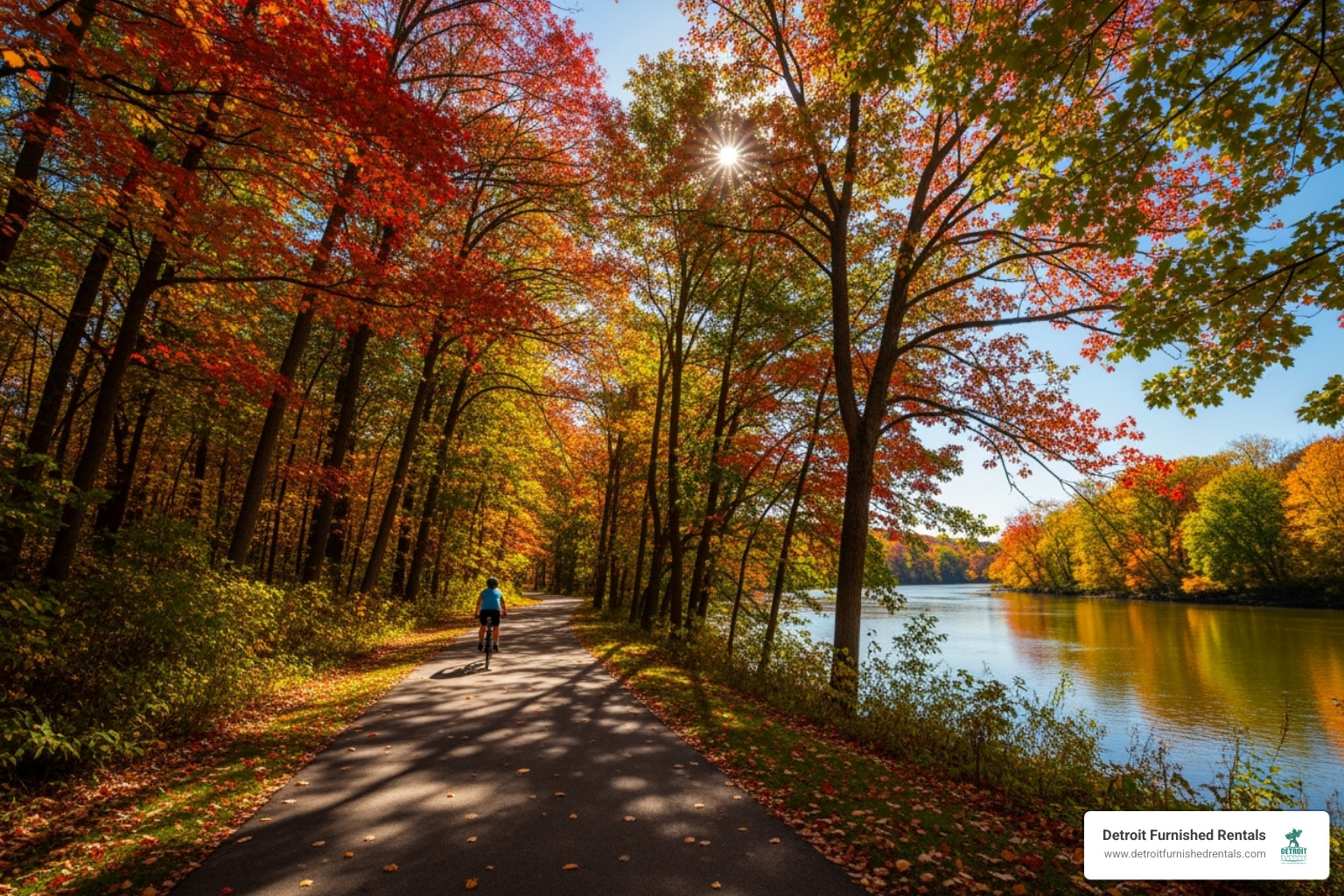
The scenery is lush and wooded, with a shady canopy and peaceful views of the Clinton River. Downtown Rochester is conveniently along the trail, perfect for a stop for coffee or lunch. The connectivity is exceptional, linking directly to the Paint Creek Trail and the Macomb Orchard Trail.
Look for the historic Yates Cider Mill, a local landmark offering cider and donuts in the fall. Smooth surfaces, natural beauty, park connections, and amenities make this eastern section the trail’s crown jewel.
Planning Your Adventure on the Clinton River Trail
A little planning ensures a great day on the Clinton River Trail. Whether it’s a quick ride or a full-day adventure, being prepared is key.
First, what should you bring? Your water bottle is essential. Pack snacks for energy, and always wear a helmet. A bike lock is useful for stops in town. Don’t forget sunscreen, a small first-aid kit, and your phone or a map. For cyclists, a basic repair kit can be a lifesaver.
Popular Activities on the Clinton River Trail
The Clinton River Trail welcomes everyone, from serious cyclists to families. Its multi-use nature makes it a community gathering place.
Biking is the most popular activity. Varied surfaces suit different bikes: road bikes for the paved east, and mountain/hybrid bikes for the crushed limestone west. It’s a top choice among Detroit’s bike paths. Hiking and running are also popular on the relatively flat terrain.
In winter, the trail is a peaceful retreat for cross-country skiing and snowshoeing. Nature lovers can enjoy wildlife viewing, with chances to spot deer and various birds. Dog walking is also a favorite, but pets must be on a 6-foot leash and under your control.
Access Points, Parking, and Amenities
Accessing the Clinton River Trail is straightforward. Your starting point along the 16-mile stretch depends on whether you want an urban or scenic experience.
Key access points include Sylvan Lake (western entry, connects to West Bloomfield Trail), Opdyke Road (industrial section), and Auburn Hills (central section with bridges). For first-timers, Downtown Rochester offers parking near shops and restaurants. Rochester Municipal Park is another great starting point with ample parking and access to the scenic eastern trail.
Amenities like benches, drinking fountains, and restrooms (especially in the Rochester area) make the journey comfortable. Check a detailed trail map before longer trips to plan your route and rest stops. These trailheads also connect to some of the best parks in Detroit and Oakland County.
The Trail’s Role in the Community and Beyond
The Clinton River Trail is more than a path; it’s a community treasure connecting people and places in Oakland County. For two decades, this 16-mile corridor has become part of daily life, a shared space for joggers, cyclists, and families. The trail improves quality of life for all users, from traveling professionals needing a workout to families seeking a safe ride. It’s a green sanctuary for exercise and mental clarity, proving nature is close by even in a metro area.
The trail’s superpower is its connectivity. By linking the West Bloomfield Trail to the west with the Macomb Orchard Trail and Paint Creek Trail to the east, it creates an impressive network spanning multiple counties. This allows for rides of 30, 40, or even 50 miles. This regional planning transforms individual trails into a recreational infrastructure for Metro Detroit. You can see all the connections on this detailed trail map.
The Friends of the Clinton River Trail
The Friends of the Clinton River Trail is the all-volunteer organization behind the trail’s success. They work year-round to maintain, improve, and advocate for the pathway. These dedicated volunteers organize clean-up days, coordinate with the five municipalities, and advocate for funding and improvements.
This year marks the trail’s 20th anniversary. The Friends of the Clinton River Trail have been key in organizing community events, fostering pride and ownership among users.
If you enjoy the trail, consider giving back. The organization relies on volunteers and donations. Your support helps ensure the Clinton River Trail remains a vibrant community asset. You can learn more and support the Friends of the Clinton River Trail through their website.
Frequently Asked Questions about Biking the Trail
Planning a ride on the Clinton River Trail? Here are answers to common questions to help you prepare.
Is the Clinton River Trail good for all types of bikes?
The trail accommodates different bikes, but your experience will vary by section.
The western sections (Sylvan Lake, Pontiac) have crushed limestone and on-road portions. A hybrid or mountain bike is recommended for these rougher surfaces, as road bikes will find the ride bumpy.
The eastern sections (Rochester, Rochester Hills) are a treat for road cyclists, with mostly paved asphalt for a smooth, fast ride. Hybrid and mountain bikes are also great here. Our recommendation: if you’re on a road bike, start in the east. If you have a hybrid or mountain bike, the entire trail is open for exploration.
Are dogs and e-bikes allowed on the trail?
Yes, the Clinton River Trail welcomes both, with a few guidelines.
Dogs are welcome but must be on a leash no longer than 6 feet and under your control. Please clean up after your pet to ensure a pleasant experience for all users.
Class 1 e-bikes (pedal-assist up to 20 mph) are generally permitted, offering a boost for longer distances. However, since the trail crosses multiple cities, check local regulations for the specific sections you plan to ride before you go.
What are the best sections for a scenic, family-friendly ride?
For the most scenic and family-friendly experience, the Rochester and Rochester Hills sections are highly recommended. These eastern portions are ideal for stress-free outings for all ages and abilities.
These sections feature mostly paved asphalt, perfect for young children, road cyclists, strollers, and joggers. You’ll ride through gorgeous, shaded woods with scenic views of the Clinton River. The convenience is also a huge plus, with easy access to downtown Rochester for restrooms, water, and food. Rochester Municipal Park is an ideal starting point with plenty of parking and amenities. The combination of natural beauty, smooth surfaces, and family-friendly accessibility makes these sections a favorite.
Conclusion
The Clinton River Trail is a special 16-mile pathway in Metro Detroit. Its history, from an 1880 railway to a 2004 recreational trail, shows community vision in repurposing old infrastructure.
The trail’s versatility is remarkable. It ranges from urban, crushed limestone sections in Pontiac to peaceful, paved corridors with river views in Rochester and Rochester Hills. It welcomes serious cyclists, families, and anyone seeking a nature escape.
As part of the Iron Belle Trail and Great Lake to Lake Trail Route #1, the Clinton River Trail connects to a larger network, linking with the West Bloomfield Trail, Paint Creek Trail, and the Macomb Orchard Trail.
For travelers to Detroit, the Clinton River Trail offers easy access to outdoor exercise. After a ride or run, you’ll appreciate returning to a comfortable home base. Detroit Furnished Rentals provides fully equipped apartments for your stay as you explore Metro Detroit.
We encourage you to experience this trail for yourself. See why locals have cherished this pathway for 20 years. The Clinton River Trail is a vital part of Metro Detroit’s outdoor lifestyle. For more cycling adventures, explore our complete guide to Detroit’s biking and running paths. Happy trails!