Why Creating a Dog Friendly Kitchen Matters More Than Ever
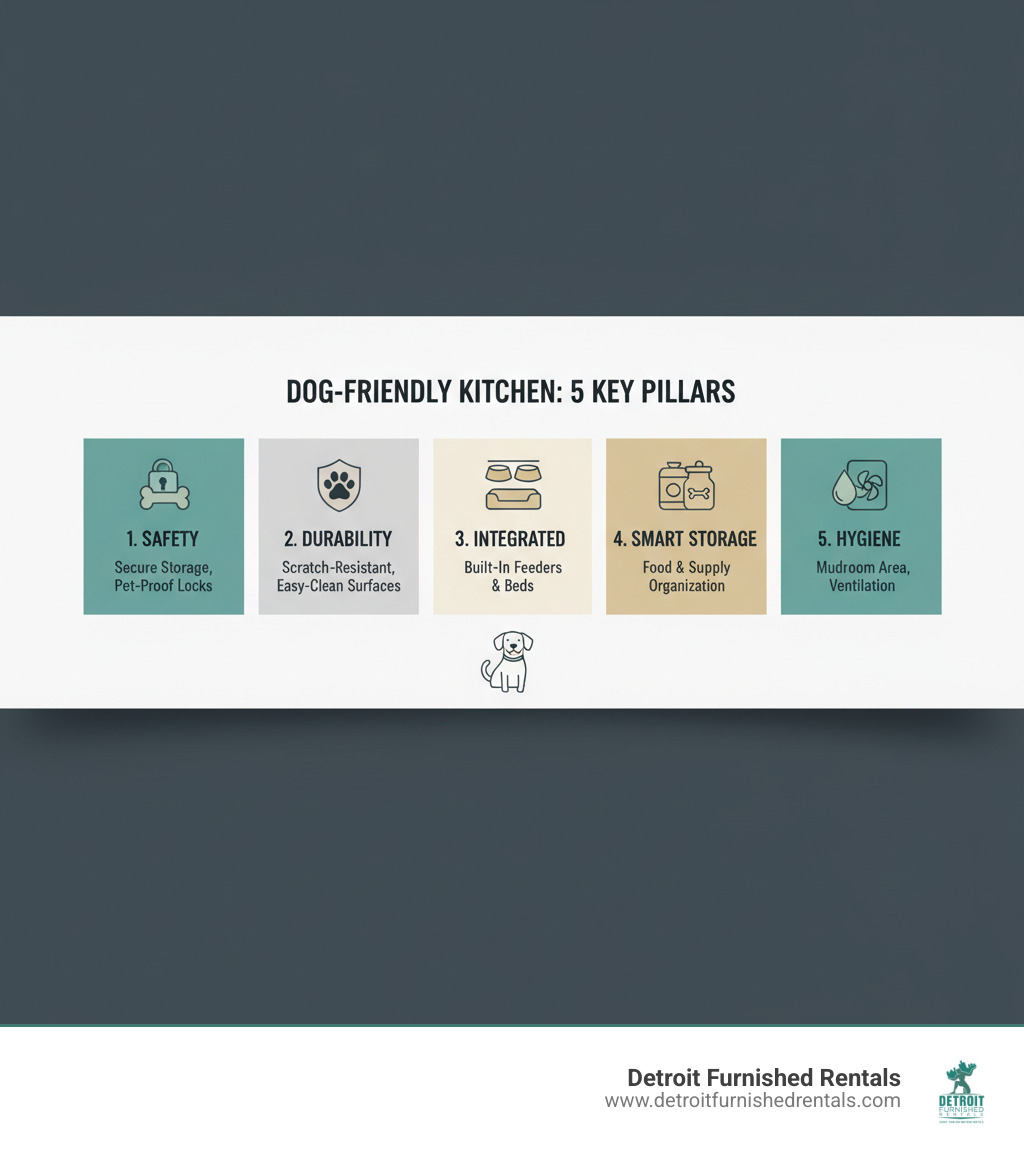
A dog friendly kitchen is no longer a luxury—it’s become essential for the 27% of UK adults who now own dogs. Whether you’re designing from scratch or adapting your existing space, here’s what makes a kitchen truly dog-friendly:
- Safety first: Secure storage for toxic foods and cleaning supplies
- Durable materials: Scratch-resistant flooring and easy-clean surfaces
- Integrated feeding stations: Built-in bowls and food storage
- Designated rest areas: Cozy nooks or under-counter dog beds
- Smart boundaries: Pet gates and defined zones
The numbers tell the story—Google searches for “Dog Friendly Kitchens” have jumped 118% in the past 18 months. Even more telling, searches for “Dog Bed Ideas for Kitchen” have skyrocketed by 2700%. This surge reflects a simple truth: the kitchen is the heart of the home, and pet owners want their four-legged family members to be part of that warmth.
“The kitchen is often a central hub of the home for family and four-legged friends,” as industry experts note. It’s where we gather, cook, and connect—naturally drawing our dogs who want to be close to the action and the delicious smells.
Creating a truly functional dog friendly kitchen means thinking beyond just throwing down a food bowl. It requires thoughtful design that balances safety, style, and the practical realities of life with dogs. From muddy paws after rainy walks to curious noses investigating every cooking smell, your kitchen needs to handle it all while still looking beautiful.
I’m Sean Swain, and through my work with Detroit Furnished Rentals, I’ve designed numerous pet-friendly spaces that seamlessly blend style with functionality. My experience creating comfortable, dog friendly kitchen environments for traveling professionals and their pets has taught me that the best solutions are both practical and neat.
The Foundation: Safe, Durable, and Easy-to-Clean Design
Living with dogs brings endless joy, but let’s be honest—it also brings muddy paws, flying fur, and the occasional kitchen chaos. Creating a dog friendly kitchen means choosing materials and designs that can handle whatever your four-legged family member throws at them while still looking beautiful.
Think of this as building your kitchen’s armor. The right foundation will save you countless hours of cleaning and repair while keeping both you and your dog safe and happy.
Choosing the Right Flooring and Materials
When it comes to flooring in a dog friendly kitchen, we need materials that can take a beating and still look good. Your dog doesn’t care if they just tracked mud across your pristine floors—they’re just excited to see you!
Luxury Vinyl Plank (LVP) has become the superhero of pet-friendly flooring. It’s completely waterproof, which means spilled water bowls and accidents won’t cause damage. The surface resists scratches from claws and provides good grip for dogs of all ages. Plus, it can look just like real hardwood without the headaches.
Ceramic and porcelain tiles are classic choices that stand up beautifully to claws and spills. They’re naturally water-resistant and incredibly durable. The downside? They can be cold and hard on joints, especially for older dogs who spend time lying on the floor.
Sealed natural stone offers elegance and durability, but it requires proper sealing to prevent stains and odors from soaking in. It’s an investment that pays off in both beauty and longevity.
For all flooring types, non-slip surfaces are crucial for your dog’s safety. Nobody wants to see their furry friend sliding across the kitchen like they’re on ice. Darker tones work wonders for hiding fur and those inevitable muddy paw prints between cleanings.
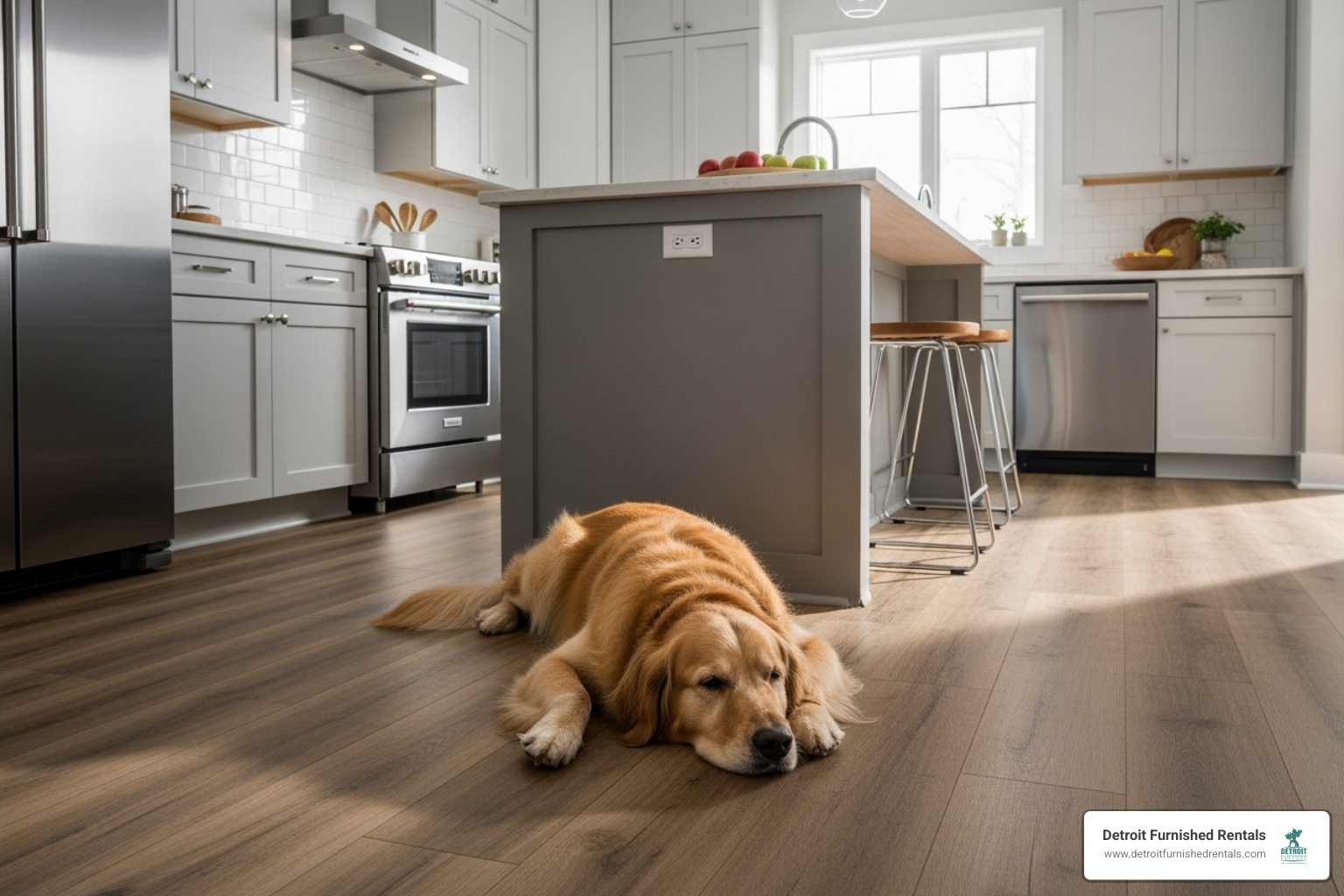
Beyond flooring, your countertops and cabinets need to be just as thoughtful. Quartz countertops are nearly indestructible—they resist scratches, stains, and don’t harbor bacteria. Slab-style cabinet doors with integrated handles are much easier to wipe clean than ornate designs that collect fur and dirt in every crevice.
Darker cabinet colors like navy, charcoal, or forest green are your best friends when living with dogs. They hide nose smudges, paw prints, and general wear much better than lighter colors. Finish walls with satin or semi-gloss paint that can handle regular wiping without showing marks.
If you’re looking for a space that already incorporates these smart material choices, check out our Pet Friendly Rentals in Detroit.
Pet-Proofing 101: Essential Safety Measures
A dog friendly kitchen isn’t just about durability—it’s about keeping your curious companion safe from the many hidden dangers lurking in this busy space.
The biggest threats are often the most obvious ones we forget about. Toxic foods like chocolate, grapes, onions, garlic, and anything containing xylitol need secure storage. Dogs have incredible noses and even more incredible determination when it comes to reaching tempting smells.
Cleaning supplies pose serious risks and should live in high cabinets or behind cabinet locks. Even natural cleaners can cause problems if ingested. The same goes for sharp objects—knives and kitchen tools should never be left accessible on counters.
Integrated dog-proof bins are game-changers for keeping trash secure. Built into your cabinetry, they prevent midnight garbage raids and protect your dog from dangerous items like cooked bones or spoiled food.
Consider induction hobs if you’re updating appliances. Unlike traditional stovetops, they stay cool to the touch, reducing burn risks if your dog decides to investigate or accidentally jumps up.
Choose rounded hardware over sharp cabinet pulls to prevent injuries during those enthusiastic tail-wagging moments. And make keeping counters clear a daily habit—it eliminates temptation and reduces risks.
For a comprehensive guide to kitchen hazards, the FDA provides excellent information about Potentially dangerous items for your pet.
The goal isn’t to create a sterile environment, but rather a space where both you and your dog can coexist safely and comfortably. With these foundational elements in place, you’re ready to build the perfect dog friendly kitchen that works for everyone.
A Pawsitively Perfect Layout: Integrating Your Dog into the Kitchen
Creating a truly dog friendly kitchen goes beyond choosing the right materials—it’s about designing a space where your furry family member feels welcome and comfortable. The best layouts consider your dog’s natural desire to be close to you while keeping them safely out of the cooking zone. Think of it as creating a harmonious dance between human and canine in the heart of your home.
Designing an Integrated Dog Feeding Station
Gone are the days of tripping over scattered food bowls or constantly moving them around during meal prep. A well-designed dog friendly kitchen includes feeding stations that blend seamlessly into your cabinetry while solving practical problems.
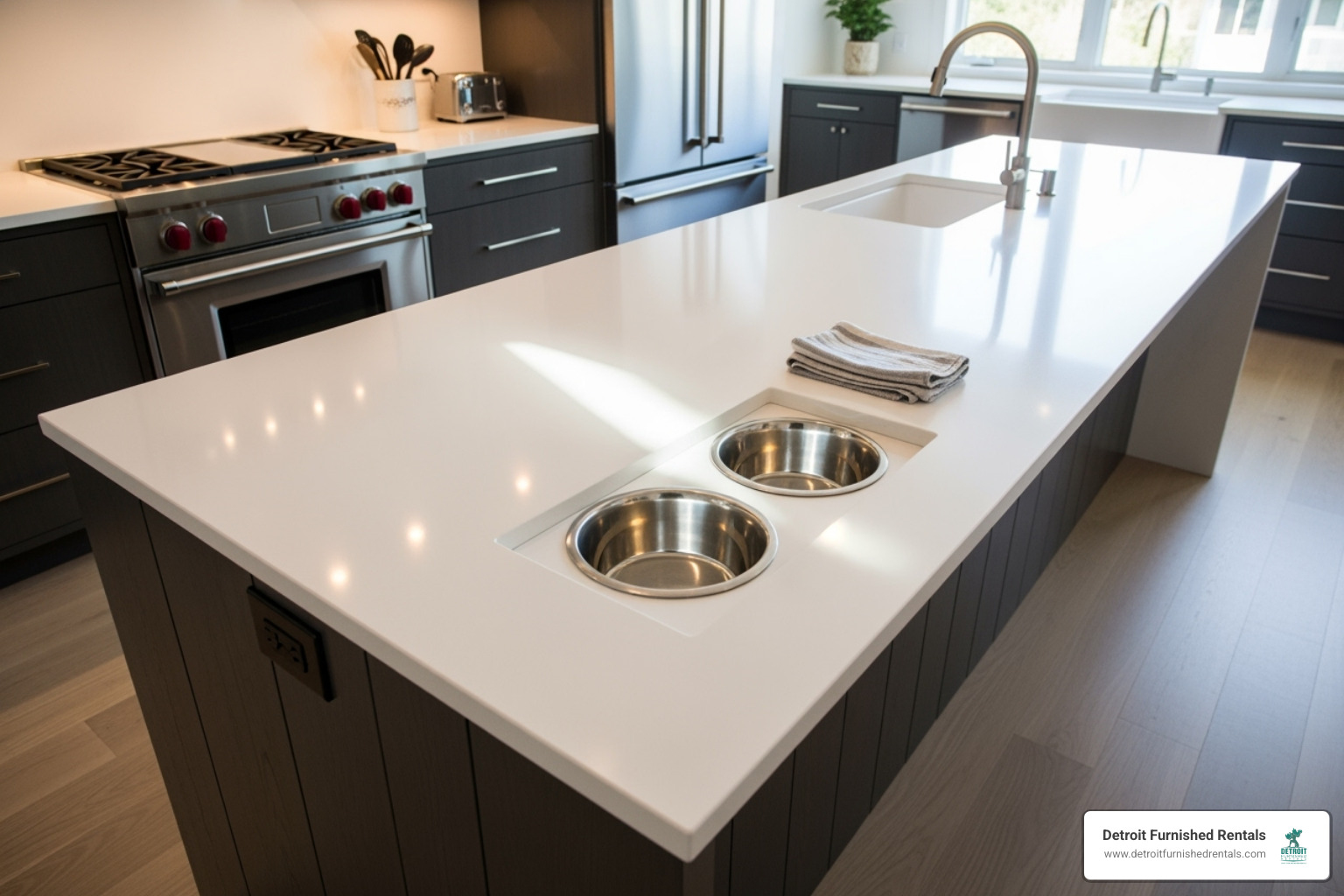
Built-in bowls recessed into kitchen islands or cabinet runs are game-changers. They stay put, look neat, and eliminate those frustrating moments when you accidentally kick a water bowl across the floor. Many homeowners love pull-out drawers that house both food and water bowls—simply slide them out for mealtime and tuck them away when not in use.
For larger breeds or senior dogs with joint issues, raised feeders promote better posture and digestion. These can be beautifully integrated into cabinetry at the perfect height for your pup. Some clever designs even include built-in storage for kibble and treats right below the feeding area.
Placement is crucial. Position your feeding station away from the main cooking triangle and high-traffic areas. The end of a kitchen island or a quieter corner works perfectly, giving your dog a peaceful dining experience without getting underfoot during your culinary adventures.
The beauty of integrated feeding stations lies in their ability to prevent tripping hazards while improving hygiene. No more sliding bowls or food scattered across the floor—just a clean, organized solution that works for both you and your four-legged friend.
For inspiration on creative feeding station designs, check out these 7 Pet Friendly Kitchens ideas for inspiration.
Creating Cozy Corners: The Rise of the Kitchen Dog Bed
Here’s a trend that’s absolutely taking off—and for good reason. The 2700% search increase for “Dog Bed Ideas for Kitchen” tells us that pet owners everywhere are realizing something important: our dogs want to be where we are, especially in the kitchen where all the interesting smells and family activity happen.
Rather than having your pup sprawled across the floor (where they might get stepped on or be tempted to investigate that sizzling pan), dedicated napping cubbies built into your cabinetry create the perfect solution. These cozy alcoves give dogs their own special spot that feels secure and included without being in the way.
Under-worktop beds are particularly brilliant. That space beneath your kitchen island that often goes unused? It’s the perfect spot for a custom dog bed. Your furry friend gets a front-row seat to all the kitchen action while staying safely out of the cooking zone. Some designs even include built-in window seats that double as dog lounging areas, giving your pup entertainment through outdoor views.
These integrated sleeping spots do more than just look good—they provide a safe, designated space that helps your dog feel secure during busy cooking times. No more worrying about your dog getting underfoot when you’re carrying hot dishes or sharp knives. They know exactly where their spot is, and you know exactly where they’ll be.
The psychological benefits are real too. Dogs are den animals by nature, so having a designated cozy corner improves their comfort and security. It’s their safe space in the midst of kitchen chaos, whether you’re hosting a dinner party or just making your morning coffee.
If you’re looking for a temporary home that already includes these thoughtful pet-friendly features, our properties understand the importance of making both you and your furry companion feel at home: Find your perfect Pet Friendly House for Rent in Detroit.
Smart Storage and Hygiene for a Dog Friendly Kitchen
Let’s face it—living with dogs means living with stuff. Between the 20-pound bag of kibble, squeaky toys that somehow multiply overnight, and enough leashes to outfit a small sled team, pet supplies can quickly turn our beautiful dog friendly kitchen into organized chaos. But here’s the thing: smart storage and good hygiene practices can keep everything tidy while making our lives so much easier.
Clever Storage Solutions for Pet Supplies
The secret to a clutter-free dog friendly kitchen isn’t having fewer pet supplies (because let’s be honest, that’s never happening). It’s about finding clever ways to store everything so it’s accessible when we need it but invisible when we don’t.
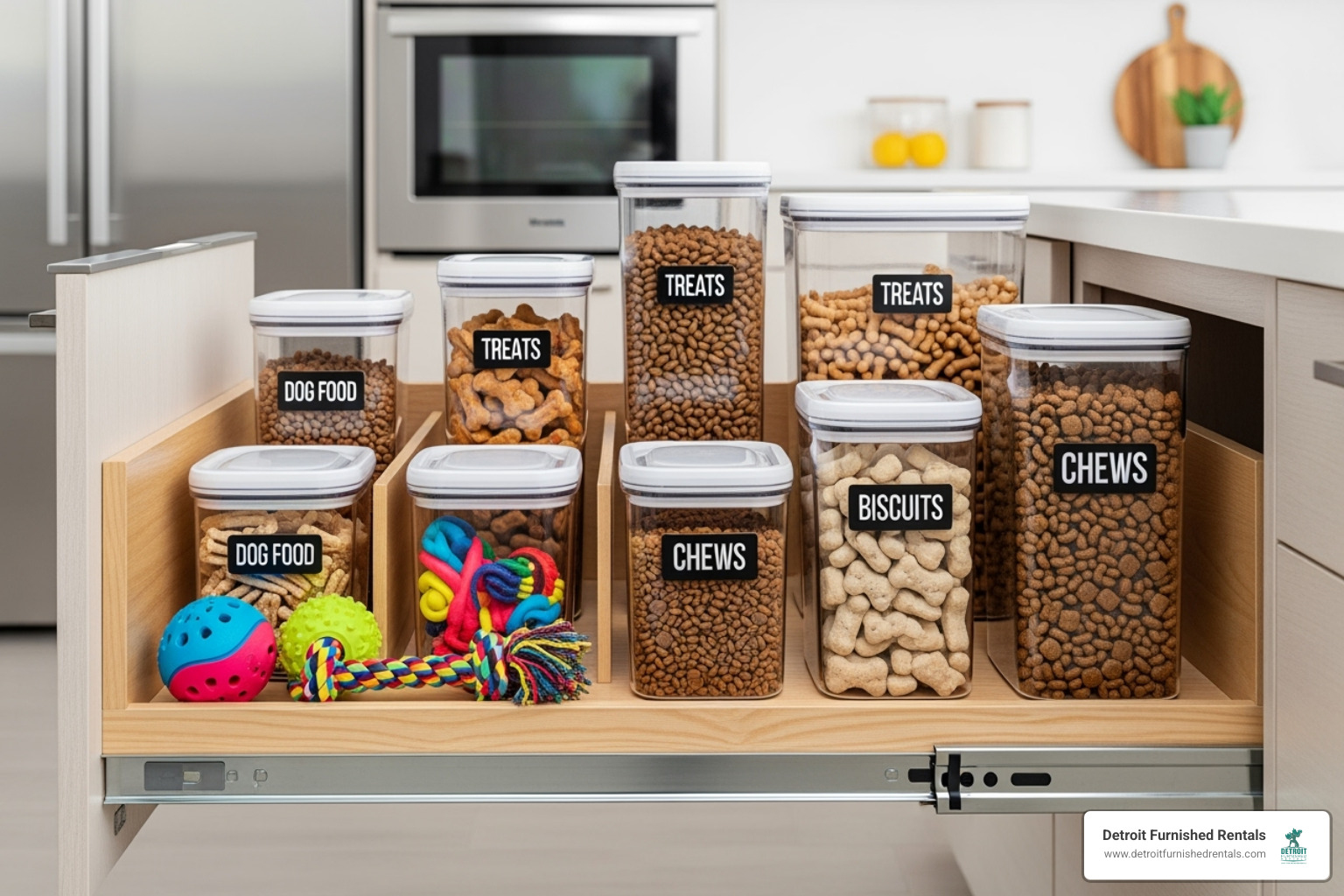
Airtight containers are absolute game-changers for pet food storage. Whether you transfer kibble into a sleek container that matches your kitchen aesthetic or keep the original bag sealed inside a larger bin, proper sealing does three important things: keeps food fresh longer, locks in those strong pet food smells that can take over a kitchen, and keeps both pests and curious noses from getting into trouble.
Pull-out pantries are like magic for pet owners. Imagine sliding out a drawer to reveal perfectly organized dog food, treats, and grooming supplies—all hidden away but instantly accessible. These systems work beautifully alongside dedicated drawers with custom compartments. You can designate spots for toys, leashes, waste bags, and even those comfort blankets that somehow end up everywhere.
For bulk storage, integrated bins built into your cabinetry keep large quantities of food secure and completely out of sight. And don’t overlook the simple power of well-placed hooks for leads and collars. Mount them near your kitchen entrance or mudroom area, and you’ll always know exactly where to find them for that next walk.
Managing Messes and Maintaining a Clean Dog Friendly Kitchen
Here’s what no one tells you about dogs: they’re adorable mess-makers. Muddy paws after rainy walks, water splashes that seem to defy physics around their bowls, and the endless battle against shedding—it’s all part of the package. The good news? With the right setup, managing these messes becomes much more manageable.
If you’re lucky enough to have a boot room or mudroom entry near your kitchen, you’ve hit the jackpot. This transition space lets you tackle muddy paws before they hit your beautiful kitchen floors. A deep sink in this area makes paw washing quick and easy, saving your kitchen from becoming a muddy disaster zone.
The surfaces we choose make all the difference in cleanup. Those easy-clean backsplashes we mentioned earlier—think tile or glass—are lifesavers behind feeding stations where water bowls inevitably splash. Water-resistant paint on walls means you can simply wipe away the evidence of an enthusiastic post-meal shake-off.
Good ventilation is crucial but often overlooked. While we love those cooking aromas, kitchens can also trap pet odors and dander. Quality extraction systems whisk away everything from cooking smoke to pet smells, creating a healthier environment for everyone—especially important since some cleaning fumes can be harmful to our furry friends.
When it comes to cleaning products, we always stick to pet-safe ingredients. Harsh chemicals like bleach can be dangerous if your dog decides to investigate with their tongue or absorbs residue through their paw pads. Natural alternatives work just as well and give us peace of mind.
The key to maintaining a sparkling dog friendly kitchen is building these hygiene practices into your daily routine. Regular cleaning of pet bowls and feeding areas, combined with smart design choices, keeps everything fresh and welcoming for both two-legged and four-legged family members.
Balancing Aesthetics and Practicality
The best dog friendly kitchen designs prove that you don’t have to choose between beautiful and functional. When done thoughtfully, pet-friendly features can actually improve your kitchen’s style rather than detract from it. It’s all about smart integration and making choices that work for both you and your furry family member.
Stylishly Setting Boundaries with Pet Gates
Even in the most welcoming dog friendly kitchen, there are times when we need to keep our pups at a safe distance. Whether you’re handling hot oil, cleaning up broken glass, or simply want to prevent your enthusiastic helper from getting underfoot during dinner prep, pet gates offer the perfect solution.
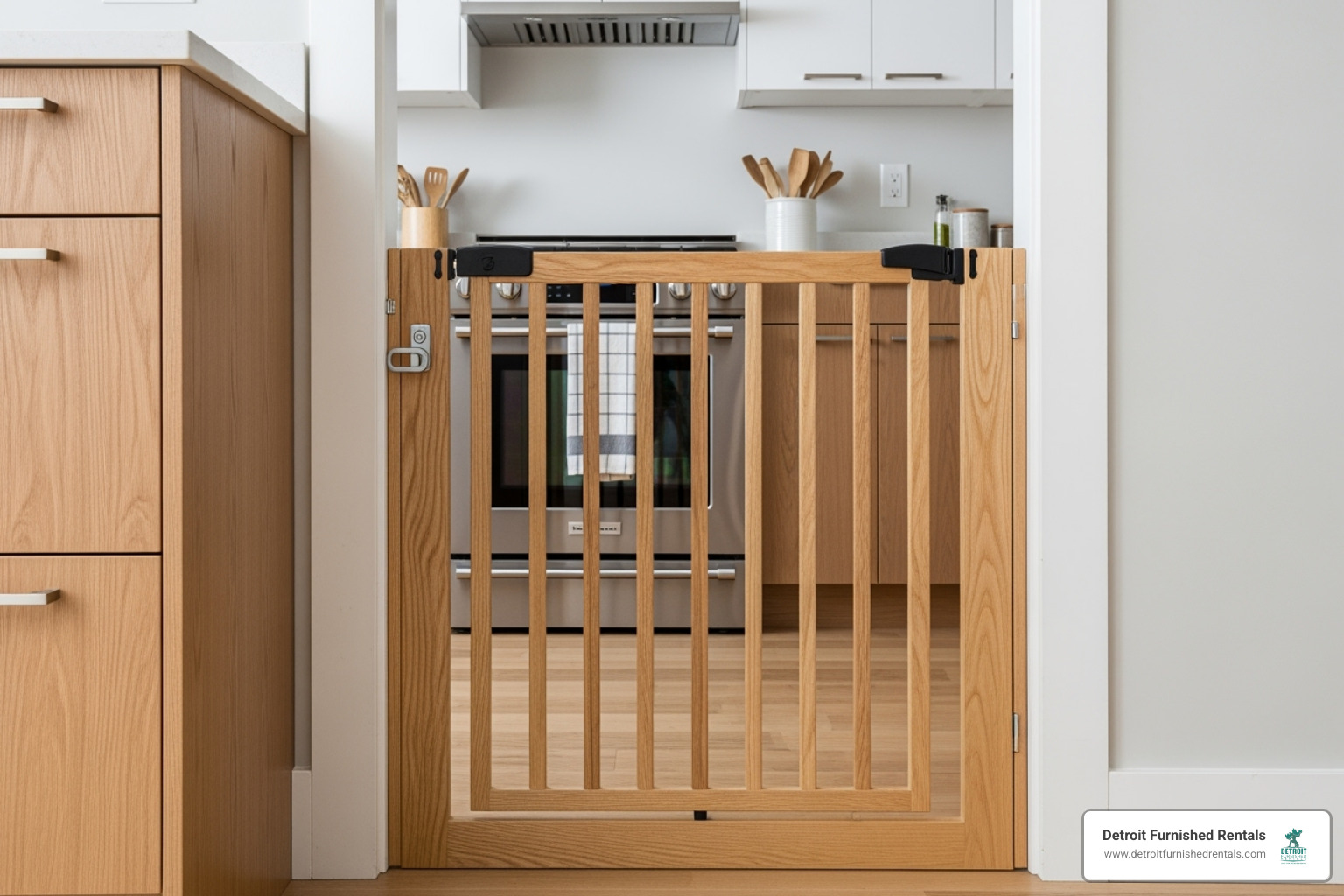
Gone are the days of unsightly plastic barriers that scream “pet owner compromise.” Today’s pet gates are design-forward and can actually add to your kitchen’s appeal.
Built-in gates represent the gold standard of seamless integration. These custom solutions are crafted to match your existing cabinetry or trim work, sliding or folding discretely into the wall when not needed. Imagine a gate that disappears completely into your kitchen island—it’s there when you need safety during cooking, invisible when you want unobstructed flow.
Retractable gates offer similar discretion, pulling across doorways and then tucking back into their housing unit like a measuring tape. When retracted, they’re practically invisible, maintaining your kitchen’s clean lines.
For those who prefer flexibility, stylish freestanding options have come a long way. Beautiful wooden gates with craftsman details, sleek metal designs, or even artistic screens can complement your decor while providing necessary boundaries.
These solutions let you create pet-free zones safely and stylishly, ensuring peace of mind without sacrificing your kitchen’s aesthetic. For additional insights on creating safe boundaries throughout your home, this resource offers valuable guidance: How to Pet-Proof Your Kitchen Space.
Achieving a Cohesive and Neat Look
The magic of a truly successful dog friendly kitchen lies in making pet features feel intentional rather than added as an afterthought. When pet amenities blend seamlessly with your overall design, they stop being “dog stuff” and become integral parts of your kitchen’s character.
Consistent materials and colors are your secret weapon here. When designing that built-in feeding station or cozy napping nook, use the same wood stain, paint color, or hardware as your existing cabinetry. A dog bed cubby that matches your kitchen island doesn’t look like a pet accommodation—it looks like thoughtful design.
Consider making pet nooks a design statement rather than hiding them away. A beautifully crafted dog retreat under your island, complete with your pup’s name neatly engraved on a small plaque, becomes a conversation starter. Add soft LED lighting to create a cozy glow, and suddenly you’ve created a feature that guests admire rather than overlook.
The key is balancing owner aesthetics with dog needs without compromising either. This might mean choosing honed finishes over high-gloss ones because they’re more forgiving of nose prints and paw marks. Or selecting darker cabinet colors that naturally camouflage the occasional muddy smudge.
When every element feels purposeful and coordinated, your kitchen becomes a space that celebrates your whole family—including the four-legged members. The result is a room that’s both practical for daily life with dogs and beautiful enough to be the heart of your home.
At Detroit Furnished Rentals, we understand this balance intimately. Our properties demonstrate how pet-friendly features can improve rather than compromise a space’s appeal: Our Detroit Pet Friendly Apartments are designed for style and comfort.
Frequently Asked Questions about Dog Friendly Kitchens
As someone who’s helped countless pet owners create comfortable living spaces, I get asked the same questions about dog friendly kitchens time and again. Let me share the answers that have worked best for my clients and their furry companions.
What is the best flooring for a kitchen with a dog?
The best flooring for a dog friendly kitchen needs to tick four essential boxes: durability, scratch-resistance, water-resistance, and easy maintenance. After years of seeing what works (and what doesn’t), I consistently recommend three top performers.
Luxury vinyl plank (LVP) is my go-to recommendation for most families. It’s completely waterproof, which means those inevitable water bowl spills and muddy paw prints wipe away without a trace. The cushioned surface is gentler on aging joints, and it stands up beautifully to claws and daily wear.
Ceramic or porcelain tile offers incredible durability and stays naturally cool—perfect for dogs who love to sprawl on the floor during warm weather. These tiles handle everything from dropped food bowls to enthusiastic tail wagging without showing damage.
Sealed natural stone brings elegance while maintaining practicality. The key word here is “sealed”—proper sealing prevents stains and makes cleanup effortless, though this option requires a bigger investment upfront.
Here’s a practical tip I always share: darker tiles and flooring are your secret weapon for hiding fur and those inevitable muddy prints between cleanings. Your kitchen will look tidier for longer, and you’ll stress less about every little mess.
How can I store dog food in the kitchen without it smelling?
The answer is surprisingly simple: airtight containers are absolutely non-negotiable. I’ve seen too many beautiful kitchens compromised by the lingering smell of kibble, and it’s completely avoidable.
You have two excellent approaches. First, you can store the entire original bag inside a large pull-out pantry bin with an airtight seal. This keeps the food fresh in its original packaging while containing any odors. Alternatively, decant the kibble into dedicated airtight storage containers—this method often saves space and looks neater.
The airtight seal does triple duty: it locks in odors, maintains freshness longer than opened bags, and keeps both pests and curious noses out of the food. I’ve seen dogs who’ve learned to open cabinets, so a secure container is essential for multiple reasons.
For bulk storage, consider integrated solutions that blend seamlessly with your kitchen design. The goal is keeping your space smelling fresh while ensuring your dog’s food stays at its best quality.
Is it safe for my dog to be in the kitchen while I cook?
Absolutely, but it requires some thoughtful planning and proper boundaries. The kitchen can be a wonderful place for your dog to spend time—they love being close to the action and those amazing cooking smells—but safety must come first.
The biggest risk is having your dog underfoot in the main cooking triangle. Hot oil splashing, dropped knives, or simply tripping over an eager pup can create dangerous situations for everyone. This is where smart design solutions make all the difference.
Pet gates are incredibly effective for keeping dogs out of the immediate cooking area while still allowing them to feel included. Choose from built-in options that blend with your cabinetry or stylish freestanding gates that complement your décor.
Even better, train your dog to stay in a designated safe spot during meal preparation. A built-in dog bed or cozy napping cubby gives them their own special place to watch the culinary magic happen. They feel included in family activities without being in harm’s way.
The key is creating clear boundaries that work for your specific space and your dog’s personality. Some dogs naturally stay out of the way, while others need more guidance. Either approach can work safely with the right setup.
Conclusion
Creating a dog friendly kitchen is truly about thoughtful integration rather than compromise. Throughout this journey, we’ve explored how the right choices can transform your kitchen into a space that celebrates both style and functionality for every family member—whether they walk on two legs or four.
The foundation starts with smart material choices. Durable, scratch-resistant flooring like luxury vinyl plank or ceramic tile stands up to daily wear while remaining beautiful. Water-resistant surfaces and easy-clean finishes mean less stress about muddy paws or water bowl splashes.
Safety measures form the backbone of any truly pet-friendly space. From securing toxic foods and cleaning supplies to choosing induction hobs and rounded hardware, these details protect our curious companions while giving us peace of mind during meal preparation.
The magic happens in the thoughtful layout design. Built-in feeding stations eliminate tripping hazards while maintaining clean lines. Integrated dog beds and cozy nooks provide our pets with their own special spaces, keeping them comfortable and out from underfoot. The 2700% surge in searches for kitchen dog bed ideas shows just how much homeowners value these features.
Smart storage solutions keep pet supplies organized and odor-free, while proper hygiene practices ensure our kitchens remain fresh and welcoming. From airtight containers for kibble to easy-clean backsplashes, every detail contributes to a harmonious living space.
Perhaps most importantly, we’ve seen how aesthetic integration means never having to choose between beautiful design and practical pet features. Stylish pet gates, consistent materials, and cohesive color schemes prove that a dog friendly kitchen can be the envy of any home.
For those seeking a temporary home that already incorporates these thoughtful features, the fully equipped, pet-friendly kitchens at Detroit Furnished Rentals provide the perfect solution for you and your furry companion. These spaces understand that great design serves everyone in the family. Explore our fully furnished apartments in Detroit today!