Why Understanding Temporary Housing Matters
Houses temporarily fill a critical gap for millions of people every year who need a place to live between permanent homes. Whether you’re relocating for work, renovating your home, recovering from a disaster, or simply between leases, temporary housing offers a flexible solution that traditional hotels and long-term rentals can’t match.
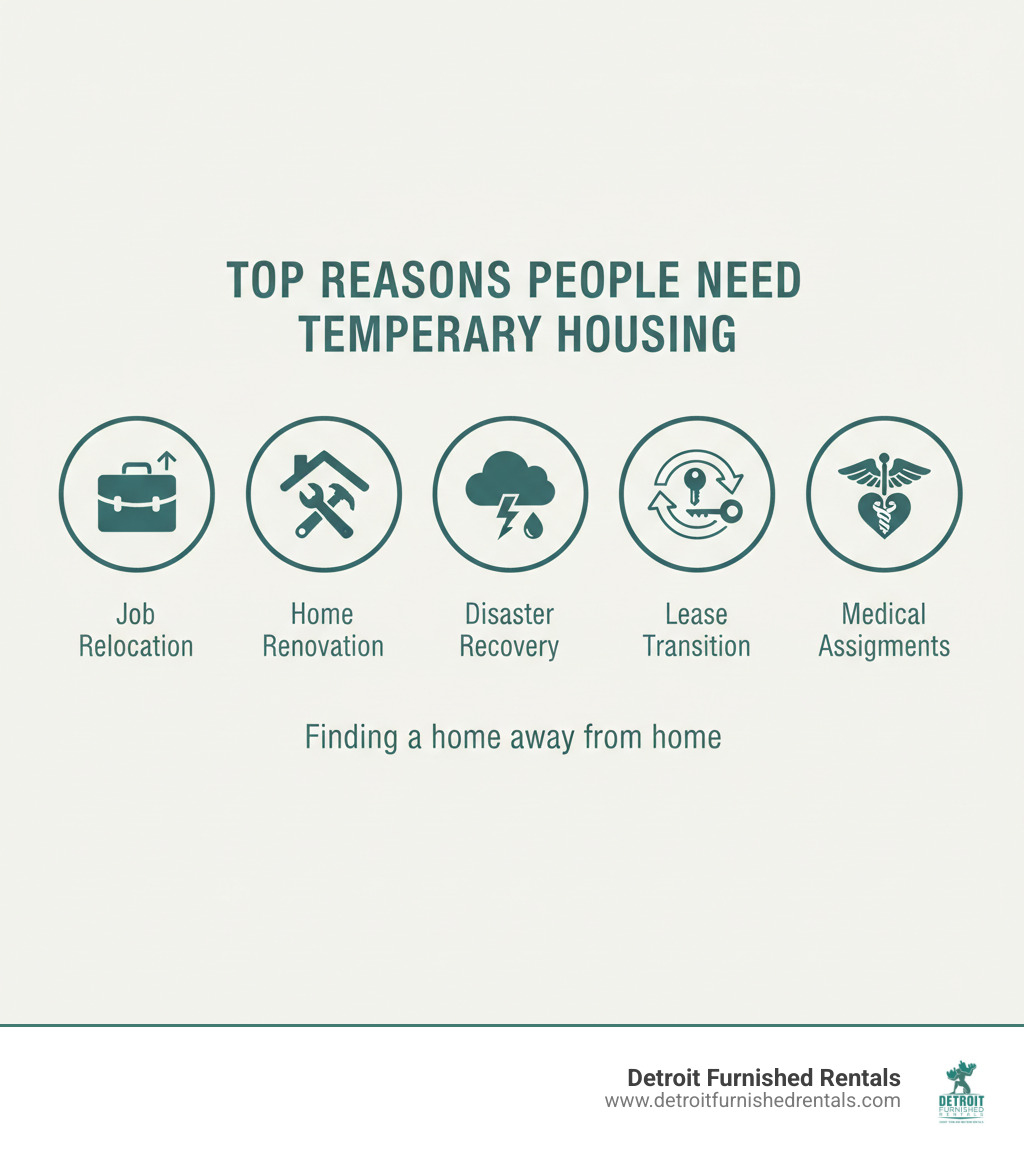
Quick Answer: Top Reasons People Need Temporary Housing
- Job relocation or corporate assignments – Business travelers and professionals on temporary assignments
- Home renovation or construction – Homeowners whose primary residence is being repaired or rebuilt
- Disaster displacement – Families affected by hurricanes, floods, fires, or other emergencies
- Between permanent homes – Individuals or families transitioning between leases or waiting for a home purchase to close
- Medical assignments – Healthcare workers, including traveling nurses, on short-term contracts
- Family emergencies – Teens, youth, and veterans experiencing housing instability or homelessness
Understanding your temporary housing options means knowing what’s available, how to access it, and what to expect in terms of duration, cost, and amenities. The landscape ranges from government-provided disaster relief units to fully furnished corporate apartments, each designed for different circumstances and needs.
I’m Sean Swain, founder of Detroit Furnished Rentals, and I’ve spent over a decade helping people find houses temporarily during life transitions—from corporate professionals to traveling nurses to families navigating unexpected changes. My experience managing furnished rentals across Detroit has taught me that the right temporary housing isn’t just about finding a roof over your head; it’s about creating a comfortable, functional home base during uncertain times.
Exploring the Spectrum of Temporary Housing Options
When life throws you a curveball and you need houses temporarily, you’ll quickly find there’s no single solution that works for everyone. The temporary housing landscape has evolved far beyond basic hotel rooms or bare-bones apartments. Today’s options range from cozy furnished homes to adventurous mobile living solutions, each designed to meet different needs, budgets, and lifestyles.
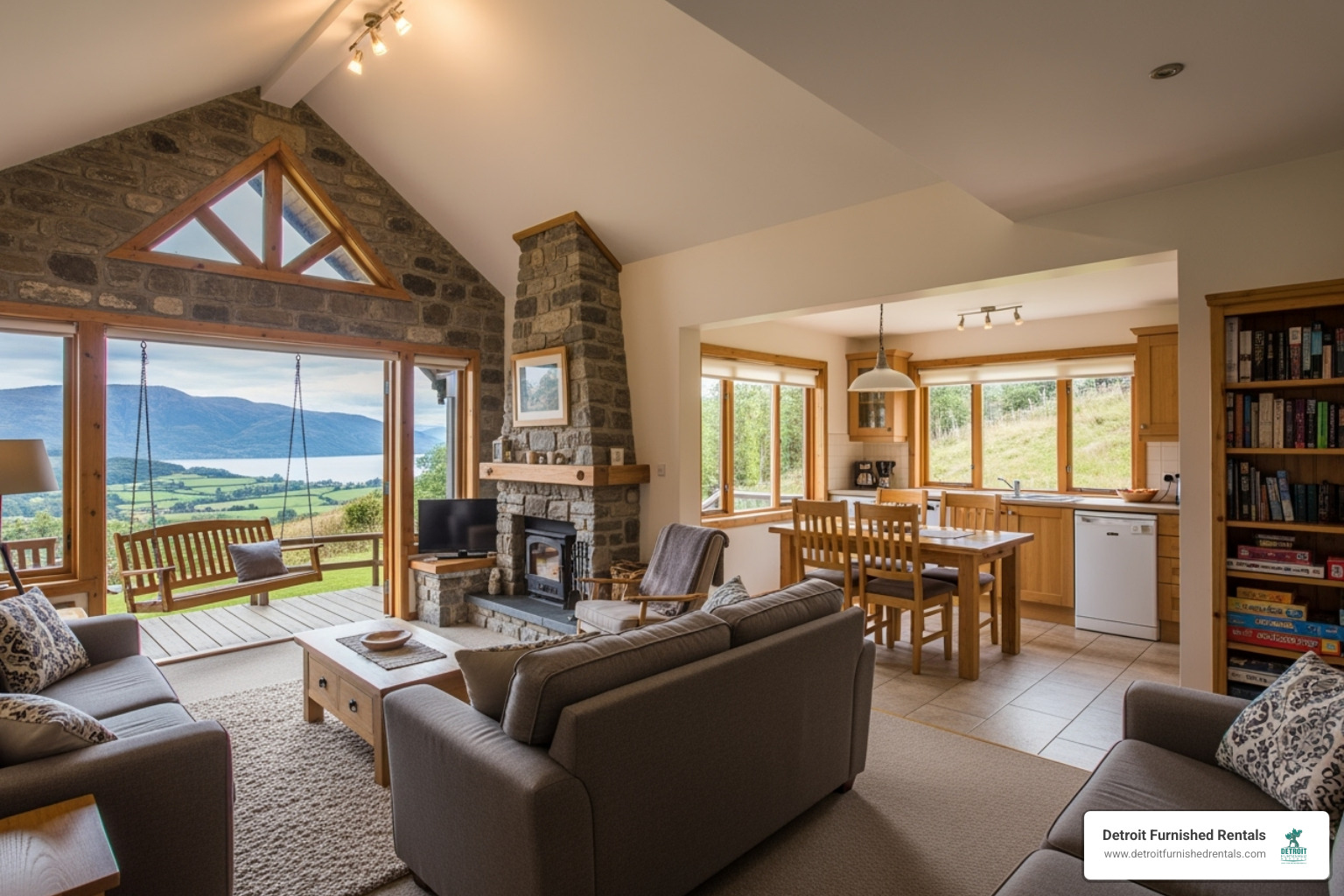
The beauty of temporary housing is the incredible lifestyle flexibility it offers. You’re not locked into year-long commitments, you can choose locations that fit your immediate needs, and you often save significant money compared to extended hotel stays. Whether you need a place for three weeks or six months, there’s a solution that can make your transition smoother and less stressful.
Conventional Short-Term Stays
The most straightforward path to finding houses temporarily starts with conventional short-term rentals. These are furnished homes and apartments available with flexible rental terms—think month-to-month leases, weekly rates, or even custom arrangements that match your specific timeline.
What makes these options so appealing is their home-like environment. Unlike a hotel room where you’re living out of a suitcase, furnished rentals give you a real kitchen where you can cook your favorite meals, a comfortable living space to relax after work, and often amenities like in-unit laundry and dedicated workspaces. You can maintain your normal routine without the hassle of buying furniture or setting up utilities.
These rentals work beautifully for professionals on temporary assignments, families waiting for their new home to be ready, or anyone who needs stability during a transition period. The flexible lease terms mean you’re not trapped if your situation changes—you can extend your stay or move on as needed. For a deeper look at what’s available, check out our guide on Short-Term House Rentals.
Unique & Flexible Living Solutions
The world of temporary housing has gotten wonderfully creative in recent years. Beyond traditional apartments, people are embracing alternative living arrangements that often involve downsizing and simplifying their lives. These solutions aren’t for everyone, but they offer unique advantages worth considering.
- Mobile Living (Tiny Homes, Airstreams, Vans): For those who crave adventure and mobility, options like tiny homes on wheels, classic trailers, and converted camper vans offer the freedom to take your home with you. The trade-offs include very small living spaces, the need for utility hookups, and potential zoning restrictions.
- Budget-Friendly Options (Room Rentals, Sublets): In expensive cities, renting a room or subletting a studio apartment can be a smart way to save money. You may share common spaces, but the cost savings can be substantial, and utilities are often included.
- Extended-Stay Hotels: Bridging the gap between hotels and apartments, these properties offer furnished rooms with small kitchens and no lease requirements. While convenient for short-term needs, they can be more costly than other options for longer stays.
- Vacation Rentals: Platforms offering private homes for rent provide wide variety and local experiences for short to mid-term stays. Pricing can vary greatly by location and season, and additional fees can add up.
- Cabins and Nature Living: For a minimalist escape, cabins can offer surprising cost savings. They are often remote and may lack modern amenities, but for the right person, that’s part of the appeal. On the extreme budget end, tent living offers a direct connection with nature but is not a comfortable long-term solution.
Furnished Rentals & Local Experiences
When you want the comfort of home without the commitment of a long-term lease, furnished apartments hit the sweet spot. These are the houses temporarily that feel less like temporary and more like actually living somewhere.
A quality furnished rental comes with everything you need already in place. We’re talking comfortable furniture, clean linens, fully equipped kitchens with full-size refrigerators and stoves, and all the small touches that make a space livable from day one. You can cook your own meals instead of eating out constantly, work from a proper desk instead of a hotel bed, and spread out in a real living room after a long day.
What really sets furnished rentals apart is how they let you experience a neighborhood like a local rather than a tourist. You shop at the same grocery stores as your neighbors, find the best coffee shop down the street, and get a real feel for what living in that area is actually like. Month-to-month options give you flexibility without forcing you into a year-long commitment you might not need.
At Detroit Furnished Rentals, we’ve designed our properties specifically for people who need this kind of comfortable, flexible living solution. Whether you’re a professional on a temporary assignment, someone relocating to a new city, or a family between permanent homes, a furnished rental gives you the stability and comfort to focus on what brought you here in the first place—not on where you’re going to sleep or what you’re going to eat.
Many furnished rentals also offer pet-friendly options and dedicated workspaces, understanding that your temporary home should accommodate your whole life, not just provide a place to crash at night. The cost savings compared to extended hotel stays add up quickly, especially when you factor in the ability to cook your own meals and do your own laundry.
Emergency and Disaster Relief: Finding Houses Temporarily When You Need Them Most
When a hurricane tears through your neighborhood, a wildfire forces you to evacuate, or flooding makes your home uninhabitable, finding houses temporarily shifts from a convenience to a necessity. In these moments, the search for shelter becomes urgent and overwhelming. That’s when government agencies like FEMA and local organizations step in to bridge the gap between crisis and recovery.
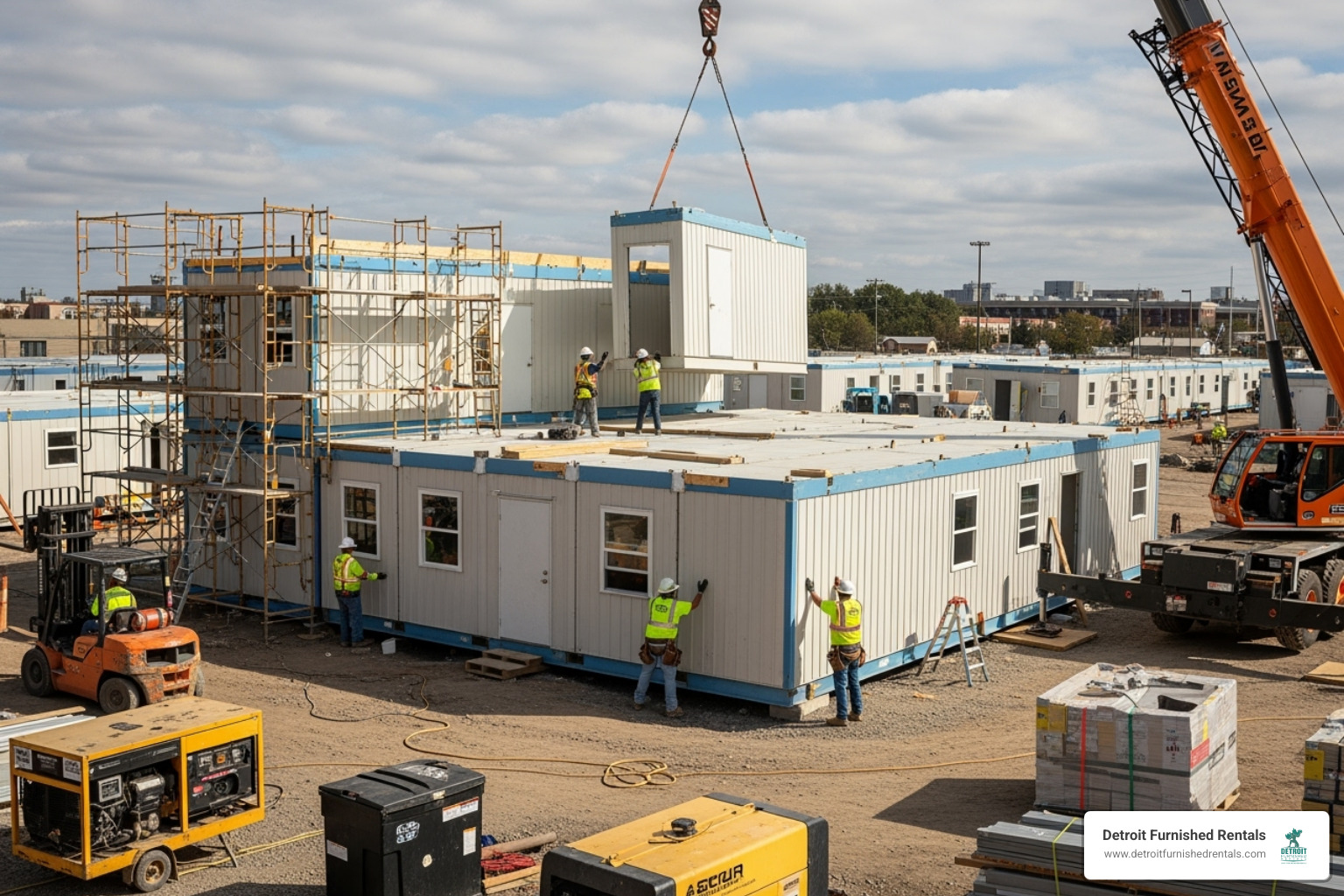
The process of securing disaster assistance and emergency housing can feel complex when you’re already dealing with the trauma of displacement. But understanding how these programs work, what documentation you’ll need, and what to expect can help you steer this challenging time with more confidence and less stress.
How to Apply for Emergency Housing Assistance
If disaster has made your home unlivable, applying for emergency housing assistance should be one of your first steps. The sooner you start the application process, the sooner you can begin working toward a stable temporary living situation.
- Start with FEMA: If your area is a federal disaster zone, apply online at DisasterAssistance.gov, use the FEMA App, or call their helpline. FEMA’s Direct Temporary Housing Assistance program may provide a temporary housing unit or rental assistance. For specific information about Florida’s programs, you can check out this FAQ: Direct Temporary Housing Assistance in Florida.
- Contact Local Resources: Dial 211 in most parts of the U.S. to connect with community support programs for immediate referrals.
- Consult HUD and PHAs: The Department of Housing and Urban Development (HUD) lists shelters by state on their local homeless assistance resources page. Your local Public Housing Agency (PHA) can also guide you toward longer-term solutions.
The key is to apply everywhere you might qualify. Recovery support often comes from multiple sources working together, and casting a wide net increases your chances of finding houses temporarily that meet your family’s needs.
Understanding Eligibility and Duration for Houses Temporarily
FEMA’s temporary housing programs aren’t designed to be permanent solutions. Instead, they provide a safe place to live while you develop and work toward a permanent housing plan. Understanding the eligibility requirements and time frames can help you make the most of this assistance period.
- Eligibility: To qualify for FEMA Direct Temporary Housing Assistance, your primary home must be determined unlivable because of a declared disaster. FEMA will assess your specific situation and housing needs. Accessible units are available for those with access and functional needs.
- Duration and Responsibilities: Assistance can extend up to 18 months from the date of the disaster declaration. This window is for situations where adequate alternate housing is scarce. During this time, you must stay engaged with FEMA, show progress on your permanent housing plan, and comply with program rules.
- Move-Out: The process begins when you’ve achieved your permanent housing plan or when your assistance period ends. FEMA may also sell or donate units to occupants or local organizations in some cases. For a complete overview of how these temporary housing units work, see FEMA Temporary Housing Units.
Housing Placement: Key Considerations
Placing houses temporarily after a disaster involves more than just finding an empty spot of land. FEMA carefully evaluates multiple factors including flood risks, zoning regulations, site clearance, and utility hookups to ensure each placement is safe and legal.
- Site Types: FEMA uses both primary and secondary sites. A primary site is on your own property, allowing you to oversee rebuilding. A secondary site is on land leased by FEMA to house multiple families. Both require sufficient space, safe access, and compliance with local codes. For detailed information about both options, check out this FAQ: FEMA’s Primary vs. Secondary Housing Sites.
- Environmental and Legal Factors: FEMA avoids placing units in high-risk flood zones whenever possible. If a unit is placed in a potential flood area, you must agree to evacuate when directed. See more at Placing Transportable Temporary Housing Units in Special Flood Hazard Areas. All placements must also adhere to local zoning regulations, though temporary variances are sometimes granted.
- Site Prep: Before any unit arrives, the site must be completely cleared of debris and obstacles. Utility hookups for water, sewer, and electricity need to be established, which can take time and coordination with local utility companies.
Specialized Housing Support for Specific Groups
Life doesn’t always follow a predictable path, and sometimes the need for houses temporarily comes from circumstances beyond our control. Whether you’re a teenager in crisis, a veteran facing housing challenges, or anyone experiencing homelessness, knowing where to turn can make all the difference. The good news? Specialized programs exist specifically to help vulnerable populations find safe, stable housing when they need it most.

Emergency Housing for Teens and Youth
Young people facing homelessness or unsafe situations at home need immediate support—no judgment, just help. The National Runaway Safeline provides free, confidential support 24 hours a day, seven days a week.
If you’re a teen or young adult in need, you can reach them at 1-800-RUNAWAY (1-800-786-2929), or via text, live chat, and email. They connect youth with local resources and can even provide free transportation to a safe location. You can learn more at the National Runaway Safeline website.
Housing Assistance for Veterans
Those who’ve served our country deserve unwavering support when they face housing challenges. The Department of Veterans Affairs recognizes this and has created dedicated programs specifically for veterans experiencing or at risk of homelessness.
The National Call Center for Homeless Veterans operates around the clock, offering confidential assistance at 1-877-4AID-VET (1-877-424-3838). Trained counselors can connect you with VA housing programs, supportive services, and resources designed specifically for those who’ve worn the uniform. Find out more about available services at the National Call Center for Homeless Veterans.
General Homelessness Assistance
Anyone can face housing instability. When it happens, knowing where to find help quickly can change everything. Here are several key resources:
- Dial 211: Available in most areas across the United States, this number connects you with local social services for immediate referrals for emergency shelters and other critical support.
- HUD Resources: The Department of Housing and Urban Development (HUD) maintains a searchable database to find local homeless assistance specific to your area.
- Continuing Care Programs: These organizations specialize in helping people transition from homelessness to stable housing. You can find a provider through HUD’s Homeless Assistance Exchange.
- Public Housing Agencies (PHA): Your local PHA can be instrumental in helping you move from temporary shelter to more permanent housing solutions. You can locate your nearest PHA through HUD’s PHA contact directory.
These resources represent a network of support designed to ensure that everyone—regardless of their circumstances—can find safe houses temporarily and a pathway to permanent housing stability.
Frequently Asked Questions about Temporary Housing
When you’re searching for houses temporarily, certain questions come up again and again. We’ve helped hundreds of people steer temporary housing decisions, and these are the answers that matter most.
How long can you rent houses temporarily?
There’s no single answer to how long you can stay in houses temporarily—it really depends on what you need and what type of housing you choose.
If you’re looking at furnished rentals like the ones we provide, you’ll typically find incredible flexibility. Weekly rentals work perfectly if you’re testing out a new city or covering a short work assignment. Month-to-month leases give you the freedom to stay as long as you need without being locked into a year-long commitment. Some of our guests stay just a month during a home renovation, while others remain for six months or more during a job transition.
For those dealing with disaster recovery, FEMA’s Direct Temporary Housing Assistance typically provides support for up to 18 months from the disaster declaration date. This gives families time to rebuild and find permanent housing solutions.
The beauty of temporary housing is that it adapts to your timeline, not the other way around. We specialize in houses for rent month to month, which means you’re never paying for more time than you actually need.
Are utilities included in temporary housing?
One of the biggest advantages of choosing furnished temporary housing is the simplicity it brings to your life—and that includes utilities.
In most furnished rentals and extended stay accommodations, utilities are bundled into your rental price. This typically covers electricity, water, gas, and high-speed Wi-Fi. Many properties, including ours, also include premium cable to help you feel at home from day one.
Why does this matter? Because you won’t spend your first week setting up utility accounts, putting down deposits, or worrying about fluctuating bills. You simply move in, flip on the lights, connect to Wi-Fi, and start living. Everything just works.
For extended stays lasting several months, having utilities included makes budgeting straightforward. You know exactly what you’re paying each month with no surprises when the electric bill arrives.
That said, policies can vary between providers, so it’s always smart to confirm what’s included before you sign. With our furnished rentals, we believe in transparency—what you see is what you get, utilities and all.
Can I bring my pet to a temporary house rental?
Your pet isn’t just an animal—they’re family. We understand that finding houses temporarily that welcome your four-legged companion can feel like an extra challenge when you’re already dealing with a life transition.
The good news? Many temporary housing providers recognize how important pets are. Pet-friendly furnished rentals are becoming more common, and we’re proud to be among those who welcome your furry friends.
Here’s what to expect when looking for pet-friendly temporary housing. Most properties will have a pet policy that outlines acceptable pet types and sizes. Some places limit the number of pets or have weight restrictions—typically under 50 pounds for dogs, though this varies.
You’ll also encounter pet fees, which usually include a non-refundable pet deposit to cover extra cleaning, and sometimes a monthly pet rent. These fees help property owners maintain their homes while keeping them open to pet owners.
Certain properties may have breed restrictions due to insurance requirements, so if you have a breed that’s sometimes restricted, ask upfront. Honesty about your pet’s size, breed, and temperament helps everyone find the right fit.
We’re happy to offer pet-friendly houses for rent in Detroit because we know that moving without your pet isn’t really an option. Let us know about your pet early in the conversation, and we’ll work together to find a home where everyone—including your dog or cat—feels welcome.
Conclusion
Finding the right temporary home during a transition doesn’t have to be overwhelming. Throughout this guide, we’ve walked through everything from conventional furnished rentals to emergency disaster housing, from creative mobile living solutions to specialized support programs for veterans and youth. The landscape of houses temporarily is more diverse and accessible than many people realize.
What matters most is taking the time to understand your specific situation. Are you relocating for a three-month work assignment? Waiting for your home renovation to wrap up? Recovering from a natural disaster? Each scenario calls for different considerations—duration, amenities, location, and yes, whether you can bring your beloved pet along for the journey.
We’ve seen how the right temporary housing can transform a stressful transition into a manageable, even comfortable experience. When you have a fully equipped kitchen to cook your favorite meals, a dedicated workspace to stay productive, and a cozy living room to unwind after a long day, it stops feeling temporary and starts feeling like home. That’s exactly what we aim to provide at Detroit Furnished Rentals.
Your temporary home should support your life, not complicate it. Whether you need a place for a few weeks or several months, the right fit gives you stability and peace of mind during uncertain times. And if you’re heading to Detroit, we’d love to help you settle in with accommodations designed specifically for people in transition—complete with all the comforts that make a house feel like home, even when it’s just for a while.