What Is an Opera House and Why Does It Matter?
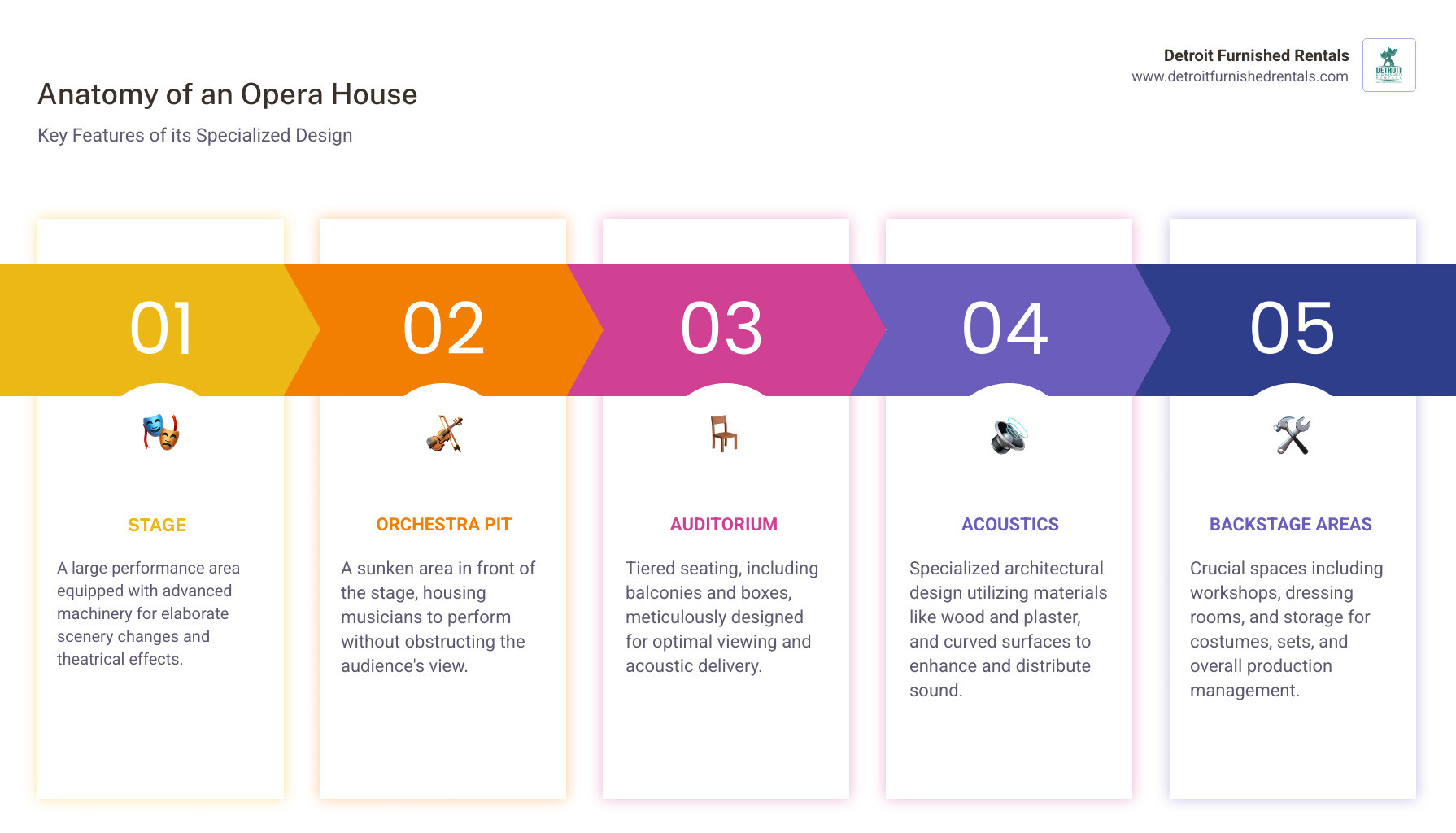
An opera house is a specialized theater designed for musical performances like opera, ballet, and musicals. It features a large stage with complex machinery, an orchestra pit, tiered seating, and extensive backstage areas.
Key Features of an Opera House:
- Stage: Large performance area with advanced machinery for scenery changes
- Orchestra Pit: Sunken area in front of the stage where musicians perform
- Auditorium: Tiered seating with balconies and boxes for optimal viewing
- Acoustics: Specialized design using wood, plaster, and curved surfaces to improve sound
- Backstage: Workshops, dressing rooms, and storage for productions
Originally private venues for nobility in the 1600s, the first public opera house, Teatro San Cassiano, opened in Venice in 1637. This democratized the arts, turning these venues into community gathering places.
Today, these landmarks are cultural hubs offering educational programs, diverse performances, and driving local economies through tourism and jobs. Venues from the Sydney Opera House to the Detroit Opera House serve as anchors for entertainment districts.
Understanding what makes an opera house special improves any visit, whether you’re in town for work or exploring a new city’s culture.
The Grand Evolution: From Ancient Roots to Modern Icons
The history of the opera house dates back to the amphitheaters of ancient Greece and Rome. These civilizations built magnificent open-air theaters, understanding that great performances require great spaces.
In the 1st century BC, Roman architect Vitruvius wrote about using resonators to amplify sound in stone theaters. Early venues like the Odeon in Athens demonstrated these acoustic principles, hosting musical and civic events.
During the Middle Ages, grand public theaters vanished, and performances became exclusive to churches and aristocratic courts.
The Birth of Public Performance
Everything changed in Venice in 1637 with the opening of Teatro San Cassiano, the world’s first public opera house. Before this, opera was an exclusive affair for royalty and wealthy patrons. This new venue allowed anyone with a ticket to attend, democratizing the art form.
Opera houses quickly became social hubs where different classes mingled. The shift from patronage to public ticketing made opera a public art form. You can learn more from the History of Opera on HistoryWorld.
The concept spread across Europe. Naples’ Teatro di San Carlo opened in 1737 and remains the world’s oldest continuously working opera house. These early venues featured the elaborate Baroque design that defined the era’s architecture.
The Golden Age of Grandeur
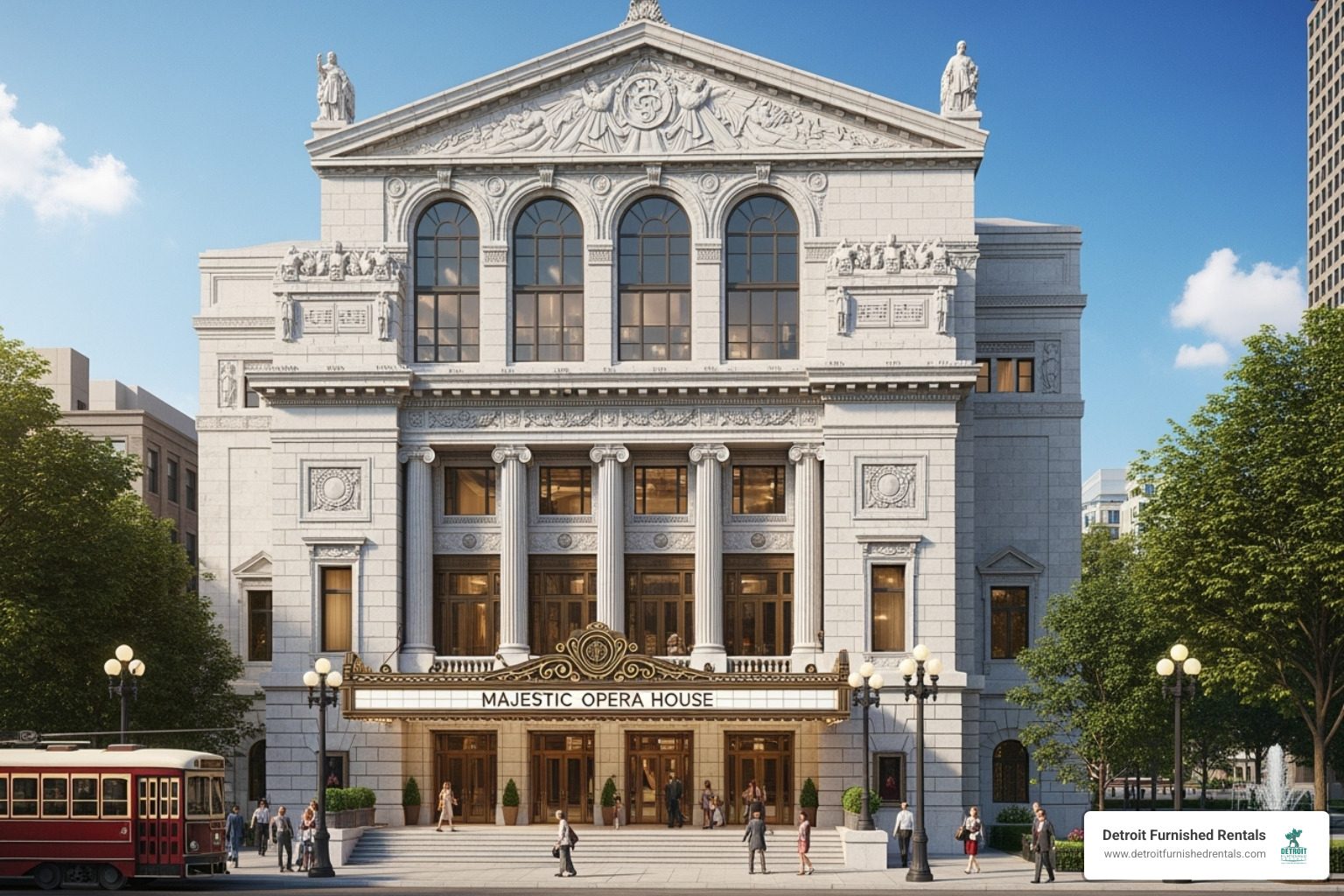
The 19th century was the golden age of opera house construction. As European cities prospered, these buildings became symbols of cultural and civic pride. Cities competed to build the most magnificent venues, with Neoclassical and Beaux-Arts exteriors and lavish interiors of gilt, velvet, and crystal. The Palais Garnier in Paris epitomized this opulence, where the building was as much a spectacle as the performance.
Attending the opera was a major social event for displaying status. The architecture, with its private boxes, grand staircases, and elaborate lobbies, reinforced this social function.
This 19th-century prestige led many American theaters to adopt the “opera house” term for respectability, even if they rarely staged opera. The name lent cultural legitimacy and these venues hosted everything from dances to vaudeville, proving their versatility.
Today, opera houses are funded by grants, ticket sales, and donations, keeping them accessible. This evolution is visible in Detroit’s historic theatres, which remain vital community hubs.
Anatomy of an Opera House: Architecture, Sound, and Stagecraft
An opera house is an engineered masterpiece where every detail serves a purpose. Each element, from the curve of the balconies to the orchestra pit, is designed for visual drama and acoustic perfection.
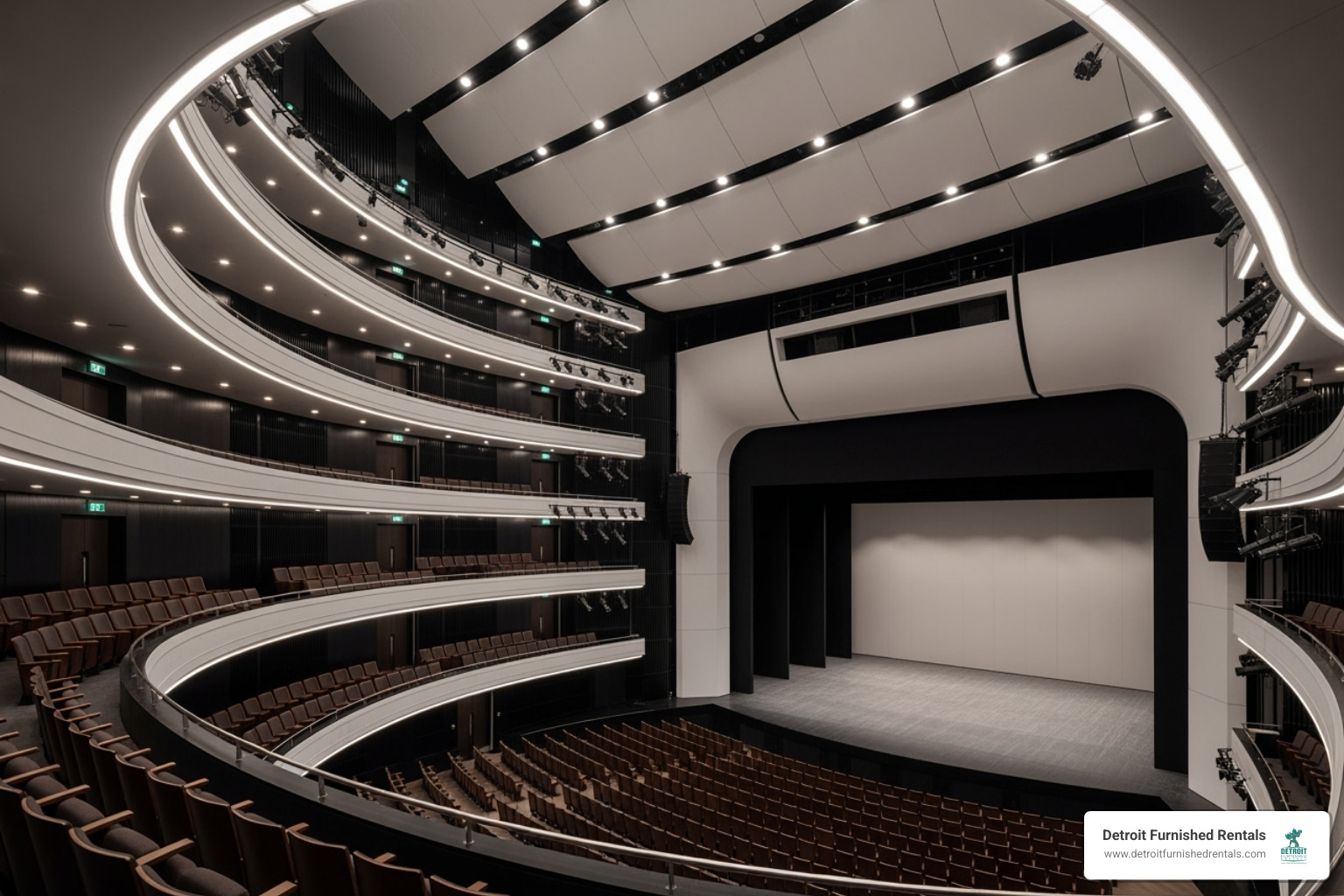
The proscenium arch frames the stage, creating a “fourth wall” that focuses attention on the performance. Above, the domed ceiling is crucial for distributing sound throughout the hall. The traditional horseshoe-shaped auditorium is a brilliant design, ensuring good sightlines and acoustic intimacy. Tiers of balconies and boxes line the walls, offering unique perspectives. Behind the curtain, sophisticated machinery makes the stage magic happen.
The Stage and Orchestra Pit
An opera house stage is highly complex. Many feature a raked stage, sloping toward the audience to improve visibility and create dramatic depth. The fly system above the stage uses ropes and pulleys to move massive scenery pieces quickly, enabling seamless scene changes. Modern stages also incorporate turntables and lifts. The orchestra pit is a distinctive feature. This sunken area houses the musicians without blocking the audience’s view and is crucial for balancing the sound of the orchestra with the singers’ voices.
Richard Wagner revolutionized pit design at his Bayreuth Festspielhaus with a sunken, covered pit that blended the orchestra’s sound seamlessly with the singers. This innovation influenced opera house design for generations.
The Science of Sound: Acoustics in an Opera House
The primary acoustic challenge in an opera house is ensuring unamplified voices can be heard clearly over a full orchestra throughout the hall. Reverberation time—the duration for sound to fade—is key. Too much makes words muddy, while too little makes the sound thin. Achieving the right balance is crucial.
Materials like wood and plaster are used to reflect sound warmly, while ornate decorations often help diffuse sound waves evenly. Strategic sound absorption prevents excessive echo. The Oslo Opera House’s interior was shaped by acoustics, turning the hall into what designers called “a singularly outsized wooden instrument.”
Modern acoustic modeling software allows architects to predict sound behavior before construction. Some venues even feature adjustable acoustics with movable panels to alter reverberation for different performance types. This blend of tradition and technology ensures clarity for every note. To learn more, explore the science of Concert Hall and Opera House Acoustics.
Appreciating this invisible architecture of sound is part of the magic of a live performance in an opera house.
More Than a Venue: A Cultural and Community Pillar
Today’s thriving opera houses are not just for high art; they are vital, inclusive cultural centers hosting everything from opera to rock concerts and community gatherings. Once catering to wealthy patrons, these buildings now welcome diverse audiences, reflecting their role as community hubs that enrich everyone’s lives.

A Stage for Every Story
Modern opera houses accept diverse programming. Alongside classic opera and ballet, you might find a tribute band, a contemporary dance troupe, a comedian, or a lecture series. The Sydney Opera House, for example, hosts an annual ‘All About Women’ festival, showing how these venues have become platforms for social discourse. Similarly, the Woodstock Opera House in Illinois features musicals, tribute bands, and unique events, attracting a wide range of audiences.
The Detroit Music Hall embodies this spirit, welcoming a wide array of performances. Its schedule includes opera, ballet, musicals, diverse concerts, comedy, theatre, speaker series, and children’s shows, making it a true cultural hub where communities gather for shared experiences.
Economic and Social Impact
Opera houses are powerful economic engines, creating hundreds of jobs for performers, stagehands, and staff. Each performance supports local businesses like restaurants and hotels. The tourism impact is significant, as famous venues draw millions of visitors annually, boosting the local economy.
Many opera houses also offer educational and artist development programs. For instance, the Detroit Opera’s Resident Artist Program helps launch the careers of emerging performers, enriching the local arts scene.
These versatile venues also host corporate functions, weddings, and other private events. With grand architecture and large capacities, they are ideal for neat, large-scale gatherings. This versatility ensures financial sustainability and deepens the opera house’s role in the city’s social fabric, strengthening community bonds and contributing to urban life.
A Global Tour of Iconic Opera Houses
From historic European masterpieces to bold modern designs, opera houses worldwide are testaments to creativity and cultural ambition. Let’s tour some of the most celebrated venues that have shaped the performing arts.
Historic Masterpieces
Europe’s great opera houses carry centuries of tradition, making a visit feel like stepping back in time.
- Teatro di San Carlo, Naples: Opened in 1737, it’s the world’s oldest continuously operating opera house, setting a standard for theater design.
- Teatro alla Scala, Milan: Since 1778, it has been synonymous with operatic excellence, premiering many of Verdi’s works.
- Palais Garnier, Paris: This ornate 1875 masterpiece inspired “The Phantom of the Opera,” and the building itself is a spectacle.
- Vienna State Opera: A Neo-Renaissance jewel from 1869, it’s one of the world’s leading venues and home to the famous Vienna Opera Ball.
- Bolshoi Theatre, Moscow: Established in 1776, it is central to Russia’s cultural identity, launching legendary ballet and opera talents.
Modern Architectural Wonders
Modern architects have innovated opera house design, reimagining what these cultural institutions can be.
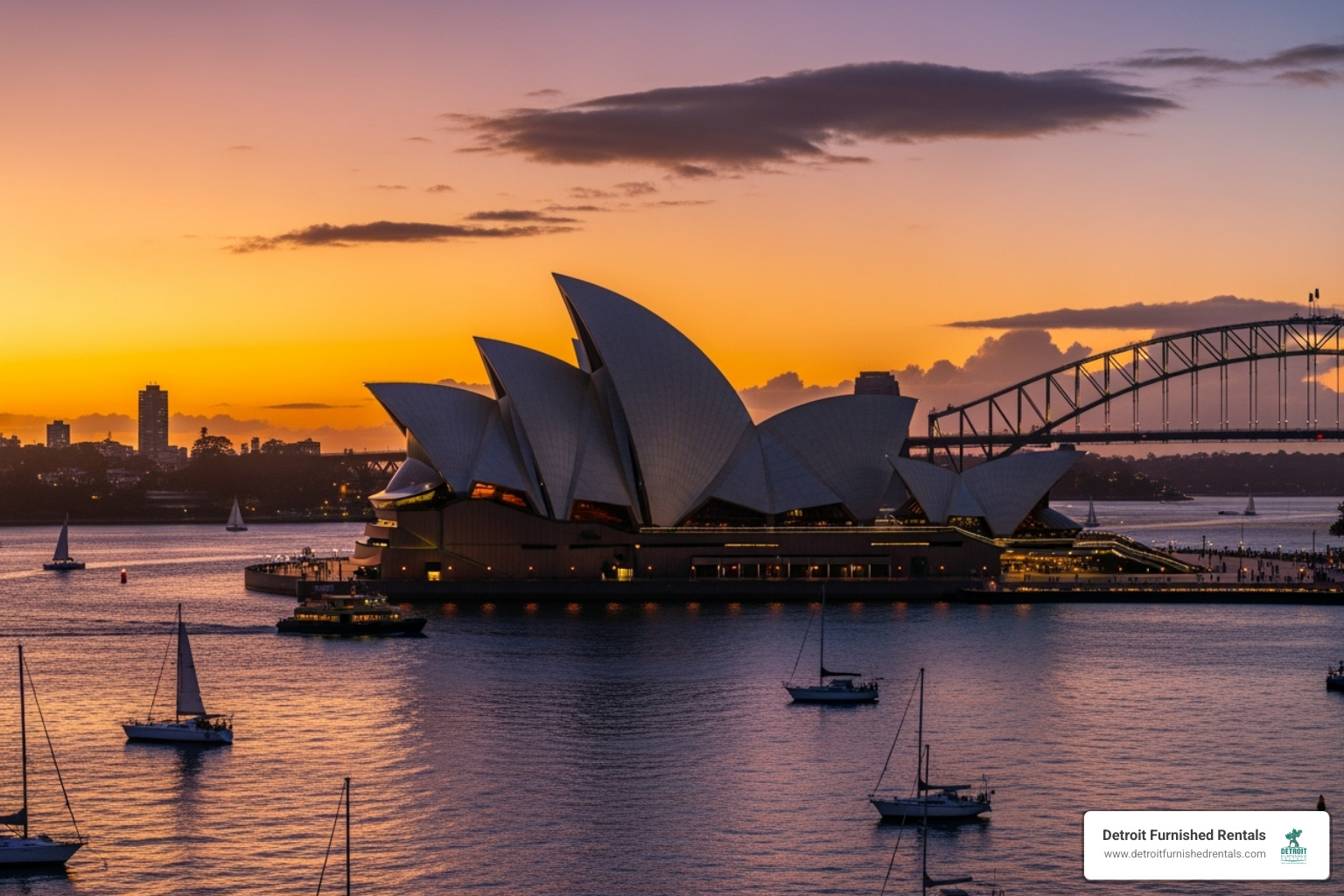
- Sydney Opera House: Its iconic “sails” have made this 1973 building a world-renowned landmark and multi-venue arts center.
- Oslo Opera House: Opened in 2008, its accessible roof serves as a public plaza, breaking down barriers between high culture and daily life.
- Metropolitan Opera, New York: “The Met” (1966) is North America’s largest classical music organization, mounting productions of staggering scale.
- Guangzhou Opera House: Zaha Hadid’s futuristic “double pebble” design (2010) is a bold statement of China’s cultural confidence.
- Palau de les Arts Reina Sofía, Valencia: Part of the futuristic City of Arts and Sciences, this 2005 venue is often cited as Europe’s largest opera house.
A Local Gem: The Detroit Opera House
Detroit has its own architectural treasure: the Detroit Opera House. Opened in 1922 as the Capitol Theatre, it was designed by C. Howard Crane in the Grand Circus Park Historic District. Once one of the nation’s most luxurious movie palaces, its opulent interior reflects the Roaring Twenties.
After difficult decades, the theater was carefully restored and reopened in 1996. Today, it is home to Detroit Opera and presents world-class opera, ballet, and other performing arts. Its breathtaking interior features a spectacular proscenium arch, an ornate domed ceiling, and a raked stage. The opera house is a vital part of Detroit’s vibrant cultural scene, anchoring the entertainment district.
A visit to the Detroit Opera House is an unforgettable experience. Learn more and plan your visit through Detroit’s Theatre District, where history and world-class performances meet.
Frequently Asked Questions about Opera Houses
Visiting an opera house can feel intimidating, but it doesn’t have to be. Here are answers to common questions to help you enjoy your experience.
What is the difference between an opera house and a concert hall?
An opera house is built for staged theatrical performances like opera and ballet. It has a large stage with machinery for scenery, a proscenium arch, and an orchestra pit. Its acoustics are designed to project unamplified voices over an orchestra.
A concert hall is designed for non-staged musical performances like symphonies and recitals. It lacks complex stage machinery and focuses purely on acoustics optimized for instrumental and vocal sound. While their functions can sometimes overlap, their core designs are distinct.
What should I wear to an opera house?
The dress code at most opera houses is more relaxed than you might think. For most performances, business casual or cocktail attire is appropriate. Think dress pants and a nice shirt, a sports coat, a dress, or a skirt and blouse. Opening nights and galas are more formal, often calling for black-tie attire.
When in doubt, check the venue’s website for specific recommendations. The most important thing is to feel comfortable so you can enjoy the show.
Are opera houses only for opera?
No, this is a common misconception. While originally built for opera, modern opera houses are versatile cultural centers. They host a wide variety of events, including ballet, musicals, concerts of all genres, comedy shows, plays, and speaker series. This diverse programming makes them accessible and vibrant hubs for the entire community, welcoming everyone to experience the thrill of live entertainment.
Conclusion
From exclusive courtly venues to inclusive cultural centers, opera houses are enduring symbols of artistic and architectural ingenuity. We’ve traced their journey from ancient theaters to modern marvels like the Sydney Opera House.
What makes them special is their ability to adapt. The same venue might host opera one night and a rock concert the next, ensuring they remain vibrant and accessible to all. These structures do more than entertain; they anchor neighborhoods, create jobs, and draw tourism. From the historic Teatro di San Carlo to our own restored Detroit Opera House, each venue contributes to global culture by offering educational programs and community gathering spaces.
To experience Detroit’s vibrant cultural scene, staying nearby is key. Detroit Furnished Rentals offers comfortable, convenient accommodations moments from the Detroit Opera House and other top venues. Our fully equipped apartments provide the perfect home base for exploring the city’s heritage and enjoying world-class performances.
The magic of live performance is something no screen can replicate. Opera houses preserve and celebrate these shared moments, night after night.
Explore the heart of the city’s entertainment district and plan your cultural getaway by finding more about Detroit’s incredible theatres.