What Makes a Central Business District the Heart of Any City
A Central business district (CBD) is the commercial and business center of a city, with high concentrations of offices, retail, and financial institutions. As the most accessible area where transportation systems converge, it’s also where land values peak.
Quick Definition:
- Location: Usually at the meeting point of a city’s main transport systems
- Primary Function: Commercial hub with offices, retail, banks, and services
- Key Features: High land values, tall buildings, dense pedestrian traffic
- Common Confusion: Not always the same as “downtown” or the historic city center
- Modern Trend: Increasingly including residential units and mixed-use spaces
If you’ve ever wondered why certain parts of a city feel busier and more vertical, you’re observing the CBD. These districts evolved from economic forces, urban planning, and transportation networks pulling activity toward a central point. The CBD is where you’ll find coffee shops on the ground floor, law offices above them, and apartments higher still—all stacked vertically because horizontal space is too valuable. It’s also where cities face challenges like traffic congestion and competition from suburbs, pushing them to balance commerce with livability.
For someone like Alex, looking for short-term housing in Detroit, understanding the CBD matters. Modern CBDs are becoming vibrant, mixed-use neighborhoods where you can work, shop, dine, and live, with unparalleled access to cultural landmarks and amenities.
The Anatomy of a City’s Economic Heart
When you walk through a Central business district, you’re experiencing decades of economic forces pulling in the same direction. It’s a carefully orchestrated dance of accessibility, value, and vertical ambition.

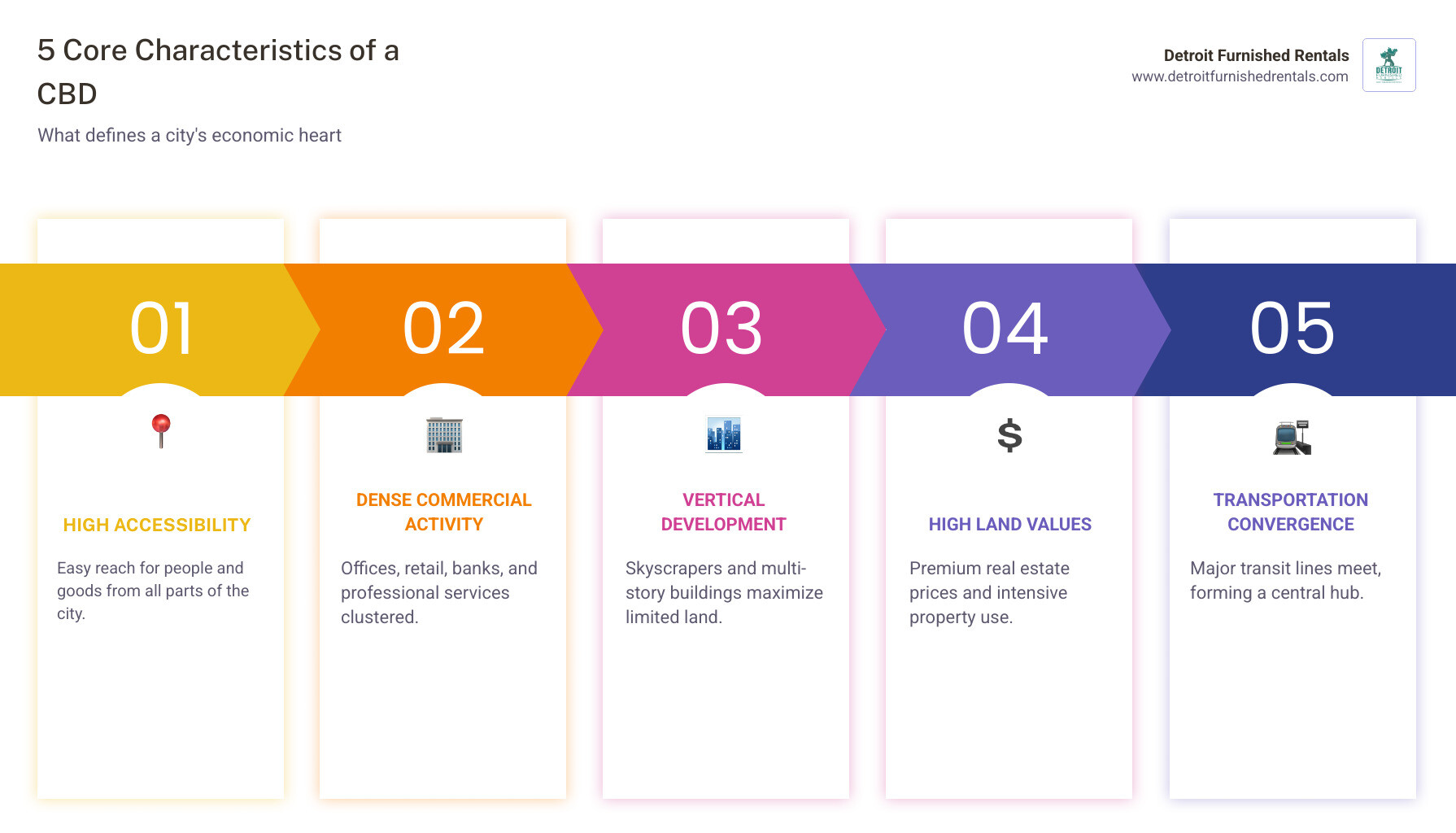
The process starts with accessibility. A CBD is where a city’s transportation lines—buses, trains, and highways—converge, making it easy for thousands to gather. This high demand makes land incredibly expensive, often the priciest in the city. To maximize their investment, property owners must build up. Skyscrapers are a practical solution to this economic pressure, stacking functions vertically. This vertical development is a defining feature of any Central business district, creating iconic skylines and resulting in intensive land use, with every square foot working overtime.
Key Functions and Activities
A thriving CBD contains a mix of interconnected activities. Corporate headquarters choose these locations for prestige and access to talent. Financial institutions like banks and investment firms often cluster in a “financial district.” Retail centers cater to office workers, while government buildings like city halls and courthouses are often located nearby. Cultural institutions such as theaters and museums add vibrancy after business hours. Professional services (law, accounting) situate themselves close to corporate clients. Finally, hospitality—hotels, restaurants, and entertainment venues—serves business travelers and locals alike. For those in short-term furnished rentals in Detroit, the CBD offers a perfect base to experience this ecosystem.
Spatial and Land-Use Patterns
In a Central business district, valuable space leads to a predictable internal hierarchy known as vertical land-use zoning. Ground-floor retail is nearly universal, capturing the most foot traffic. The floors above, with slightly lower rent, are ideal for offices and professional services. Upper levels often contain residential units like apartments and condos, offering impressive views. This stacking allows a single building to serve multiple purposes, maximizing its value.
CBDs also develop specialist areas, where similar businesses cluster to benefit from shared suppliers, a specialized labor pool, and a concentrated customer base—a phenomenon known as external economies. A city’s jewellery quarter is a classic example. For a deeper academic look at these patterns, Raymond Murphy’s A study in Urban Geography offers detailed insights.
What Defines a Central Business District?
At its heart, a Central business district is a geographic area where commercial activity is so densely packed it becomes the economic and population core for an entire region. This concentration of jobs, money, and culture is vital to the city’s economy and the rhythm of urban life.
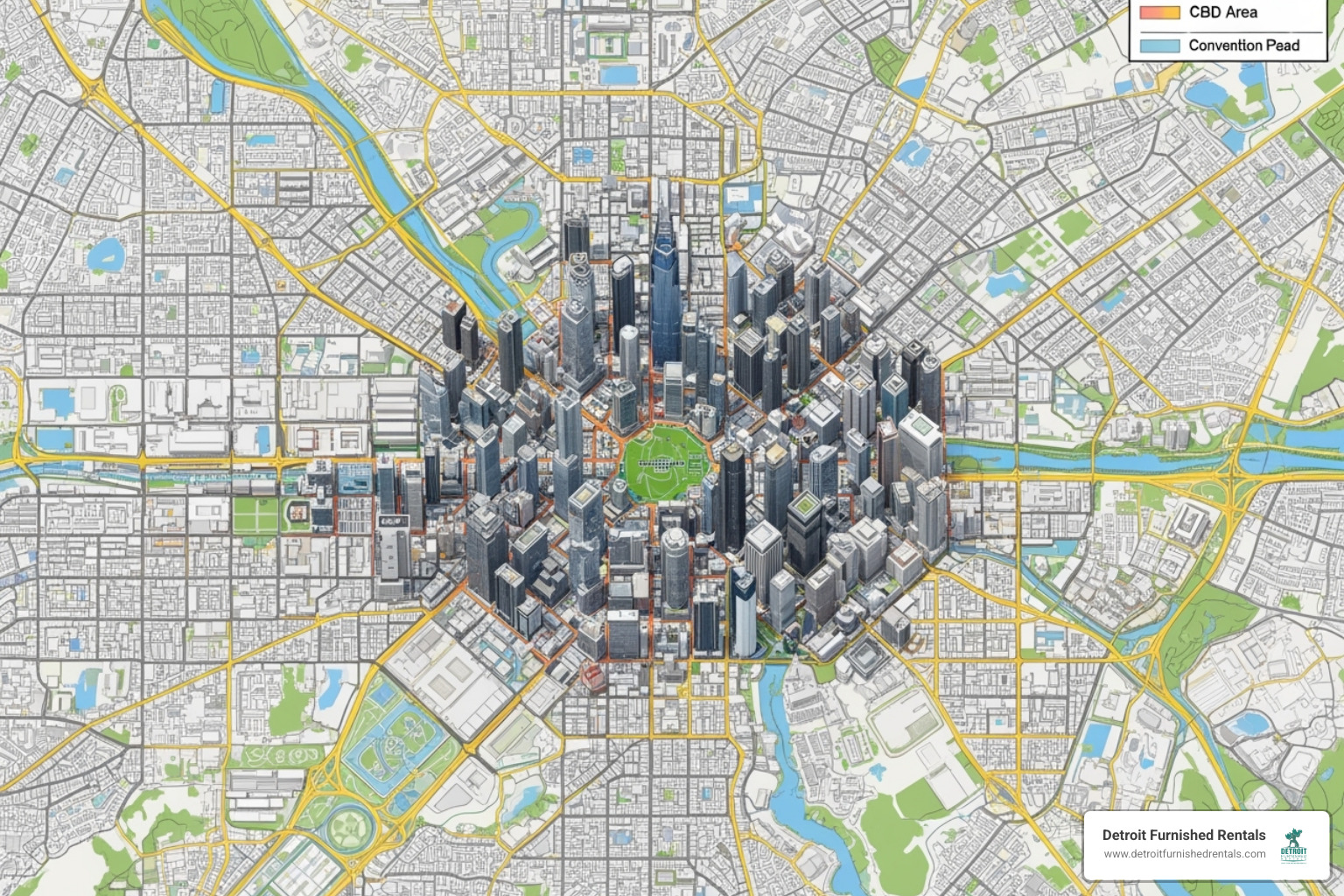
For anyone considering a stay in Detroit, understanding what makes the Central business district tick helps explain why these areas feel so connected and alive.
How a Central Business District is Measured
How do you draw a line around a CBD? Urban geographers use several clever methods to define the commercial core. The Central Business Height Index analyzes vertical development, as taller buildings signal intensive land use. Floor space analysis records the percentage of building space dedicated to core CBD functions like offices and retail. Pedestrian flow charting counts people, since high foot traffic is a clear indicator of commercial concentration. Land value assessment maps property values, which consistently peak in the CBD. There’s even the quirky pavement chewing gum survey; a higher density of discarded gum can be a surprisingly accurate proxy for pedestrian traffic.
For those interested in comparing CBDs across the United States, data from sources like Demographia provides valuable insights Data for comparing CBDs.
The CBD vs. Downtown: Is There a Difference?
People often use “downtown” and Central business district interchangeably, but there are technical distinctions. A CBD is a precise term for the commercial core dominated by offices, banks, and retail. Downtown is a broader term that may include the CBD as well as adjacent historic areas, cultural centers, or revitalized residential neighborhoods.
In many older European cities like Paris, preservation laws forbid tall buildings in the historic center, so their primary Central business district (like La Défense in Paris) is separate from the traditional city center. In contrast, “New World” cities like Detroit often have a single central area that serves as both the CBD and the cultural heart of the city.
The key takeaway is that while a CBD is always part of downtown, downtown isn’t always just the CBD. This distinction helps you understand what different parts of a city offer, whether you’re looking for corporate headquarters or a vibrant neighborhood to call home for a few months.
A Closer Look at Detroit’s Urban Core
Every city’s Central business district has a unique personality, and Detroit’s—known locally as “Downtown”—tells a story of industrial triumph, struggle, and a remarkable comeback. What makes Detroit’s core fascinating is how its history lives alongside its future. Walk down Woodward Avenue, and you’ll see ornate 1920s facades next to sleek glass towers. Detroit has chosen to honor its past while building for the future, giving its CBD a genuine character that reflects its journey.

Unlike cities that bulldozed their history, Detroit kept its bones. The result is a Central business district with character, where you can feel the weight of the past while getting excited about what’s next.
Notable Features of Detroit’s CBD
Detroit’s Central business district is more than just a place to work; it’s a destination. Campus Martius Park sits at its heart, a public square that proves green space is vital even in dense commercial districts. It’s an award-winning urban living room, with lawns in the summer and an ice rink in the winter.
The Renaissance Center, a seven-tower complex on the riverfront, houses General Motors’ world headquarters and makes a bold statement about the city’s industrial legacy. Detroit’s historic theaters, like the Fox Theatre and Detroit Opera House, bring culture to the core, hosting everything from Broadway shows to concerts. These restored venues ensure the CBD is about more than just commerce.
Beyond landmarks, you’ll find major office towers for established firms and tech startups, a growing number of cultural institutions, and a thriving dining and entertainment scene. For anyone in short-term housing in Detroit, living near the CBD means having all of this in your backyard.
The Growth of Specialized Districts in Detroit
Detroit’s Central business district is evolving into a collection of distinct neighborhoods. Emerging tech corridors are attracting startups drawn by lower costs and a growing talent pool, creating Detroit’s own version of a tech hub. Arts and entertainment districts have blossomed, with smaller galleries and venues creating a cultural ecosystem where artists can afford to live and work.
Energy from the downtown core has rippled into revitalized neighborhoods like Corktown and Brush Park, breathing new life into historic areas. The most significant trend is the rise of mixed-use developments that combine apartments, offices, and retail. These projects create walkable urban environments that attract new residents and keep the CBD vibrant after 5 PM. For those in furnished rentals, this means moving into a real neighborhood that’s lively morning, noon, and night.
The Evolving CBD: Challenges and Future Trends
The Central business district has never been a finished product—it’s always adapting. What worked fifty years ago doesn’t necessarily work today, as technology, transportation, and urban planning philosophies change. The modern CBD is evolving from a 9-to-5 office park into a genuine, livable neighborhood.
Threats to the Traditional CBD
The old model of a Central business district is under serious pressure. The traditional vision of a commuter-heavy hub is becoming less relevant due to several key threats. Traffic congestion remains a major headache, a side effect of the CBD’s high accessibility. The retail revolution, driven by e-commerce and suburban shopping centers, has challenged traditional brick-and-mortar stores. Perhaps the biggest threat is the remote work shift. With fewer people commuting daily, demand for traditional office space has dropped, leading to higher vacancies and questions about the CBD’s future. These changes have sparked debate, with some predicting a “center-less” city and others arguing the CBD will simply evolve.
The Future: Revitalization and Mixed-Use Development
Despite these challenges, CBDs are reinventing themselves to be more dynamic and livable. The key is mixed-use development. Instead of single-purpose office buildings that are empty after hours, cities are encouraging structures that combine workspaces, apartments, shops, and restaurants. This creates 24/7 vibrancy.
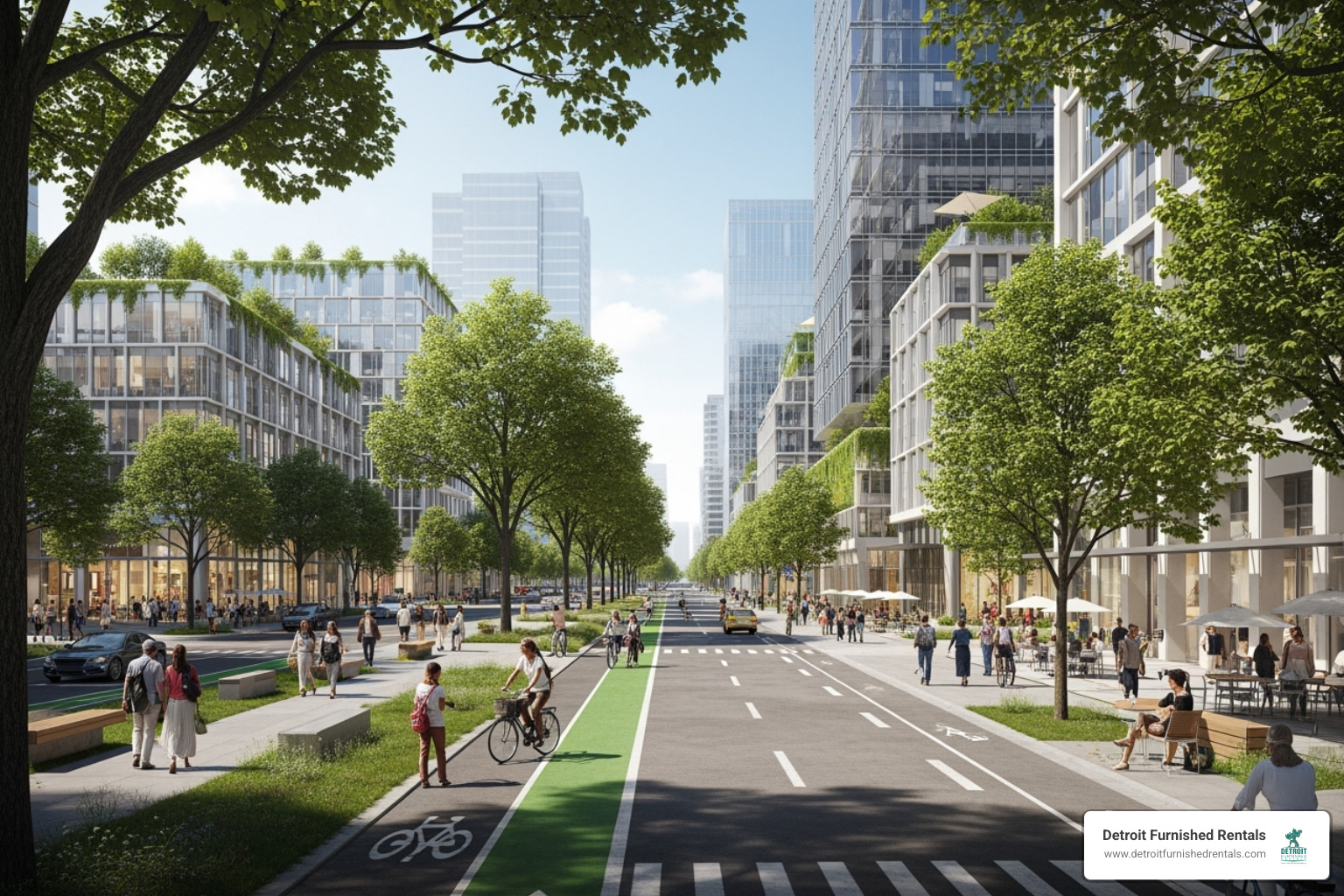
A crucial part of this strategy is deliberately increasing the residential population within CBDs. When people live downtown, local businesses thrive and the area develops a true sense of community. Furnished rentals offer a perfect way to experience this lifestyle without a long-term commitment. Cities are supporting this with urban revitalization projects, investing in green spaces, bike lanes, and pedestrian plazas. These aren’t just aesthetic fixes; they represent a fundamental shift toward prioritizing livability.
The trend is clear: CBDs are becoming true neighborhoods where people live, work, and socialize. This isn’t just a theory—it’s happening in downtowns across America, including right here in Detroit. The Central business district of the future will be measured not just by its commercial power, but by its quality of life.
Frequently Asked Questions about Central Business Districts
People often ask us about how Central business districts work and why they matter. After all, understanding the CBD helps you appreciate what makes living or staying in one so special. Let’s tackle some of the most common questions we hear.
Why are buildings in a CBD so tall?
Buildings in a CBD are tall for a simple economic reason: high land value. Because the CBD is the most accessible and desirable location, land is extremely expensive. To maximize their investment on a small plot, developers must build vertically instead of horizontally. This intense competition for space drives the construction of high-rises and skyscrapers that stack offices, retail, and residences. These tall buildings are not only a practical response to cost but have also become powerful symbols of economic strength and corporate prestige.
Do people live in Central Business Districts?
Yes, and this is a dramatic change from the past. Historically, most CBDs were ghost towns after 5 PM. Today, more people are choosing to make the Central business district their home. The rise of mixed-use development means apartments are being built alongside offices and shops, often in the same building. Urban professionals and others love the convenience of living steps from work, restaurants, and entertainment. This trend has also created demand for flexible housing like furnished rentals, which allow people to experience CBD living without a long-term commitment. Revitalization efforts in cities like Detroit are specifically designed to bring residential life back to the urban core, creating vibrant, 24/7 neighborhoods.
How do CBDs impact the rest of the city?
The Central business district is the city’s heart, and its health affects the entire region. As the economic engine, it generates significant tax revenue and creates thousands of jobs, drawing workers from across the metropolitan area. This shapes commuter patterns and drives investment in public transportation that benefits everyone. The CBD also serves as the city’s transportation hub, where bus, rail, and highway networks converge, connecting neighborhoods across the city. A thriving CBD can also boost property values in surrounding areas. Finally, the concentration of theaters, museums, and restaurants in the Central business district makes it a social and cultural focal point for the entire region.
Conclusion
Think about what we’ve finded together. A Central business district isn’t just where the tallest buildings happen to stand—it’s where a city’s energy, ambition, and personality come alive. From its roots as a simple marketplace to today’s complex urban ecosystem, the CBD has always been about connection: people connecting with opportunities, businesses connecting with customers, and communities connecting with culture.
We’ve walked through how these districts work, from the economic forces that push buildings skyward to the daily rhythms that make them hum with activity. High land values, intense competition for space, and the constant flow of people create something unique—a place where you can grab coffee at street level, close a business deal ten floors up, and come home to your apartment twenty floors higher, all without leaving the building.
CBDs face real challenges. Traffic can be frustrating. Online shopping has changed how we use retail spaces. And yes, remote work has made us rethink what “going to the office” even means. But here’s what excites us: cities aren’t giving up on their centers. They’re reimagining them.
The shift towards mixed-use development means CBDs are becoming actual neighborhoods where people live, not just places they escape from at 5 PM. Urban revitalization projects are adding green spaces, bike lanes, and public gathering spots. Cities like Detroit are proving that a Central business district can be both an economic powerhouse and a genuinely great place to call home.
These districts remain the economic engine that powers entire regions. They’re where jobs are created, where culture thrives, and where a city shows the world who it is. That matters whether you’re a lifelong resident or just passing through.
If you’re considering experiencing urban living at its most vibrant—especially in a city like Detroit that’s in the middle of such an exciting comeback—the Central business district offers something special. You’re not just close to where things happen; you’re right in the middle of it all. The energy, the convenience, the culture, the late-night restaurants, the early-morning coffee shops—it’s all right there.
We get why people are drawn to the heart of the city. That’s exactly why we focus on providing comfortable, fully furnished accommodations in Detroit’s most central locations. When you stay with us, you’re not just visiting Detroit—you’re living it, feeling its pulse, and experiencing everything that makes this city’s urban core so compelling.
Ready to make the CBD your home base? Explore centrally located properties in Detroit and find the perfect spot to experience everything the city center has to offer.